
Guatemala City Celebrates 250 Years: 29th Festival del Centro Histórico Unveils 150 Free Cultural Events in Zone 1
Marking 250 years since the founding of Guatemala City, the 29th Festival del Centro Histórico activates Zone 1 with 150 free concerts, guided tours, and exhibitions.

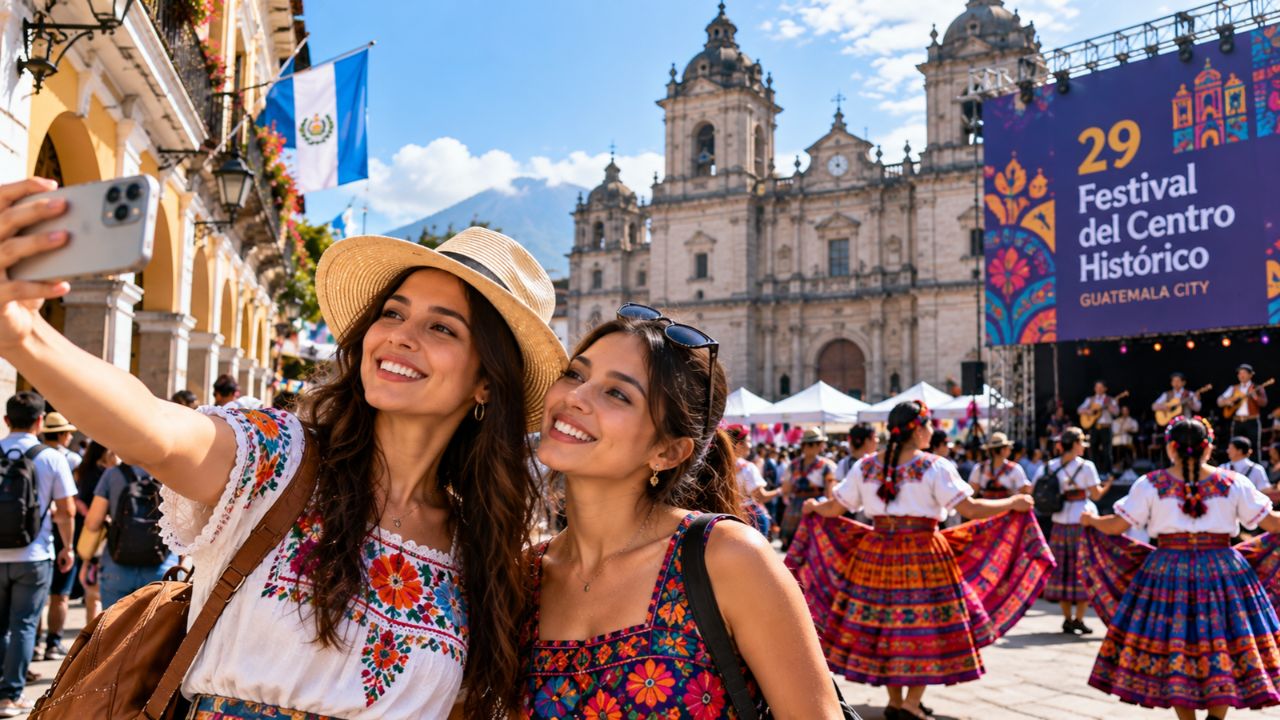
Approximately 150 completely free public cultural activities and a historic 250-year municipal founding milestone anchor the 29th edition of the Festival del Centro Histórico in Guatemala City. Running from 7 to 17 October 2026 throughout the streets, plazas, and municipal institutions of Zone 1, the event concludes its multi-day run on Friday 16 October and Saturday 17 October under the official thematic banner "Nuestro Punto de Encuentro" ("Our Meeting Point"). Established in 1998 to reclaim public urban space, this year's staging forms a core pillar of the national commemorations celebrating two and a half centuries since the capital was formally transferred to the Valley of the Ermita (Valle de la Ermita) in 1776 following the catastrophic Santa Marta earthquakes.
Multi-Agency Coordination and Diplomatic Cultural Exchange
The festival operates not as an insular convention held behind closed auditorium doors, but as an open-air activation of the capital’s central heritage quarter. Administrative oversight involves broad multi-sectoral collaboration coordinated with the Ministry of Culture and Sports of Guatemala, which directly sponsors 35 featured performances and historical workshops. The broader initiative incorporates regional universities, community neighborhood collectives, civic conservation bodies, and public libraries to transform the colonial and neoclassical core into an accessible learning corridor.
International cultural diplomacy provides a significant dimension to the 2026 schedule. Diplomatic missions from Canada, Mexico, El Salvador, Peru, Italy, and Spain have integrated visual art, film retrospectives, and musical performances into the daily roster. Creative ensembles and solo performers from the United States, Honduras, and Cuba join domestic ensembles to animate the national stages.
The programmatic focus is heavily weighted toward traditional and classical performance arts. The marimba—Guatemala’s national instrument and a designated Americas Cultural Heritage symbol recognized alongside Guatemalan Tourism Institute (INGUAT) preservation programs—anchors primary open-air assemblies alongside symphonic recitals and modern Latin jazz.
| Schedule Date | Feature Event & Venue Location | Artistic Discipline & Institutional Partner | Entrance Fee & Access Requirements | Target Audience & Highlight |
|---|---|---|---|---|
| Friday 16 Oct | Archaeology & Technology Talks, IDAEH | Heritage preservation; Instituto de Antropología | Free admission; open seating | Researchers and conservation professionals |
| Friday 16 Oct | National History Day, Museo Nacional | Guided curation & archival tour (16:00 – 20:00) | Free admission; walk-in access | Families and regional history scholars |
| Friday 16 Oct | Patrice Fisher & Arpa, Plaza Mayor | Open-air Latin jazz (Guatemala-Cuba ensemble) | Free public access; open plaza | General travelers and music patrons |
| Friday 16 Oct | Italian Cinema, Centro Cultural Universitario | Screening of Vittorio De Sica's Bicycle Thieves | Free admission; venue capacity limits | Cinephiles and university students |
| Friday 16 Oct | Spanish Talent Concert, CCE/G | Chamber music at Centro Cultural de España | Free advance tickets required | Classical music and vocal arts patrons |
| Saturday 17 Oct | Pinta tu barrio: El Santuario, Zone 1 | Community urban facade restoration | Open volunteer participation | Civic volunteers and preservationists |
| Saturday 17 Oct | Sonrisitas por el Centro, Zone 1 | Historic Centre motorized trolley tour | Free for registered children (Ages 6–11) | Interactive youth heritage education |
| Saturday 17 Oct | RE-CREO Family Assembly, Plaza Mayor | Public games, movement, and workshops (09:00–12:00) | Free public plaza access | Multi-generational families and children |
| Saturday 17 Oct | Miguel Ángel Asturias Literary Tour | Architectural walking tour of El Señor Presidente | Free guided walk; group departure | Literary travelers and literature enthusiasts |
| Saturday 17 Oct | Concierto de Las Américas (18:00 Closing) | Orquesta Sinfónica Regional de Occidente | Free open access on Plaza Mayor | Official grand festival closing assembly |
Urban Heritage Programming and the Final Weekend Schedule
The concluding 48-hour window concentrates diverse performance genres across historic architectural landmarks. On Friday 16 October, the Instituto de Antropología e Historia (IDAEH) opens with specialized technical panels examining modern archaeological technologies and structural conservation techniques applied to historic brick and adobe buildings. In the afternoon, the Museo Nacional de Historia stages an extended National History Day commemoration from 16:00 to 20:00, leading visitors through curated vaults tracing Central American independence and republican transformations.
Evening performances on Friday bridge multiple cultural traditions. At the Centro Cultural de España en Guatemala, a specialized Spanish talent cycle highlights contemporary compositions, while Casa Ibargüen hosts a solo baroque cello recital. Simultaneously, Italian cinematic realism takes center stage at the Centro Cultural Universitario with a public screening of Vittorio De Sica's classic 1948 drama Bicycle Thieves (Ladri di biciclette). Across the open cobblestones of Plaza Mayor de la Constitución, New Orleans harpist Patrice Fisher & Arpa joins guest instrumentalists from Cuba and Guatemala for a major Latin jazz concert.
Saturday 17 October emphasizes participatory community heritage. The volunteer initiative "Pinta tu barrio: El Santuario" coordinates residents and international visitors to restore and repaint historic building facades along northern Zone 1 residential avenues. For children aged six to eleven, the "Sonrisitas por el Centro" trolley tour navigates iconic avenues, pairing transit with historic storytelling. Literature takes center stage through a walking tour charting the urban landmarks featured in El Señor Presidente, the masterwork by Guatemala’s 1967 Nobel laureate Miguel Ángel Asturias.
The grand finale commences at 18:00 on Saturday with the Concierto de Las Américas. Staged on the open platform of the Plaza de la Constitución against the backdrop of the National Palace of Culture (Palacio Nacional de la Cultura) and the Metropolitan Cathedral, the Orquesta Sinfónica Regional de Occidente performs a comprehensive pan-American classical repertoire.
Expert Analysis: Urban Regeneration, Cultural Decentralization, and Security Architecture in Zone 1
For international travelers navigating Guatemala, the Festival del Centro Histórico presents an instructive case study in how targeted cultural events alter urban travel geography. Historically, leisure travelers landing at La Aurora International Airport (GUA) bypass the capital entirely, heading directly along the Pan-American Highway to Antigua Guatemala or Lake Atitlán due to persistent safety warnings regarding downtown Guatemala City.
The strategic concentration of 150 free cultural activations across Zone 1 actively counters this pattern. By deploying synchronized municipal police details, specialized tourist police (POLITUR) units, and pedestrianized corridors connecting the Sixth Avenue (Paseo de la Sexta) pedestrian mall to Plaza Mayor, municipal authorities establish an active, secure perimeter for international visitors.
The pricing impact for travelers is immediate. Because all 140 to 150 events operate with zero admission fees, budget travelers, backpackers, and cultural researchers access elite symphonic and theatrical productions that would cost substantial ticket premiums in North American or European capitals. Furthermore, the Transmetro bus rapid transit line (Lines 1 and 2) allows seamless transit between southern lodging districts (Zones 4, 9, and 10) directly into the heart of Zone 1 for less than one Guatemalan Quetzal per ride, providing a budget-friendly urban discovery circuit that demonstrates the living durability of Central America’s oldest planned republican grid.
Key Takeaways
- Scale and Access: The 29th Festival del Centro Histórico delivers 150 completely free cultural activities across Zone 1, running through its grand finale on 17 October 2026.
- Historical Anniversary: The 2026 edition coincides with the 250th anniversary of the transfer of Guatemala City to the Valley of the Ermita in 1776.
- Diplomatic Footprint: Official participation includes embassies from Canada, Mexico, El Salvador, Peru, Italy, and Spain, alongside guest performers from Cuba, Honduras, and the United States.
- Symphonic Closing: The grand finale, Concierto de Las Américas, takes place at 18:00 on Saturday 17 October at Plaza Mayor, performed by the Orquesta Sinfónica Regional de Occidente.
- Neighborhood Preservation: Activations blend passive spectator concerts with active civic restoration, highlighted by the "Pinta tu barrio" facade painting initiative.
FAQ: Guatemala City Heritage Festival 2026
What is the theme and location of the 2026 Festival del Centro Histórico?
The festival operates under the theme "Nuestro Punto de Encuentro" throughout Zone 1 (the Historic Centre) of Guatemala City, centered on Plaza Mayor de la Constitución.
Are tickets required to attend festival concerts and film screenings?
All events are free of charge. While open-air concerts on Plaza Mayor require no ticketing, indoor venues such as Casa Ibargüen and Centro Cultural de España distribute free passes on a first-come, capacity-limited basis.
What is the significance of the 250-year celebration during the festival?
The 2026 festival marks 250 years since the formal relocation of the capital from Antigua Guatemala to the Valley of the Ermita in 1776 following severe earthquake destruction.
How can visitors safely travel to Zone 1 for the evening concerts?
Travelers can utilize the municipal Transmetro bus rapid transit system to Plaza Mayor or hire registered rideshares, taking advantage of active tourist police (POLITUR) patrols along the Paseo de la Sexta pedestrian corridor.
By reclaiming colonial avenues through free symphonic music and communal restoration, Guatemala City proves that historic downtowns remain the living heart of national identity.
Related Travel Guides
Brazil Coastal Tourism Boom Rio Carnival Amazon Pantanal Guide 2026
Bermuda Black Film Weekend 2026 Cultural Tourism Hamilton Travel Guide
10 Best Historic Attractions in Guatemala City, According to Reddit
Disclaimer
This article is for informational and educational purposes only. It does not constitute legal, financial, or professional advice. While we strive to provide accurate and up-to-date information, travel policies, regulations, and conditions change rapidly. Always verify information with official sources before making travel decisions. Nomad Lawyer makes no representations about the accuracy, reliability, completeness, or suitability of the information provided. Readers should consult qualified professionals for advice specific to their circumstances. The views expressed in this article are those of the author and do not necessarily reflect the views of Nomad Lawyer.
Preeti Gunjan
Contributor & Community Manager
A passionate traveller and community builder. Preeti helps grow the Nomad Lawyer community, fostering engagement and bringing the reader experience to life.
Learn more about our team →