
Arabian Travel Market 2026 Puts Agentic AI, Robotics and Digital Discovery at the Heart of Travel’s Next Era
Arabian Travel Market 2026 Puts Agentic AI, Robotics and Digital Discovery at the Heart of Travel’s Next Era

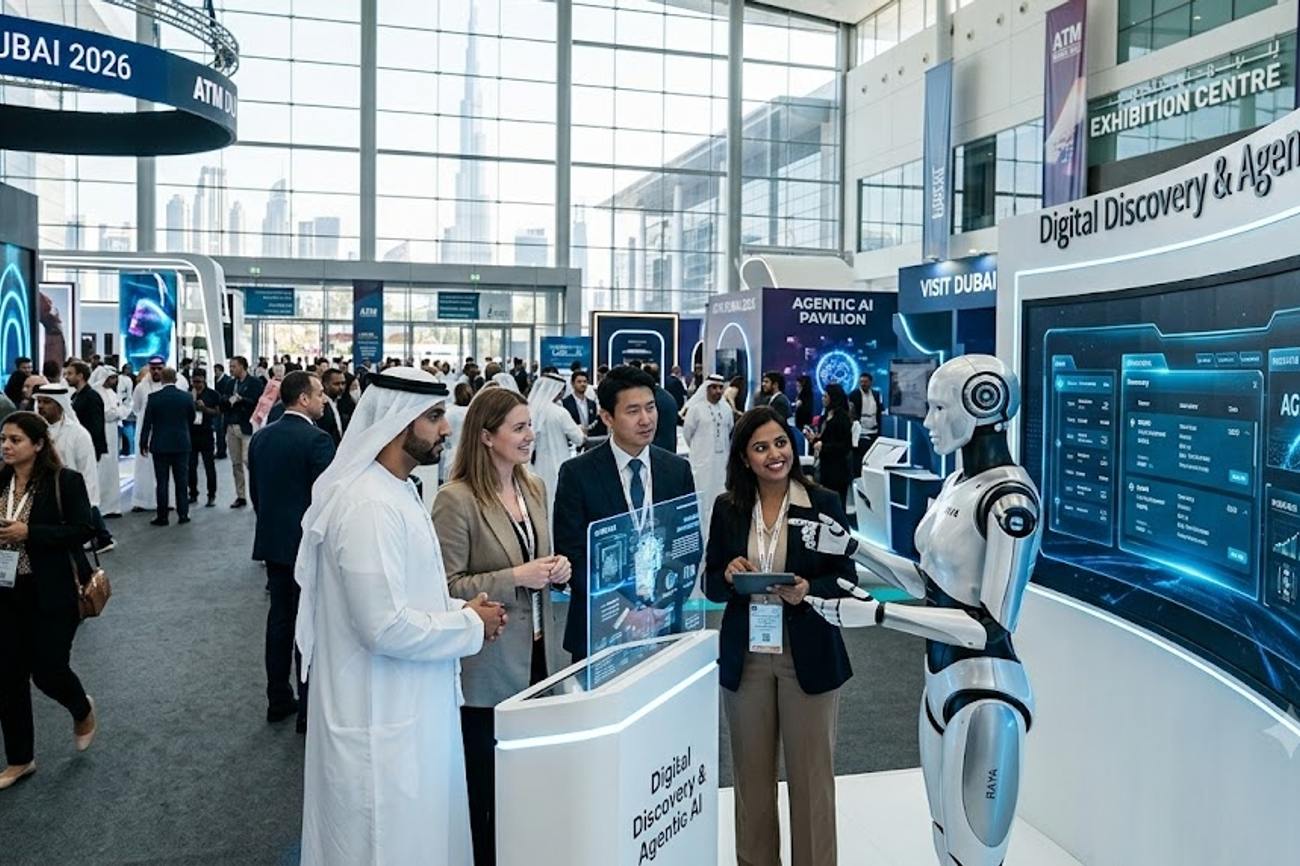
Image generated by AI
[Dubai, 2026] — The Arabian Travel Market (ATM) 2026 has positioned Agentic AI, robotics, and digital discovery as the primary drivers of a fundamental shift in the global travel economy. This strategic pivot marks a transition from technology as a support tool to technology as the primary architect of how travelers search, book, and experience journeys.
The event, centered on the theme “Travel 2040: Driving New Frontiers Through Innovation and Technology,” serves as a high-level summit for aviation, hospitality, and distribution leaders. By integrating a massive expansion of its technology programming, ATM 2026 is coordinating a response to a rapidly changing digital marketplace where automation is moving beyond simple chatbots toward autonomous systems capable of executing complex, multi-step travel arrangements.
The Shift to Agentic AI and Automation
The immediate catalyst for this industry pivot is the emergence of "Agentic AI," a significant evolution from the generative AI models currently in use. While standard AI focuses on information retrieval and answering queries, Agentic AI is designed to execute tasks. In a practical sense, this means moving from a system that suggests a hotel to a system that can independently research options, compare prices, coordinate a multi-city itinerary, and facilitate the final transaction based on a user's specific budget and preferences.
This transition is being spearheaded by a coalition of the world's most influential distribution and technology firms. The Visa payments network is joining forces with travel giants to ensure the financial infrastructure can support these autonomous transactions. Simultaneously, distribution powerhouses like Sabre are examining how these AI agents will interact with legacy reservation systems and the wider travel supply chain.
The objective is to eliminate the fragmented nature of travel planning. Currently, a traveler must navigate multiple tabs, apps, and websites to build a trip. The "Agentic" model proposes a single, integrated digital interaction where the AI acts as a professional travel agent, handling the logistics from discovery to payment.
Industry Stakeholders and Market Impact
The scale of this digital transformation is evidenced by the diversity of the corporate participants. The ATM 2026 program has assembled a cross-section of the travel ecosystem to address the risks and rewards of total automation.
| Entity | Primary Role in ATM 2026 Discussions | Strategic Focus |
|---|---|---|
| Sabre | Distribution Infrastructure | Integration of AI into the travel supply chain |
| Trip.com / Tripadvisor | Digital Discovery | Evolution of search and consumer engagement |
| Wego / MakeMyTrip | Booking Platforms | Transition from OTAs to autonomous booking |
| RateGain | Hospitality Tech | AI-driven pricing and personalization |
| Visa | Fintech | Streamlining payments for automated agents |
The involvement of these specific players indicates that the industry is no longer looking at AI as a "feature" but as a new operational layer. For companies like RateGain, the focus is on how AI can automate revenue management and personalization. For the Online Travel Agencies (OTAs) like Trip.com and MakeMyTrip, the challenge is redefining their value proposition as AI agents begin to handle the discovery and booking phases that previously drove their traffic.
What This Means for Travelers
For the end-user, the corporate jargon of "Agentic AI" and "Digital Discovery" translates into a drastic reduction in "planning friction."
1. End of the "Tab-Hopping" Era Travelers will no longer need to manually compare five different hotel sites and three flight aggregators. Instead, they will provide a high-level objective—for example, "Plan a 10-day sustainable trip to Japan in October for under $5,000"—and the AI agent will present a completed, bookable itinerary.
2. Immersive Pre-Trip Validation Through the integration of Virtual Reality (VR) and Augmented Reality (AR), the "discovery" phase is moving from 2D photos to immersive experiences. Travelers can virtually walk through a hotel room or explore a city square before committing to a booking, reducing the gap between expectation and reality.
3. Frictionless Transit and Stay The introduction of robotics into the operational environment means a shift in the physical travel experience. This includes autonomous luggage handling at airports and robotic concierge services in hotels, aimed at reducing wait times and automating routine guest requests.
4. Hyper-Personalized Pricing With fintech and AI integration, pricing will become more dynamic. Travelers may see offers tailored in real-time to their specific spending habits and loyalty profiles, though this also raises questions regarding price transparency.
The Roadmap to Travel 2040
The long-term vision presented at ATM 2026 is not merely about convenience but about a total overhaul of the commercial infrastructure. The "Future Stage" at the event is focusing on how these tools alter actual business models.
The industry is moving toward a "connected ecosystem" where different systems—airline GDS, hotel PMS, and payment gateways—communicate seamlessly without human intervention. The timeline for this involves several critical hurdles:
- Trust and Security: The industry must solve the problem of "accountability." If an AI agent books a non-refundable flight to the wrong city, the legal and financial responsibility must be clearly defined.
- Data Ownership: A battle is brewing over who owns the customer relationship. If an AI agent handles the booking, does the loyalty belong to the AI provider, the booking platform, or the hotel?
- Green Integration: A major pillar of the Tech & Innovation Hub is the marriage of AI and green technology. The goal is to use AI to optimize routes for lower carbon emissions and help travelers make environmentally conscious choices automatically.
As these technologies move from the "showcase" phase at the Tech & Innovation Hub into real-world deployment, the travel industry is effectively betting that the future of tourism is autonomous.
FAQ: Travel AI and Automation 2026
Will AI agents completely replace travel agents? Not entirely, but they will replace the "transactional" part of the job. Human agents will likely shift toward high-value consultancy, complex crisis management, and luxury curation, while AI handles the routine searching and booking of flights and hotels.
Is it safe to let an AI handle my payments? The industry is currently developing secure fintech frameworks, with companies like Visa leading the charge. While the technology is moving toward autonomy, users will likely maintain "final approval" controls over payments for the foreseeable future.
How does VR/AR actually help me book a trip? It moves discovery from "searching" to "experiencing." Instead of reading reviews, you can use a VR headset or AR app to see a 360-degree view of a destination or hotel, allowing you to verify the quality of the property before paying.
What is the difference between Generative AI and Agentic AI? Generative AI (like early ChatGPT) provides information and answers questions. Agentic AI can actually do things—it can log into a system, compare real-time data, and execute a booking or a transaction on your behalf.
The era of manual trip planning is ending; the era of the autonomous journey has begun.
#ATM2026 #AgenticAI #TravelTech2040 #DubaiTravel #Sabre #VisaFintech
Related Travel Guides
- Hong Kong International Lantern Spectacular 2026: Victoria Park Guide & Free Entry Details
- AirBaltic Restructuring Sparks Europe Airline Warning as Wizz Air and Others Face Tough Financial Challenges
- Abu Dhabi International Book Fair 2026 Sees ERRA Drive New Push For Rights Awareness And Creative Growth
Disclaimer
This article is for informational and educational purposes only. It does not constitute legal, financial, or professional advice. While we strive to provide accurate and up-to-date information, travel policies, regulations, and conditions change rapidly. Always verify information with official sources before making travel decisions. Nomad Lawyer makes no representations about the accuracy, reliability, completeness, or suitability of the information provided. Readers should consult qualified professionals for advice specific to their circumstances. The views expressed in this article are those of the author and do not necessarily reflect the views of Nomad Lawyer.
Kunal K Choudhary
Co-Founder & Contributor
A passionate traveller and tech enthusiast. Kunal contributes to the vision and growth of Nomad Lawyer, bringing fresh perspectives and driving the community forward.
Learn more about our team →