
AI and Infrastructure Resilience Take Center Stage at Arabian Travel Market 2026
Arabian Travel Market 2026 gathers global leaders in Dubai to tackle AI integration, tourism resilience, and the UAE's 2031 goal of 40 million hotel guests.

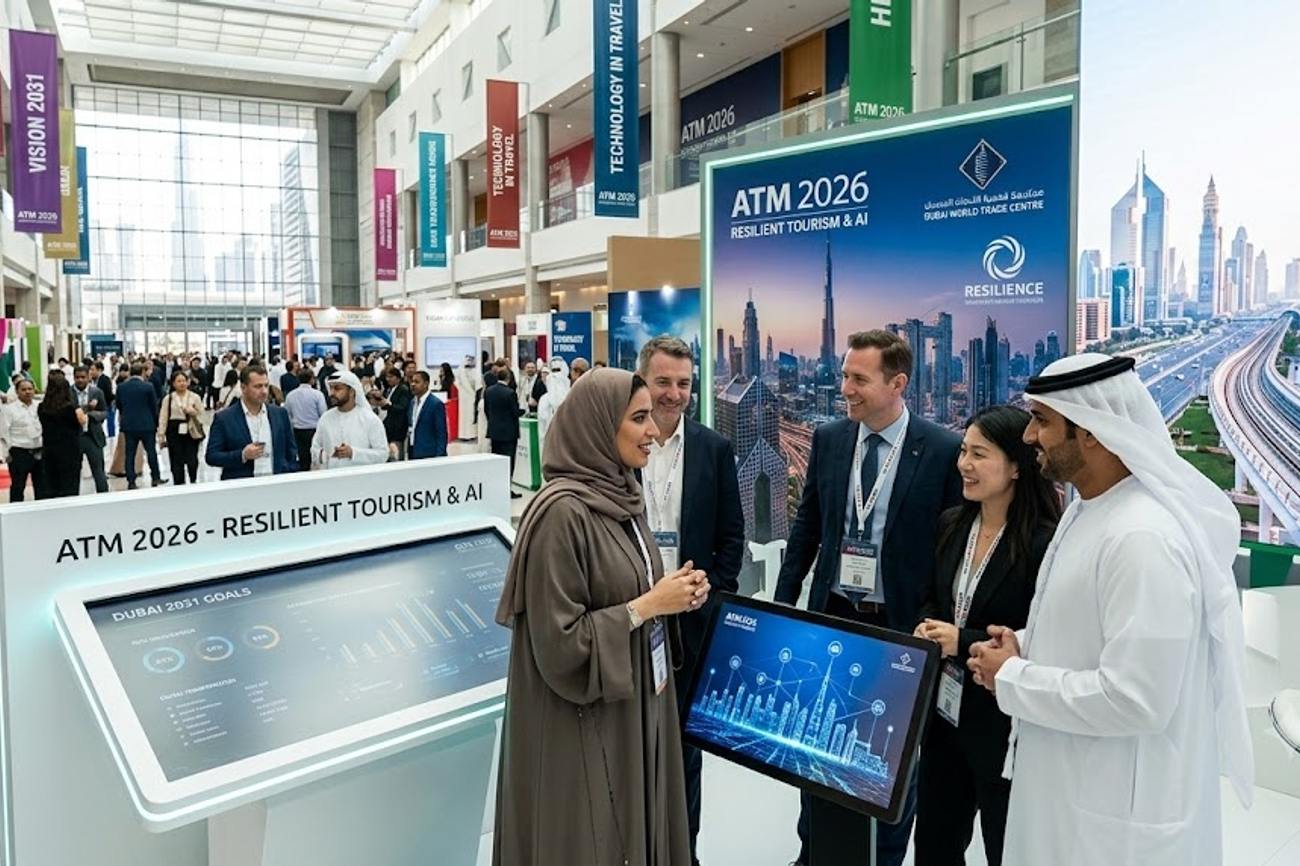
Image generated by AI
Dubai Hosts Global Tourism Powerhouses for ATM 2026
[Dubai, September 8, 2026] — Government ministers, tourism policymakers, and top-tier travel executives are convening at the Dubai World Trade Centre from September 14 to 17 for the 33rd edition of the Arabian Travel Market (ATM). This year's summit arrives at a critical juncture as the global travel sector grapples with the rapid integration of artificial intelligence, shifting consumer demands, and the urgent need for destination stability.
The outcomes of these high-level negotiations are expected to ripple through the entire travel ecosystem. For the average traveler, the decisions made in Dubai will likely dictate how future vacations are curated, the level of personalization experienced within luxury hotels, and the efficiency of recovery protocols when geopolitical or economic disruptions strike international itineraries.
Innovation Framework: Travel 2040
The 2026 summit operates under the strategic theme “Travel 2040: Driving New Frontiers Through Innovation and Technology.” This forward-looking mandate shifts the conversation from immediate recovery to long-term evolution, examining how technological breakthroughs will redefine the tourist experience over the next 14 years.
The scale of the event is significant, featuring more than 210 speakers who will lead over 80 specialized sessions. These discussions will span a wide array of sectors, including aviation logistics, sustainable development, hospitality investment, and the evolving psychology of the modern traveler.
Key figures confirmed for the event include:
- Abdulla bin Touq Al Marri, UAE Minister of Economy and Tourism
- Shaikha Al Nuwais, UN Tourism Secretary-General
- Fatima bint Jafar Al Sairafi, Bahrain Tourism Minister
- Apostolos Tzitzikostas, European Commissioner for Sustainable Transport and Tourism
Strengthening Global Tourism Resilience
A primary pillar of the ATM 2026 agenda is the concept of systemic resilience. In a ministerial debate titled “Building A Resilient Industry Through Collaboration,” officials will address the fragile nature of international travel in an era of economic volatility and geopolitical tension.
The focus will be on creating a unified front between governments, commercial airlines, and tourism operators. Industry observers suggest that the goal is to standardize crisis communication and destination messaging to maintain traveler confidence during unforeseen events. For the end-user, this means more reliable updates and fewer stranded passengers when operational disruptions occur, as authorities and private companies synchronize their response strategies.
AI Integration and the Future of Trip Planning
Artificial intelligence is no longer a peripheral topic but a core component of the travel infrastructure. ATM 2026 is dedicating a significant portion of its programming to the intersection of AI, fintech, and digital distribution.
Major industry players, including Visa, Tripadvisor, Sabre, MakeMyTrip, Wego, and Trip.com, are expected to provide insights into the evolving digital ecosystem. The shift is moving away from simple AI chatbots toward "hyper-integrated" planning. This involves AI systems that can simultaneously manage flights, lodging, local transport, and activities into a single, fluid itinerary, removing the friction of fragmented booking processes.
Evolution of the Hospitality Experience
The role of the hotel is undergoing a fundamental transformation, moving from a provider of rooms to a curator of experiences. Reports from the Emirates News Agency indicate that ATM 2026 will highlight a pivot toward integrated stays that blend gastronomy, wellness, heritage, and adventure.
The integration of robotics and predictive guest services is expected to be a major talking point. By leveraging AI-powered personalization, hotels can now anticipate guest needs before they are explicitly stated, effectively turning the accommodation into a gateway for cultural immersion rather than just a place to sleep.
Dubai’s Record-Breaking Growth as a Blueprint
The summit takes place against a backdrop of unprecedented growth for the host city. Data from the Dubai Department of Economy and Tourism reveals a strong upward trajectory in visitor numbers:
| Year | International Overnight Visitors | Growth Percentage |
|---|---|---|
| 2024 | 18.72 Million | — |
| 2025 | 19.59 Million | 5% |
This third consecutive year of record performance positions Dubai as a living case study for other destinations. The city's success is attributed to a combination of aggressive destination marketing, massive investment in infrastructure, and world-leading air connectivity.
Strategic Ambitions: The UAE Tourism Strategy 2031
The objectives of ATM 2026 are closely aligned with the broader UAE Tourism Strategy 2031. The UAE has set aggressive benchmarks to diversify its economy and solidify its status as a premier global hub.
The national targets include:
- GDP Contribution: Increasing tourism's impact to AED 450 billion.
- Investment: Attracting an additional AED 100 billion in sector-specific investment.
- Visitor Volume: Welcoming 40 million hotel guests.
To achieve this, the government has implemented 25 distinct policies aimed at enhancing national tourism capabilities and developing specialized travel products.
Balancing Business Travel and Sustainability
While leisure travel dominates the headlines, the corporate sector remains a vital focus. Organizations such as SITE, GBTA, IAPCO, and ICCA will lead discussions on how the Middle East can leverage business events to drive knowledge exchange and attract global talent.
However, this growth comes with a logistical challenge: sustainability. The industry is currently attempting to balance the drive for increased revenue and visitor counts with the physical limits of local infrastructure. The summit will explore "smart mobility" solutions to mitigate the environmental impact of mass tourism.
Why This Matters: The Traveler's Perspective
For the modern traveler, the shift toward "resilience" and "AI integration" discussed at ATM 2026 is not merely corporate jargon—it represents a fundamental change in the user experience.
From a logistical standpoint, the move toward coordinated government-airline messaging means that during a crisis, the "information gap" that often leaves travelers stranded should shrink. From a planning perspective, the transition to AI-driven ecosystems means the end of the "tab-fatigue" associated with opening ten different websites to plan one trip.
Furthermore, the shift in hospitality means travelers will see a decline in standardized hotel stays and an increase in "experience-led" lodging. The hotel becomes a concierge to the city, using data to suggest a local gallery or a specific culinary experience based on the guest's digital footprint, making travel feel less like a transaction and more like a curated journey.
Related Travel Guides
Disclaimer
This article is for informational and educational purposes only. It does not constitute legal, financial, or professional advice. While we strive to provide accurate and up-to-date information, travel policies, regulations, and conditions change rapidly. Always verify information with official sources before making travel decisions. Nomad Lawyer makes no representations about the accuracy, reliability, completeness, or suitability of the information provided. Readers should consult qualified professionals for advice specific to their circumstances. The views expressed in this article are those of the author and do not necessarily reflect the views of Nomad Lawyer.
Raushan Kumar
Founder & Lead Developer
Full-stack developer with 11+ years of experience and a passionate traveller. Raushan built Nomad Lawyer from the ground up with a vision to create the best travel and law experience on the web.
Learn more about our team →