
Apple AirTag Integration Cuts Lost Luggage by 90%: How Smart Baggage Tracking Is Revolutionizing Airlines in 2026
Airlines using Apple AirTag with SITA WorldTracer report 90% reduction in lost baggage. Discover how smart tracking is transforming airport operations and passenger experience globally.

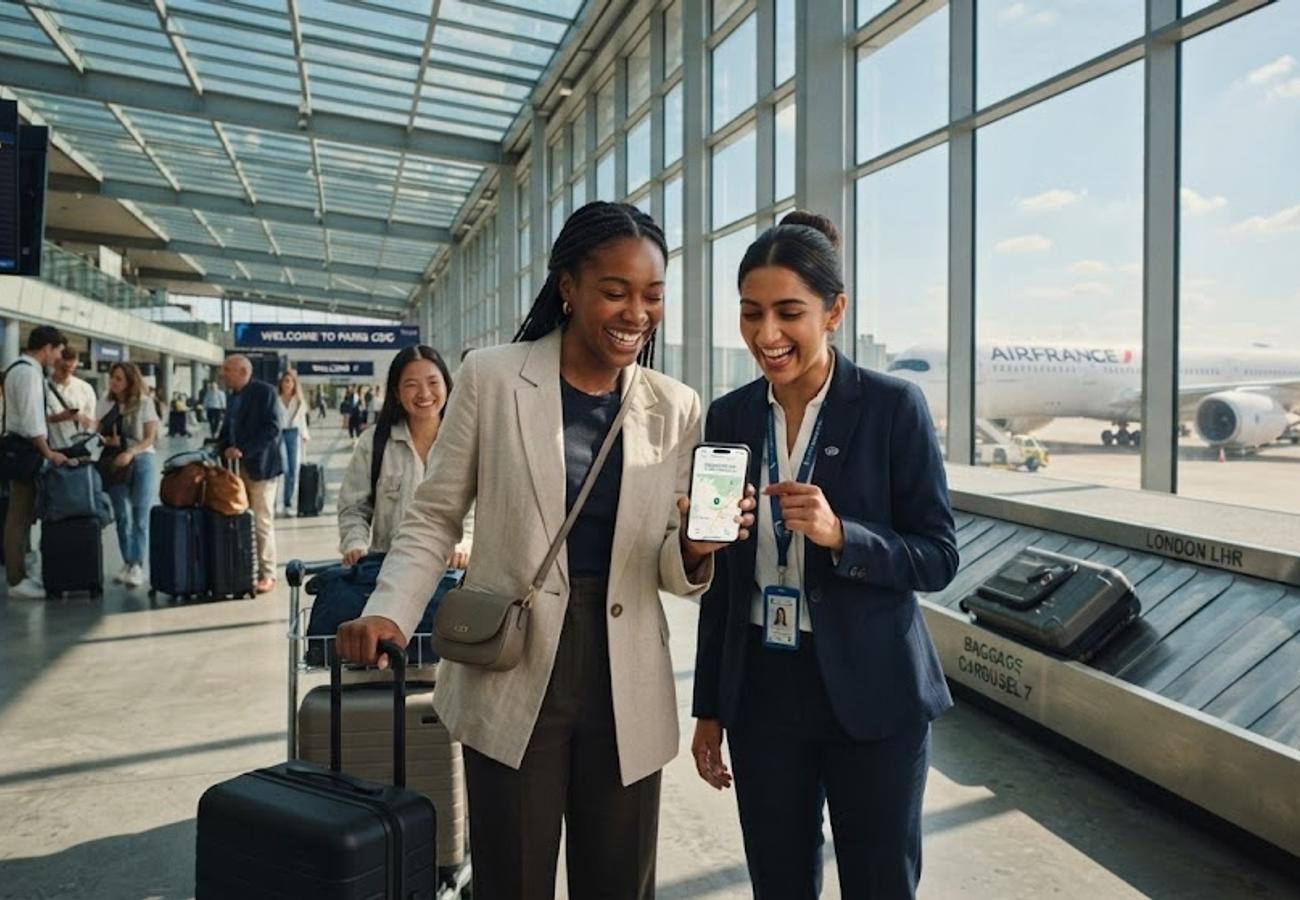
Image generated by AI
The Lost Luggage Crisis That Technology Finally Solved
Imagine arriving at your destination and discovering your suitcase didn't. For decades, this nightmare scenario has plagued millions of international travellers annually, costing airlines billions in compensation while destroying customer trust.
Now, after years of incremental improvements, the aviation industry has achieved something remarkable: a 90% reduction in unclaimed baggage through a deceptively simple integration between consumer technology and enterprise baggage systems.
Apple AirTag integration with SITA's WorldTracer platform is fundamentally rewiring how airlines track luggage. The results speak louder than any press release: mishandled bags are plummeting, recovery times are shrinking from days to hours, and passengers are gaining real-time visibility into one of travel's greatest pain points.
Why This Moment Matters: The Perfect Storm of Technology and Need
The timing isn't coincidental. Post-pandemic global passenger traffic has rebounded to record levels, overwhelming legacy baggage systems that were designed for slower, simpler travel patterns. During peak seasons, major hubs process hundreds of thousands of bags daily—and the old barcode-and-manual-scan approach simply can't keep pace.
Reddit: "Finally, an airline tech that actually solves a real problem instead of just charging us more fees." — r/travel
Traditional baggage tracking relied on barcode scans at fixed points—check-in, sorting hubs, transfer points, final destination. Between those checkpoints? Blind spots. When connections were missed or delays occurred, luggage could vanish into logistical limbo for days.
The infrastructure was creaking. Airlines needed a solution that didn't require ripping out billion-dollar baggage handling systems at every airport globally. Enter Apple AirTag: a lightweight, battery-efficient tracking device that passengers could attach to luggage, creating a continuous data stream independent of airport infrastructure.
How the System Actually Works: Two Worlds Colliding
The breakthrough isn't revolutionary in concept—it's brilliant in execution.
Passengers attach Apple AirTag devices to their suitcases. These leverage Apple's massive network of devices to report location data whenever they connect to nearby iPhones, iPads, or Macs. This creates constant GPS-level location awareness, even in airport areas without dedicated tracking infrastructure.
Simultaneously, airlines maintain their traditional SITA WorldTracer system—a global baggage management platform that handles routing decisions, transfer logistics, and operational workflows. WorldTracer knows where baggage should go; AirTag knows where it actually is.
When these systems synchronize, magic happens.
If a bag is misrouted to the wrong carousel, the airline immediately sees the discrepancy between expected location (WorldTracer) and actual location (AirTag). They can physically retrieve it within minutes instead of hoping ground staff notice the error hours later.
During multi-leg journeys across different airlines, AirTag data becomes the universal truth layer. No more "lost in translation" between carriers' incompatible systems.
The Numbers: Why 90% Reduction Changes Everything
Early adoption across 29 airlines has already generated staggering metrics. A 90% reduction in unclaimed baggage isn't just an improvement—it's a complete category shift.
Historically, major airlines lost between 20-50 million bags annually. At an average compensation cost of $100-300 per bag, plus handling costs, the global baggage mishandling burden exceeded $2 billion yearly. A 90% reduction represents genuine operational transformation.
For context: this outpaces improvements made in the previous 20 years of baggage system upgrades.
Who Actually Benefits: The Ripple Effect Across Aviation
For travellers: The most obvious winner. Peace of mind replaces anxiety. Real-time smartphone visibility transforms the baggage experience from "hope and pray" to "know exactly where your stuff is."
Recovery times that once stretched 3-7 days now compress to hours. A misrouted bag in Barcelona? Passengers see it, airlines retrieve it immediately using AirTag coordinates, and it reaches them by next flight. The entire recovery workflow accelerates.
For airlines: Compensation costs plummet. Customer satisfaction scores rise noticeably. Airlines testing the system report fewer rebooking requests, reduced customer service volume, and measurably improved Net Promoter Scores (NPS).
Operational efficiency improves dramatically. Ground crews can stop performing exhaustive manual searches; they simply follow AirTag coordinates. Staff hours previously spent investigating lost baggage redirect toward other customer service functions.
For airports: Baggage congestion decreases. Transfer flows improve. Terminal space previously devoted to lost baggage offices can be repurposed. Major hubs like London Heathrow, Dubai International, and Amsterdam Schiphol—which process 200,000+ bags daily—are reporting measurable reduction in baggage-related delays.
Competitive Pressure: The Race to Modernize
Airlines now face genuine competitive incentive to implement smart baggage systems. Carriers that lag risk customer defection, particularly among frequent international flyers who've experienced the frustration personally.
Low-cost carriers can't use "we're budget" as excuse anymore—AirTag integration is remarkably cheap to implement compared to baggage system overhauls.
Full-service and premium carriers view it as competitive necessity. Lufthansa, United, and other major carriers have announced rollout plans. Technology providers like SITA Intelligence are positioning themselves as essential infrastructure partners in this ecosystem shift.
What Happens Next: Beyond Tracking Into Prediction
Current AirTag integration is phase one. The aviation industry is already eyeing phase two innovations.
Predictive baggage routing using machine learning algorithms will anticipate mishandling scenarios before they occur. If weather causes connection delays, systems will automatically reroute baggage proactively rather than reactively.
Integration with airport robotics and automated baggage systems will eliminate human handling as a failure point entirely. Picture fully autonomous baggage transfer, guided by continuous AirTag data and AI optimization.
Some airlines are experimenting with direct integration between AirTag data and their mobile apps—passengers won't need separate tracking apps; baggage status appears naturally within loyalty program apps.
Full ecosystem connectivity is the endgame. Imagine a future where your airline, airport, ground handler, connecting carrier, and destination hotel all access synchronized baggage data. Your hotel knows your arrival time with certainty, your ground transport is timed precisely, and baggage recovery becomes impossible because mishandling becomes mathematically unlikely.
This shift toward IoT-driven airport operations represents a broader industry trend toward fully connected travel ecosystems.
The Legal and Privacy Angle: What Travellers Should Know
One question inevitably arises: what about privacy and data security?
Apple's architecture provides meaningful safeguards. AirTag location data is encrypted end-to-end. Airlines don't access raw location feeds; they receive reports only when discrepancies between expected and actual baggage location occur.
Passengers retain control—they can disable tracking, remove devices, or limit which airlines access data. The system is opt-in, not mandatory, though adoption rates suggest most travellers view tracking benefits as outweighing privacy concerns.
Regulatory bodies are watching closely. IATA and ICAO are developing standards to ensure AirTag integration doesn't create liability gaps or privacy violations across jurisdictions.
The Reality Check: Adoption Obstacles Still Exist
Not every airline can implement this immediately. Legacy baggage systems at some carriers lack API integration capacity. Smaller regional airports may lack the infrastructure to benefit fully.
Coordination across multi-airline journeys remains challenging—what works for connecting flights on the same carrier is harder when bags transfer between competitors using different systems.
But the momentum is undeniable. Every month, additional carriers announce integration. Within 12-18 months, expect the 90% improvement figure to become industry standard rather than early-adopter achievement.
The Passenger Checklist: What You Should Do Now
If you fly regularly internationally, buying AirTags for luggage is prudent investment ($29-99 per device). Attach them to checked baggage, carry-on items, and checked backup bags.
Ensure your Apple ID is current and Find My is enabled on your device. Test tracking before international flights—familiarize yourself with the interface.
Some airlines now offer AirTag integration information during check-in; take advantage of it. Provide your phone number so airlines can contact you if tracking shows baggage mishandling in real-time.
Check whether your primary airline has implemented WorldTracer integration; if not, inquire about timeline. Your feedback matters—airlines prioritize features based on customer demand signals.
Where This Leads: The Unsexy Revolution
The brilliant aspect of this innovation is its unsexy subtlety. It's not flashy. Nobody will post Instagram photos of "my baggage arrived on time." But that's precisely what makes it transformative.
Aviation tends to advance through unglamorous operational improvements rather than passenger-facing spectacles. Yet these improvements accumulate into measurably better travel experiences. When 90% fewer bags go missing, when recovery times shrink to hours, when you actually know where your luggage is—the cumulative effect is profound.
This is how global transportation systems evolve: not through revolutionary overnight shifts, but through quiet technological integration that eventually makes the old way seem primitive.
The era of mysteriously vanished luggage is ending. Smart baggage tracking isn't future-focused anymore—it's reshaping how aviation operates, right now.
The next time your flight connects through a major hub, your suitcase might finally make it there with you.
Related Travel Guides
Disclaimer
This article is for informational and educational purposes only. It does not constitute legal, financial, or professional advice. While we strive to provide accurate and up-to-date information, travel policies, regulations, and conditions change rapidly. Always verify information with official sources before making travel decisions. Nomad Lawyer makes no representations about the accuracy, reliability, completeness, or suitability of the information provided. Readers should consult qualified professionals for advice specific to their circumstances. The views expressed in this article are those of the author and do not necessarily reflect the views of Nomad Lawyer.
Preeti Gunjan
Contributor & Community Manager
A passionate traveller and community builder. Preeti helps grow the Nomad Lawyer community, fostering engagement and bringing the reader experience to life.
Learn more about our team →