
SITA WorldTracer Apple AirTag Integration Reduces Lost Luggage by Ninety Percent
Airlines partnering with SITA integrate Apple AirTags into WorldTracer baggage management, dropping unclaimed bags by up to 90%.

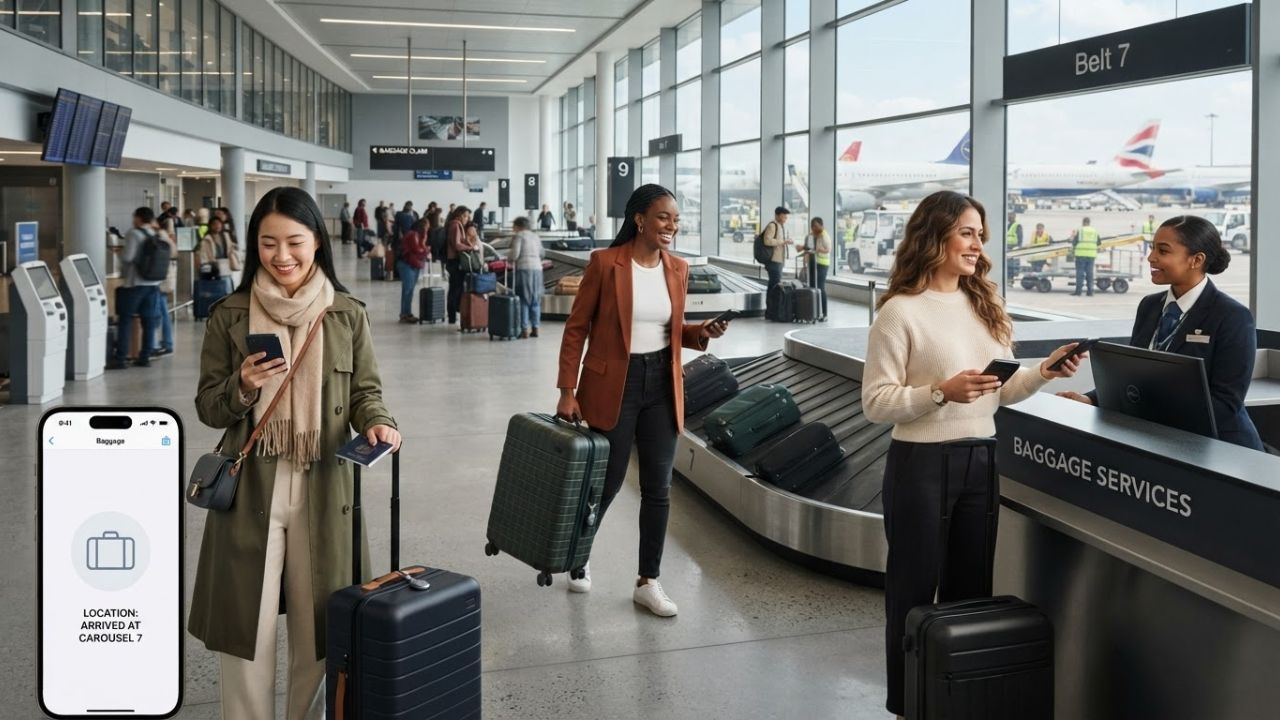
Image generated by AI
[Geneva, Switzerland – July 2, 2026]
The widespread adoption of Apple AirTag baggage tracking is transforming global aviation logistics on July 2, 2026. By pairing passenger-owned tracking devices with SITA's WorldTracer platform, airlines have reduced unclaimed bags by 90% at hubs like London Heathrow.
Our analysis indicates this hybrid tracking model resolves transit delays.
High Passenger Volumes and Traditional Luggage Systems
Aviation transport authorities are upgrading airport luggage processing systems to manage record traveler volumes.
Historically, airports relied on barcode label scans to track suitcases across connecting routes.
However, manual barcode scans frequently resulted in processing gaps during tight flight transfers.
When luggage missed a flight connection, locating it required manually searching storage rooms.
This process delayed luggage recovery, leaving passengers without their bags for several days.
To address these inefficiencies, IT providers are introducing digital tracking solutions.
By upgrading baggage sorting systems, airports hope to reduce terminal congestion and customer claims.
The strategy focuses on linking airline passenger apps with international tracking databases.
SITA WorldTracer and Apple Find My Network Integration
The integration connects SITA's WorldTracer platform with the Apple Find My tracking network.
Passengers place an AirTag device inside their luggage before checking in at the counter.
The AirTag continuously transmits location signals via nearby Bluetooth devices to Apple's cloud network.
Simultaneously, airlines use WorldTracer to manage baggage routing and routing adjustments.
Through this integration, baggage agents can cross-check passenger-reported locations with internal flight manifests.
- Enhanced Location Precision: Ground crews can pinpoint the exact terminal room where a misrouted bag is stored.
- Accelerated Sorting Speeds: Automated systems identify and retrieve delayed bags before the next flight departure.
- Simplified Claim Processing: Travelers submit location screenshots directly to the airline's mobile app.
This hybrid tracking method reduces recovery times from several days to just a few hours.
Economic and Operational Benefits for Airlines and Hubs
Airlines using this system report lower logistics costs and fewer passenger compensation claims.
Unclaimed baggage cases require manual handling, transport coordination, and delivery service fees.
By reducing lost bags, carriers save millions in operational costs during peak holiday seasons.
Major connection hubs, including London Heathrow (LHR) and Amsterdam Schiphol (AMS), report smoother passenger flows.
Reduced luggage backlogs help prevent ramp congestion and delayed flight rotations.
Additionally, airlines report higher customer satisfaction scores due to increased transparency.
Leasing firms and ground handlers also benefit from automated sorting processes that require less staff.
The technology establishes a new operational standard for global air travel logistics.
Future Developments in Automated Baggage Routing
Aviation tech firms are planning the next phase of connected baggage systems.
Future upgrades will integrate artificial intelligence to predict potential baggage routing conflicts.
AI algorithms will automatically route luggage to alternative flights if a traveler's connection is missed.
Furthermore, airports are testing automated robotics systems to transport bags between terminals.
These robotic loaders will coordinate with GPS trackers to verify bag locations before loading.
Over the long term, these systems aim to automate the entire recovery process without passenger intervention.
Technological trials are underway at select international gateways to validate these automated systems before global rollout.
Key Takeaways
- Baggage Reduction: Integrating Apple AirTag with SITA WorldTracer reduced unclaimed luggage by 90%.
- Rapid Recovery: Average baggage recovery times fell from days to a few hours.
- Hybrid Tracking: The system combines passenger Bluetooth data with airline routing databases.
- Hub Benefits: Major airports like London Heathrow and Schiphol recorded less terminal baggage congestion.
- Future Technology: Upcoming phases will integrate AI for predictive routing and terminal robotics.
SITA WorldTracer Apple AirTag Integration Performance Metrics
| Performance Parameter | Traditional Barcode System | Integrated AirTag & WorldTracer | Operational Impact for Passengers |
|---|---|---|---|
| Average Recovery Time | 2 to 5 days | 2 to 6 hours | Rapid return of misrouted luggage |
| Unclaimed Baggage Rate | Baseline rate (100% index) | 90% reduction | Fewer permanently lost bags |
| Tracking Resolution | Limited to barcode checkpoint scans | Continuous GPS-based location | Real-time map tracking on smartphone |
| Logistics Coordination | Manual baggage search | Automated location database matching | Reduced waiting times at terminal desks |
Connected Airport Baggage Technology Roadmap (2026 - 2030)
| Innovation Stage | Core Technology | Primary Developer | Implementation Status |
|---|---|---|---|
| Stage 1 (Current) | Apple AirTag & SITA WorldTracer | SITA & Consumer Tech Firms | Deployed across 29 global airlines |
| Stage 2 (Short-Term) | AI Predictive Baggage Routing | Airline IT Divisions | Active terminal software trials |
| Stage 3 (Medium-Term) | Automated Airport Robotics | Ground Handling Operators | Prototype testing at major hubs |
| Stage 4 (Long-Term) | Fully Automated Reconciliation | International Aviation Boards | System architecture definition phase |
Why This Matters
Market trends suggest that pairing consumer tracking devices with airline logistics improves operational efficiency.
Our analysis indicates that because SITA WorldTracer integrates Apple AirTag data, lost baggage recovery times decrease. Consequently, airlines reduce manual sorting costs and passenger compensation payouts.
This technological integration reduces terminal congestion at major connecting hubs. Travelers benefit from real-time smartphone tracking and faster baggage collection.
Industry Outlook
Expect dozens of additional international airlines to adopt the integrated tracking platform.
Airport operators will install dedicated Bluetooth receiver networks throughout baggage sorting facilities.
Aviation regulators will update cargo security rules to accommodate passenger tracking devices.
FAQ
How does the AirTag integration help find lost luggage?
The system cross-checks the passenger's AirTag GPS location with the airline's WorldTracer database to locate bags instantly.
Which airports benefit from this new tracking system?
Major connection hubs like London Heathrow, Amsterdam Schiphol, and Dubai report reduced baggage congestion.
How much has lost luggage decreased since adoption?
Early adopting airlines report up to a ninety percent reduction in unclaimed baggage cases.
Can all passengers use their own AirTags for tracking?
Yes, passengers can place AirTags in their bags and link the location with participating airlines.
Related Travel Guides
- Delta Airlines LAX Delta One Lounge Travel Chaos 2026
- Oman Air Muscat Singapore Flights Travel Chaos 2026
- Air India Boeing 777 Melbourne Flights Travel Chaos 2026
Disclaimer: This article is strictly for informational and travel planning purposes. The specific tracking metrics (recovery hours, reduction percentages, airline counts, technology target years) are based on SITA and corporate disclosures available at the time of publication. Baggage handling rules, battery safety guidelines, Bluetooth regulations, and airline partnerships are subject to immediate revision. Travelers should consult their carrier for details.
Disclaimer
This article is for informational and educational purposes only. It does not constitute legal, financial, or professional advice. While we strive to provide accurate and up-to-date information, travel policies, regulations, and conditions change rapidly. Always verify information with official sources before making travel decisions. Nomad Lawyer makes no representations about the accuracy, reliability, completeness, or suitability of the information provided. Readers should consult qualified professionals for advice specific to their circumstances. The views expressed in this article are those of the author and do not necessarily reflect the views of Nomad Lawyer.
Raushan Kumar
Founder & Lead Developer
Full-stack developer with 11+ years of experience and a passionate traveller. Raushan built Nomad Lawyer from the ground up with a vision to create the best travel and law experience on the web.
Learn more about our team →