Andean Slow Transit for Solo Female Travelers: Luxury Rail, Bus-Cama Networks, and Safety Across Peru and Chile

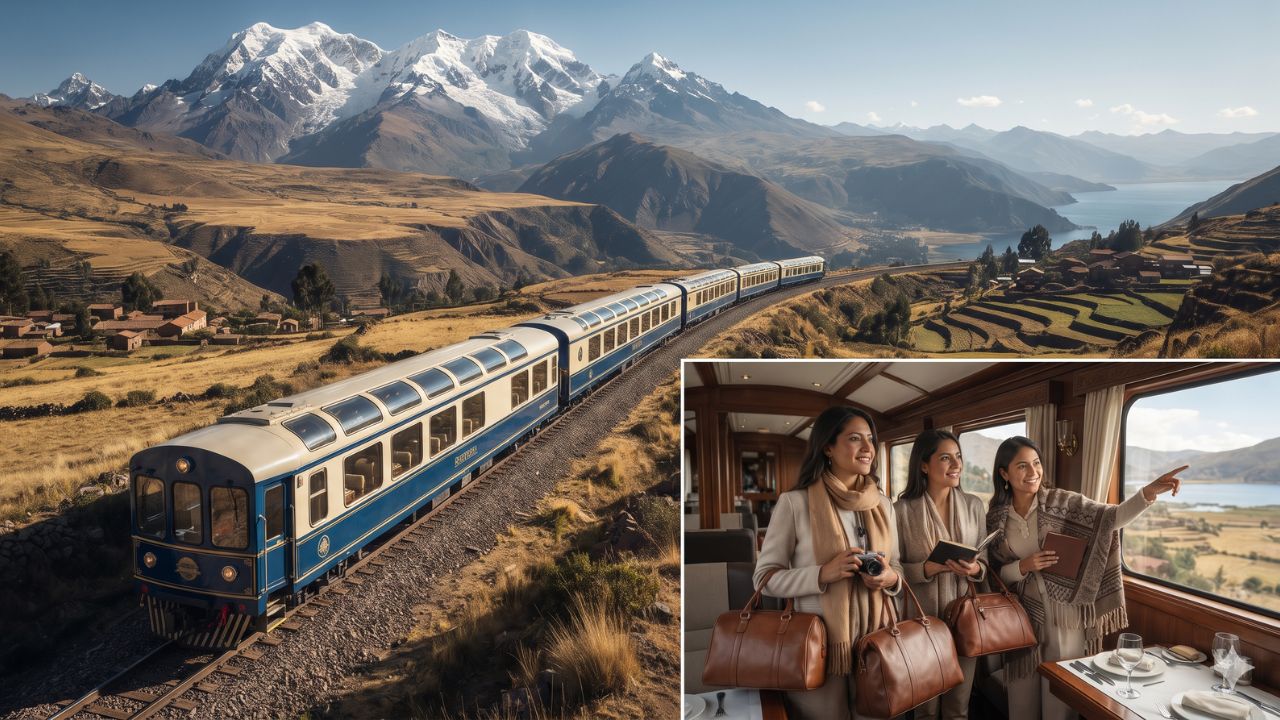
While regional flights across South America frequently suffer rolling airport cancellations, a high-altitude luxury sleeper train carrying just 48 to 70 guests glides smoothly across the altiplano at 4,300 meters above sea level—equipped with personal oxygen systems and dedicated onboard doctors in every carriage.
A profound behavioral shift is reshaping travel across the high spine of the Andes. Independent solo female explorers are increasingly abandoning congested airport terminals in favor of a highly regulated terrestrial phenomenon known across Latin America as the "Me-Moon." Instead of rushing through three countries in ten days via chaotic puddle-jumpers, travelers are booking multi-day, slow-motion overland routes that combine rigorous sovereign security, biometric border control, and panoramic geography across southern Peru and northern Chile. Supported by state transport ministries in Lima and Santiago, this overland renaissance proves that slow, land-based exploration can be both deeply authentic and exceptionally safe.
The Overland Transformation: Altiplano Rail and Lie-Flat Bus Networks
The backbone of this terrestrial revolution is a blend of heritage railway engineering and strictly monitored interprovincial highway coaches.
Under concession agreements managed by Ferrocarril Transandino S.A. (FTSA), rail operator PeruRail launched South America’s first luxury sleeper service in May 2017. Tracing an ancient Inca trade corridor connecting Cusco, Lake Titicaca at Puno, and the white volcanic stone city of Arequipa, the train ascends to a dizzying 4,300 meters (14,107 feet) above sea level.
To ensure safety and personalized security, the luxury sleeper train enforces low-density caps, accommodating only 48 to 70 passengers per departure across 16 to 35 individual carriages. Because acute mountain sickness (soroche) presents a real physiological risk when sleeping at extreme altitude, sovereign transport regulations mandate that every train carries advanced clinical gear, dedicated oxygen tanks piped directly to cabins, and a certified medical practitioner stationed onboard for the entire duration of the journey.
Complementing the luxury rail network is the interprovincial bus-cama system. Far removed from the unmonitored rural minibuses of past decades, flagship carriers like Cruz del Sur operate multi-axle coaches engineered with private, leather-upholstered seats that recline 180 degrees into fully flat sleeping berths. Regulators enforce mandatory satellite GPS speed tracking, cabin surveillance, and strict driver rotation shifts every four hours on Andean mountain passes, giving solo female passengers peace of mind during overnight journeys.
| Transit Provider / Mode | Operating Route & Network | Passenger Capacity & Cabin Layout | Key Safety & Medical Features |
|---|---|---|---|
| FTSA / PeruRail Luxury Sleeper | Cusco → Puno (Lake Titicaca) → Arequipa | 48–70 passengers; 16–35 carriages | Onboard doctor, oxygen-piped suites, private cabins |
| Regulated Bus-Cama (Cruz del Sur) | Lima → Arequipa → Tacna → Arica (Chile) | 180-degree lie-flat sleeper beds | Real-time GPS tracking, mandatory driver shifts |
| Tourist Police (POLTUR) | Dial 105; historic zones & hubs | Dedicated national security force | 24/7 bilingual patrols in Cusco, Arequipa, Miraflores |
| Tacna–Arica Border Crossing | Peru-Chile Contiguous Frontier | Biometric electronic immigration | Fully digitised exit/entry stamps, customs screening |
Economic Metrics and State Safety Directives
The turn toward slow overland travel directly reflects shifting international traveler satisfaction. Data monitored by Peru’s Ministry of Foreign Trade and Tourism (MINCETUR) documents that international tourist arrivals grew from 3.2 million foreign visitors in 2024 to a projected 3.8 million between January and November 2025. Official state tourism surveys catalog a 94 percent satisfaction rate among international travelers utilizing monitored transit corridors.
Across the southern frontier, SERNATUR Chile directs this movement under its formal "National Plan for Sustainable Cultural Tourism." Championed by the national Undersecretary of Tourism, the Chilean directive deliberately discourages superficial whistle-stop tours in favor of deep, multi-day desert and mountain exploration spanning the Atacama Desert and the altiplano. By promoting slow transit over air shuttles, Chile directly distributes tourism spending into indigenous Atacameño communities and rural eco-lodges while reducing aviation carbon emissions.
Sovereign security indices substantiate this regional stability. According to the 2024 Global Peace Index (GPI), Peru ranks 99th out of 163 surveyed sovereign nations—placing it substantially higher in safety rankings than regional travel competitors like Mexico (ranked 137th) and Colombia (ranked 140th). Chile consistently ranks as the most peaceful and stable nation on the South American continent.
Sanctioned Safe Corridors vs. Remote Border Zones
A crucial factor behind the success of the Me-Moon trend is the visibility of Peru’s dedicated Tourist Police (Policía de Turismo), accessible nationwide via the direct 105 emergency hotline. Uniformed officers maintain a constant protective presence across the historic core of Cusco, Arequipa’s Plaza de Armas, and Lima’s coastal Miraflores district.
State travel advisories clearly delineate the established "Gringo Trail" corridor—linking Lima, Paracas, Arequipa, Puno, and Cusco—as a heavily monitored, safe transit network with modern private clinics and English-speaking police units. Conversely, official travel authorities explicitly warn travelers away from non-tourist frontier territories, including remote sectors bordering Colombia and the interior jungle valleys of the Apurímac, Ene, and Mantaro rivers (known as the VRAEM), where tourist infrastructure and police presence are absent.
Visitor Insider Tips
- Acclimatization Strategy: Do not rush directly from sea-level Lima to high-altitude Cusco. Follow the slow transit principle: take a lie-flat bus-cama to Arequipa (2,325 meters), spend three days enjoying the white sillar courtyards and eating rocoto relleno (stuffed spicy pepper), and let your red blood cells multiply before boarding the train to Lake Titicaca (3,812 meters).
- Border Protocol at Tacna-Arica: Crossing from Peru into Chile via the Tacna-Arica land frontier is completely digitized. Book licensed international collective taxis (colectivos) from Tacna’s international bus terminal. Retain your printed Andean Migration Card (TAM) and never carry fresh fruit, honey, or unpackaged agricultural goods into Chile, as SAG agriculture inspectors enforce strict canine baggage searches.
- Local Altiplano Dining: In Puno and Lake Titicaca, skip Western-style tourist cafés and visit local picanterías for freshly caught lake trout (trucha frita) served with native purple potatoes (papas nativas) and steaming cups of muña (Andean mint) tea, which soothes altitude sickness far better than synthetic pharmaceuticals.
- Official Heritage Resources: Discover regional transit timetables and indigenous community homestays through the official PromPerú Travel Portal.
Cultural and Environmental Context
The slow overland transit movement represents a vital ecological counterweight to aviation-driven mass tourism. Flying between Andean cities burns thousands of gallons of aviation fuel while over-concentrating foot traffic into fragile archaeological zones during identical morning arrival banks.
Slow overland transit spreads traveler revenue across small valley towns, artisanal weaving cooperatives in Chinchero, and totora-reed boat builders on Lake Titicaca. In Chile's Atacama Desert, sustainable transit policies mandate that travelers remain on marked wooden walkways and refrain from touching ancient petroglyphs or collecting crystalline salt formations around Laguna Chaxa. By respecting indigenous Quechua and Aymara cultural customs, dressing modestly in traditional rural markets, and choosing certified collective transit, solo female travelers directly support indigenous cultural preservation.
FAQ: Andean Slow Transit 2026
What makes luxury sleeper trains in Peru safe for solo female travelers?
PeruRail's luxury sleeper trains limit capacity to 48–70 guests across 16–35 carriages, featuring secure private lockable suites, personal oxygen systems, and certified onboard medical doctors.
How do Peru and Chile rank on global safety indices?
On the 2024 Global Peace Index, Peru ranks 99th globally (outperforming Mexico at 137th and Colombia at 140th), while Chile consistently ranks among the most peaceful nations in South America.
How do I contact the Tourist Police in Peru?
In Peru, travelers can dial the nationwide emergency number 105 to reach the dedicated Tourist Police (POLTUR), who maintain continuous patrols in Cusco, Arequipa, and Lima.
What are the entry requirements at the Peru-Chile land border?
The Tacna-Arica land border utilizes biometric electronic immigration. Travelers must carry a valid passport, complete customs declarations, and avoid carrying any fresh food or agricultural products into Chile.
Related Travel Guides
- Eastern US Warms Up Ahead of Thanksgiving Travel Rush Guide
- British Airways Launches Glasgow to Nice Flights and Riviera Guide
- Delta and Hyatt Forge Strategic Travel Loyalty Alliance Guide
By stepping aboard slow-moving observation cars and traversing ancient mountain passes at ground level, travelers discover the true spirit of the Andes with security and grace.
This article is for informational purposes. Flight routes, passenger regulations, visa rules, and transit advisories are subject to change by airlines and aviation authorities. Readers are advised to verify schedules and travel documentation with relevant carriers and border agencies before departure.
Related Stories

Oregon and Portland Thanksgiving Road Trip Guide 2026: Falling Gas Prices, I-5 Traffic, and Routes

Eastern US Warms Up Ahead of Thanksgiving Travel Rush: Mild Forecasts, Florida Floods, and Route Guide