
Egypt Tourism Ministry and Mediterranean Authorities Develop 5,000 Year Old Ancient Civilisation Heritage Routes Connecting Nile and Aegean Hubs
New 5,000-year-old First Dynasty discoveries including Meretneith inspire multi-country heritage travel routes across Egypt, Sudan, Greece, and Turkey.

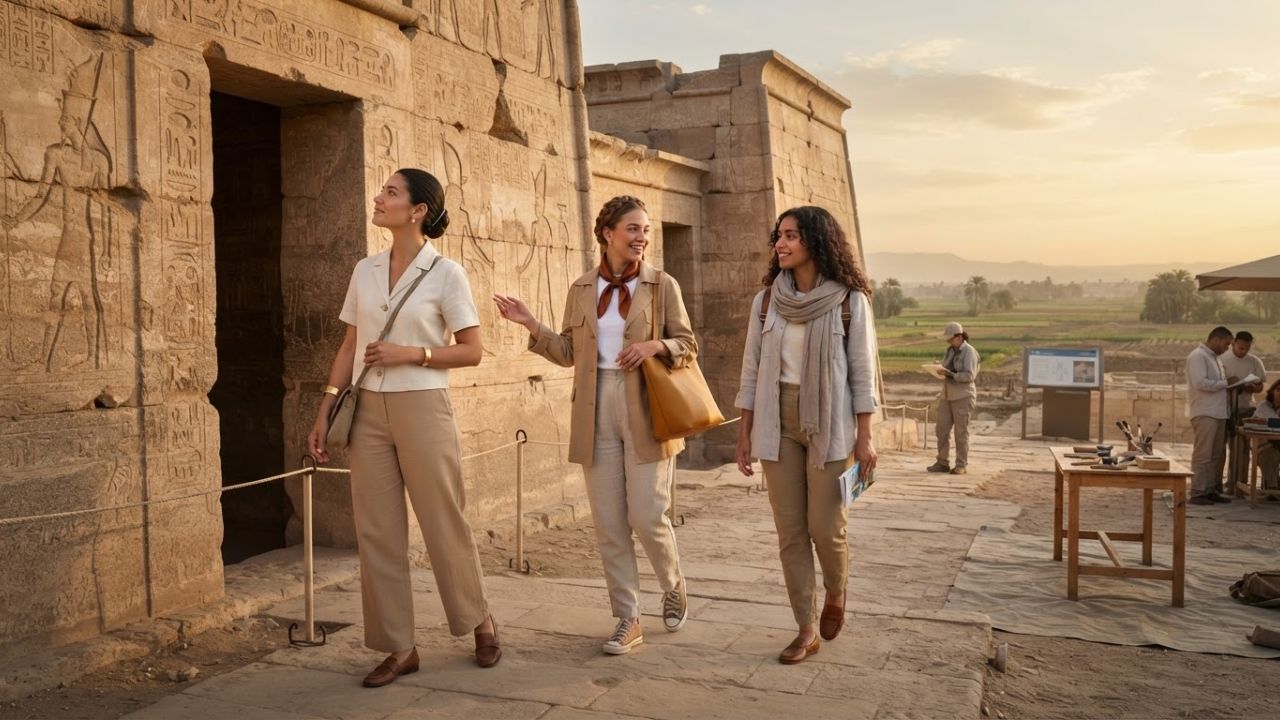
Image generated by AI
Archaeological research into 5,000-year-old artifacts associated with Queen Meretneith of Egypt’s First Dynasty is shaping new multi-country heritage travel routes across North Africa, the Middle East, and the Mediterranean. The discovery anchors regional tourism initiatives that link ancient archaeological sites, museums, and historical trade corridors.
Coordinated under international heritage frameworks overseen by the Ministry of Tourism and Antiquities, these expanded cultural trails connect the Nile Valley in Egypt to ancient Nubian locations in Sudan, Mesopotamian sites in Iraq, Aegean ruins in Greece, Anatolian complexes in Turkey, and Roman collections in Italy. Digital analysis and 3D imaging are transforming overlooked historical artifacts into connected travel experiences centered on early human civilisations.
Multi-Regional Archaeological Corridors and Historical Themes
The expansion of multi-country heritage travel moves beyond single-monument tourism, offering structured itineraries that highlight early governance, writing systems, and Mediterranean maritime trade. A primary focus examines the role of women in ancient history, highlighting early female rulers like Meretneith alongside royal figures across Mediterranean and Asian kingdoms.
Advanced digital archaeology tools—including 3D site reconstructions, digital archives, and interactive museum displays—allow cultural institutions to present complex historical research without exposing fragile 5,000-year-old physical artifacts to environmental degradation.
Transit Schedule & Heritage Corridor Specifications
The structured breakdown below details key ancient civilisation corridors, entry airports, primary archaeological complexes, and transit connectivity across the Mediterranean and Nile regions:
| Historical Corridor / Region | Primary Entry Gateway | Key Archaeological Sites | Historical Period / Era | Transit Options & Logistics |
|---|---|---|---|---|
| Nile Valley Corridor | Cairo International Airport (CAI) | Abydos, Saqqara, Luxor, Aswan | 5,000-Year-Old / 1st Dynasty | ENR Sleeper Rail / Nile River Cruising |
| Nubian Heritage Corridor | Khartoum / Port Sudan Airports | Meroë Pyramids, Jebel Barkal | Ancient Nubian Kingdoms | Regional Air / River & Overland Transit |
| Aegean Heritage Corridor | Athens International (ATH) | Mycenae, Knossos, Delos | Bronze Age / Aegean Culture | Inter-Island Ferries & Regional Flights |
| Anatolian Heritage Corridor | Istanbul Airport (IST) / Izmir | Göbeklitepe, Ephesus, Hattusa | Early Anatolian & Hittite | Turkish Airlines / High-Speed Rail |
| Roman Mediterranean Axis | Rome Fiumicino Airport (FCO) | Etruscan Necropolises, Capitoline | Etruscan & Roman Republic | Trenitalia Rail & Regional Shuttles |
Comprehensive Traveler Logistics & Heritage Transit Guide
Navigating multi-destination ancient history routes requires coordinating regional rail passes, digital site tickets, and cross-border flight connections.
Nile Valley Transit and Rail Logistics in Egypt
Travelers exploring First Dynasty sites from Cairo to Abydos and Luxor utilize Egyptian National Railways (ENR) express and sleeper trains departing from Cairo Ramses Station:
- Sleeper Train Operations: Nightly deluxe sleeper trains connect Cairo to Luxor International Airport (LXR) area and Aswan (ASW) in 10 to 12 hours.
- Museum Pass Ticketing: Visitors can purchase the Cairo Pass or Luxor Pass directly through Ministry of Tourism portals, granting multi-entry access to major archaeological sites including the Grand Egyptian Museum (GEM) and National Museum of Egyptian Civilization (NMEC).
Cross-Border Mediterranean Air Connections
Connecting Nile Valley routes to Aegean and Anatolian heritage sites is facilitated via non-stop flight corridors between Cairo (CAI), Athens (ATH), and Istanbul (IST). Regional carriers provide daily flights that allow travelers to link Egyptian First Dynasty history with Greek and Turkish Bronze Age sites within a single travel itinerary.
Digital Site Booking and Preservation Rules
Visitors exploring sensitive excavation zones like Abydos (burial site of Meretneith) or Saqqara must adhere to strict UNESCO heritage preservation rules. Tripod photography and touching 5,000-year-old masonry are prohibited. Digital QR code ticketing systems at site entrances streamline entry verification.
Slow Travel Trade Routes and Cultural Tourism Impact
Connecting historic trade routes encourages "slow travel" itineraries, where visitors follow ancient maritime and overland trade tracks. Touring ancient marketplaces, historic ports, and traditional craft centers distributes tourism expenditure into regional communities surrounding major archaeological sites.
By combining digital museum storytelling with multi-country transport corridors, heritage tourism opens new educational avenues for international travelers exploring the origins of human society.
Frequently Asked Questions
What is the historical significance of the Meretneith discovery in Egypt?
Meretneith was an early royal figure connected with Egypt's First Dynasty approximately 5,000 years ago. Recent archaeological discoveries and digital analysis highlight her role as an influential early female ruler.
Which countries are connected by the new ancient civilisation travel routes?
The heritage routes connect archaeological sites across Egypt (Nile Valley), Sudan (Nubia), Iraq (Mesopotamia), Greece (Aegean), Turkey (Anatolia), and Italy (Roman/Etruscan collections).
How do travelers travel between Cairo and major archaeological sites in Luxor and Aswan?
Travelers can take Egyptian National Railways (ENR) express or overnight sleeper trains from Cairo Ramses Station, domestic flights from Cairo Airport (CAI), or Nile river cruise sailings between Luxor and Aswan.
What digital tools are being used to enhance heritage tourism experiences?
Destinations utilize 3D site reconstructions, virtual museum displays, digital archives, and mobile QR code ticketing to educate visitors while protecting fragile ancient artifacts.
Related Travel Guides
Egypt Nile Valley Rail and Transit Guide Cairo to Luxor Aswan 2026
China Airlines Deploys 36.3 Tonnes of SAF on Long Haul Flight CI073 Connecting Taipei and Amsterdam
10 Best Ancient History Trails and Archaeological Tour Guides in the Mediterranean
Disclaimer
This article is for informational and educational purposes only. It does not constitute legal, financial, or professional advice. While we strive to provide accurate and up-to-date information, travel policies, regulations, and conditions change rapidly. Always verify information with official sources before making travel decisions. Nomad Lawyer makes no representations about the accuracy, reliability, completeness, or suitability of the information provided. Readers should consult qualified professionals for advice specific to their circumstances. The views expressed in this article are those of the author and do not necessarily reflect the views of Nomad Lawyer.
Kunal K Choudhary
Co-Founder & Contributor
A passionate traveller and tech enthusiast. Kunal contributes to the vision and growth of Nomad Lawyer, bringing fresh perspectives and driving the community forward.
Learn more about our team →