Amsterdam Mandates Shore Power for Cruise Ships Starting January 2027 to Cut Port Emissions

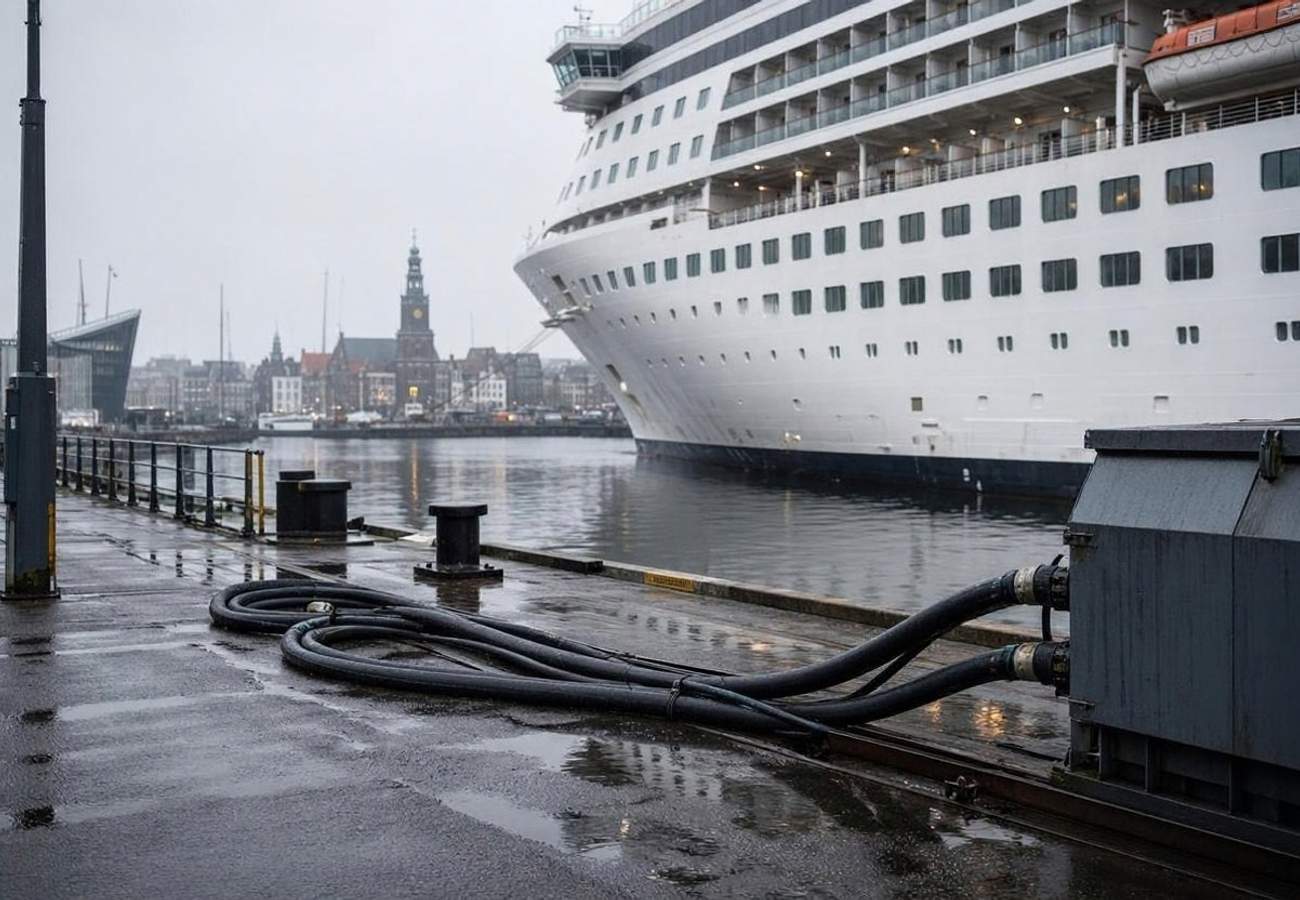
Image generated by AI
[Amsterdam, November 15, 2026] — Passenger Terminal Amsterdam has announced that land-based electricity connections will become mandatory for all visiting sea cruise ships effective January 1, 2027. Under the new mandate, any vessel lacking a certified shore power connection will be prohibited from berthing at the terminal.
The initiative is designed to eliminate the need for ships to run onboard diesel generators while docked, directly reducing noise pollution and carbon emissions within the city's port area. While river cruise ships are already required to comply, this new rule extends the obligation to larger sea-going vessels, marking a shift from the current "encouraged" status to a strict operational requirement.
The Trigger for Mandatory Connection
The transition follows a phased implementation strategy. The Passenger Terminal Amsterdam has provided shore power infrastructure since May 2025, allowing cruise lines a nearly two-year window to retrofit vessels or adjust itineraries. The year 2026 is officially designated as a testing period to ensure technical compatibility before the hard deadline in January 2027.
The terminal's current capacity allows for a maximum supply of 16 MW to a single sea cruise ship, alongside dedicated connections for eight river vessels. This infrastructure aligns with a broader regional trend toward "cold ironing"—the process of powering a ship from the shore—to meet urban air quality standards.
Regional Readiness and Infrastructure Comparison
Amsterdam's move is part of a fragmented European rollout where different ports apply varying levels of enforcement. While some cities rely on forecasts and voluntary uptake, others are moving toward mandatory requirements.
The following table outlines the current state of shore power implementation across key European cruise hubs:
| Port City | Implementation Status / Deadline | Capacity/Usage Data | Requirement Level |
|---|---|---|---|
| Amsterdam | Mandatory Jan 1, 2027 | Up to 16 MW per sea ship | Mandatory for all |
| Rotterdam | Operational since March 2025 | 230-metre flexible cable system | Infrastructure Ready |
| Copenhagen | 2026 Forecast | 183 connected calls (58.7% of total) | Voluntary/Capacity-based |
| Stockholm | Operational (Nov 2026) | 59 connected calls reported | Voluntary (Public Port) |
| Bergen | Mandatory from 2026 | 3 simultaneous connections | Mandatory |
| Oslo | Revierkaia Operational | 10 MVA available | Terminal Specific |
What This Means for Travelers
For the average passenger, this regulation does not change immigration, visa, or passport requirements. However, it introduces a new technical variable that could impact itinerary stability.
Passenger Impact Assessment:
- Vessel Eligibility: If your chosen cruise line operates older ships without shore power certification, those specific vessels may be unable to dock in Amsterdam after January 1, 2027. This could lead to last-minute itinerary changes or "tender" operations if the ship is forced to anchor offshore.
- Onboard Experience: Passengers will notice a significant reduction in vibration and noise typically caused by idling generators while the ship is in port.
- Booking Stability: There is no evidence of widespread cancellations or fare hikes, but travelers should verify that their specific ship is "shore power compatible" for 2027 sailings.
The European Regulatory Timeline
Amsterdam's deadline precedes a much larger legal framework established by the European Union. EU infrastructure legislation mandates that qualifying ports must be able to supply shore power to at least 90% of relevant calls by December 31, 2029.
The regulatory scope targets ships exceeding 5,000 gross tonnes that make more than 25 qualifying annual calls. Starting January 1, 2030, these covered vessels must either connect to the grid at equipped EU ports or utilize certified zero-emission technology. This requirement will expand to all other equipped EU ports by January 1, 2035.
Norway's national adoption of these rules is expected to begin no earlier than January 1, 2028, though local port authorities in cities like Bergen are already implementing stricter local mandates.
FAQ: Amsterdam Shore Power 2027
Will I need a different visa to visit Amsterdam because of these rules? No. The shore power mandate is a technical requirement for the ship's engines and electricity. It has no impact on passenger entry requirements, passports, or visa regulations.
Could my 2027 cruise be cancelled because of this? While unlikely, a ship that cannot connect to shore power will be denied berthing at Passenger Terminal Amsterdam. Check with your cruise line to ensure your vessel is certified for shore power.
Does this mean the cruise is now "carbon neutral"? No. This rule only affects emissions while the ship is docked (at berth). It does not eliminate the emissions produced by the ship while sailing between ports.
Will this increase the price of my cruise ticket? There is currently no verified data suggesting that shore power mandates are leading to passenger fare increases.
The era of the idling cruise ship in Amsterdam is ending.
Related Travel Guides
This article is for informational purposes. Flight routes, passenger regulations, visa rules, and transit advisories are subject to change by airlines and aviation authorities. Readers are advised to verify schedules and travel documentation with relevant carriers and border agencies before departure.
Related Stories
TUI Cruises Launches Fleetopia 2027: Three-Ship Convergence and Concert Event in Malaga Spain
Coral Expeditions Expands 2027-28 Asia-Pacific Remote Cruises: New Kimberley and Raja Ampat Routes