American Heritage Cruise Ship Capsizes in New Orleans After Tanker Collision in 2026

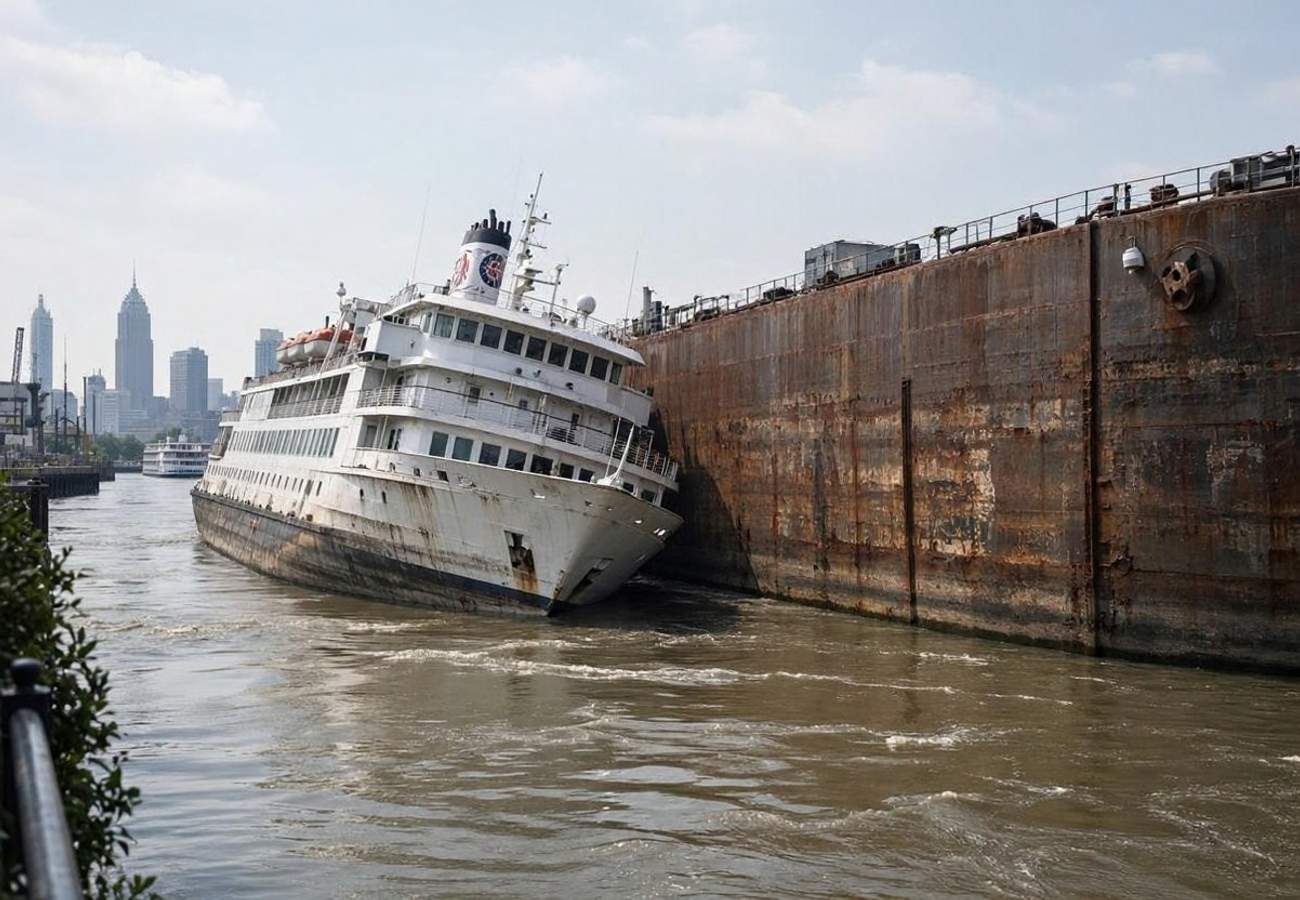
Image generated by AI
Thirty-two individuals were hospitalized following a violent maritime collision on November 13, 2026, when a commercial tanker struck a docked passenger vessel in New Orleans. The incident occurred at approximately 12:30 pm local time near the Crescent City Connection bridge, resulting in the capsizing of the American Heritage, a vessel operated by American Cruise Lines. While no fatalities were reported among the 180 passengers and crew, the event has triggered a high-level investigation into the safety of mixing heavy industrial shipping with leisure tourism on the Mississippi River.
Collision Dynamics and Emergency Response
The disaster unfolded as the American Heritage was beginning the disembarkation process, having arrived at the Port of New Orleans roughly two hours prior to the impact. The Atlantic Asphalt, a 160-meter tanker specializing in the transport of bitumen and asphalt, reportedly suffered steering failures that left the crew unable to maintain control, leading the vessel to strike the side of the cruise ship.
The impact caused immediate structural failure, allowing the river's current to flood the American Heritage and force it to capsize. The rescue operation required a massive coordinated effort between the United States Coast Guard, the New Orleans Fire and Police Departments, and the Port of New Orleans Harbor Police. Nearby tugboat crews played a vital role in pulling passengers from the water, many of whom had leaped overboard wearing life jackets as the ship tilted.
Casualty and Logistics Breakdown
The scale of the emergency is reflected in the passenger distribution and the subsequent medical requirements. While the majority of those on board were safely evacuated, a significant minority required urgent clinical intervention.
| Data Point | Figure/Detail |
|---|---|
| Total Persons on Board | 180 |
| Passenger Count | 129 |
| Crew Count | 51 |
| Total Hospitalizations | 32 |
| Fatalities | 0 |
| Tanker Length (Atlantic Asphalt) | 160 Meters |
| Incident Time | 12:30 PM, Nov 13, 2026 |
| Vessel Build Year (American Heritage) | 2015 |
| Emergency Hotel Rooms Secured | 85 |
Expert Analysis: The Industrial-Tourism Conflict
For travelers booking river cruises, the direct consequence of this accident is a spotlight on the inherent risks of "shared navigation environments." Unlike ocean cruises that operate in open waters or dedicated terminals, Mississippi River cruising places leisure vessels in the direct path of massive industrial tankers and barges.
The pricing pressure and operational risks created by this incident will likely lead to stricter berthing regulations. When a 160-meter industrial vessel loses steering in a high-traffic zone, the "safe harbor" of a dock becomes a liability. The fact that the American Heritage capsized while passengers were disembarking suggests a failure in the protective buffering between commercial lanes and passenger zones.
Furthermore, the loss of personal documentation and mobile devices reported by passengers highlights a critical logistical gap in maritime emergency planning. For the modern nomad, the loss of a passport or phone during a shipwreck creates a legal and administrative nightmare that exceeds the physical trauma of the accident. Travelers should note that the National Transportation Safety Board (NTSB) will likely examine whether the steering failure of the Atlantic Asphalt was a maintenance lapse or a systemic failure of river traffic management.
Key Takeaways
- Immediate Impact: 32 people were hospitalized and 180 total personnel were evacuated after the American Heritage capsized.
- Root Cause: Preliminary reports indicate the 160-meter Atlantic Asphalt tanker experienced steering difficulties prior to the collision.
- Logistical Fallout: 85 hotel rooms were secured for stranded passengers, many of whom lost essential identification and communication devices.
- Regional Disruption: Navigation was restricted between river mile markers 93 and 96, temporarily suspending New Orleans Regional Transit Authority ferry services.
- Vessel Status: The American Heritage, a five-deck vessel built in 2015, remains incapacitated pending structural assessment.
FAQ: New Orleans Maritime Accident 2026
Are river cruises in New Orleans still safe? While this specific collision was devastating, it was caused by a steering failure of a third-party tanker. However, the incident highlights the risks of shared waterways. Travelers should verify the safety protocols and emergency evacuation plans of their cruise operator.
What happens to passengers who lost documents in the capsizing? The American Red Cross and local authorities are providing support. Passengers should contact their respective embassies or the Department of State to begin the process of replacing lost passports and identification.
Was there an environmental spill during the collision? The Atlantic Asphalt carries bitumen and asphalt. Initial reports from the US Coast Guard indicated that no hazardous materials had entered the Mississippi River at the time of the initial rescue.
How did this affect local transport in New Orleans? Ferry services managed by the Regional Transit Authority were temporarily suspended due to navigation restrictions between mile markers 93 and 96 to allow emergency vessels clear access.
The intersection of heavy industry and luxury tourism on the Mississippi remains a volatile equation.
Related Travel Guides
This article is for informational purposes. Flight routes, passenger regulations, visa rules, and transit advisories are subject to change by airlines and aviation authorities. Readers are advised to verify schedules and travel documentation with relevant carriers and border agencies before departure.
Related Stories

Haiti Marine Weather Alert 2026: Navigating 6-Foot Waves and Storm Risks on Northern Coast

Asia Air Travel Hit by Over 500 Cancellations and 6,055 Delays: Bangkok, Delhi, and Beijing Guide