
Escaping the LAX Horseshoe: Ontario International Eyes Seven Million Passengers as International Flights Surge 28%
Ontario International Airport is on track to surpass seven million passengers in 2026, driven by an impressive 27.9% surge in overseas travel and rapid commercial freight growth across Southern California.

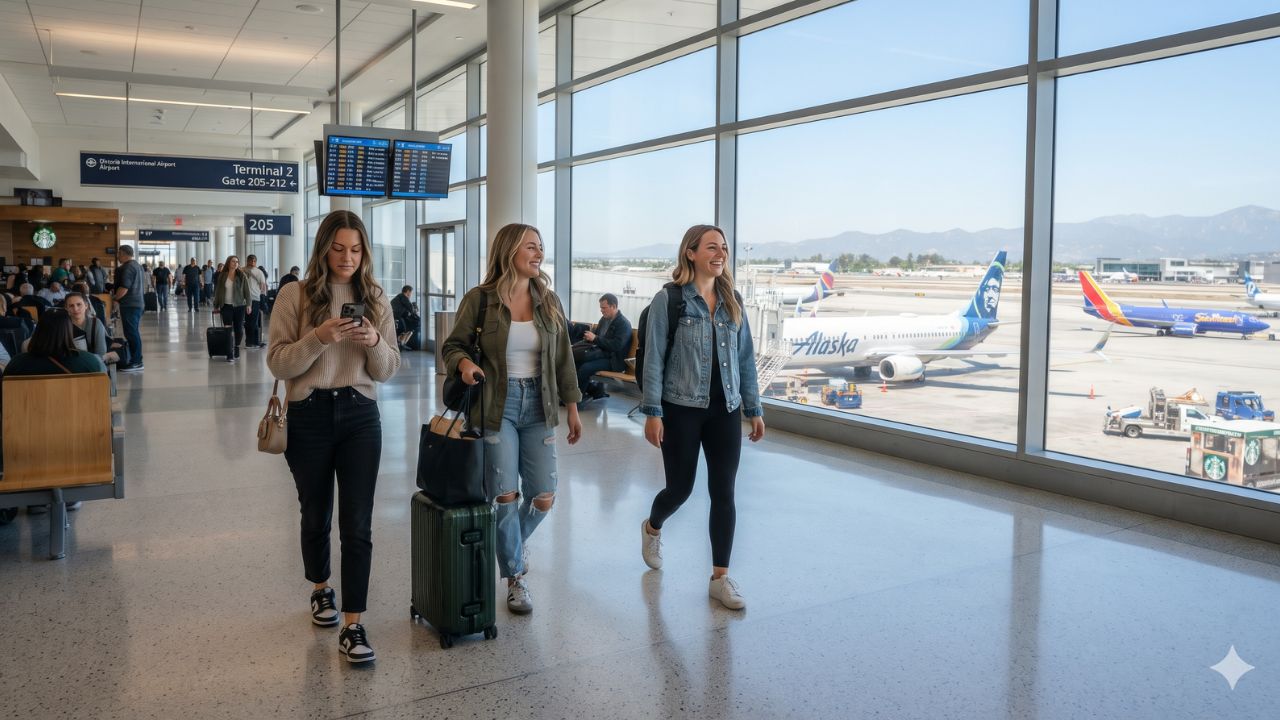
While millions of air travelers heading to Southern California routinely spend up to two grueling hours trapped in the infamous vehicular loop at LAX, savvy locals have quietly turned Ontario International Airport into California's fastest-accelerating overseas gateway, logging a 27.9% surge in international passengers in 2026. Positioned 35 miles east of downtown Los Angeles in the heart of the Inland Empire, Ontario International Airport (ONT) handled 5,274,568 passengers across the first nine months of the year. Operating at an unhurried, human scale where curbside-to-gate transit rarely exceeds fifteen minutes, the airport enters the fourth quarter firmly on track to welcome approximately seven million travelers by year's end—representing an extraordinary 65% expansion since the facility transitioned back to local municipal control in 2016.
Serving communities across San Bernardino County, Riverside County, and the broader eastern Los Angeles basin, Ontario International has outgrown its historical reputation as a secondary domestic divert field. Today, it operates as a full-fledged international aviation node and an undisputed global freight crossroads.
The Inland Empire Ascent: Tracing the Path to Seven Million Travelers
The airport's performance across 2026 reveals a resilient travel hub adapting smoothly to shifting airline capacity allocations and consumer habits:
The Seven-Million Benchmark Within Reach
Between January and September 2026, Ontario International accommodated 5,274,568 travelers, matching the 5,278,343 passengers logged during the identical nine-month window in 2025. To cross the historic seven-million threshold before midnight on December 31, the airfield must process approximately 1.73 million passengers during the final quarter—a target well within reach given historical holiday travel volumes through November and December.
This sustained volume reflects ten years of aggressive modernization following the airport's historic split from Los Angeles World Airports (LAWA) a decade ago. Since regaining local governance in 2016, regional leadership has unlocked more than 65% passenger volume growth by prioritizing airline cost efficiency, rapid turnarounds, and stress-free passenger amenities.
September Traffic Adjustments and Carrier Capacity
During September 2026, the airport recorded 582,315 passengers, compared with 599,086 during September 2025, marking a modest year-on-year dip of 2.8%.
This minor retraction was concentrated primarily on domestic corridors, which dropped 3.5% from 554,651 to 535,481 travelers. The decline directly coincided with scheduled airline capacity trims, as commercial carriers trimmed secondary domestic frequencies across the United States in response to elevated aviation jet fuel prices. Despite these tactical schedule prunings, ONT consistently cleared more than half a million passengers through its security checkpoints in September alone.
Overseas Traffic Breaks Regional Records
In stark contrast to domestic contractions, international travel emerged as Ontario's undeniable star performer. Between January and September 2026, the airport welcomed 502,786 overseas travelers, compared to 393,035 during the same timeframe in 2025—an outstanding leap of 27.9%.
September sustained this upward trajectory, with international volumes expanding 5.4% to reach 46,834 travelers. Bolstered by transpacific nonstop services connecting Southern California with Taipei and robust routes into Mexico and Central America, Ontario has successfully positioned itself as the preferred customs-clearing portal for travelers seeking to bypass the multi-hour immigration queues of coastal California mega-hubs.
Domestic Core and Airline Market Distribution
Despite the overseas boom, domestic travelers remain the economic lifeblood of the terminal complex, generating 4,771,782 passenger trips between January and September 2026 (a modest 2.3% decrease from 4,885,308 in 2025). Domestic journeys continue to account for approximately 90% of all passenger traffic at ONT.
The airport’s carrier distribution demonstrates an exceptionally healthy balance of low-cost and legacy network operators:
- Southwest Airlines: Retained its dominant position as Ontario's primary passenger airline, capturing a 36.5% share of total September traffic.
- American Airlines: Maintained second position with 12.4% of travelers.
- Frontier Airlines: Matched third position with 10.9%.
- United Airlines: Stood tied for third with an identical 10.9% share.
- Alaska Airlines: Rounded out the top five carriers with 9.8%.
Combined, these five commercial airlines generated 80.5% of total passenger throughput during September, demonstrating the enduring strength of established domestic route maps.
A Freight and Air Cargo Powerhouse
Operating alongside passenger concourses, Ontario's cargo operations cemented its status as one of North America's premier logistics hubs:
- Total Air Cargo Volume: Reached 649,034 tons from January through September 2026, a 7.3% expansion over the 605,095 tons handled during the prior year's first nine months.
- September Performance Surge: Monthly cargo vaulted 13.2% to 74,251 tons, up from 65,587 tons in September 2025. This double-digit growth easily surpassed the wider global air cargo industry benchmark of roughly 3% monthly expansion. While Ontario's year-to-date cargo growth of 7.3% trailed the global 9% benchmark slightly, its late-season acceleration remains extraordinarily potent.
- Commercial Freight Dominance: Pure commercial freight drove the cargo boom, advancing 16.9% in September to 64,485 tons (up from 55,143 tons in 2025). Year-to-date commercial freight reached 558,195 tons, reflecting an impressive 10.1% gain.
- Air Mail Contraction: In contrast to commercial cargo, air mail shipments retreated by 6.5% in September to 9,767 tons, dragging year-to-date mail down 7.4% to 90,838 tons as postal logistics shifted increasingly toward surface road transportation.
What Makes Ontario International Different: Escaping the Coastal Gridlock
To understand Ontario International Airport is to understand the geography of Southern California’s ongoing eastward shift. For decades, the coastal aviation hubs—Los Angeles International (LAX), Hollywood Burbank (BUR), and John Wayne Airport (SNA)—dominated regional travel. However, with millions of California residents relocating to the Inland Empire's sunny valleys and foothills, ONT has evolved from an alternative airport into a primary choice.
The airport’s genius lies in its architectural and geographic simplicity. Two linear terminals (Terminal 2 and Terminal 4) run parallel to parking aprons, meaning travelers park their vehicles literally a three-minute stroll from TSA screening checkpoints. There are no automated people-mover train failures, no forty-minute rides on parking shuttle buses, and zero multi-level roadway confusion.
Geographically, Ontario sits at the strategic junction of Interstate 10, Interstate 15, and State Route 60. For visitors heading toward Southern California's premier desert retreats and alpine summits, landing at ONT eliminates the notorious two-hour coastal freeway slog. Within forty-five minutes of collecting luggage, travelers can reach the mid-century modern architecture of Palm Springs, ascend the switchbacks toward the ski slopes of Big Bear Lake, or embark on desert road trips through the granite boulder mazes of Joshua Tree National Park.
Comprehensive Record: Ontario International Airport Traffic and Operational Metrics 2026
The following data table synthesizes certified traffic volumes, cargo metrics, and operational performance indicators across 2026:
| Operational Category | Jan–Sept 2026 Volume | Jan–Sept 2025 Volume | Recorded Metric Shift | Key Operational Drivers & Context |
|---|---|---|---|---|
| Total Passenger Traffic | 5,274,568 passengers | 5,278,343 passengers | -0.1% (Essentially flat) | Needs ~1.73M in Q4 to achieve 7.0M annual milestone |
| International Passengers | 502,786 passengers | 393,035 passengers | +27.9% expansion | Rapid growth in Asia-Pacific and Mexico transborder demand |
| Domestic Passengers | 4,771,782 passengers | 4,885,308 passengers | -2.3% contraction | Airline capacity realignments; comprises ~90% of total travelers |
| September Total Traffic | 582,315 passengers | 599,086 passengers | -2.8% decline | Airline schedule trims following summer peak |
| September Domestic Traffic | 535,481 passengers | 554,651 passengers | -3.5% decline | Seat reductions tied to higher aviation jet fuel prices |
| September Overseas Traffic | 46,834 passengers | 44,435 passengers | +5.4% expansion | Sustained consumer preference for streamlined border clearance |
| Total Air Cargo Volume | 649,034 tons | 605,095 tons | +7.3% expansion | Outperformed wider domestic air cargo sector averages |
| September Cargo Volume | 74,251 tons | 65,587 tons | +13.2% expansion | Substantially beat broader industry monthly benchmark of ~3% |
| Commercial Freight (9-Mo) | 558,195 tons | 506,989 tons | +10.1% expansion | Expanding warehouse distribution networks in Inland Empire |
| Commercial Freight (Sept) | 64,485 tons | 55,143 tons | +16.9% expansion | Strong pre-holiday inventory build across regional supply chains |
| Air Mail Shipments (9-Mo) | 90,838 tons | 98,106 tons | -7.4% decline | Continuing modal shift toward regional ground trucking |
| September Air Mail | 9,767 tons | 10,444 tons | -6.5% decline | Reduced reliance on commercial belly-cargo postal contracts |
| Southwest Airlines Share | 36.5% market share | Leading carrier | Ranked #1 carrier | Anchors extensive West Coast and Southwest domestic routes |
| Top 5 Combined Airlines | 80.5% market share | Combined concentration | Leading 5 operators | Southwest, American (12.4%), Frontier (10.9%), United (10.9%), Alaska (9.8%) |
Visitor Insider Tips
Experiencing the Inland Empire through Ontario International requires understanding local travel hacks that turn Southern California transit into an effortless adventure:
- Ditch the Rental Car Shuttles for Walkable Parking: If you are renting a car or parking locally, select spaces in Lot 2, Lot 3, or Lot 4 directly facing the terminals. Unlike the cavernous parking garages of coastal hubs, walking from your vehicle into the terminal lobby takes less than three minutes across ground-level crosswalks. When returning a rental vehicle at the consolidated facility on Haven Avenue, electric shuttle buses run every five minutes, dropping you at terminal doors without highway delay.
- Base Yourself in Historic Claremont Village: Instead of staying in standard roadside freeway hotels adjacent to the airport, drive five miles west along Foothill Boulevard into Claremont. Known as the "City of Trees and PhDs," this collegiate town surrounding the seven Claremont Colleges offers pedestrian-friendly streets lined with early 20th-century Craftsman homes, boutique hotels, independent coffee houses, and farm-to-table bakeries.
- Ride Metrolink to Downtown Los Angeles: Avoid Interstate 10 traffic entirely if your final destination is downtown LA. Board the direct Omnitrans Route 380 shuttle bus (ONT-Connect) outside the terminal, which whisks you directly to the Rancho Cucamonga Metrolink Station. From there, the Metrolink San Bernardino Line connects you directly into Los Angeles Union Station in under an hour, complete with free onboard Wi-Fi.
- Sample Historic Route 66 Dining: Take time to explore the culinary heritage of the historic Mother Road, which runs parallel to the airport along Foothill Boulevard. Stop in nearby Rancho Cucamonga or Upland for classic diner breakfasts, or visit the historic citrus packing houses in Redlands for artisan ice cream crafted with local blood oranges and Meyer lemons.
- Time Your Desert Highway Departures: If you are heading east toward the Coachella Valley, Palm Springs, or Joshua Tree, avoid leaving Ontario between 15:30 and 19:00 on Friday afternoons, when commuter traffic heading down the San Gorgonio Pass backs up Interstate 10. Relax in the terminal's open-concept restaurants or explore Ontario's historic Guasti winery district before hitting the open desert freeway.
Cultural and Environmental Context
The grounds beneath Ontario International Airport hold a deeply layered agricultural history. Long before concrete runways hosted wide-body Boeing and Airbus jets, this sun-drenched alluvial plain was home to the historic Italian Vineyard Company founded by Secondo Guasti in 1900. At its peak, the Guasti estate spanned more than 5,000 contiguous acres, celebrated as the world's largest single vineyard. Surviving stone cellars and historic worker cottages adjacent to the airfield remind visitors of the immigrant hands that transformed the semi-arid desert basin into a global wine and citrus powerhouse.
In modern times, the region faces acute ecological responsibilities. Nestled in a valley bowl beneath the towering peaks of Mount San Antonio (Mount Baldy) and the San Gabriel Mountains, the Inland Empire historically absorbed smog pushed eastward by Pacific ocean breezes. Today, Ontario International leads municipal sustainability initiatives, deploying all-electric ground support tugs, high-efficiency airfield LED lighting, and extensive solar panel canopies over long-term parking lots.
Travelers exploring the wider Golden State through Visit California are encouraged to practice responsible recreation across the delicate desert ecosystems of the Mojave and Colorado deserts. By choosing regional entry points like Ontario, visitors reduce regional highway vehicle miles traveled, directly lowering transport emissions while supporting historic communities nestled along the base of the mountains.
FAQ: Flying Through Ontario International Airport 2026
Why should travelers choose Ontario International (ONT) over LAX?
Ontario International offers shorter security lines, direct curbside parking, faster baggage delivery, and direct freeway access that bypasses central Los Angeles traffic congestion.
Which airlines operate international flights at Ontario Airport?
Carriers including China Airlines offer nonstop transpacific connections to Taipei, while Volaris and other international operators connect travelers directly to destinations across Mexico and Central America.
How far is Ontario Airport from Palm Springs and Joshua Tree?
Ontario Airport sits approximately 70 miles west of Palm Springs (about an hour's drive) and roughly 85 miles from the West Entrance of Joshua Tree National Park.
Is there public transit connecting Ontario Airport to Los Angeles?
Yes. The free Omnitrans Route 380 shuttle connects airport terminals directly to the Rancho Cucamonga Metrolink Station, providing passenger rail service straight into Los Angeles Union Station.
In a state celebrated for its boundless horizons, Ontario International proves that the smoothest Southern California journeys begin where the coastal gridlock ends.
Related Travel Guides
- Inside New Zealand's Aviation Overhaul: Auckland's NZ$3.9B Terminal Unification and Regional Upgrades Across Aotearoa
- Bordeaux Airport Electrifies Aircraft Stands: Slashing 4,100 Tons of CO2 and APU Emissions Under EU AFIR Standards
- Cascading Airspace Delays Grip US Hubs: Chicago, Austin, and San Francisco Hit by 3,287 Flight Disruptions
- SWISS Opens Summer 2027 Gateway to Toulouse: Direct Flights to France's Aerospace Capital and Pyrenean Trails
Disclaimer
This article is for informational and educational purposes only. It does not constitute legal, financial, or professional advice. While we strive to provide accurate and up-to-date information, travel policies, regulations, and conditions change rapidly. Always verify information with official sources before making travel decisions. Nomad Lawyer makes no representations about the accuracy, reliability, completeness, or suitability of the information provided. Readers should consult qualified professionals for advice specific to their circumstances. The views expressed in this article are those of the author and do not necessarily reflect the views of Nomad Lawyer.
Raushan Kumar
Founder & Lead Developer
Full-stack developer with 11+ years of experience and a passionate traveller. Raushan built Nomad Lawyer from the ground up with a vision to create the best travel and law experience on the web.
Learn more about our team →