
American Airlines Restores US Flight Operations After Critical Technology Outage Forces Nationwide Ground Stop in 2026
American Airlines has resumed US travel operations following a critical technology outage that triggered a nationwide flight halt and widespread passenger disruptions on Tuesday.

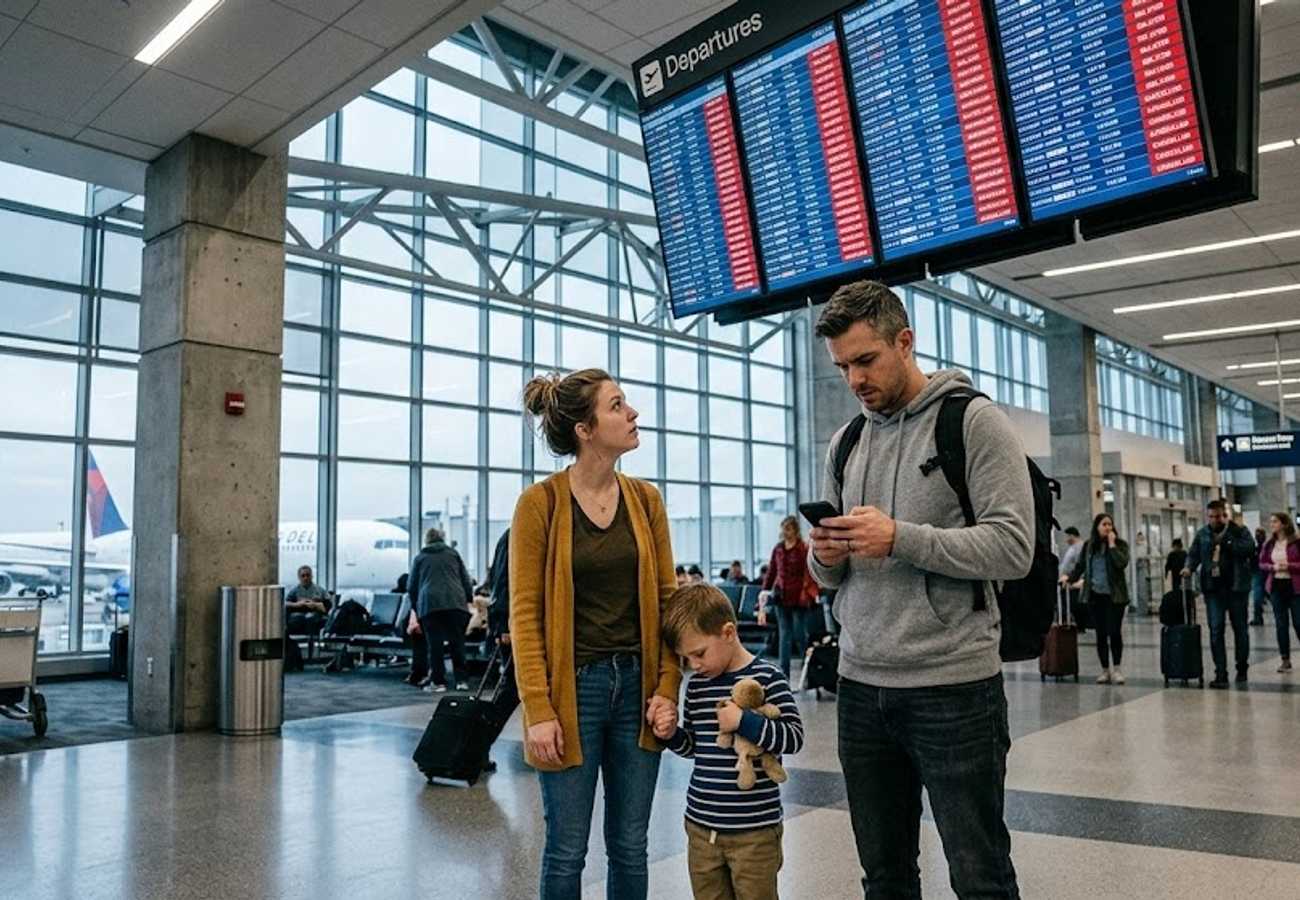
Image generated by AI
[City, July 29, 2026] — American Airlines has successfully reactivated its domestic flight network after a severe technology failure forced a nationwide ground stop, leaving thousands of passengers stranded and disrupting schedules across the United States. The outage, which struck on Tuesday evening, paralyzed departure operations until technical teams could isolate and repair the system connectivity issues.
The sudden collapse of internal digital systems necessitated an immediate pause in all flight departures. While the carrier has since confirmed that operations are returning to baseline levels, the ripple effects of the outage continue to impact crew rotations and aircraft positioning across various US hubs.
Sudden System Failure Triggers Nationwide Ground Stop
The operational crisis began Tuesday evening when American Airlines experienced a critical loss of connectivity across several internal technology platforms. This failure compromised the airline's ability to coordinate flight movements, leading to the implementation of a nationwide ground stop.
In aviation terminology, a ground stop is a restrictive measure used to prevent aircraft from departing to avoid further complicating an already compromised operational environment. For American Airlines, this meant that every departing aircraft across its US network was held at the gate while engineers worked to diagnose the root cause of the digital blackout.
Industry reports confirm that the disruption was not the result of external factors such as severe weather or airport congestion. Instead, the failure was entirely systemic, rooted in the digital infrastructure that manages the airline's internal communications and flight coordination.
Air Traffic Control Reports Widespread Infrastructure Impact
Data from the Air Traffic Control System Command Center indicates that the IT failure extended beyond the airline's corporate offices, impacting various aviation facilities and airports that integrate directly with American Airlines' operational data. This highlights the fragile interdependence between carrier-specific software and broader national air traffic management systems.
Modern aviation relies on a complex web of interconnected platforms to manage:
- Real-time flight planning and routing.
- Coordination of aircraft movements on the tarmac.
- Live passenger manifest updates.
- Critical communication channels between cockpit crews and ground operations.
When a primary carrier of American Airlines' scale suffers a system interruption, the impact is rarely isolated. The ground stop prevented a total collapse of the schedule but created immediate bottlenecks at major hubs, where departing flights were stalled and incoming aircraft faced potential diversions or holding patterns.
Rapid Technical Recovery and Operational Reset
Technical teams at American Airlines worked through the evening to restore the affected systems. The airline eventually announced that connectivity had been re-established and that the nationwide ground stop was lifted, allowing flights to resume.
Despite the restoration of the software, the recovery of the physical flight network is a more gradual process. Aviation experts note that after a widespread halt, airlines must manage "recovery lag," which involves:
- Crew Legalities: Resetting duty clocks for pilots and flight attendants who may have timed out during the delay.
- Aircraft Positioning: Moving planes from the airports where they were grounded to the airports where they are needed for the next scheduled leg.
- Passenger Re-accommodation: Managing the backlog of missed connections and cancelled flights.
The airline issued a formal apology to affected travellers, acknowledging the inconvenience caused by the temporary cessation of services.
Passenger Experience and the Chaos of Digital Blackouts
For the thousands of passengers at terminals on Tuesday, the outage manifested as a sudden lack of information. As digital boards froze and boarding processes halted, travellers faced significant uncertainty regarding their departures.
The incident underscores a critical vulnerability in the modern travel experience: the total reliance on real-time data. When these systems fail, the gap in communication between the airline and the passenger widens, often leading to congestion at customer service desks and increased stress within airport terminals.
While the ground stop was temporary, the "chain reaction" effect meant that a two-hour outage could result in six to twelve hours of delays for passengers on later flights due to the displacement of aircraft and crew.
The Growing Risk of Digital Dependency in Aviation
This outage serves as a stark reminder of the risks associated with the digital transformation of the skies. While cloud computing and integrated software have increased efficiency and lowered costs, they have created single points of failure that can ground an entire national fleet in minutes.
Aviation entities are now under increasing pressure to invest in:
- Redundant Systems: Creating "fail-safe" backups that can take over operations if the primary system crashes.
- Cyber Resilience: Ensuring that outages are not the result of external breaches or malicious software.
- Analog Contingencies: Maintaining a baseline ability to operate flights using manual or legacy processes when digital tools are unavailable.
As airlines continue to automate passenger services and flight coordination, the cost of a "system down" event becomes exponentially higher, not just in lost revenue, but in systemic instability across the national airspace.
Why This Matters: The Impact on the Modern Traveler
For the frequent flyer, this incident shifts the perspective on travel reliability. It is no longer just about weather or mechanical failures; "digital reliability" is now a primary risk factor. From a logistical standpoint, this means that a glitch in a server room in one city can effectively trap a passenger in another city thousands of miles away.
Travelers should recognize that when a "technology outage" is announced, the recovery is rarely instantaneous. Even after the "systems are back up," the physical logistics of aviation—fuel, crews, and gates—take hours or days to synchronize. To mitigate this, passengers are encouraged to maintain independent access to flight tracking apps and keep digital copies of their itineraries, as airline-specific apps are often the first tools to fail during such outages.
The resilience of the global aviation network now depends as much on software stability as it does on mechanical engineering.
Related Travel Guides
Disclaimer
This article is for informational and educational purposes only. It does not constitute legal, financial, or professional advice. While we strive to provide accurate and up-to-date information, travel policies, regulations, and conditions change rapidly. Always verify information with official sources before making travel decisions. Nomad Lawyer makes no representations about the accuracy, reliability, completeness, or suitability of the information provided. Readers should consult qualified professionals for advice specific to their circumstances. The views expressed in this article are those of the author and do not necessarily reflect the views of Nomad Lawyer.
Preeti Gunjan
Contributor & Community Manager
A passionate traveller and community builder. Preeti helps grow the Nomad Lawyer community, fostering engagement and bringing the reader experience to life.
Learn more about our team →