
US Aviation Braces for Impact: Record Spring Tourism Meets Intense ATC Preparedness
As the 2026 spring travel season shatters historical passenger records, US Air Traffic Control implements drastic operational readiness protocols to prevent system-wide gridlock across major domestic aviation hubs.

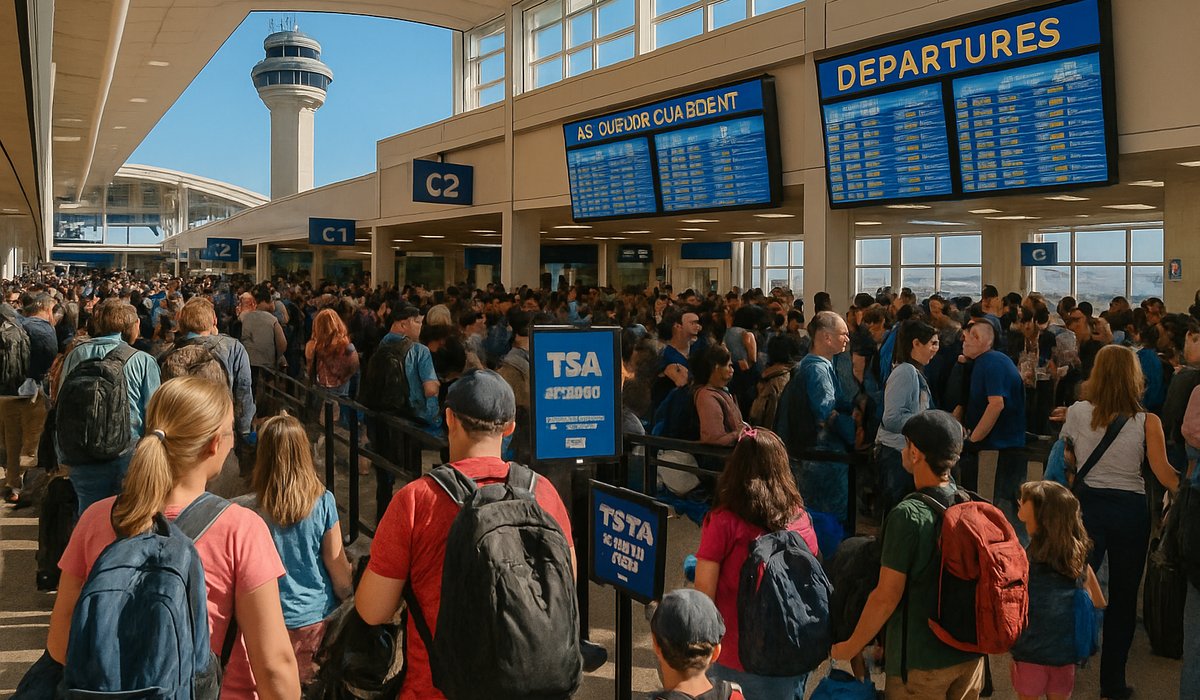
Image generated by AI
The 2026 Spring Travel Surge: Testing the US Aviation Grid
The United States is officially maneuvering through what is statistically projecting to be the single most congested spring travel season in commercial aviation history. Following years of volatile, fluctuating demand cycles post-pandemic, passenger traffic has violently rebounded, thrusting unprecedented volume onto the national airspace system.
The surge is primarily fueled by heavily condensed spring break corridors intersecting with optimal warming weather patterns across the southern states. For the average traveler, the visual evidence is immediate: security lines winding outside terminal doors, zero empty seats on domestic widebodies, and cutthroat competition for decent hotel accommodations and rental cars. However, the true test of this massive mobilization is not happening at the ticket counter—it is happening inside the darkened radar rooms of the nation’s Air Traffic Control facilities.
ATC Readiness: The Frontline Against Gridlock
According to intensive briefings released by the National Air Traffic Controllers Association (NATCA), the underlying workforce managing the skies is operating at peak defensive readiness. Following highly publicized staffing shortages that severely crippled summer travel in prior years, the FAA and NATCA emphasize that the 2026 operation represents a fully staffed, rigorously trained posture designed specifically to absorb this historic demand.
Air Traffic Controllers act as the invisible circulatory system of global travel. With thousands of supplemental, seasonal flights injected into the daily rhythm, controllers are utilizing highly advanced scheduling software and real-time predictive weather modeling tools to maintain razor-thin, yet perfectly safe, separation margins between descending aircraft.
Learning the Harsh Lessons of Previous Years
The aviation industry possesses a brutally clear memory of recent operational failures. Previous peak travel seasons demonstrated precisely how cascading delays mutate into multi-day national gridlock when ATC sector staffing buckles under stress or severe weather hits an under-staffed routing center (such as the heavily chronicled issues spanning the Florida corridors).
To directly combat this, the 2026 strategy relies heavily on proactive flow control. Rather than allowing aircraft to launch blindly into severe weather or congested airspace, ATC will enforce strict ground-stops at departing airports. While incredibly frustrating for passengers sitting idle at the gate, this deliberate metering prevents dangerous aerial holding patterns and ensures safety standards are never materially compromised regardless of how many jets demand runway access.
What Guests Get
- Expanded flight frequencies specifically targeting highly demanded coastal and national park destinations
- Predictive ground-stop notifications pushed via airline apps to prevent boarding during ATC metering programs
- Increased TSA staffing deployments mirroring anticipated heavy departure banks
- Advanced ATC routing logic utilizing fuel-efficient descent profiles even during localized congestion
- Expanded seasonal route connectivity, enabling direct access utilizing low-cost competition
Spring 2026 Travel Dynamics
| Operational Element | 2026 Spring Outlook | Primary Challenge | Expected ATC Response |
|---|---|---|---|
| Passenger Volume | Historic Record Highs | Severe Terminal Congestion | Intense En-Route Metering |
| ATC Staffing | Fully Staffed via NATCA | Sustaining Deep Fatigue Levels | Rotational Shift Management |
| Flight Connectivity | Expanded Schedules | Maxed Runway Capacities | Controlled Ground-Stops |
| Security Checkpoints | Heavily Stressed | Missed Outbound Flights | Expanded TSA PreCheck Lanes |
What This Means for Travelers
If you are navigating the US domestic network during the spring 2026 peak, your strategy must aggressively change from "casual" to "defensive." The system is functionally prepared to move you safely, but it cannot move you quickly when operating at 100% capacity.
You must physically arrive at major hubs like Atlanta (ATL), Los Angeles (LAX), or Orlando (MCO) a bare minimum of two hours early, strictly anticipating massive security screening bottlenecks. Furthermore, absolutely expect your aircraft to occasionally sit on the tarmac post-boarding; this is not airline incompetence, but rather ATC holding your departure slot to ensure the arrival airspace at your destination isn't dangerously saturated. Lastly, maintain iron-clad flexibility: the system prioritizes safety over your connecting flight, so always pack vital essentials directly in your carry-on luggage should you suffer a missed connection.
FAQ: US Air Travel Spring 2026
Why does Air Traffic Control delay my flight before it even takes off? This is known as a "Ground Stop" or "Flow Control." If the airspace above your destination airport (or a severe storm system executing along your route) is dangerously overcrowded, ATC will hold your plane safely on the ground at your origin. It prevents the incredibly dangerous prospect of dozens of airplanes circling in the sky waiting for a spot to land.
Are there still widespread shortages of air traffic controllers? Historically, yes. However, heading into the spring of 2026, the National Air Traffic Controllers Association specifically highlighted a strong surge in readiness and full structural staffing models designed entirely to prevent the severe breakdowns witnessed in previous years.
Is it actually safe to fly when the skies are this incredibly crowded? Yes. Commercial aviation safety protocols are absolutely rigid and non-negotiable. If traffic volume exceeds the safety capacity of a specific radar sector, ATC simply refuses to authorize more aircraft into that space, causing ground delays but fiercely maintaining required safety margins in the air.
Related Travel Guides
TSA PreCheck vs CLEAR: Which Saves More Time in 2026?
Surviving Airport Delays: The Ultimate Domestic Travel Checklist
Disclaimer
This article is for informational and educational purposes only. It does not constitute legal, financial, or professional advice. While we strive to provide accurate and up-to-date information, travel policies, regulations, and conditions change rapidly. Always verify information with official sources before making travel decisions. Nomad Lawyer makes no representations about the accuracy, reliability, completeness, or suitability of the information provided. Readers should consult qualified professionals for advice specific to their circumstances. The views expressed in this article are those of the author and do not necessarily reflect the views of Nomad Lawyer.
Raushan Kumar
Founder & Lead Developer
Full-stack developer with 11+ years of experience and a passionate traveller. Raushan built Nomad Lawyer from the ground up with a vision to create the best travel and law experience on the web.
Learn more about our team →