
Thailand 2026 Entry Requirements: New Travel Checklist for Indian Tourists and Visa-Free Visitors
New 2026 immigration updates for Indian tourists visiting Thailand mandate digital arrival cards and strict financial proof to avoid entry denial.

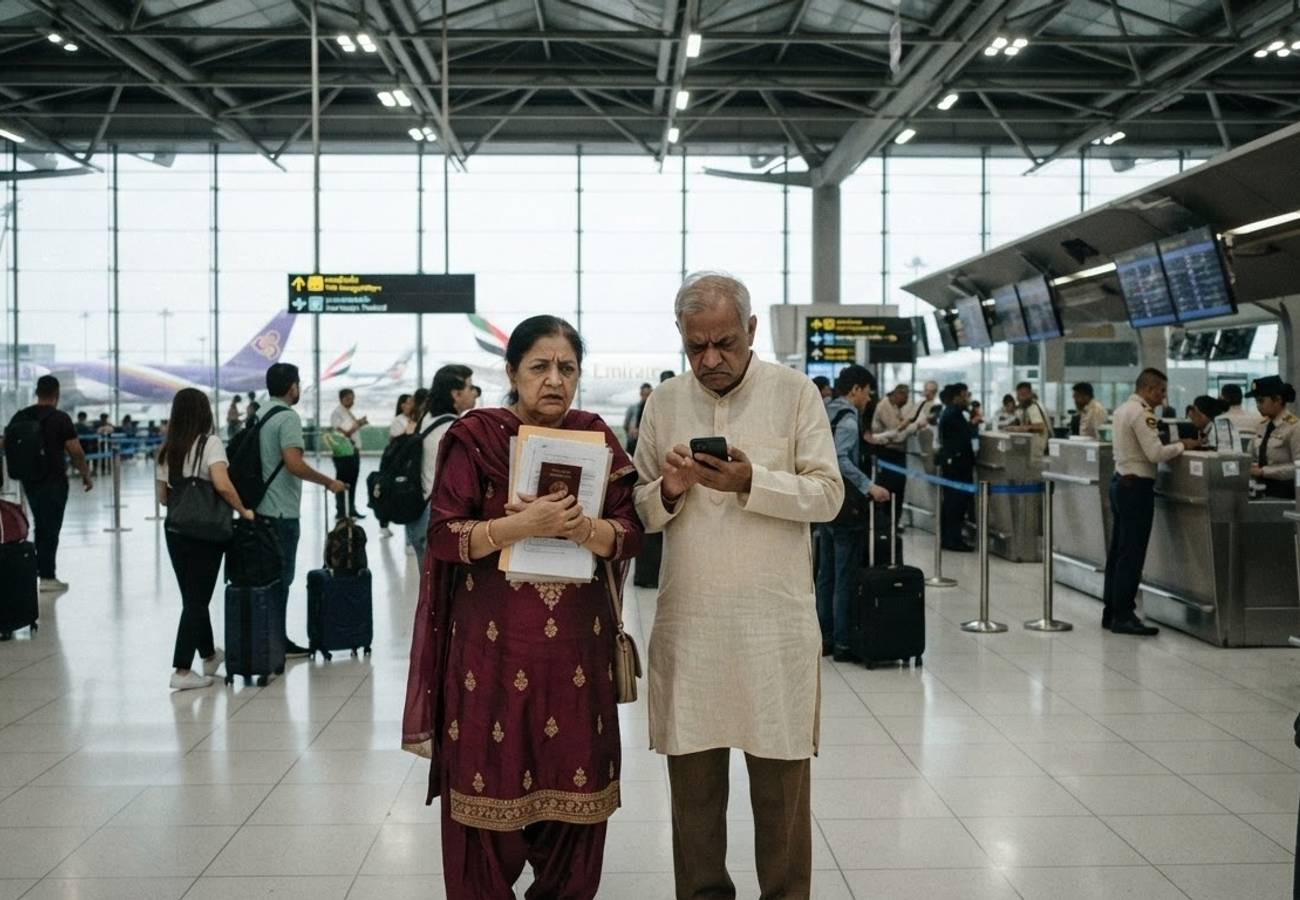
Image generated by AI
Indian travelers must adhere to tightened immigration protocols to ensure entry into Thailand, following a formal travel advisory issued by the Indian Embassy.
Thai authorities have implemented rigorous immigration updates to manage tourist volume and enhance border security. These changes shift the entry process from a flexible system to a rigid, documentation-heavy framework. Failure to provide specific evidence of funds or digital filings now carries a high risk of immediate entry denial.
Mandatory Entry Documentation for 2026
Indian citizens utilizing visa-free entry or Visa on Arrival (VoA) must present a comprehensive set of documents. Market trends suggest that immigration officers are now strictly enforcing these requirements without exception.
- Passport Validity: Must be valid for at least six months beyond the date of entry.
- Thailand Digital Arrival Card (TDAC): Mandatory digital submission. This must be completed within 72 hours of arrival.
- Financial Solvency: Travelers should carry 20,000 Thai Baht in cash per person. Major international currencies of equivalent value are accepted.
- Onward Travel: Confirmed return or onward flight tickets are required.
- Lodging Verification: Valid hotel booking confirmations must be available for inspection.
Compliance Standards for Groups and Families
Industry observers note that "group" travel no longer guarantees lenient checks. Each individual traveler—including children and family members—must possess their own set of documents. Specifically, the 20,000 Baht financial requirement applies per person; a single lump sum for a family may not be sufficient to satisfy immigration officials.
Comparison of Entry Protocols
The transition toward digital verification has altered the speed and nature of the arrival process. While the reliance on tangible proof of funds is more rigid than in previous years, the digital integration of the TDAC has streamlined the initial verification phase.
| Requirement | Previous Standard | 2026 Standard |
|---|---|---|
| Arrival Filing | Manual/Paper-based | Digital (TDAC) within 72 hours |
| Financial Proof | Occasional/Flexible | Strict enforcement of 20,000 THB |
| Verification | Manual Review | Digital QR Code & Document Audit |
| Border Control | Moderate | High Security/Rigid Enforcement |
Why This Matters: Industry Implication
The shift in Thailand's entry policy signals a broader global trend toward "high-quality travel" filtering. By mandating significant cash reserves and pre-arrival digital filings, Thailand is effectively prioritizing tourists with proven financial means and planned itineraries over spontaneous or low-budget travelers.
For the aviation and travel industry, this increases the burden of pre-departure briefing. Travel agents and airlines must now ensure passengers are aware that "Visa-Free" does not mean "Document-Free." The risk of passenger deportation at the gate or the border has increased, potentially leading to higher rates of denied boarding if passengers cannot produce the TDAC or proof of funds.
Forward Outlook
Expect further digitization of the border process. The current 72-hour window for the TDAC is likely a precursor to a fully integrated electronic travel authorization (ETA) system. Travelers should prioritize official government portals and Indian Embassy updates over third-party blogs, as these rules are subject to rapid change based on real-time security assessments.
Precision in documentation is now the only guarantee of a seamless entry.
Related Travel Guides
Disclaimer
This article is for informational and educational purposes only. It does not constitute legal, financial, or professional advice. While we strive to provide accurate and up-to-date information, travel policies, regulations, and conditions change rapidly. Always verify information with official sources before making travel decisions. Nomad Lawyer makes no representations about the accuracy, reliability, completeness, or suitability of the information provided. Readers should consult qualified professionals for advice specific to their circumstances. The views expressed in this article are those of the author and do not necessarily reflect the views of Nomad Lawyer.
Preeti Gunjan
Contributor & Community Manager
A passionate traveller and community builder. Preeti helps grow the Nomad Lawyer community, fostering engagement and bringing the reader experience to life.
Learn more about our team →