
American Airlines to Restore Seat-Back Entertainment Screens to Narrowbody Fleet Starting 2028
American Airlines is reversing its 'bring-your-own-device' strategy, announcing plans to reinstall seat-back screens across its Boeing 737 and Airbus A320 narrowbody fleets beginning in 2028.

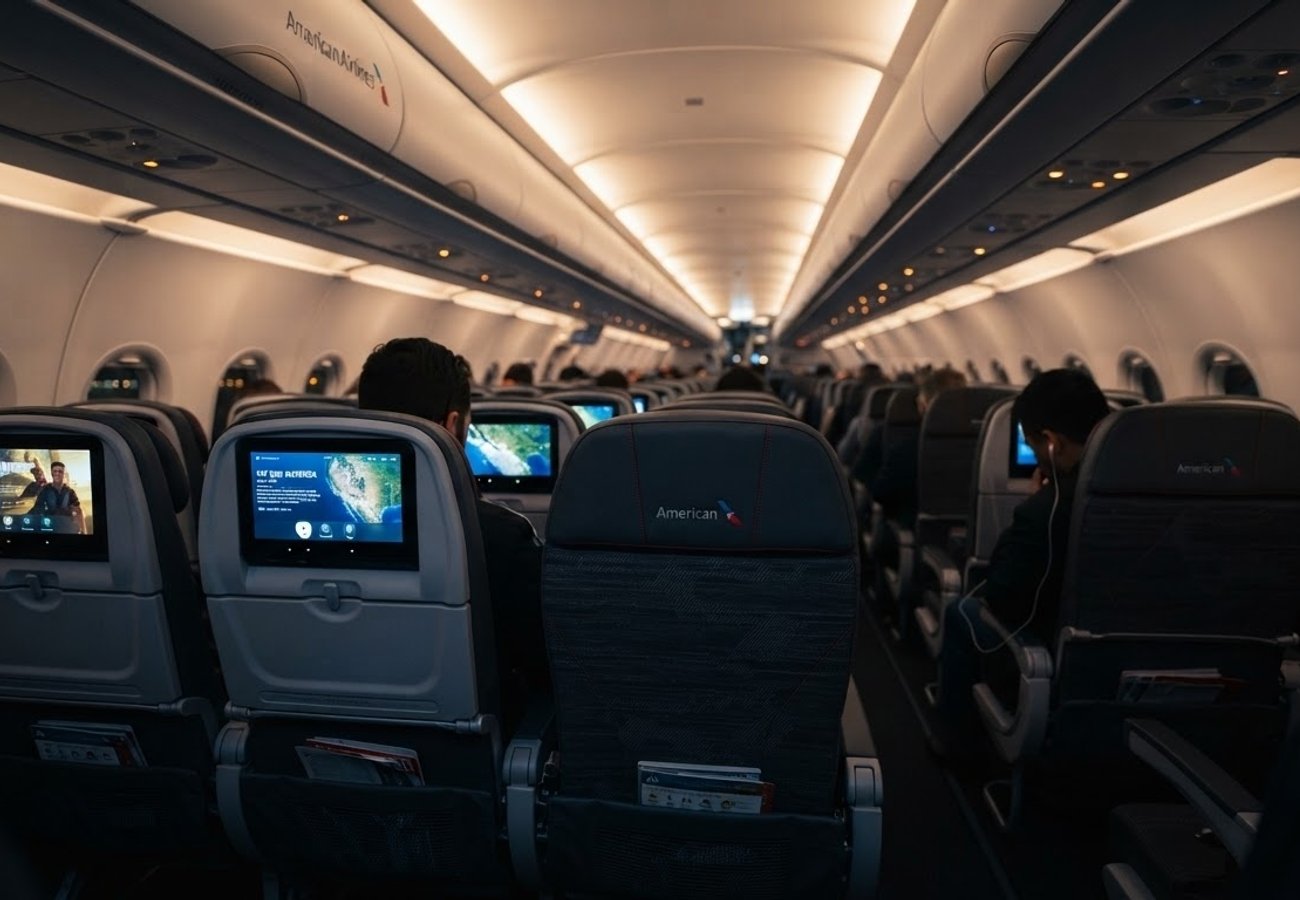
Image generated by AI
American Airlines has announced a strategic reversal of its "bring-your-own-device" (BYOD) policy, committing to the reintroduction of seat-back entertainment screens across its narrowbody fleet starting in 2028.
Strategic Pivot from BYOD Model
For over a decade, American Airlines prioritized a streaming-first approach for domestic and short-haul routes. This strategy involved the systematic removal of traditional seat-back screens from Boeing 737 and Airbus A320-family aircraft, replacing them with free onboard Wi-Fi streaming to personal tablets, phones, and laptops.
Our analysis indicates this shift is a direct response to competitive pressures from Delta and United, both of which have utilized embedded entertainment as a key differentiator in the economy cabin. While the BYOD model reduced aircraft weight and maintenance costs, passenger feedback consistently highlighted "battery anxiety" and the inconvenience of managing personal devices on longer domestic segments.
Fleet Impact and Implementation Timeline
The rollout will occur in two primary phases: new aircraft deliveries and a comprehensive retrofit program for existing jets.
New Aircraft Deliveries (Starting 2028)
- Boeing 737 Family: Future deliveries will feature integrated, modern seat-back systems.
- Airbus A321 Variants: New deliveries will be equipped with high-resolution displays to support transcontinental networks.
- Hardware Specs: Next-generation systems will utilize thinner, lighter screens with Bluetooth audio capability to minimize impact on legroom.
Fleet Retrofit Program
- Affected Models: Airbus A319, A320, A321, and Boeing 737-800 and 737 MAX.
- Execution: Installations will be coordinated with heavy maintenance checks to minimize aircraft downtime.
- Timeline: Due to the scale of the narrowbody fleet, full standardization is expected to extend well into the 2030s.
Passenger Rights & Advisory
For the affected passenger, this transition period means a "patchwork" experience. Until the retrofit program is complete, travelers cannot guarantee a seat-back screen on narrowbody flights.
Our analysis of the transition suggests the following for passengers:
- Equipment Redundancy: Until 2030, passengers should continue to carry personal devices and power banks, as many aircraft will remain in the BYOD configuration.
- Connectivity Rights: Under current DOT guidelines, while entertainment is a service and not a regulated right, the availability of power outlets is becoming a standard expectation. Passengers should verify the aircraft type via flight tracking systems to determine if AC/USB power is available for their specific tail number.
- Service Consistency: Passengers who experience a discrepancy between the marketed "screen-equipped" cabin and the actual aircraft provided may request mileage compensation or "customer goodwill" gestures, though this is at the airline's discretion and not a legal requirement under EU261 or DOT rules.
Industry Analyst View
The return to hardware-based entertainment signals a broader industry realization: the "invisible" convenience of streaming does not carry the same perceived value as a tangible cabin amenity. In the eyes of the non-elite traveler, a seat-back screen serves as a visual proxy for overall product quality.
However, the critical challenge for American Airlines will be the "weight vs. comfort" trade-off. Adding screens increases aircraft mass, which can lead to higher fuel burn. To offset this, airlines often introduce thinner seat cushions or reduced seat pitch. Passengers should monitor whether these hardware gains come at the expense of physical legroom.
By adopting a hybrid model—maintaining free streaming while adding physical screens—American is attempting to capture both the tech-savvy traveler and the traditional passenger, effectively neutralizing the competitive advantage currently held by its domestic rivals.
The era of the bare seat-back is ending as hardware returns to the domestic cabin.
Related Travel Guides
Disclaimer
This article is for informational and educational purposes only. It does not constitute legal, financial, or professional advice. While we strive to provide accurate and up-to-date information, travel policies, regulations, and conditions change rapidly. Always verify information with official sources before making travel decisions. Nomad Lawyer makes no representations about the accuracy, reliability, completeness, or suitability of the information provided. Readers should consult qualified professionals for advice specific to their circumstances. The views expressed in this article are those of the author and do not necessarily reflect the views of Nomad Lawyer.
Kunal K Choudhary
Co-Founder & Contributor
A passionate traveller and tech enthusiast. Kunal contributes to the vision and growth of Nomad Lawyer, bringing fresh perspectives and driving the community forward.
Learn more about our team →