
American Airlines to Restore Seatback Screens on Narrow-Body Fleet with 4K Displays by 2028
American Airlines is reversing its long-term strategy by bringing 4K seatback entertainment screens and universal power to its Boeing and Airbus narrow-body jets starting in 2028.

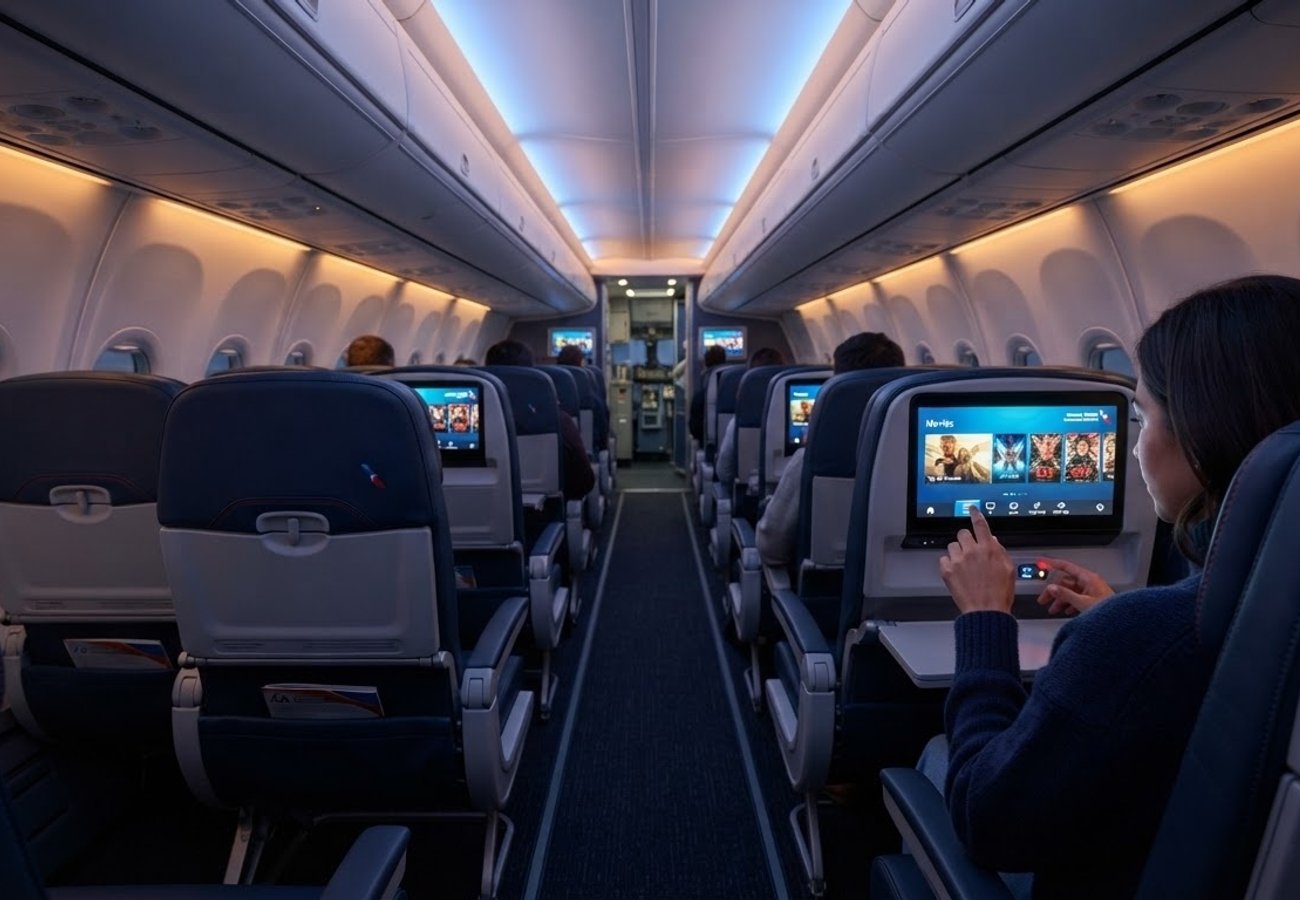
Image generated by AI
American Airlines is abandoning its "bring-your-own-device" philosophy in a massive strategic pivot. Starting in 2028, the carrier will install 4K seatback screens and universal power across the majority of its narrow-body fleet.
For over a decade, American Airlines operated as a domestic outlier, stripping seatback entertainment from its single-aisle aircraft to reduce weight and maintenance costs. While the airline bet on passengers using their own tablets and smartphones, the competitive reality of the U.S. aviation market has forced a reversal.
The upcoming overhaul targets both new deliveries and existing Boeing and Airbus narrow-body aircraft. This shift aligns American with rivals Delta Air Lines and United Airlines, both of which have leveraged integrated entertainment systems to signal a more premium passenger experience.
A Technical Leap to 4K Entertainment
This is not a return to the low-resolution monitors of the past. American is introducing a next-generation platform featuring large-format 4K displays, mirroring the visual quality of modern home electronics.
The hardware upgrade extends beyond the screen. To address chronic passenger complaints regarding battery life, the airline will implement:
- USB-C Power: Available at every seat to support fast-charging for modern devices.
- Standard AC Outlets: Retained on many aircraft for laptop users.
- Enhanced Connectivity: Upgraded options to allow the use of wireless earbuds and headphones.
The software experience will also evolve. Rather than a static list of movies, the new system will offer personalized, curated recommendations for films and television, interactive flight maps, and real-time flight data integrated directly into the user interface.
Implementation Timeline and Fleet Logistics
The rollout will be a multi-year endeavor. Installation is scheduled to begin in 2028 and will continue into the early 2030s.
Because the narrow-body fleet consists of hundreds of Boeing 737 and Airbus A320-family aircraft, the airline cannot ground the fleet for a simultaneous upgrade. Instead, American will integrate these retrofits into existing heavy maintenance schedules. This means passengers will encounter a "mixed fleet" for several years, where some aircraft feature the new 4K screens while others remain limited to device streaming.
Beyond Screens: The Wider Cabin Strategy
The entertainment upgrade is part of a broader interior redesign aimed at increasing revenue per flight. American is utilizing the retrofit window to modify seating configurations, specifically on Boeing 737 MAX and Airbus A321neo variants.
Key cabin enhancements include:
- Premium Expansion: Increasing the number of domestic first-class seats.
- Main Cabin Extra: Expanding the rows dedicated to extra-legroom economy seating.
- Storage Upgrades: Installing larger overhead bins designed for side-loading carry-ons to reduce boarding delays.
- Atmospherics: Refreshing cabin lighting and overall seat design.
The Strategic Shift in Passenger Experience
The decision to reintroduce built-in screens highlights a critical realization in the aviation industry: while passengers can use their own devices, they prefer not to.
From a business perspective, this move is a calculated risk. Seatback systems add significant weight to the aircraft—which increases fuel burn—and require ongoing licensing and maintenance. However, the potential gains in customer loyalty and the ability to compete for high-yield business travelers on transcontinental routes outweigh these operational costs.
By closing the amenity gap with Delta and United, American is repositioning itself to attract travelers who prioritize onboard comfort over the lowest possible ticket price.
Narrow-Body Fleet Upgrade Overview
| Feature | Previous Strategy (2010s–2027) | New Strategy (2028 onwards) |
|---|---|---|
| Entertainment | Streaming to personal devices | Integrated 4K Seatback Screens |
| Power Access | Limited/Variable | USB-C at every seat + AC outlets |
| Connectivity | Standard Audio Jacks | Upgraded wireless/Bluetooth options |
| Content | Basic Streaming | Personalized/Curated Recommendations |
| Cabin Layout | Standard configurations | Increased First Class & Main Cabin Extra |
| Storage | Legacy overhead bins | Large-format side-loading bins |
Key Takeaways
- Strategic Reversal: American Airlines is moving away from device-only streaming back to integrated seatback screens.
- High-End Tech: The new screens will be 4K resolution with accompanying USB-C power at every seat.
- Slow Rollout: The process begins in 2028 and will take several years to complete across the Boeing and Airbus fleets.
- Revenue Focus: The retrofit includes more premium and extra-legroom seating to target higher-spending travelers.
FAQ
When will I see the new screens on my American Airlines flight? The rollout begins in 2028. Because it coincides with scheduled maintenance, it will take several years for the majority of the fleet to be updated.
Will there be power outlets for all passengers? Yes, the plan includes USB-C power at every seat, with standard AC outlets available on many aircraft.
Does this mean the airline will stop offering streaming to personal devices? The article indicates the screens will support a richer selection of content, but does not state that existing streaming services will be eliminated.
A significant gamble on passenger preference that could redefine the domestic flying experience.
Related Travel Guides
Disclaimer
This article is for informational and educational purposes only. It does not constitute legal, financial, or professional advice. While we strive to provide accurate and up-to-date information, travel policies, regulations, and conditions change rapidly. Always verify information with official sources before making travel decisions. Nomad Lawyer makes no representations about the accuracy, reliability, completeness, or suitability of the information provided. Readers should consult qualified professionals for advice specific to their circumstances. The views expressed in this article are those of the author and do not necessarily reflect the views of Nomad Lawyer.
Kunal K Choudhary
Co-Founder & Contributor
A passionate traveller and tech enthusiast. Kunal contributes to the vision and growth of Nomad Lawyer, bringing fresh perspectives and driving the community forward.
Learn more about our team →