
American Airlines Joins United and More to Expand Managua Air Access as Nicaragua Targets Stronger Tourism Growth: All You Need to Know
American Airlines Joins United and More to Expand Managua Air Access as Nicaragua Targets Stronger Tourism Growth: All You Need to Know

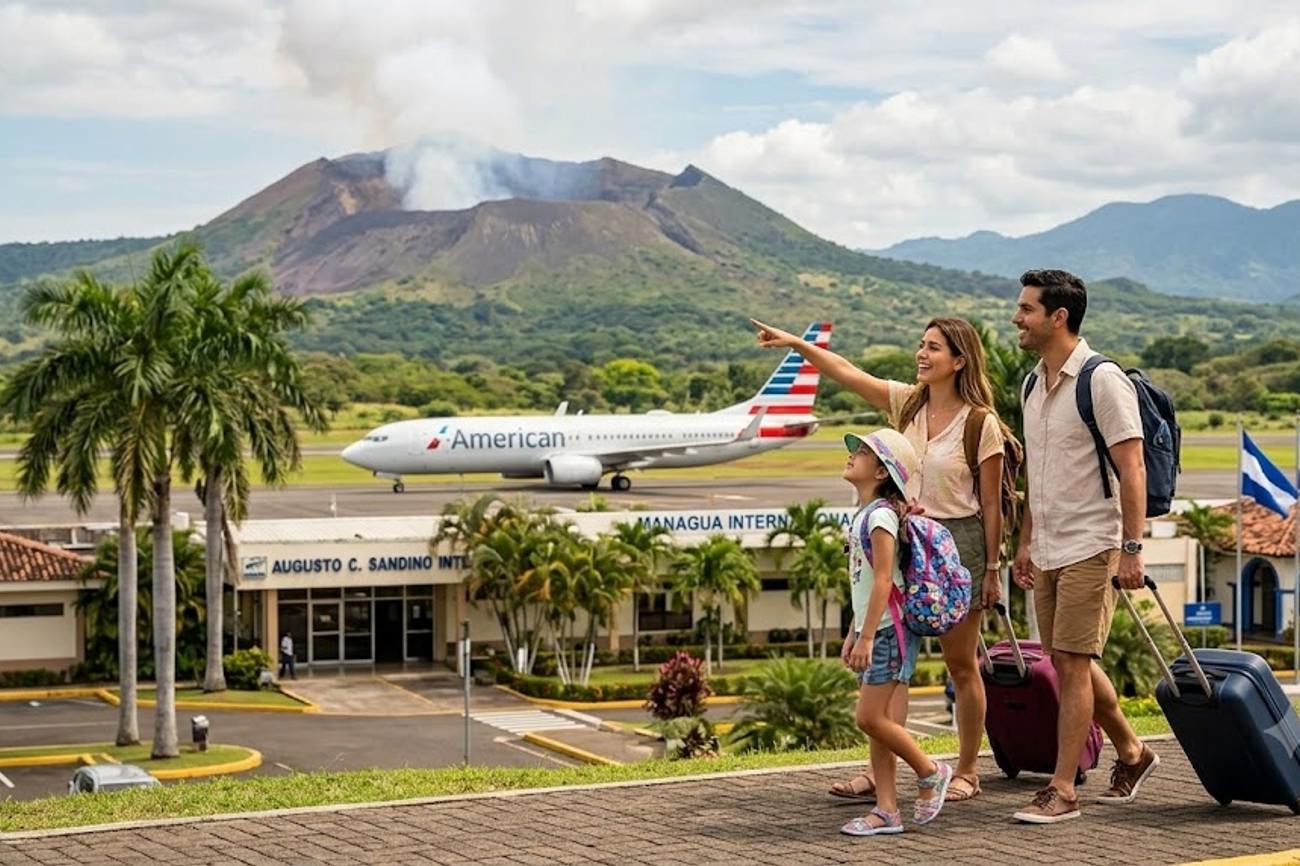
Image generated by AI
A US$55.3 million investment in runway infrastructure is fundamentally altering the operational capacity of Nicaragua’s primary aviation gateway. This capital injection is not merely a maintenance project but a strategic pivot designed to shift the Augusto C. Sandino International Airport from ICAO category 4D to 4E. By extending the runway by 858 metres—increasing the total length from 2,442 metres to 3,300 metres—the Nicaraguan government is removing the physical barriers that previously prevented the largest wide-body aircraft from operating consistent, long-haul schedules into the capital.
The Strategic Pivot to 4E Infrastructure
The transition to a 4E airport classification is a technical signal to the global aviation market. In the current configuration, Managua is limited to narrow-body and smaller wide-body operations. The planned expansion to a 3,300-metre runway, paired with a 45-metre width, transforms the airport's utility. The technical specifications include a new 900-metre parallel taxiway, bringing the total parallel taxiway length to 2,000 metres, and a 160.52-metre rapid-exit taxiway to improve runway throughput. Additionally, the project incorporates a 6,100 square metre runway-end turning platform and a further 3,600 square metre platform.
This infrastructure overhaul follows a previous resurfacing effort that cost more than US$9 million. The objective is clear: the airport must be capable of handling aircraft such as the Boeing 787-8, Airbus A330, Airbus A340-600, and Airbus A350. These aircraft, which can transport approximately 400 passengers per flight depending on the seating configuration, are the workhorses of intercontinental travel. Without this expansion, Nicaragua remains tethered to regional hubs, unable to attract direct flights from Europe or Asia.
Current Connectivity and Passenger Volume
While the long-term goal is intercontinental access, the immediate operational reality is defined by seven regular passenger airlines. These carriers link Managua to key strategic hubs in North America and Latin America, creating a spoke-and-hub system that feeds international tourism into the country.
| Airline | Primary Route/Connection | Frequency |
|---|---|---|
| United Airlines | Houston | Daily |
| American Airlines | Miami | One Daily |
| Avianca | San Salvador / Miami | Daily |
| Copa Airlines | Panama City | Daily |
| Aeroméxico | Mexico City | 4 Weekly (Mon, Wed, Fri, Sun) |
| Spirit Airlines | Fort Lauderdale | Confirmed |
| Conviasa | Havana (onward to Caracas) | Confirmed |
The demand for these seats is climbing. Based on data from the International Air Transport Association (IATA), passenger volume is a primary indicator of a destination's economic health. Managua currently operates from an international passenger baseline of approximately 1.1 million. Growth projections for 2026 suggest a further increase of 4%–5%, a trend supported by January 2026 data which showed a 6% increase in passenger numbers compared to the previous year.
Expert Analysis: The Geopolitics of Runway Length
For the seasoned traveler or aviation analyst, the expansion of the Augusto C. Sandino International Airport is less about current tourism and more about future geopolitical alignment. The mention of potential long-term connectivity to China, Türkiye, Moscow, and Africa suggests that Nicaragua is positioning itself as a diversified hub that does not rely solely on North American transit.
For travelers booking routes today, the direct consequence is a reliance on three specific US gateways: Miami, Houston, and Fort Lauderdale. The current dependence on these hubs means that any regulatory shift in US-Nicaragua relations directly impacts the country's tourism viability. However, the move to 4E capability creates a "competitive hedge." By enabling wide-body aircraft, Nicaragua can eventually bypass the US hub system entirely, allowing flights from Beijing or Istanbul to land directly in Managua.
The pricing pressure this creates is significant. Currently, the limited number of carriers and the reliance on narrow-body aircraft keep seat capacity tight. As the airport begins to accommodate 400-seat aircraft, the sudden influx of capacity will likely force a correction in ticket pricing, making Nicaragua more competitive against regional neighbors like Costa Rica. Furthermore, the 24-hour operational status of the airport—including immigration and customs—means the infrastructure is already primed for the erratic arrival times associated with ultra-long-haul flights from Asia or Europe.
Key Takeaways
- Infrastructure Leap: A US$55.3 million investment is extending the runway to 3,300 metres, upgrading the airport to ICAO 4E status to support wide-body jets like the Boeing 787-8 and Airbus A350.
- Passenger Growth: With a baseline of 1.1 million international passengers, the airport is seeing a growth trend, including a 6% increase in January 2026 and a projected 4%–5% rise for the full year.
- Hub Dependency: Current access is dominated by seven airlines, with critical daily links provided by American Airlines and United Airlines via Miami and Houston.
- Future Markets: While not yet confirmed, the airport is being prepared for direct routes to China, Türkiye, and Russia, aiming to reduce reliance on North American transit.
- Operational Readiness: The facility already supports 24-hour operations with ten international aircraft positions and four boarding bridges.
FAQ: Managua Air Travel 2026
Which US cities have direct flights to Managua? Travelers can fly directly into Managua from Miami via American Airlines and Avianca, Houston via United Airlines, and Fort Lauderdale via Spirit Airlines.
Can large wide-body planes land in Managua? Currently, the airport is undergoing an expansion to 3,300 metres. Once the upgrade to ICAO 4E is complete, the airport will be able to accommodate aircraft like the Airbus A350 and Boeing 787-8.
What is the best way to connect to South America from Managua? The most efficient regional connections are currently through Copa Airlines via Panama City or Conviasa via Havana for onward travel to Caracas.
Is the Managua airport open for late-night arrivals? Yes, the Augusto C. Sandino International Airport operates 24 hours a day, with customs and immigration services available around the clock.
The transition from regional outpost to intercontinental gateway is measured in metres of concrete and millions of dollars.
#NicaraguaAviation2026 #AugustoSandinoAirport #ManaguaTourism #WideBodyExpansion #CentralAmericaAirTravel #ICAO4E
Related Travel Guides
- USA Travel Shift: Houston Birth Tourism Case Raises Questions for International Visitors
- Cambodia Unveils Siem Reap Tourism Plan 2026–2030 for the Smart Heritage Destination Growth
- Italy Aligns With Greece, Norway and More European Destinations to Create Ultimate Travel Bucket List Journeys: All You Need to Know
Disclaimer
This article is for informational and educational purposes only. It does not constitute legal, financial, or professional advice. While we strive to provide accurate and up-to-date information, travel policies, regulations, and conditions change rapidly. Always verify information with official sources before making travel decisions. Nomad Lawyer makes no representations about the accuracy, reliability, completeness, or suitability of the information provided. Readers should consult qualified professionals for advice specific to their circumstances. The views expressed in this article are those of the author and do not necessarily reflect the views of Nomad Lawyer.
Preeti Gunjan
Contributor & Community Manager
A passionate traveller and community builder. Preeti helps grow the Nomad Lawyer community, fostering engagement and bringing the reader experience to life.
Learn more about our team →