
Aviation Updates: Massive American Airlines Flight RPA4603 Diversion Shields Midwest Passengers from Terrifying Travel Chaos
Desperate to bypass terrifying regional gridlock and severe airport disruptions, Republic Airways aggressively executes a massive operational diversion of Flight RPA4603 to Indianapolis.
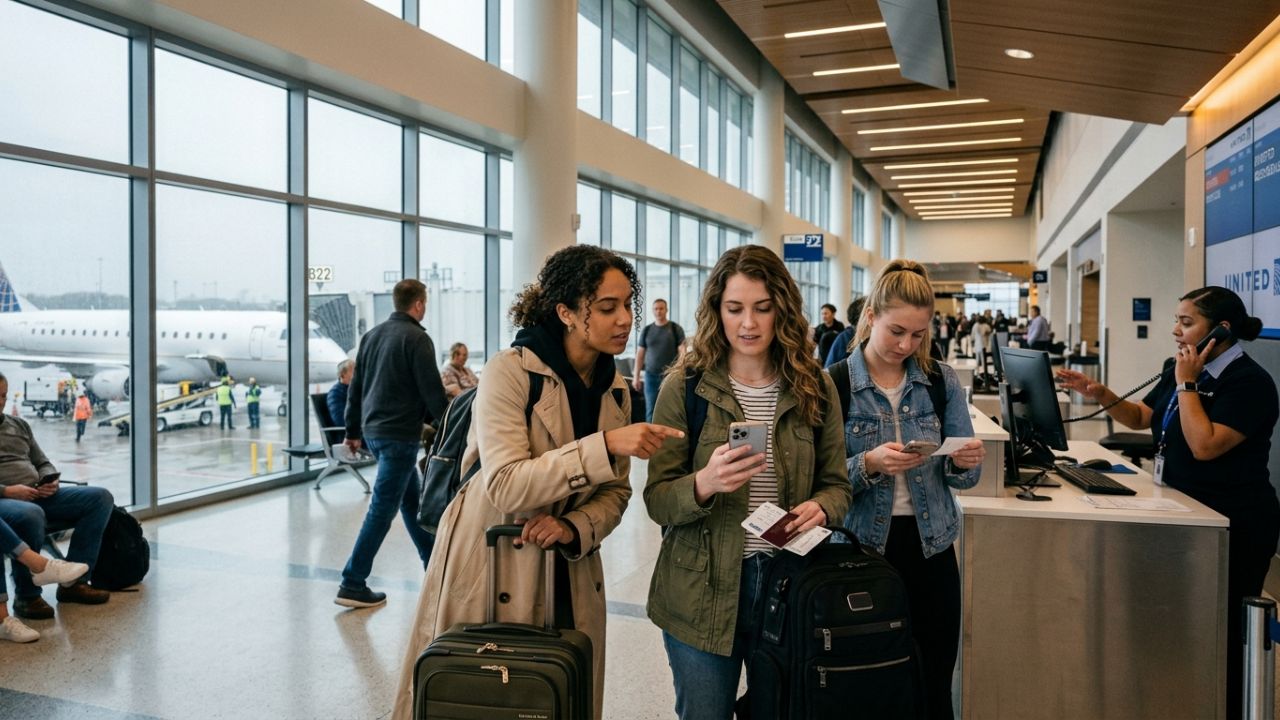
Image generated by AI
Aviation Updates: Massive American Airlines Flight RPA4603 Diversion Shields Midwest Passengers from Terrifying Travel Chaos
As incredibly severe regional gridlock and massive Midwest airspace congestion threaten to completely suffocate primary destination hubs, Republic Airways has aggressively executed a massive operational fortress maneuver, officially diverting American Airlines Flight RPA4603 to Indianapolis to guarantee absolute passenger protection against terrifying domestic travel chaos.
While incredibly exhausted global passengers desperately navigate an incredibly brutal aviation landscape defined by rolling flight cancellations and severe, localized airport disruptions, a massive, highly strategic mid-air operational pivot is actively reshaping the absolute highest levels of American regional commercial aviation. According to the absolute latest breaking airline news, Republic Airways—operating on behalf of American Airlines—officially triggered a monumental, paradigm-shifting defensive maneuver. Desperate to ensure that severe, localized regional hub gridlock does not completely destroy the safety parameters of their high-density Midwest network, Flight RPA4603—an Embraer E175LR operating the heavily trafficked Chicago to Louisville corridor—was forced to aggressively abort its primary approach and execute a massive tactical diversion to Indianapolis International Airport.
This highly critical operational maneuver explicitly positions Republic Airways and American Airlines as deeply engaged in active domestic travel optimization. By aggressively redirecting aircraft to secondary regional nodes, the airline is directly combating the massive travel chaos that routinely plagues travelers forced into agonizing, heavily delayed holding patterns above deeply congested airspace. Because traditional legacy transit nodes frequently suffer from severe capacity bottlenecks leading to massive, unannounced airport disruptions, this newly structured, rapid-response diversion protocol serves as an absolute logistical lifeline. It completely bypasses the terrifying logistical nightmares of mid-air fuel depletion, granting travelers an unbreakable, highly efficient mobility shield that ensures safe, immediate landings when primary infrastructure or weather conditions completely collapse under peak volume.
Aviation Updates: Insulating the High-Density Midwest Corridor
This massive, highly structural shift in national airspace management perfectly illustrates the intense, incredibly fragile nature of modern domestic mobility.
According to highly detailed, official aviation updates sourced directly from real-time flight tracking data, this strategic capacity diversion was explicitly designed to massively enhance operational safety while aggressively eliminating terrifying airborne anxiety for the passengers onboard. Republic Airways Flight RPA4603 departed Chicago O’Hare International Airport executing a flawless climb and cruise trajectory toward Kentucky. However, because major connecting hubs like Louisville Muhammad Ali International Airport are increasingly crippled by rolling travel chaos stemming from systemic weather shifts, sudden thunderstorms, wind shear, and massive runway capacity saturation, funneling passenger flows directly into the primary terminal became an unacceptable logistical gamble. This massive infrastructure optimization—forcing the Embraer E175LR east to Indianapolis—prevents a total regional network collapse, ensuring that passengers safely reach the ground without ever risking the disruption-prone emergency management systems of failing primary airspace.
Section-Wise Breakdown: Navigating the Point-to-Point Shield
The sudden, massive evolution of these critical transit failures actively impacts several incredibly distinct, highly sensitive operational dynamics across the United States.
The Chicago O'Hare (ORD) and Louisville (SDF) Saturation Point
At the absolute core of this massive operational pivot is the total logistical saturation at the origin and destination hubs. Chicago O'Hare frequently operates violently close to absolute maximum capacity, and when this congestion intersects with marginal safety thresholds approaching Louisville, the airspace completely shatters. To prevent severe cascading airport disruptions and the terrifying threat of rolling flight cancellations, dispatch teams and air traffic controllers actively utilize regional release valves, stripping flights out of the holding pattern to protect the integrity of the aircraft and its passengers.
The Indianapolis (IND) Operational Fortress
The ultimate execution of this highly destructive airspace failure heavily targets the strategic resilience of Indianapolis International Airport. Functioning as a massive, highly capable alternative, IND actively absorbs this diverted capacity to shield the broader network. By securing this diverted Embraer E175LR, Indianapolis actively protects Chicago-originating passengers from the severe travel chaos associated with airborne delays. The airport’s highly efficient infrastructure, long runways, and advanced navigation systems handle the sudden influx flawlessly, allowing ground teams to coordinate immediate logistical recovery without the crippling congestion found at the primary hubs.
Flight Details and Verified Disruption Bypass Matrix
To fully understand the exact structural parameters of this massive performance collapse and how Republic Airways successfully navigates complex regional congestion, the following matrix explicitly details the flight data and strategic diversion metrics.
Confirmed American Airlines Disruption Bypass Matrix
| Flight / Aircraft Metric | Massive Capacity & Operational Details | Regional Congestion Impact & Bypass |
|---|---|---|
| Primary Flight Designation | Republic Airways Operated American Airlines Flight RPA4603. | Executed massive tactical diversion mid-flight. |
| Aircraft Equipment Utilized | Highly advanced Embraer E175LR. | Handled the rapid altitude/route adjustment flawlessly. |
| Originating Gateway | Chicago O’Hare International Airport. | Departed safely before encountering Midwest airspace gridlock. |
| Primary Destination Failure | Louisville Muhammad Ali Int. Airport. | Weather and hub saturation triggered severe travel chaos. |
| Strategic Rescue Destination | Indianapolis International Airport. | Shielded passengers from terrifying airport disruptions. |
| Primary Diversion Triggers | Thunderstorms, wind shear, reduced visibility. | Safety-first protocol overrides scheduled routing. |
Data explicitly reflects the massive, highly structural operational shift designed to flawlessly execute domestic passenger stabilization, directly forcing massive primary hubs to rely on regional airports for survival.
Passenger Impact: The Financial and Emotional Toll of Diversions
For the highly demanding passengers actively engaged in this massive American mobility crisis, traditional, highly anticipated domestic travel is currently viewed as completely terrifying and incredibly unpredictable.
The immediate enforcement of this mid-air diversion significantly degraded travel convenience for the exhausted passengers onboard RPA4603. Instead of relying absolutely solely on a highly scheduled arrival in Louisville—where efficient onward connections or ground transit are standard—travelers were suddenly trapped in a collapsed logistical itinerary in Indianapolis. Passengers facing these massive airport disruptions at an alternate airport are forced to wait for American Airlines to execute emergency ground transportation or rebooking assistance. The massive logistical strain guarantees persistent high stress, as ground teams frantically attempt to disembark passengers, handle baggage, and arrange bus transfers or onward flights to Kentucky. However, despite the agonizing delay, this protocol ensures absolute passenger survival, completely bypassing the catastrophic risk of attempting to land in heavily saturated, weather-compromised airspace.
Industry Analysis: The Economics of Mid-Air Safety Protocols
Aviation structural analysts strictly point out that this massive, multi-city operational commitment perfectly illustrates the extreme, highly vital importance of heavily optimized, continuous airspace management.
Aviation data explicitly indicates that massive domestic regional carriers like Republic Airways are absolutely desperate to secure rapid, safe landings to actively combat the terrifying reality of capacity saturation. Industry observers strongly view this Indianapolis diversion as the absolute ultimate proof of network resilience. When Louisville's landing slots are tightly constrained by heavy regional volume and severe meteorological constraints, airlines are legally required by FAA frameworks to prioritize passenger safety over schedule integrity. By aggressively executing these diversions using fully capable aircraft like the Embraer E175LR, airlines absolutely ensure that they maintain a highly secure grip on operations, completely insulating their fleet from the unpredictable dangers that violently plague competitor airlines attempting to force landings during severe Midwest airspace gridlock.
Conclusion: A Highly Congested Domestic Future
The massively evolving infrastructure dynamics directly defining the integration of massive passenger volume into the Midwest network violently reflect a much broader, highly critical structural transformation currently dominating how American commercial aviation is physically managed in 2026.
Rather than violently forcing massive domestic traffic through deeply congested, highly restricted, delay-prone legacy networks, global travelers must actively accept that mid-air diversions are a permanent, highly necessary survival mechanism. As airlines aggressively struggle to clear the backlog and permanently alter their immediate flight paths, travelers actively navigating the incredibly busy sector must absolutely remain highly vigilant. To actively survive potential travel chaos during the summer travel season, passengers must aggressively monitor all breaking aviation updates, actively utilize airline mobile applications to check real-time status while in the air, and perfectly understand that escaping modern airport disruptions fundamentally requires accepting that flights will be aggressively diverted to secondary airports whenever massive primary hubs fail.
Key Takeaways
- Massive Tactical Diversion: Republic Airways operated American Airlines Flight RPA4603 (Embraer E175LR) from Chicago to Louisville was aggressively diverted to Indianapolis.
- Bypassing Regional Gridlock: The maneuver explicitly protected passengers from severe travel chaos caused by potential thunderstorms, wind shear, and reduced visibility at the primary destination.
- Safe Execution: The aircraft landed safely at Indianapolis International Airport, functioning as a massive operational fortress for the Midwest.
- Passenger Logistics: Stranded travelers required immediate, highly coordinated ground transportation or rebooking to reach Louisville.
- Routine Safety Protocol: The FAA and regional dispatchers prioritize immediate diversions over the catastrophic risks of holding patterns in volatile weather.
- Passenger Survival Strategy: Domestic travelers are strictly advised to pack essential items in their carry-on bags and remain highly flexible, as sudden mid-air diversions remain a critical safety response during periods of severe airport disruptions.
Related Travel Guides
Massive UAE Visa Bombshell: Strict New 30-Day Escape Window Announced
Travel Chaos Cripples Spain as Iberia and Ryanair Suffer 1,079 Delays
Global Flight Cancellation and Compensation Guide 2026
Disclaimer: This article is strictly for informational purposes only. Massive airport ground failures, highly localized mid-air diversion protocols, and complex airline rebooking procedures change rapidly based on operational demand and real-time FAA airspace conditions. Always carefully verify your specific itinerary and aggressively monitor real-time flight statuses directly via your airline's application before attempting to travel.