
American Airlines Flight AA16 Airbus A321 Diverts to Philadelphia from San Francisco in 2026
American Airlines Flight AA16, an Airbus A321 traveling from San Francisco to New York JFK, was diverted to Philadelphia International Airport on July 18, 2026, causing significant arrival delays.

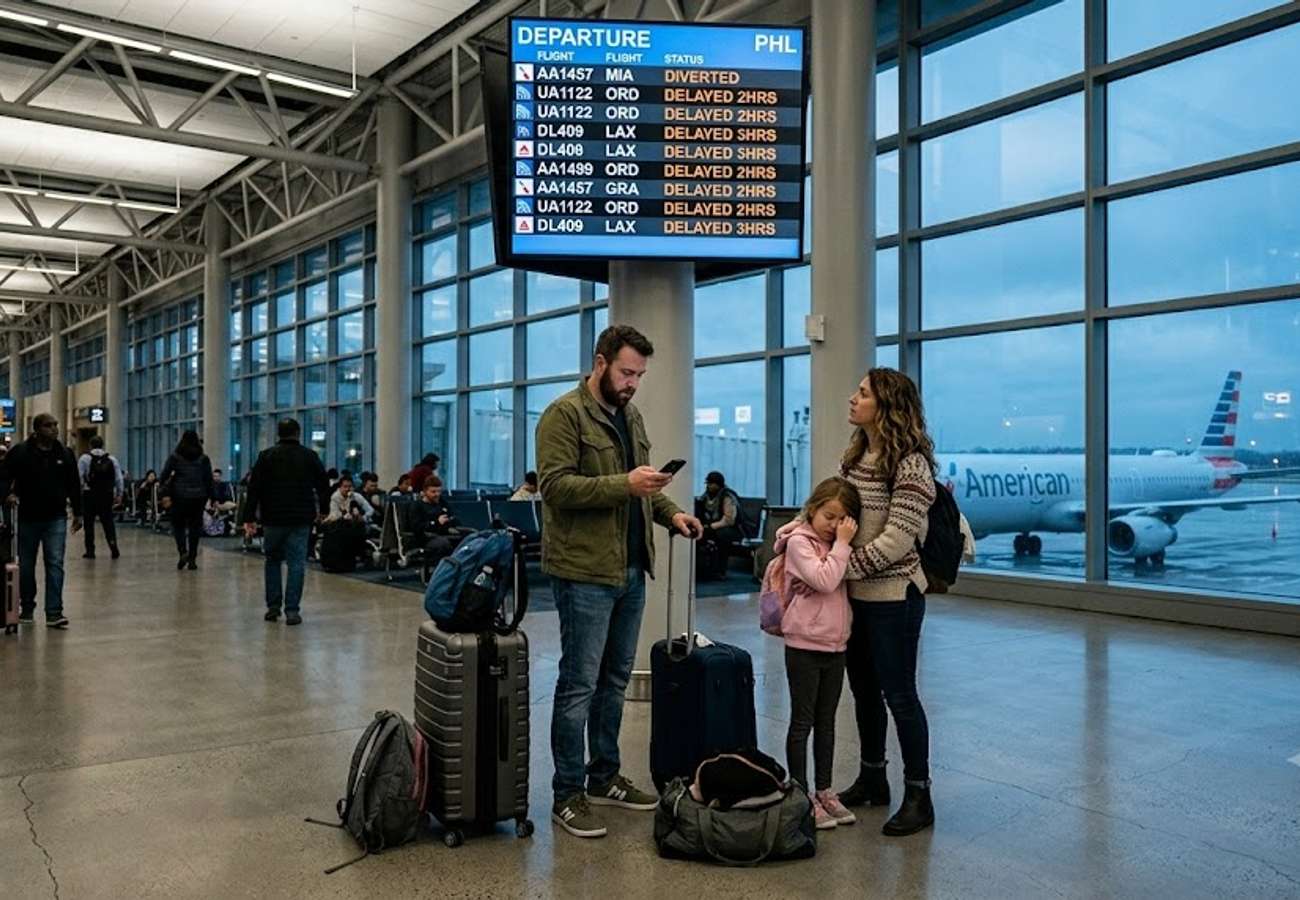
Image generated by AI
A scheduled transcontinental service from San Francisco to New York experienced an unexpected route change on July 18, 2026. American Airlines Flight AA16, operated by an Airbus A321, was diverted to Philadelphia International Airport (PHL) instead of completing its journey to John F. Kennedy International Airport (JFK).
The diversion resulted in a significant delay, with the aircraft arriving in Philadelphia more than two hours after its originally scheduled arrival time in New York.
Flight Timeline and Operational Details
Flight AA16 was tasked with a high-capacity domestic leg between two of the United States' largest economic hubs. The aircraft departed from San Francisco International Airport (SFO), leaving Gate B23.
While the scheduled departure was set for 10:15 AM PDT, the aircraft actually took off at approximately 10:59 AM PDT, marking an initial delay of 44 minutes. The flight was originally slated to touch down at JFK at 7:04 PM EDT. However, due to the diversion, the aircraft landed at Philadelphia International Airport at 8:50 PM EDT, totaling a delay of two hours and 16 minutes from the original plan.
Analysis of the Diversion to Philadelphia
The specific catalyst for the diversion of Flight AA16 has not been officially disclosed. In commercial aviation, route changes of this nature are typically triggered by a set of standard operational variables:
- Weather Disruptions: Sudden deterioration of visibility or severe thunderstorms at the destination airport.
- Technical Assessments: Precautionary landings to address aircraft-related mechanical concerns.
- Medical Emergencies: The need to land at the nearest suitable facility to provide urgent care to a passenger.
- Air Traffic Control (ATC) Mandates: Directives from aviation authorities due to congestion or airspace restrictions.
The choice of Philadelphia International Airport as the alternate destination is strategic. PHL serves as a major aviation hub with the necessary runway length and ground support infrastructure to accommodate a narrow-body aircraft like the Airbus A321. Such facilities ensure that passengers can be processed safely and that airline crews have immediate access to operational resources.
Passenger Impact and Logistics
The shift from a New York arrival to a Philadelphia landing creates immediate logistical challenges for travelers. Because these cities are in different metropolitan areas, passengers were forced to navigate unplanned ground transportation or seek rebooking assistance to reach their final destinations in New York.
For those with tight connections or scheduled business engagements at JFK, the 2-hour and 16-minute delay, combined with the change in city, likely caused significant disruption. American Airlines typically manages these scenarios by providing updated travel guidance and alternative flight options to move diverted passengers to their original destination.
Flight Data Summary: AA16 Diversion
| Flight Detail | Original Plan | Actual Outcome |
|---|---|---|
| Flight Number | AA16 | AA16 |
| Aircraft Model | Airbus A321 | Airbus A321 |
| Departure Airport | San Francisco (SFO) | San Francisco (SFO) |
| Departure Gate | B23 | B23 |
| Scheduled Departure | 10:15 AM PDT | 10:59 AM PDT |
| Intended Destination | New York (JFK) | Philadelphia (PHL) |
| Scheduled Arrival | 7:04 PM EDT | 8:50 PM EDT (Actual) |
| Total Delay | N/A | 2 Hours 16 Minutes |
Aviation Safety and Reliability
The diversion of Flight AA16 underscores the priority of safety over schedule in modern aviation. The Airbus A321 is a staple for American Airlines' transcontinental routes due to its efficiency and range, but even the most reliable aircraft are subject to the dynamic conditions of cross-country flight.
By redirecting to a hub like Philadelphia, the flight crew exercised a precautionary measure to ensure the safety of all passengers and crew members. This operational flexibility is a standard component of aviation safety protocols, allowing airlines to mitigate risks before they become critical.
Safe travels are the result of precise planning and the ability to adapt to the unexpected.
Related Travel Guides
Disclaimer
This article is for informational and educational purposes only. It does not constitute legal, financial, or professional advice. While we strive to provide accurate and up-to-date information, travel policies, regulations, and conditions change rapidly. Always verify information with official sources before making travel decisions. Nomad Lawyer makes no representations about the accuracy, reliability, completeness, or suitability of the information provided. Readers should consult qualified professionals for advice specific to their circumstances. The views expressed in this article are those of the author and do not necessarily reflect the views of Nomad Lawyer.
Raushan Kumar
Founder & Lead Developer
Full-stack developer with 11+ years of experience and a passionate traveller. Raushan built Nomad Lawyer from the ground up with a vision to create the best travel and law experience on the web.
Learn more about our team →