
Why The US Navy Is Sending Super Hornets To Fight F-5 Tigers In Reserve Squadrons
Why The US Navy Is Sending Super Hornets To Fight F-5 Tigers In Reserve Squadrons

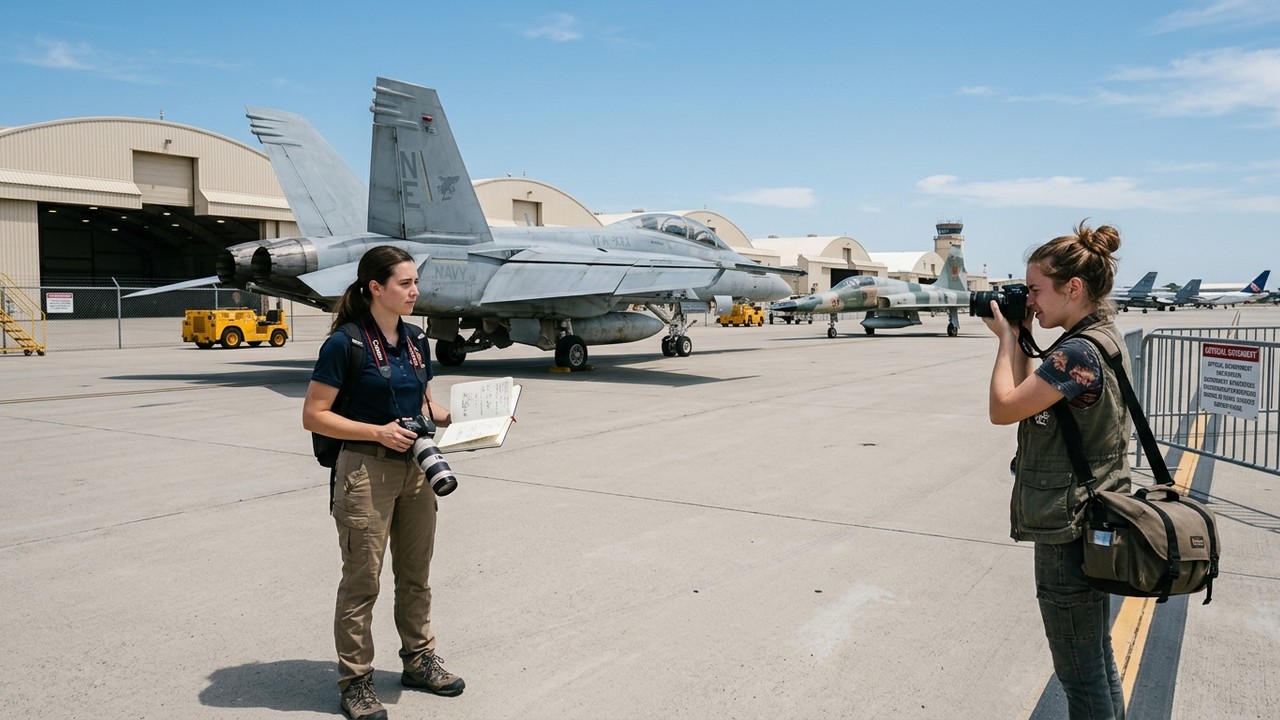
Image generated by AI
US Navy Accelerates Transition From F-5 Tiger Aggressors To Super Hornet Red Air Squadrons Amid Rising Asian Threats
[Washington, June 21, 2026] — The US Navy is transitioning F-5 aggressors to Super Hornet training fleets as part of a major readiness overhaul mandated by preliminary legislative language for the Fiscal 2027 National Defense Authorization Act. This strategic shift directly addresses the growing capabilities of fourth- and fifth-generation Chinese fighter aircraft. By upgrading high-end training scenarios with mature, carrier-capable airframes, naval aviation commanders aim to close persistent readiness gaps before surplus aircraft enter the reserve inventory.
Washington Mandates F-5 To Super Hornet Aggressor Fleet Transition
Adversary (red air) training programs have long served as the backbone of realistic combat preparation for American fighter pilots. Following extensive combat lessons learned during the Vietnam War, military planners covertly acquired Soviet-era MiG-21, MiG-23, and MiG-17 aircraft under Operation Constant Peg. These foreign-built airframes allowed US crews to practice dogfighting maneuvers against authentic enemy tactics without risking captured personnel. Decades later, the Northrop F-5 Tiger II emerged as the standard workhorse for simulating hostile interceptors across multiple service branches. Its lightweight frame, straightforward maintenance profile, and affordable operating costs made it an ideal placeholder for high-intensity training exercises.
Congressional draft language for the upcoming defense budget now explicitly requires the Department of the Navy to submit annual progress reports over the next five years. These mandatory updates will track the systematic relocation of reserve-level F-5 tactical fighter units into F/A-18E/F Super Hornet configurations. Industry observers note that this legislative push reflects a deliberate pivot toward higher-end platforms capable of mimicking modern aerial threats. The Navy currently maintains a mix of upgraded single-seat F-5N models and two-seat F-5F variants, all slated for the ARTEMIS avionics standard.
Swiss Air Force Exports Fuel Navy Adversary Training Upgrades
Procurement pipelines are processing twenty-two former Swiss Air Force F-5E and F-5F airframes designated for frontline adversary duties. Even with these mechanical enhancements, fleet commanders acknowledge that the original airframe architecture simply cannot replicate the sensor fusion and kinetic performance of contemporary combat aircraft. The transition relies heavily on a unique reverse Foreign Military Sales arrangement established in the early twenty-first century. Naval aviation officials originally purchased forty-four former Swiss F-5E fighters across a six-year window for approximately fifty million dollars.
Switzerland itself had initially acquired one hundred and ten of these jets from the US Air Force during the nineteen seventies under standard export agreements. Today, Bern continues to operate roughly fifteen legacy Tigers alongside twenty-five aging Hornet models, with procurement plans already earmarking thirty F-35A Lightning IIs to eventually clear out remaining stock. Meanwhile, Washington leverages the returned airframes to sustain training volume while simultaneously upgrading tactical readiness for Pacific operations. The accelerated retirement schedule ensures that aging airframes do not bottleneck large-scale joint exercise scheduling.
Carrier Strike Groups Benefit From Super Hornet Red Air Capabilities
The F/A-18E/F brings a completely different operational profile to simulated combat environments compared to its predecessor. Modern carrier-based fighters feature the AN/APG-79 active electronically scanned array radar, advanced ATFLIR targeting pods, and integrated radar warning receivers that closely mirror actual threat systems. These mature avionics suites allow training commands to replicate Chinese J-16 multirole fighters and other fourth-generation platforms with unprecedented accuracy. Super Hornets also accommodate infrared search and track systems, enabling them to track and pursue evading targets far more effectively than unpowered F-5s flying clean configurations.
Surplus airframes already supporting reserve and training commands provide a cost-effective bridge until the next generation of unmanned or manned fighters enters service. The Navy currently operates approximately three hundred and twenty-seven Super Hornets, with final production deliveries expected in 2027. These airframes complement a growing F-35C inventory that currently exceeds seventy examples and will eventually scale to two hundred and seventy-three platforms. Fleet commanders view the Super Hornet’s proven carrier suitability and mature maintenance logistics as critical advantages during the transition phase.
| Unit Designation | Primary Aircraft Type |
|---|---|
| VFC-111 "Sundowners" | Northrop F-5s |
| VFC-13 "Saints" | Lockheed Martin F-16C/Ds (transitioned from F-5s) |
| VFC-12 "Fighting Omars" | F/A-18E/F Super Hornet |
| VFC-204 "River Rattlers" | Northrop F-5s (transitioned from Legacy Hornets) |
| NAWDC / TOPGUN | F/A-18E/F and F-16A/B/C/D |
Pacific Theater Threats Drive Marine Corps Aggressor Squadron Overhaul
Parallel restructuring efforts are underway within the Marine Corps aviation command, which currently relies on two dedicated adversary squadrons for expeditionary training support. VMFT-401 "Snipers" and VMFT-402 "Grim Reapers" both operate modified F-5 airframes enhanced with Red Net tactical networking systems. These integrated situational awareness tools allow simulated enemy pilots to broadcast threat data directly to friendly strike packages during large-scale exercises. Marine leadership is currently drafting replacement blueprints outlined in the latest February aviation strategy document. Industry analysts expect the Corps to adopt either surplus Super Hornets or specialized contractor-operated airframes to maintain training continuity across joint force deployments.
The shift away from legacy adversary platforms also impacts long-term maintenance planning. As older airframes approach structural service limits, replacement cycles will require coordinated funding allocations across multiple defense budgets. Fleet readiness reports indicate that high-tempo exercises in the Indo-Pacific region demand consistent red air availability. Transitioning to Super Hornet configurations allows marine aviation commands to synchronize training requirements with active carrier strike group schedules. This alignment reduces friction during combined arms drills and improves overall force posture readiness.
Private Defense Contractors Maintain Global Tactical Jet Training Networks
Even as military services retire their own F-5 fleets, private defense contractors will continue supplying a significant portion of red air support. Five major commercial operators currently manage combined tactical jet inventories exceeding four hundred aircraft for government training contracts. Companies including ATAC, Draken International, Top Aces, Tactical Air Support, and Ravn Aerospace provide flexible surge capacity during peak exercise periods. Only Tactical Air Support currently maintains a dedicated F-5 Tiger inventory, operating roughly twenty-six ex-Royal Jordanian and Canadian F-5E and F-5F models. Corporate flight divisions are actively expanding their fleets toward forty-four F-5AT configurations to meet sustained demand.
This public-private training ecosystem ensures that high-fidelity adversary simulations remain available regardless of whether surplus military airframes enter the reserve pipeline or face immediate retirement. Contractor-operated fleets often deploy to forward locations, providing regional training access that government squadrons cannot routinely sustain. Fleet commanders rely on these commercial partnerships to fill scheduling gaps during maintenance availabilities or when domestic ranges face weather-related restrictions. The continued integration of civilian aviation assets into national defense training networks establishes a resilient, scalable support structure for future combat readiness initiatives.
Future Carrier Aviation Relies On Collaborative Combat Aircraft Programs
Naval aviation leaders are simultaneously evaluating autonomous systems and next-generation manned fighters to permanently replace legacy trainer and aggressor roles. The T-45 Goshawk fleet, numbering nearly two hundred examples, remains the primary advanced jet trainer while procurement teams assess competition between the Air Force T-7A Red Hawk and alternative commercial designs. Collaborative Combat Aircraft programs are already testing unmanned drone derivatives specifically designed to simulate hostile electronic warfare and missile threats during large-scale fleet exercises. The YFQ-44 designation marks an early stage in developing autonomous platforms that can operate alongside manned fighters during complex mission profiles.
As fiscal constraints and technological advancements intersect, the deliberate shift from F-5 Tigers to Super Hornet red air squadrons establishes a new baseline for carrier strike group combat readiness. Training commands will continue refining high-end threat replication protocols until the F/A-XX fighter program delivers its final service designation. Industry sources indicate that the defense acquisition community will likely announce the next-generation fighter winner in the second half of 2026. Until that milestone arrives, the Navy will maintain its current transition trajectory, ensuring that carrier air wings remain prepared for high-intensity aerial combat operations.
US Navy transitioning F-5 aggressors to Super Hornet training fleets to counter modern Chinese fighter threats and upgrade adversary simulation capabilities.
Related Travel Guides
Disclaimer
This article is for informational and educational purposes only. It does not constitute legal, financial, or professional advice. While we strive to provide accurate and up-to-date information, travel policies, regulations, and conditions change rapidly. Always verify information with official sources before making travel decisions. Nomad Lawyer makes no representations about the accuracy, reliability, completeness, or suitability of the information provided. Readers should consult qualified professionals for advice specific to their circumstances. The views expressed in this article are those of the author and do not necessarily reflect the views of Nomad Lawyer.
Raushan Kumar
Founder & Lead Developer
Full-stack developer with 11+ years of experience and a passionate traveller. Raushan built Nomad Lawyer from the ground up with a vision to create the best travel and law experience on the web.
Learn more about our team →