
American Airlines Flight AAL2281 Diverts to Harrisburg Due to Severe Weather and Airspace Congestion
A routine flight from Florida to the nation's capital took an unexpected turn when severe summer weather and heavy traff

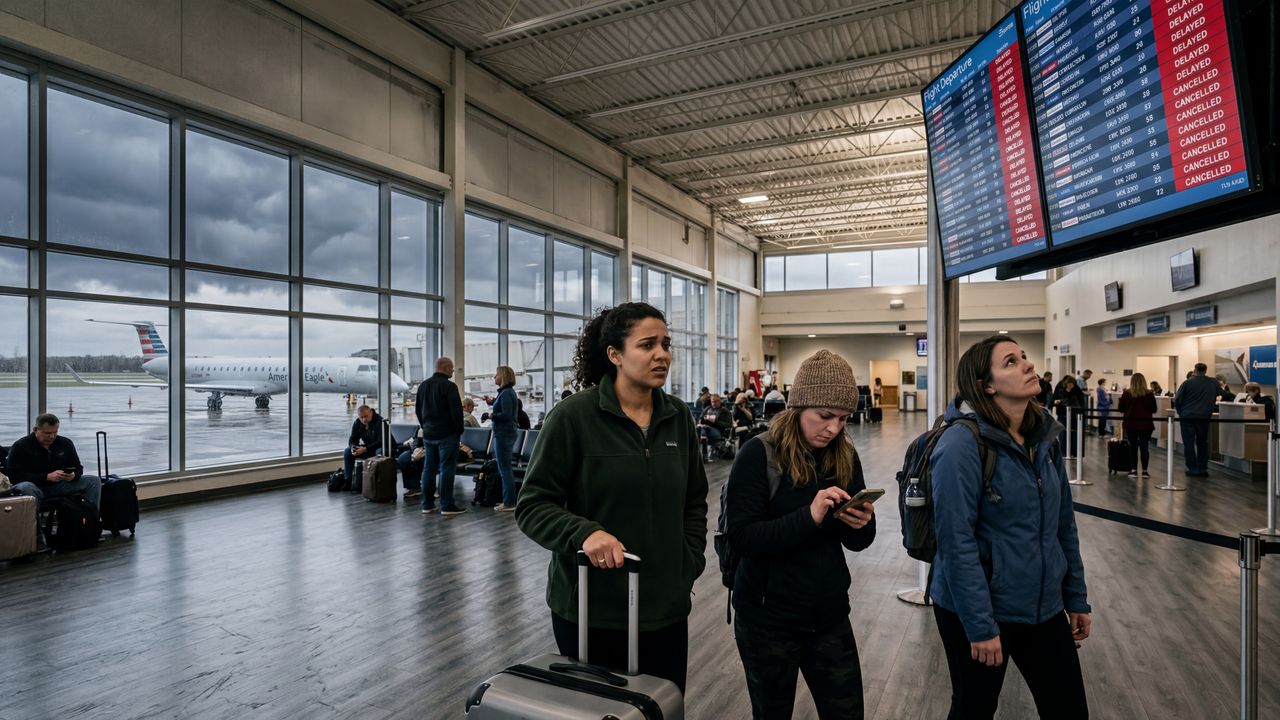
Image generated by AI
Weather and Gridlock Force Emergency Diversion in US Airspace
American Airlines flight AAL2281, an Airbus A320-214 traveling from West Palm Beach to Washington, was forced to divert to Harrisburg International Airport on June 23, 2026. The diversion occurred as the aircraft approached the highly restricted and congested airspace of the U.S. capital, where a combination of atmospheric instability and ground-stop delays created a critical operational challenge.
The flight crew received immediate instructions from air traffic controllers to alter their course. As weather conditions deteriorated rapidly near the destination, the pilots executed a tactical turn toward Pennsylvania to ensure the safety of all passengers and crew.
Critical Fuel Margins and Air Traffic Constraints
The decision to divert was driven by a cascading series of delays at Reagan National Airport. Severe summer storms caused significant ground-stop disruptions, leading to an extensive queue of aircraft waiting to land.
Aviation logs indicate that had flight AAL2281 remained in its assigned holding pattern, the aircraft would have faced a delay exceeding 90 minutes. Such a prolonged wait would have severely depleted the Airbus A320's reserve fuel tanks, potentially compromising the mandatory safety cushions required by federal aviation regulations. To mitigate this risk, the captain identified Harrisburg International Airport as the most viable alternative for a safe landing.
Flight Timeline and Operational Recovery
The journey began at West Palm Beach International Airport with a slight departure delay. The flight proceeded normally through the initial cruising phase until the aircraft entered the mid-Atlantic tracking sector. It was at this point that the crew was notified of the severe constraints affecting the Washington arrival corridors.
The aircraft touched down safely in Harrisburg at approximately 6:00 PM. Following the landing, ground crews at Harrisburg International Airport coordinated a rapid turnaround, refueling the aircraft and providing passenger support. Once the weather cell over the East Coast dissipated and a new departure window opened, the flight departed Harrisburg and successfully completed its journey to Washington later that evening.
Safety Protocols in Modern Aviation
While mid-air rerouting can be unsettling for passengers, this incident underscores the rigorous safety-first protocols of commercial aviation. The Airbus A320-214 is designed for high structural reliability, and its flight planning software allows crews to make precise calculations regarding fuel burn and weight.
By opting for an early diversion rather than circling in turbulent skies, the flight crew adhered to standard operating procedures designed to prioritize passenger welfare over schedule adherence.
Flight Summary Data
| Flight Detail | Information |
|---|---|
| Flight Number | AAL2281 |
| Aircraft Type | Airbus A320-214 |
| Origin | West Palm Beach International Airport |
| Intended Destination | Washington (Reagan National) |
| Diversion Airport | Harrisburg International Airport |
| Primary Cause | Summer Storms & Air Traffic Congestion |
| Landing Time (Diversion) | Approx. 6:00 PM |
Key Takeaways
- Safety First: The diversion was a proactive measure to avoid depleting emergency fuel reserves during a 90-minute projected delay.
- Weather Impact: Severe convective summer storms caused widespread ground stops in the Washington airspace.
- Efficient Recovery: Coordination between American Airlines and Harrisburg ground crews allowed for a swift refuel and completion of the trip.
- Standard Procedure: The event highlights the effectiveness of aviation safety buffers and the role of air traffic control in managing congested corridors.
FAQ
Why did American Airlines flight AAL2281 divert? The flight diverted due to a combination of severe summer storms and heavy air traffic congestion near Washington, which would have forced the plane into a dangerously long holding pattern.
Was there a mechanical failure on the Airbus A320? No. The diversion was operational and weather-related; the aircraft performed as expected throughout the rerouting and subsequent flight.
Where did the flight eventually land? After a temporary stop and refueling at Harrisburg International Airport, the flight continued to its original destination in Washington.
Related Travel Guides
-
Travel Western Sydney Gains Major Boost as Singapore Airlines Commits Daily Service
-
States Travel Latest: Florida Joins Top 2026 Retirement Destinations
Disclaimer: All information is obtained from reliable flight tracking and news sources and is subject to change.
Disclaimer
This article is for informational and educational purposes only. It does not constitute legal, financial, or professional advice. While we strive to provide accurate and up-to-date information, travel policies, regulations, and conditions change rapidly. Always verify information with official sources before making travel decisions. Nomad Lawyer makes no representations about the accuracy, reliability, completeness, or suitability of the information provided. Readers should consult qualified professionals for advice specific to their circumstances. The views expressed in this article are those of the author and do not necessarily reflect the views of Nomad Lawyer.
Kunal K Choudhary
Co-Founder & Contributor
A passionate traveller and tech enthusiast. Kunal contributes to the vision and growth of Nomad Lawyer, bringing fresh perspectives and driving the community forward.
Learn more about our team →