
Why Lufthansa's Airbus A340-600 Has Working Restrooms Hidden in the Cargo Hold Below Deck
Lufthansa's A340-600 features an unusual design choice: functional lavatories located below the main passenger deck accessed by staircase. Here's the engineering and strategy behind this quirk.

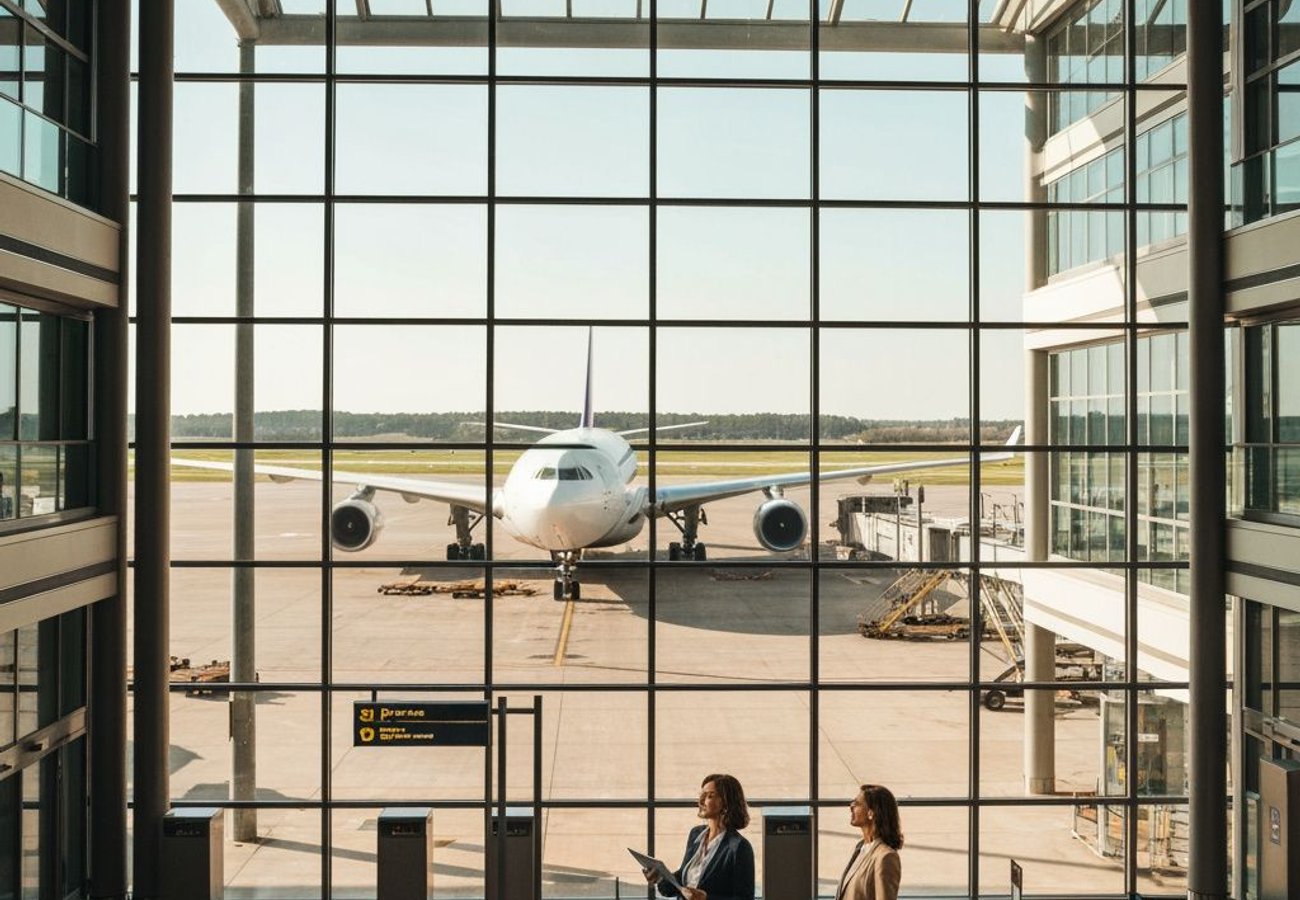
Image generated by AI
Passengers boarding Lufthansa's Airbus A340-600 often discover something unexpected mid-flight: a narrow staircase leading downward to a fully functional bathroom nestled in the cargo hold. It sounds absurd. It looks bizarre in viral cabin tour videos. Yet this design quirk represents one of modern aviation's most pragmatic solutions to long-haul cabin optimization.
I first encountered footage of travelers descending into the lower deck on social media, and my instinct was skepticism. A working toilet below the main deck? In cargo space? But the engineering behind it reveals something important about how airlines ruthlessly maximize every cubic foot of fuselage space on aircraft designed for 12-hour transoceanic missions.
The Problem: Space Wars on Ultra-Long-Haul Aircraft
The Airbus A340-600 stretches approximately 250 feet (75 meters)—making it one of the longest commercial aircraft ever built. Lufthansa, as the largest operator of this type, faced a classic widebody dilemma in the early 2000s: how do you fit premium seating, wider galleys, and adequate passenger facilities into a cabin designed for routes exceeding 10 hours without adding more aircraft?
The answer wasn't adding more lavatories to the main deck. It was removing them entirely.
Reddit: "I went down there expecting disaster. The bathroom was actually spotless and way quieter than the ones upstairs." — r/flying
By relocating some lavatories to the lower deck's cavernous cargo area, Lufthansa freed up valuable real estate on the main cabin. More business-class seats. Expanded galleys. Reduced aisle congestion during peak meal service. Better passenger flow dynamics on flights where bathrooms become social bottlenecks.
The Engineering: Why the A340-600 Made This Possible
Not every widebody could support this configuration. The A340-600's four-engine design and exceptionally long fuselage created something rare: a cargo hold tall enough for passengers to stand upright comfortably. Most other widebodies—the Boeing 777, 787, Airbus A350—lack sufficient lower-deck headroom for safe passenger access.
The structural flexibility of the aircraft was critical. Lufthansa's engineers installed a dedicated staircase near the mid-cabin galley area, leading to a small lower-deck lavatory complex featuring standard aircraft fittings, UV disinfection, full pressurization, and temperature control. Each below-deck bathroom setup can accommodate up to ten waiting passengers—crucial during peak service hours.
Weight distribution improved as well. On ultra-long flights, even small adjustments to center-of-gravity calculations matter. Relocating facilities lowered the fuselage's weight distribution, a subtle but measurable operational benefit that airlines document across every flight segment.
The Unique Solution: Lufthansa's Signature Move
Here's the critical detail: no other A340-600 operator adopted this design. Not Air France, not Virgin Atlantic, not British Airways. This was pure Lufthansa customization, reflecting the airline's historically conservative yet innovative approach to long-haul comfort optimization.
The cabin tour videos circulating on YouTube and TikTok capture passenger reactions accurately. What appears unconventional actually enhanced the experience. Travelers reported the below-deck lavatories as surprisingly spacious, odor-free, and private—unexpected luxuries that generated positive word-of-mouth.
According to cabin documentation and crew feedback, the lower-deck location eliminated a common complaint on long-haul flights: unpleasant lavatory odors drifting through premium cabin sections. Pressurized, climate-controlled, and isolated from the main cabin, these facilities simply worked.
Precedent: Other Aircraft Experimented With Lower-Deck Solutions
Lufthansa's A340-600 wasn't aviation's first foray into unconventional lavatory placement. Thomas Cook's Airbus A330-200 charter aircraft featured nearly identical staircase-accessible lower-deck restrooms during the late 1990s and early 2000s. Historical Soviet designs pushed the concept further—the Ilyushin Il-86 incorporated full lower-deck galley spaces, food lifts, and service areas with dedicated elevators.
Even contemporary aircraft like the Boeing 747 (all variants) and Airbus A380 maintained lower-deck galley and service zones accessed by elevators, though not for passenger lavatories. The design principle—leveraging cavernous lower decks for operational efficiency—remained consistent across generations.
The difference? The A330 experiments never gained traction. The complexity wasn't worth the marginal gains on aircraft with smaller cargo holds. But on the massively stretched A340-600, with its enormous fuselage and lighter passenger density per volume, the calculus changed.
Why Other Airlines Didn't Follow
Modern widebodies prioritize compact, space-saving lavatory modules over relocation. The Boeing 787, 777X, and Airbus A350 achieve efficiency through design innovation rather than repositioning—advanced vacuum systems, modular construction, integrated galley-lavatory clusters.
Lufthansa's A340-600 represents a transitional design era. Built in the late 1990s and early 2000s, the aircraft inherited four-engine reliability and generous lower-deck volume from the jet age, while incorporating modern avionics and glass cockpits. By the time newer widebodies launched, aircraft engineers had cracked better solutions.
But Lufthansa had already optimized their fleet. Moving lavatories down required minimal retrofitting on aircraft they operated for 20-year lifecycles. Competitors faced no incentive to adopt unconventional solutions when ordering new aircraft with superior baseline efficiency.
The Practical Reality: Passenger Experience
Crew training addresses the below-deck facilities as standard procedure. Signage is clear. The staircase is safe, with handrails and adequate lighting. During peak meal services or lavatory rushes on 12-hour flights, passengers actually appreciate the overflow capacity.
Safety compliance remained non-negotiable. All fixtures meet ICAO and JAA standards. Pressurization, oxygen systems, electrical provisions—every system was engineered to FAA and European Aviation Safety Agency specifications. This wasn't a hack; it was a certified cabin modification.
The real insight? Lufthansa recognized that on ultra-long-haul routes, cabin space utilization mattered more than novelty. Premium passengers valued wider seats and shorter meal-service delays over traditional lavatory locations. The below-deck bathrooms delivered both.
The Legacy: Why This Matters Now
As airlines face modern constraints—fuel efficiency demands, weight penalties, seating density pressure—Lufthansa's A340-600 represents an underrated case study in creative constraint-solving. They didn't invent new technology. They reorganized existing space with brutal pragmatism.
Today's aircraft manufacturers have rendered this approach obsolete. Twin-engine widebodies dominate new orders. The A340-600 production ended in 2011. But as these aircraft continue flying for another decade—many won't retire until 2035-2040—their unconventional cabins remain operational reminders of a different era's design philosophy.
Reddit: "Every time I fly Lufthansa A340, I go down there just to say I used an aircraft bathroom in the cargo hold. It's the weirdest flex in aviation." — r/aviation
The below-deck lavatories won't appear on next-generation aircraft. But they've earned their place in aviation trivia, viral videos, and the expanding collection of airline quirks that make this industry endlessly fascinating.
Lufthansa's cargo hold bathrooms prove that solving problems sometimes requires thinking vertically—and passengers surprisingly don't mind the detour.
Related Travel Guides
Disclaimer
This article is for informational and educational purposes only. It does not constitute legal, financial, or professional advice. While we strive to provide accurate and up-to-date information, travel policies, regulations, and conditions change rapidly. Always verify information with official sources before making travel decisions. Nomad Lawyer makes no representations about the accuracy, reliability, completeness, or suitability of the information provided. Readers should consult qualified professionals for advice specific to their circumstances. The views expressed in this article are those of the author and do not necessarily reflect the views of Nomad Lawyer.
Raushan Kumar
Founder & Lead Developer
Full-stack developer with 11+ years of experience and a passionate traveller. Raushan built Nomad Lawyer from the ground up with a vision to create the best travel and law experience on the web.
Learn more about our team →