
Balkan Nations Lead Shift toward Alternative European Travel Destinations 2026, Mitigating Overtourism as Schengen EES Rules Take Effect: New Travel Alert
Alternative European travel destinations 2026: Explore Albania, Croatia, and Montenegro tourism trends, Schengen 90-day rules, and EES biometrics.

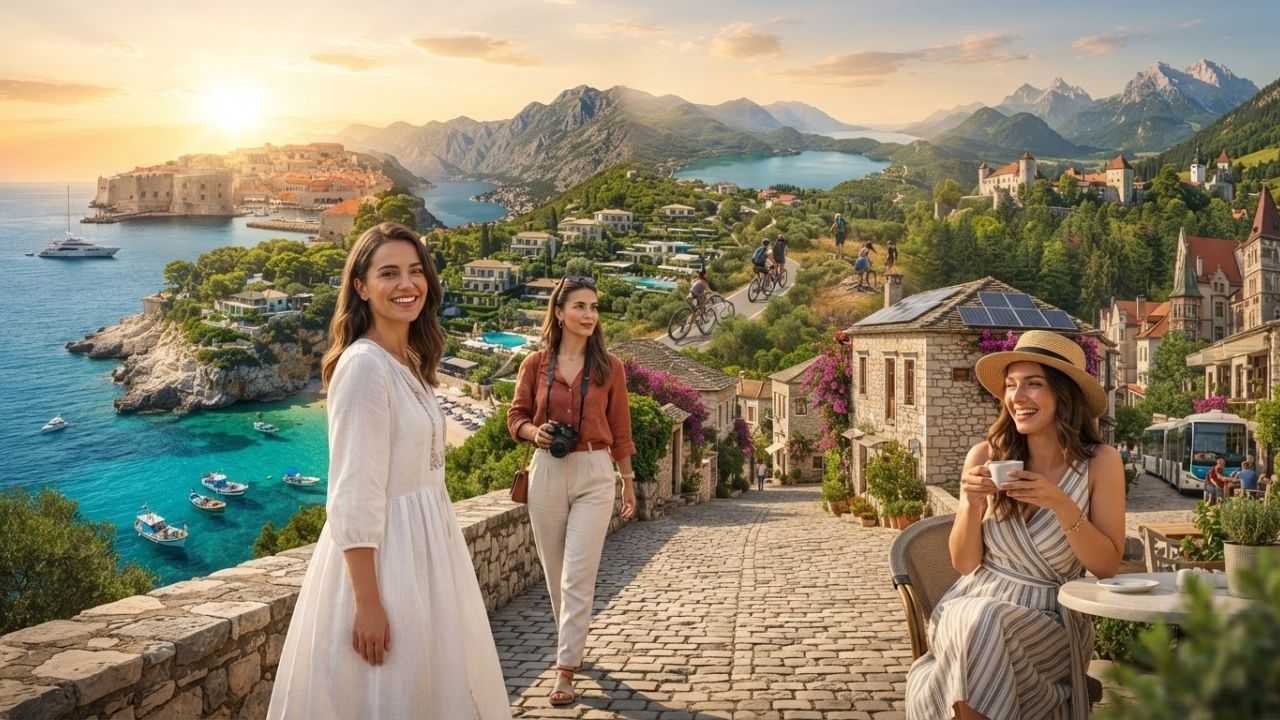
Image generated by AI
Published on July 26, 2026
As traditional European holiday hotspots experience severe summer congestion, travelers are actively seeking alternative European travel destinations 2026 to find quieter coastal and mountain retreats. Stretching from the Adriatic coasts of Albania and Croatia to the Alpine valleys of Liechtenstein and the forests of Poland, this regional transition aims to distribute visitor numbers away from saturated cities. However, holidaymakers planning multi-border itineraries must prepare for differing visa frameworks and the newly implemented Schengen Entry/Exit System (EES) biometric rules.
Quick Summary
- Balkan Growth Influx: Albania recorded 12.47 million foreign border entries in 2025, and May 2026 registered guest arrivals grew 12.4 percent year-on-year.
- Croatia's Mature Economy: Croatia continues to manage heavy demand, tracking 20.7 million arrivals and 94.8 million commercial overnight stays in 2025.
- Different Immigration Rules: Schengen members (Croatia, Poland, Liechtenstein) require different entry procedures than separate national regimes (Albania, Montenegro, North Macedonia).
- EES Biometric Scanning Live: The Schengen Entry/Exit System (EES) became fully operational on 10 April 2026, registering non-EU short-stay travelers at external border points.
- Inland Dispersal Focus: Local tourism boards are connecting coastal packages with mountain, lake (Ohrid), and countryside trails to relieve coastal pressure.
Context and Background: Selecting Alternative European Travel Destinations 2026
European tourism is undergoing a major structural shift as localized overtourism in cities like Barcelona, Venice, and Amsterdam forces regional planners to encourage tourism dispersal. According to development updates from the Ministry of Tourism and Environment of Albania, redirecting visitors to lesser-known rural and mountain communities helps support local cafés, hotels, and transport services. Although there is no formal joint marketing agreement or coordinate border campaign between the six featured destinations, they are united by the need to manage rising arrival numbers responsibly.
Event/Incident Details: Country Profiles and Dispersal Metrics
The tourism profiles and verified 2025 statistical positions of the six featured destinations are detailed below:
| Destination Country | Border & Immigration Framework | Verified Tourism Position (2025 Data) | Principal Tourism Responsibility |
|---|---|---|---|
| Albania | Separate national regime (non-Schengen) | 12.47 million foreign border entries | Spread growth beyond Tirana and popular Riviera locations |
| Croatia | European Union and Schengen member | 20.7 million arrivals; 94.8 million nights | Reduce coastal concentration and extend the visitor season |
| Montenegro | Separate national regime (non-Schengen) | 2.73 million arrivals; 15.37 million nights | Connect coastal Adriatic tourism with inland destinations |
| North Macedonia | Separate national regime (non-Schengen) | Foreigners formed 63.2% of tourists (Jan 2025) | Protect sensitive lake (Ohrid) and heritage areas |
| Liechtenstein | Schengen participant (no airport) | 121,596 guest arrivals; 219,038 nights | Convert short day visits into longer overnight stays |
| Poland | European Union and Schengen member | 18.9 million tourists (First Half of 2025) | Distribute demand across cities, coasts, and countryside |
- Albania: Foreign border entries grew 6.6 percent in 2025 compared to 2024's 11.70 million, though border movements include transit and business travel.
- Croatia: Commercial arrivals grew 2.2 percent and overnight stays rose 1.2 percent in 2025, with travelers staying an average of 4.6 nights.
- Montenegro: 2025 arrivals increased from 2.61 million in 2024, but total overnight stays fell slightly from 15.59 million, highlighting a reduction in average stay length.
- North Macedonia: Foreign visitors generated 57.5 percent of the 106,894 overnight stays recorded in January 2025.
- Liechtenstein: Swiss tourists generated 30.6 percent of 2025 overnight stays, though day-visitors continue to form a major part of the visitor economy.
- Poland: During 2024, registered establishments with 10+ bed spaces accommodated 38.8 million tourists and generated 97.6 million overnight stays.
Risk/Impact: Obstacles facing Alternative European Travel Destinations 2026
Travelers planning to cross between Schengen and non-Schengen zones in search of quieter vacation spots face several regulatory and local risks:
- Schengen Short-Stay Restrictions: Non-EU citizens must stay within the strict 90-days-in-180-days short-stay limit when traveling through Poland, Croatia, and Liechtenstein.
- EES Biometric Border Delays: Since the launch of the European Commission Migration and Home Affairs Entry/Exit System (EES) on 10 April 2026, travelers may encounter longer border queues for fingerprint and facial scan collection.
- Sensitive Ecosystem Overload: Directing visitors to delicate natural environments like Lake Ohrid in North Macedonia or pristine southern beaches in Albania can damage ecosystems if local capacity is exceeded.
- Summer Highway Congestion: Coastal roads in Montenegro and Albania suffer from severe summer traffic congestion due to limited transit infrastructure.
- Transit Bottlenecks in Liechtenstein: Having no commercial airport, Liechtenstein depends entirely on Swiss and Austrian rail and road connections.
What Authorities Are Saying
Border control agencies and tourism ministries emphasize that sustainability must guide regional expansion. Representatives from the Schengen border management teams remind travelers that the Entry/Exit System (EES), fully active since 10 April 2026, is a biometric registration system rather than a visa, and is completely separate from ETIAS, which remains in a pre-operational phase.
In Croatia, the Croatian National Tourist Board has stated that domestic dispersal is their primary focus, actively promoting continental counties, rural spa retreats, and historical inland towns to divert peak summer crowds from coastal resorts.
Similarly, Montenegrin municipal planners warn that if promotions outpace infrastructure, environmental risks—including summer water shortages and waste management strain—will intensify along the Adriatic coast, requiring a focus on regional distribution rather than a raw increase in tourist numbers.
Practical Traveler Advice Section
For holidaymakers planning to explore these alternative European destinations, travel experts suggest the following guidelines:
- Verify Immigration Rules for Each Border: Confirm which countries on your route are Schengen members and which require separate national visas.
- Calculate Schengen stay duration: Use official online Schengen calculators to track your 90-day short-stay limit.
- Allow Extra Transit Time for EES Checks: Expect longer processing times at external Schengen border crossings, particularly when driving from non-Schengen Albania or Montenegro.
- Keep Track of Local Guest Registrations: Ensure your hotel or accommodation host registers your stay with local police and provides tourist-tax receipts.
- Confirm Regional Bus and Ferry Schedules: Reconfirm transit times in the Balkan regions, as bus and ferry services can be highly seasonal.
- Book sensitive heritage permits early: Secure reservations for protected zones like Lake Ohrid in advance to comply with local visitor caps.
Broader Context Section
The rise of these alternative destinations demonstrates a changing philosophy in the global travel sector. Rather than measuring success solely by visitor arrivals, regional planners are focusing on regional distribution, average spend, and overnight stays.
Croatia’s experience with rapid coastal growth serves as a warning for Albania and Montenegro, proving that transport networks and waste services must be upgraded before promoting remote areas. By connecting cultural hubs with mountain trails and historic towns, the region aims to build a more resilient and sustainable tourism model.
What to Expect Next / Looking Ahead
Looking ahead, municipal governments in Albania and Montenegro will invest in highway upgrades along the Adriatic corridor to ease seasonal traffic congestion. In the Schengen area, border authorities will monitor the implementation of the EES system to reduce processing times for international travelers.
Additionally, the European Union will prepare for the future launch of ETIAS, though its official operational dates remain unconfirmed. As travelers continue to seek nature-based alternatives, destinations like North Macedonia and Poland will expand eco-tourism trails and rural homestay networks to capture a larger share of regional visitor spending.
Conclusion
In conclusion, the shift toward alternative European travel destinations offers a great opportunity for sustainable and responsible travel. By understanding the distinct border frameworks, planning for EES registration, and respecting local infrastructure limits, visitors can enjoy safe and unique journeys. Staying informed and maintaining flexibility will guarantee a holiday off the beaten path.
FAQ: Alternative European Travel Destinations 2026
Which of these alternative destinations are Schengen members?
Croatia, Poland, and Liechtenstein are Schengen participants, while Albania, Montenegro, and North Macedonia operate separate national border frameworks.
What is the Schengen Entry/Exit System (EES)?
Fully operational since 10 April 2026, the EES is a biometric registration system that records non-EU short-stay travelers crossing external Schengen borders. It is not a visa.
How many border entries did Albania record recently?
Albania recorded approximately 12.47 million foreign border entries in 2025, representing a 6.6 percent increase compared to 2024.
What are the main tourist attractions in North Macedonia?
Key attractions include the historic town of Lake Ohrid, the capital city of Skopje, national parks, mountain landscapes, and regional food routes.
Does Liechtenstein have an airport for international travelers?
No, Liechtenstein has no commercial airport. Travelers must access the country via rail or road connections through neighboring Switzerland or Austria.
Related Travel Guides
- European Union Approves Free Adjacent Seating for Children Under Fourteen, Strengthening Family Airline Seating Rights Across Member States: New Travel Alert
- 7.4 Magnitude Earthquake Hits Southern Mexico Pacific Coast Triggering Safety Alerts for Oaxaca and Guerrero
- Air France Suspends Flights to Dubai, Riyadh, and Beirut Amid Heightened Middle East Security Risks: New Travel Alert
Suggested SEO Metadata & Assets
- Meta Title: Alternative European Travel Destinations Guide 2026
- Meta Description: Alternative European travel destinations 2026: Explore Albania, Croatia, and Montenegro tourism trends, Schengen 90-day rules, and EES biometrics.
- URL Slug: alternative-european-travel-destinations-2026
- Tags:
Albania tourism,alternative European destinations,Croatia tourism,Schengen travel rules,Travel Alert - Featured Image Alt Text: A scenic view of a quiet stone bridge crossing a river bordered by traditional houses in a historic Balkan town.
Disclaimer
This article is for informational and educational purposes only. It does not constitute legal, financial, or professional advice. While we strive to provide accurate and up-to-date information, travel policies, regulations, and conditions change rapidly. Always verify information with official sources before making travel decisions. Nomad Lawyer makes no representations about the accuracy, reliability, completeness, or suitability of the information provided. Readers should consult qualified professionals for advice specific to their circumstances. The views expressed in this article are those of the author and do not necessarily reflect the views of Nomad Lawyer.
Kunal K Choudhary
Co-Founder & Contributor
A passionate traveller and tech enthusiast. Kunal contributes to the vision and growth of Nomad Lawyer, bringing fresh perspectives and driving the community forward.
Learn more about our team →