
Albania and the Balkans Are Rewriting Europe's Cultural Tourism Map — Here's Who's Leading
Albania, Croatia, Bosnia, and Montenegro are transforming into Europe's most compelling cultural destinations in 2026, drawing travelers away from overcrowded hotspots with UNESCO heritage towns, Ottoman architecture, and multi-civilisation archaeological sites across the Balkan corridor.
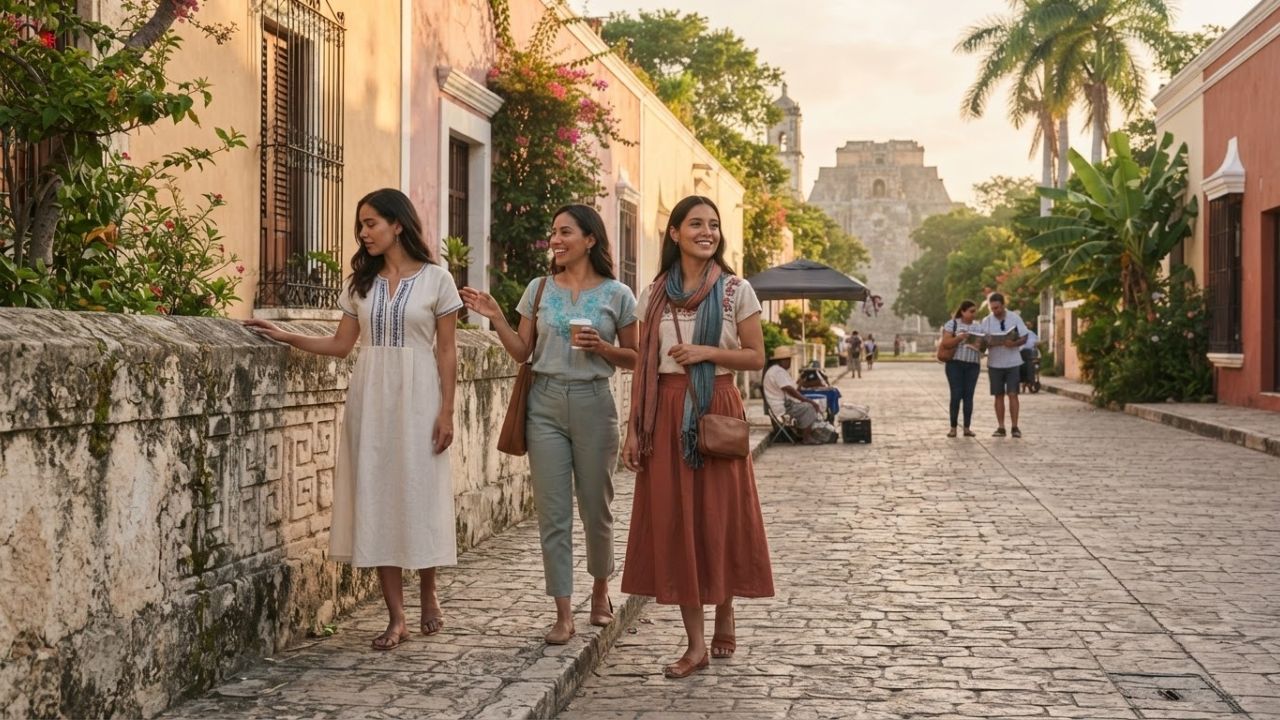
Image generated by AI
Albania's UNESCO-listed historic towns, Croatia's medieval coastal cities, and Bosnia and Herzegovina's multicultural heritage are driving a sweeping cultural tourism surge across the Balkans in 2026, with industry professionals at the Bolsa Turismo Lisboa (BTL) Travel Market reporting strong international demand from markets as geographically distant as Brazil — a signal that the region's appeal has moved decisively beyond its immediate European neighbourhood.
Travelers who once defaulted to Paris, Rome, or Barcelona are reconsidering. Across Albania, Croatia, Montenegro, Serbia, Bosnia and Herzegovina, North Macedonia, Slovenia, Bulgaria, and Romania, a combination of preserved heritage, authentic rural communities, Ottoman and Byzantine architecture, and UNESCO-recognized landscapes is generating a sustained wave of experience-driven tourism that is reshaping how Europe's cultural travel map is drawn.
How the Balkans Stack Up as Cultural Tourism Destinations in 2026
The regional ranking reveals a continent-within-a-continent, where ten countries compete through radically different cultural identities — all within a compact European geography that allows multi-country itineraries within a single trip.
| Country | Cultural Tourism Strength | Key Cultural Assets | Cultural Tourism Position |
|---|---|---|---|
| Croatia | Very High | Dubrovnik, Split, Roman heritage, UNESCO sites, Adriatic culture | Most internationally recognized Balkan cultural destination |
| Greece (Balkan region) | Very High | Ancient Greece, Athens, archaeological sites, Byzantine heritage | Global cultural tourism powerhouse |
| Albania | High Growth Potential | Berat, Gjirokastër, Butrint, Ottoman heritage, traditional villages | Fast-rising authentic cultural destination |
| Serbia | High | Medieval monasteries, Belgrade heritage, fortresses, festivals | Strong urban and historical tourism appeal |
| Bosnia and Herzegovina | High | Mostar, Sarajevo, Ottoman heritage, multicultural history | Unique cultural storytelling destination |
| Montenegro | High | Kotor, Cetinje, Venetian heritage, mountain traditions | Strong heritage and landscape combination |
| North Macedonia | High | Ohrid, Byzantine churches, ancient settlements | Important religious and archaeological destination |
| Slovenia | High | Ljubljana, Ptuj, Alpine traditions, sustainable tourism | Leading sustainable cultural experience model |
| Bulgaria | High | Thracian heritage, monasteries, folklore traditions | Strong historical depth and UNESCO assets |
| Romania (Balkan cultural zone) | High | Medieval towns, castles, folklore traditions | Expanding the heritage tourism market |
Croatia Holds Its Position as the Balkans' Most Internationally Recognized Cultural Destination
Croatia ranks at the top of the regional cultural tourism hierarchy, with its combination of UNESCO-listed heritage, Roman history, and Adriatic coastal culture giving it a depth of product that few destinations in Europe can match.
Dubrovnik's fortified Old Town and Split's Diocletian's Palace are the twin anchors of Croatia's cultural reputation. The former demonstrates how medieval European maritime heritage can generate sustained global recognition; the latter offers one of the continent's most striking examples of ancient Roman civilization embedded in a living urban environment.
Croatia's strong aviation connectivity, established tourism infrastructure, and multi-decade track record in international markets make it the benchmark against which other Balkan destinations are increasingly measured. Current cultural tourism trends in Croatia include:
- Historic city breaks centered on Dubrovnik and Split
- UNESCO heritage tours combining Roman and medieval sites
- Cultural cruises along the Adriatic coast
- Archaeological tourism at Diocletian's Palace and Roman sites
- Gastronomy-focused travel highlighting Dalmatian cuisine
- Festival tourism anchored in Dubrovnik's Summer Festival
Greece Anchors the Balkan Route Through Ancient Civilisation and Archaeological Depth
Although Greece occupies a dual identity — simultaneously a Mediterranean powerhouse and a Balkan cultural anchor — its contribution to the regional heritage travel circuit is indispensable.
The Acropolis of Athens, Delphi, and Meteora together represent one of the world's most concentrated collections of historically and archaeologically significant sites. Millions of travelers planning broader Balkan itineraries use Greece as an entry point, its classical heritage providing a chronological foundation for journeys that move north through Byzantine, Ottoman, and Austro-Hungarian layers.
Albania Emerges as the Balkans' Fastest-Rising Cultural Destination
Albania is the defining story of Balkan cultural tourism in 2026. Once practically invisible on international travel itineraries, the country has become one of Europe's most-discussed heritage destinations, driven by travelers who want authenticity over crowds.
The country's position rests on three pillars. First, Berat — universally recognized as the "City of a Thousand Windows" — and Gjirokastër, whose stone houses, Ottoman-era castle, and preserved bazaar present a civilization snapshot that predates most Western European tourism infrastructure by centuries. Both are UNESCO World Heritage Sites.
Second, Butrint — an archaeological site near the Greek border that carries the fingerprints of Greek colonists, Roman administrators, Byzantine monks, and Venetian merchants — offers a single location where visitors can trace four distinct civilizations across one compact landscape. According to UNESCO's World Heritage documentation, Butrint represents an exceptional testimony to the successive waves of Mediterranean civilization.
Third, Albania's traditional villages, folk music traditions, regional mountain cuisine, and Cold War heritage sites — including the thousands of concrete bunkers that remain scattered across the landscape — provide a travel experience unlike anything available in comparable European destinations.
Tirana is also repositioning itself as a cultural gateway city, with museums, creative hubs, and revitalized historic quarters giving visitors a meaningful urban starting point before journeys deeper into the country.
Current cultural tourism growth areas across Albania include:
- UNESCO heritage exploration in Berat and Gjirokastër
- Ottoman architecture and bazaar tours
- Rural and village community experiences
- Traditional food and mountain cuisine itineraries
- Cold War heritage and bunker tourism
- Combined culture and adventure routes
Bosnia and Herzegovina Draws Travelers Through Layers of Multicultural History
Bosnia and Herzegovina occupies a singular position in the Balkan cultural travel landscape. No other country in the region concentrates as many civilizational layers — Ottoman, Austro-Hungarian, medieval Slavic, and modern Balkan — within two cities as the country does through Mostar and Sarajevo.
Mostar's Stari Most bridge, rebuilt after its destruction in 1993 and now a UNESCO World Heritage Site, is as much a political symbol as an architectural one. For travelers who want destinations where history is not preserved behind museum glass but remains embedded in daily life, Mostar delivers with an immediacy that few heritage sites can match.
Sarajevo extends that experience across a full urban environment. Mosques, Orthodox and Catholic churches, and synagogues stand within walking distance of each other in the old city — a physical record of coexistence across centuries. The country's tourism growth is being driven by:
- Ottoman heritage routes through the old bazaars
- Historical city tours of Sarajevo's siege-era landmarks
- Religious landmarks connecting multiple faiths
- Traditional cuisine including ćevapi, burek, and Bosnian coffee culture
- War and memory tourism at sites including the Tunnel of Hope
Montenegro Combines Adriatic Heritage With Mountain Culture
Montenegro is capitalizing on a travel profile that few countries can replicate: a small territory where medieval coastal towns give way within an hour's drive to dramatic mountain scenery and traditional highland communities.
Kotor's walled old city — a UNESCO World Heritage Site — represents the country's most internationally recognized cultural asset. Its Venetian-influenced architecture, narrow stone streets, and Adriatic setting attract heritage travelers from across Europe and beyond.
The former royal capital of Cetinje provides a different dimension, its museums and monasteries connecting visitors to Montenegro's political independence and national identity narratives. Emerging tourism patterns in the country are shifting toward:
- Heritage walking tours within Kotor's walls
- Traditional village experiences in the Montenegrin highlands
- Religious tourism at the Ostrog Monastery
- Mountain culture journeys combining history and landscape
- Nature and heritage combinations for multi-interest travelers
Serbia Positions Belgrade and Novi Sad at the Centre of Its Cultural Tourism Offer
Serbia's cultural tourism appeal rests on a combination increasingly attractive to travelers exhausted by overcrowded Western European capitals: genuine urban history, living cultural festivals, and fortress architecture without the mass-market price premium.
Belgrade's Kalemegdan Fortress, positioned above the confluence of the Sava and Danube rivers, anchors the city's historical identity. Novi Sad — recognized for its cultural atmosphere and festival heritage — adds a layer of contemporary credibility through its creative industries and architectural character.
Serbia's current tourism development priorities include:
- Fortress tourism in Belgrade and the wider Danube corridor
- Wine route experiences in the Šumadija and Vojvodina regions
- Music and cultural festivals attracting international audiences
- Monastery journeys through the medieval Orthodox heritage sites of Studenica and Žiča
- Gastronomy travel built around regional cuisine traditions
North Macedonia's Ohrid Makes the Case for Religious and Archaeological Tourism
Ohrid is North Macedonia's most internationally recognized destination and one of the Balkans' most compelling UNESCO World Heritage Sites — listed for both its cultural and natural significance alongside Lake Ohrid, one of Europe's oldest and deepest lakes.
The city's Byzantine churches, Ottoman-era streets, and archaeological sites combine into a travel experience that appeals particularly to visitors interested in religious heritage, early Christian history, and ancient civilizations. According to UNESCO's site documentation, Ohrid is considered one of the oldest human settlements in Europe.
North Macedonia's cultural tourism offering is built around:
- Byzantine churches and early Christian monasteries
- Ottoman-era architecture in Ohrid's old bazaar
- Archaeological sites including the ancient town of Heraclea Lyncestis
- Traditional lake communities and fishing village experiences
- Religious heritage routes connecting multiple confessional traditions
Slovenia Sets the Regional Standard for Sustainable Cultural Tourism
Slovenia demonstrates that a small country with limited geographic scale can achieve disproportionate tourism impact through strategic focus. The country has become the Balkans' leading model for sustainable cultural tourism, combining historic towns with Alpine community traditions, artisan crafts, and a gastronomy offer recognized internationally as an example of responsible heritage tourism development.
Ljubljana's compact historic center, Ptuj's Roman and medieval heritage, and Škofja Loka's medieval character together provide a cultural circuit that rewards slow travel. Slovenia's model — emphasizing smaller-scale experiences, direct community interaction, and environmental responsibility — is increasingly being studied by other Balkan nations seeking to avoid the overtourism pressures that have affected Croatia and Greece.
Key cultural destinations across Slovenia include:
- Ljubljana's historic center and medieval castle
- Ptuj's Roman heritage and traditional festivals
- Škofja Loka's medieval character and crafts traditions
- Traditional rural communities preserving Alpine lifestyles
Bulgaria and Romania Extend the Cultural Corridor's Historical Depth
Bulgaria's Thracian heritage, the Rila Monastery — the country's largest and most revered Orthodox monastery — historic Plovdiv, and a rich calendar of folklore traditions give the country a cultural tourism base that remains significantly underexplored by international visitors relative to its quality and depth.
Romania is actively growing its heritage tourism offer through the medieval towns and castle landscapes of Transylvania, rural village experiences in regions like Maramureș, and expanding cultural tourism investment that is gradually broadening the country's international appeal beyond its most well-known narrative circuits.
Great Place to Travel Takes Balkan Cultural Tourism to BTL 2026's Global Stage
The commercial momentum behind Balkan cultural tourism is visible at major international travel trade events. At the Bolsa Turismo Lisboa (BTL) Travel Market 2026 — one of Europe's most significant travel trade fairs — Anni Rusi of Great Place to Travel, a Tirana-based operator specializing in Albanian and Balkan cultural tours, reported strong professional engagement during the event's opening day.
The company entered BTL with cultural tourism as the core of its commercial proposition. The opening professional day produced contacts with travel agencies and tour operators not only from Portugal — the expected host-market audience — but also from Brazil and other geographically distant markets. That transatlantic interest reflects BTL's capacity to connect Balkan-focused operators with markets far beyond the immediate European neighbourhood.
Great Place to Travel's participation spans both the professional program and the days open to the general public — a dual-audience strategy reflecting the changing structure of travel demand. Some travelers continue to book through organized packages via intermediaries; an expanding segment plans and arranges journeys independently. By engaging with both audiences at a single event, the company is positioning Albania and the wider Balkans for discovery by travelers at every point on that spectrum.
The first professional day was described as very positive by Rusi, with expectations for continued engagement through the remaining professional sessions. The company's objective extends beyond wholesale partnerships: reaching the "simple tourist" — the independent traveler who organizes their own Albania or Balkans journey without a travel agency — is an equally explicit goal for the public-facing days of the event.
Why the Balkans' Cultural Tourism Momentum Matters for the Traveler Planning Now
For travelers evaluating European cultural itineraries, the Balkan shift carries direct practical implications.
Destinations including Berat, Kotor, Ohrid, and Mostar offer experiences of comparable or greater historical depth than many Western European heritage cities — at a fraction of the cost and without the overcrowding that has made some UNESCO sites in France, Italy, and Spain uncomfortable to visit.
The region's growing emphasis on multi-country cultural routes means that a single two-week trip can now combine Ottoman architecture in Albania, Byzantine heritage in North Macedonia, medieval fortresses in Serbia, and Adriatic coastal towns in Montenegro — connecting visitors with four distinct civilizational traditions within a compact corridor. And for independent travelers, the expansion of English-language guided experiences, village homestay programs, and culinary tourism itineraries across the region is lowering the logistical barriers that previously pushed experience-driven travelers toward more established alternatives.
The region's greatest structural advantage is not any individual site or country. It is the density of distinct cultures, civilizations, landscapes, and traditions existing in close geographical proximity — a combination genuinely rare in European travel and one that no single established Western European destination can replicate.
FAQ: Balkans Cultural Tourism 2026
Which Balkan country is best for cultural tourism in 2026? Croatia and Greece hold the strongest international recognition, but Albania is recording the fastest growth as an authentic heritage destination. Berat, Gjirokastër, and Butrint are drawing travelers seeking experiences away from established tourist circuits, with the country also being recognized by industry professionals at BTL 2026.
Is Albania worth visiting for cultural tourism? Albania has become one of Europe's most recommended cultural destinations in 2026. The country combines two UNESCO World Heritage towns (Berat and Gjirokastër), the multi-civilisation archaeological site at Butrint, traditional village communities, and Cold War heritage in a compact, cost-effective travel environment.
What is the best cultural route through the Balkans? A well-documented regional route connects Albania's Ottoman heritage towns with North Macedonia's Byzantine Ohrid, Serbia's medieval monasteries, Bosnia and Herzegovina's multicultural Sarajevo and Mostar, and Montenegro's Venetian-influenced Kotor — covering multiple civilizational layers across a geographically manageable corridor.
What was Great Place to Travel's role at BTL Travel Market 2026? Great Place to Travel, a Tirana-based cultural tour operator, participated in the Bolsa Turismo Lisboa Travel Market 2026 to connect its Balkan-focused travel products with international travel agencies and tour operators. The company reported strong engagement from Portuguese, Brazilian, and other international professionals during the event's opening professional day, confirming that interest in Balkan cultural tourism extends well beyond the region's immediate European neighbourhood.
Related Travel Guides
Disclaimer
This article is for informational and educational purposes only. It does not constitute legal, financial, or professional advice. While we strive to provide accurate and up-to-date information, travel policies, regulations, and conditions change rapidly. Always verify information with official sources before making travel decisions. Nomad Lawyer makes no representations about the accuracy, reliability, completeness, or suitability of the information provided. Readers should consult qualified professionals for advice specific to their circumstances. The views expressed in this article are those of the author and do not necessarily reflect the views of Nomad Lawyer.