
Alaska and Hawaiian Airlines Cancel Over 120 Flights as Tropical Storm Lala Disrupts Hawaii Transit 2026
Alaska and Hawaiian Airlines have canceled more than 120 flights across Hawaii due to Tropical Storm Lala, impacting inter-island and transpacific routes.

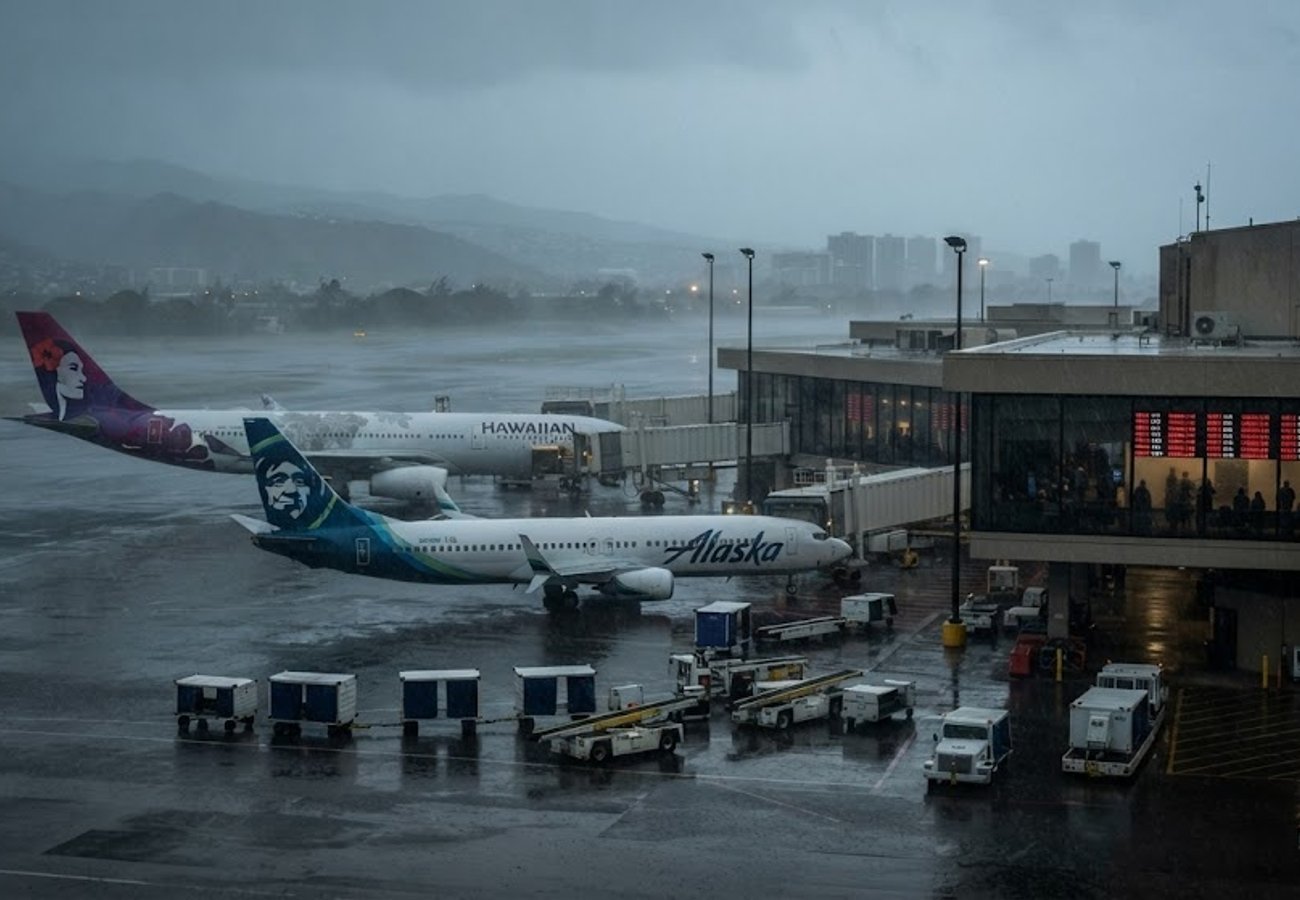
Image generated by AI
Tropical Storm Lala has forced Alaska and Hawaiian Airlines to cancel more than 120 flights, severely disrupting both inter-island connectivity and mainland U.S. connections during the peak summer travel window.
Storm Lala Operational Disruptions
A combined total of over 120 flights operated by Alaska and Hawaiian Airlines were removed from schedules over the weekend as Tropical Storm Lala tracked south of the Hawaiian archipelago. The disruptions are concentrated heavily on neighbor island services, though a significant volume of long-haul transpacific flights linking Hawaii to the U.S. mainland have also been impacted.
On Friday alone, airlines cut approximately 60 neighbor island flights and nearly 20 transpacific services. Additional cancellations followed on Saturday as the weather system persisted. Network planners have prioritized core trunk routes into Honolulu, while scaling back frequency to outer island airports to mitigate risks associated with runway contamination and deteriorating weather.
Airport Status and Route Impact
The operational impact varies by location, with smaller outstations facing the most severe constraints due to shorter runways and higher exposure to crosswinds.
| Airport / Location | Operational Status | Impact Detail |
|---|---|---|
| Hilo (Hawaiʻi Island) | Suspended | All flights suspended for at least one day |
| Kona (Hawaiʻi Island) | Restricted | Service ceased after midafternoon |
| Kahului (Maui) | Reduced | Operating on a limited schedule |
| Līhuʻe (Kauaʻi) | Reduced | Operating on a limited schedule |
| Honolulu (Oahu) | Active | Most flights operating; frequent delays/equipment changes |
Meteorological Constraints and Infrastructure Risks
Tropical Storm Lala is characterized as a slow-moving system bringing heavy rain, gusty winds, and localized flooding. From a technical standpoint, the primary challenges for aviation authorities include shifting wind patterns, low cloud bases, and saturated runways.
Airport authorities have issued warnings regarding standing water on runways and the temporary closure of taxiways. While Honolulu's primary infrastructure is designed to withstand severe weather, the "outstations" are more susceptible to disruptions, increasing the probability of flights being diverted or forced to return to their origin. Airlines have intentionally reduced rotations to create operational buffers, allowing crews to reposition and freeing spare aircraft to handle unexpected maintenance caused by the storm.
Passenger Recovery and Travel Waivers
Both Alaska and Hawaiian Airlines have activated flexible travel waivers for passengers booked on affected routes between August 14 and August 16.
- Change Fees: Standard change fees are waived for passengers traveling within a specified window, provided the origin and destination remain the same.
- Re-accommodation: Canceled passengers are being moved to the next available departure. However, due to peak summer demand, some travelers on mainland routes are experiencing delays of one to two days.
- Booking Variables: Passengers who booked via third-party agencies or those using award tickets report longer rebooking timelines compared to those who booked directly through the airlines.
Regional Connectivity and Tourism Impact
The ripple effects of these cancellations extend to major mainland hubs, including Seattle, Los Angeles, and San Francisco. As Honolulu, Kahului, and Kona serve as critical feeder points, the loss of these departures has caused a cascade of missed same-day connections across the continental United States.
This event serves as a critical stress test for the merged Alaska and Hawaiian network. While the combined entity offers more total options than previous years, the high concentration of routes into a few specific hubs means that a single weather event can still trigger large-scale systemic failure.
Traveler Logistics Guide: Navigating Hawaii Storm Disruptions
From a ground-level perspective, the best way to navigate this disruption is to move away from reliance on initial booking confirmations and shift to real-time digital monitoring.
1. Connection Strategy If you are connecting through Honolulu to a neighbor island, allow for a minimum of 4-6 hours of buffer time. During storm events, "equipment changes" (swapping a larger aircraft for a smaller one) are common, which can lead to sudden seat unavailability and forced re-bookings.
2. Digital Tooling Prioritize the airline's mobile app over email notifications. App push notifications for gate changes and cancellations typically precede email updates by 15-30 minutes.
3. Customs and Ground Transit Expect significant delays in baggage reclamation and ground transportation at Honolulu International. With diverted flights and consolidated passengers, ride-share wait times typically triple. If possible, pre-arrange transit or utilize official airport shuttles.
4. Waiver Utilization If your flight is within the August 14–16 window but not yet canceled, consider voluntarily rescheduling via the waiver. It is more efficient to move a trip forward or backward by 48 hours now than to wait for a last-minute cancellation and compete for the remaining seats on the next available flight.
The resilience of the Pacific aviation corridor remains dependent on the ability to manage these irregular operations during the volatile summer storm season.
Related Travel Guides
Disclaimer
This article is for informational and educational purposes only. It does not constitute legal, financial, or professional advice. While we strive to provide accurate and up-to-date information, travel policies, regulations, and conditions change rapidly. Always verify information with official sources before making travel decisions. Nomad Lawyer makes no representations about the accuracy, reliability, completeness, or suitability of the information provided. Readers should consult qualified professionals for advice specific to their circumstances. The views expressed in this article are those of the author and do not necessarily reflect the views of Nomad Lawyer.
Raushan Kumar
Founder & Lead Developer
Full-stack developer with 11+ years of experience and a passionate traveller. Raushan built Nomad Lawyer from the ground up with a vision to create the best travel and law experience on the web.
Learn more about our team →