
Airlines Bunk Beds: Air New Zealand Launches $495 Sleep Pods in Economy
Air New Zealand becomes the first airline to offer premium bunk bed pods in economy class for $495 this fall, creating a new ancillary revenue model for long-haul travel in 2026.

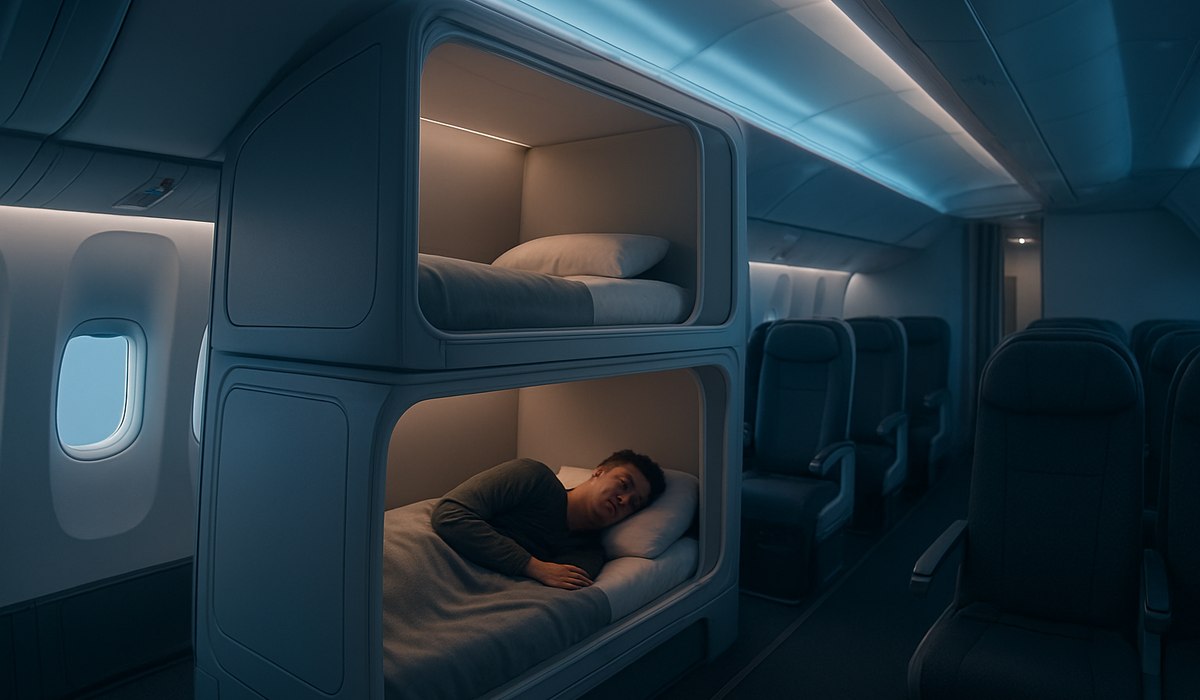
Image generated by AI
Air New Zealand Launches Premium Sleep Pod Innovation
Air New Zealand has officially announced the introduction of stacked bunk bed sleep pods throughout select economy cabins, launching this fall 2026. The Auckland-based carrier is the first global airline to commercialize this sleeping solution, pricing individual pod access at $495 per flight. This strategic move represents a significant pivot in how carriers monetize long-haul budget travel, transforming overnight flights into premium rest experiences without requiring first-class upgrades.
The initiative targets the substantial gap between standard economy seating and premium cabin offerings. Air New Zealand recognizes that economy passengers on 12-plus-hour transpacific routes face fatigue and discomfort, creating natural demand for enhanced rest solutions. By introducing airlines bunk beds as an ancillary revenue product, the carrier positions itself ahead of industry competitors while addressing genuine passenger pain points on extended journeys.
Air New Zealand's Sleep Pod Innovation Strategy
Air New Zealand's sleep pod system features compact, airline-grade bunk beds integrated directly into the economy cabin structure. Each pod accommodates one passenger in a semi-enclosed compartment approximately 2 meters long and 1 meter wide. Pods include individual lighting, USB charging ports, climate control settings, and privacy curtains. The stacked design maximizes cabin space efficiency while providing significantly better sleep quality than traditional reclining seats.
The airline selected specific long-haul routes for initial deployment, prioritizing transpacific flights from Auckland to San Francisco, Los Angeles, and Vancouver. These 13-16-hour overnight journeys represent ideal use cases where passengers traditionally struggle with economy seating comfort. Air New Zealand projects that 30-40% of economy passengers will opt for pod upgrades on inaugural deployments, generating estimated ancillary revenue of $2.8 million annually across the initial route network.
How the Bunk Bed Model Works
The $495 pricing strategy reflects Air New Zealand's positioning of bunk beds as premium ancillary offerings rather than basic economy add-ons. Passengers book sleep pods directly during ticket purchase or through post-booking modifications. Each pod rental includes 7-8 hours of guaranteed rest time during peak sleep hours on overnight segments, with pods rotating through passenger assignments based on flight duration and departure times.
Airlines bunk beds operate on a rotation system ensuring fairness across all bookings. Early-evening departures allocate pods to overnight rest periods, while early-morning arrivals guarantee maximum sleep duration for passengers. The system integrates seamlessly with Air New Zealand's existing booking infrastructure, allowing mobile app modifications and real-time pod availability updates. Passengers receive pre-departure orientation materials explaining pod operation, safety features, and emergency procedures.
Premium pod amenities differentiate the offering from economy sleeping arrangements. Selections include premium bedding packages, aromatherapy pillow options, and welcome amenities like eyemasks and earplugs. Air New Zealand has partnered with luxury hospitality suppliers to ensure pod experiences match business-class expectations while maintaining economy seating base prices. This hybrid approach allows budget-conscious travelers to enjoy business-class rest without paying business-class fares.
Industry Competition and Market Response
Air New Zealand's bunk bed announcement has sparked immediate attention across the aviation industry. Major carriers including Singapore Airlines, Lufthansa, and United Airlines have publicly acknowledged reviewing similar sleep pod technologies for future cabin refurbishments. Industry analysts estimate that airlines bunk beds could generate $800 million in annual ancillary revenue industry-wide if adopted across major long-haul carriers by 2028.
Competitors face immediate pressure to develop competitive offerings for long-haul economy passengers. Singapore Airlines announced preliminary plans to trial sleep pod concepts on their Singapore-London routes in 2027, while Lufthansa is partnering with aerospace manufacturers to develop stacked sleeping solutions for future aircraft deliveries. United Airlines remains publicly uncommitted but has reportedly conducted internal market research on bunk bed feasibility for their trans-Pacific network.
The competitive landscape favors early movers who can patent pod designs and secure supplier partnerships. Air New Zealand's first-mover advantage provides 12-18 months to refine the model, gather passenger feedback, and optimize pricing before major competitors launch competing products. Industry observers predict that sleep pod ancillary revenue will become standard expectations on routes exceeding 12 flight hours within three years.
Implications for Budget Travelers and Economy Class Experience
The introduction of airlines bunk beds fundamentally reshapes economy travel economics. Traditional economy passengers face new decisions: maintain budget-friendly base fares or invest $495 in significantly enhanced rest experiences. This tiered approach potentially increases Air New Zealand's per-passenger ancillary revenue by 18-22% on affected routes while maintaining competitive base pricing.
For budget-conscious travelers, bunk beds represent a middle-ground solution between economy and premium cabin upgrades. A roundtrip San Francisco-Auckland journey with pod pods ($990 ancillary) costs substantially less than business-class upgrades ($4,500-6,000) while dramatically improving sleep quality compared to economy seats. This value proposition appeals particularly to leisure travelers, digital nomads, and business passengers unwilling to expense premium cabin tickets.
Long-haul economy passengers will increasingly expect enhanced rest solutions as industry standards evolve. Airlines that fail to offer competitive sleep options risk passenger defection to carriers providing better onboard rest experiences. This trend accelerates the transition from basic commodity economy seating toward premium ancillary experiences, potentially creating new passenger segmentation categories throughout the industry.
| Factor | Detail | Impact |
|---|---|---|
| Launch Date | Fall 2026 | Initial deployment on select routes |
| Initial Routes | Auckland-San Francisco, Los Angeles, Vancouver | 13-16 hour flights |
| Bunk Bed Pricing | $495 per flight segment | Ancillary revenue stream |
| Pod Capacity | 1 passenger per pod | Space-efficient design |
| Expected Adoption | 30-40% of economy passengers | $2.8M annual revenue projection |
| Industry Timeline | 12-18 months to competitor launch | First-mover advantage period |
| Amenities Included | Premium bedding, aromatherapy, welcome kit | Business-class experience level |
What This Means for Travelers
Budget-conscious long-haul passengers should evaluate whether airlines bunk beds justify ancillary investment on their specific routes. Consider these actionable steps:
-
Compare total journey costs including pod fees ($495) against premium cabin upgrades, factoring in time value and rest quality improvements.
-
Book pods directly during initial purchase when availability appears highest and pricing potentially includes early-adopter discounts.
-
Reserve pods on overnight long-haul segments exceeding 12 flight hours where sleep quality directly impacts arrival fatigue and jet lag duration.
-
Check airline partnerships with pod suppliers for potential loyalty program redemptions or corporate travel discounts.
-
Request pod orientation materials before boarding to maximize comfort and understand safety protocols.
-
Leave feedback after pod experiences to help airlines refine amenities and potentially negotiate better pricing for future bookings.
-
Monitor competitor announcements as Singapore Airlines, Lufthansa, and United develop competing sleep solutions, potentially offering promotional pricing during launch phases.
Frequently Asked Questions
Are airlines bunk beds safe during turbulence? Airlines bunk beds include enhanced safety features including reinforced restraint systems, padded side rails, and emergency access procedures. Pods meet all FAA and EASA safety certifications before passenger deployment. Safety protocols require pod evacuation during severe turbulence, with crew training ensuring passenger security throughout all flight conditions.
Can passengers book multiple pods for companions? Passengers may reserve adjacent pods for family members or companions, receiving coordinated seating assignments that maximize group proximity. Air New Zealand's booking system allows multi-passenger pod reservations with bundled pricing discounts, typically offering 10
Disclaimer
This article is for informational and educational purposes only. It does not constitute legal, financial, or professional advice. While we strive to provide accurate and up-to-date information, travel policies, regulations, and conditions change rapidly. Always verify information with official sources before making travel decisions. Nomad Lawyer makes no representations about the accuracy, reliability, completeness, or suitability of the information provided. Readers should consult qualified professionals for advice specific to their circumstances. The views expressed in this article are those of the author and do not necessarily reflect the views of Nomad Lawyer.
Preeti Gunjan
Contributor & Community Manager
A passionate traveller and community builder. Preeti helps grow the Nomad Lawyer community, fostering engagement and bringing the reader experience to life.
Learn more about our team →