
Airlines Economy World: 6 Carriers With 35+ Inch Seat Pitch in 2026
In 2026, six airlines economy world class offerings break the mold with seat pitch exceeding 35 inches. While most carriers compress cabins to 30-31 inches, these airlines prioritize passenger comfort on long-haul routes.

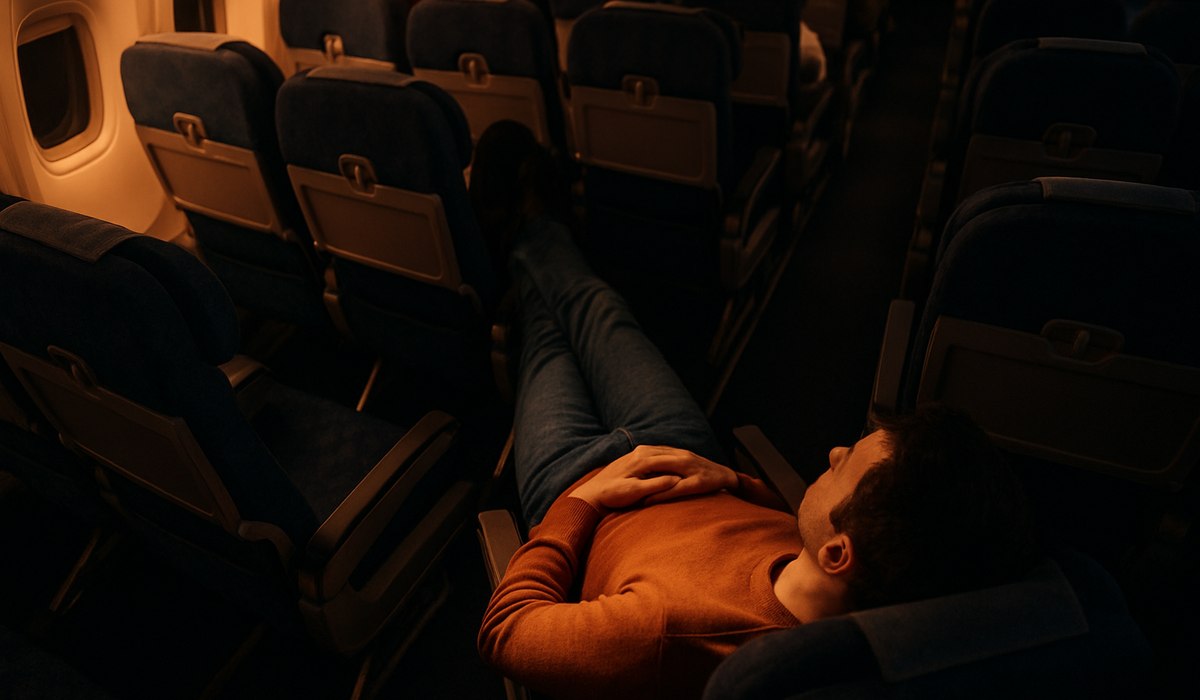
Image generated by AI
The Airlines Economy World Is Divided: Comfort vs. Capacity
Six global carriers are rejecting the industry squeeze by offering economy seat pitch well above the standard 30-31 inch measurement. While most airlines economy world operations prioritize revenue maximization through compressed cabins, these outliers maintain seat pitch of 35 inches or greater on long-haul international routes. This strategic decision reflects a fundamental shift in how forward-thinking carriers balance profitability with passenger wellbeing—a distinction that matters enormously on flights exceeding eight hours.
The distinction between cramped and comfortable seating translates directly to the travel experience. A 35-inch seat pitch provides approximately five additional inches of legroom compared to the industry default. For travelers spending 12+ hours crossing continents, this difference determines whether arrival means stretching or suffering.
The Great Squeeze: How Seat Pitch Shrank Since the 1970s
Commercial aviation underwent a dramatic transformation between the 1970s and today. During the golden era of air travel, economy passengers enjoyed 35 inches of seat pitch as standard. Airlines prioritized comfort to differentiate their product and justify premium fares. The cabin experience reflected airline pride and operational philosophy.
Today's reality looks starkly different. Industry-wide compression accelerated following deregulation and intensified after the 2008 financial crisis. Carriers adopted a race-to-the-bottom pricing model where legroom became expendable. The 30-31 inch standard emerged not from biomechanical research but from spreadsheet mathematics.
Manufacturers began designing new aircraft with narrower seat spacing. Boeing 737s and Airbus A320s rolled off assembly lines configured for maximum density packing. Each additional row generated thousands in annual revenue per aircraft. The calculus seemed inevitable and irreversible.
Yet this narrative of inexorable decline overlooks counterexamples. Airlines economy world sector includes carriers that rejected compression entirely, maintaining longer seat pitch through deliberate business strategy. Their resistance proves that comfort remains economically viable when anchored to brand positioning and route strategy.
Six Airlines Defying the Economy Crunch
Korean Air leads the comfort-focused segment with 34-35 inch seat pitch across its entire long-haul economy cabin. The Seoul-based carrier invested in Airbus A350 and Boeing 787 aircraft configured for passenger welfare. This approach supports premium positioning on Pacific routes where competition emphasizes service quality over rock-bottom pricing.
Hainan Airlines maintains 32-33 inch pitch on most widebody fleets, positioning itself as the comfort alternative for Asia-North America routes. The carrier explicitly markets extended legroom as a selling point, attracting business travelers and premium leisure passengers avoiding budget carriers.
Finnair (Helsinki hub) preserves 32 inches across transcontinental services, reflecting Northern European design philosophy valuing ergonomics. The carrier's smaller scale allows for differentiation through comfort rather than capacity competition with mega-carriers.
Cathay Pacific operates select routes with 32+ inch pitch, particularly on its flagship Hong Kong-London service. Premium positioning justifies higher base fares and seat pitch becomes a tangible quality differentiator in marketing communications.
Air New Zealand maintains 32-33 inch pitch across long-haul networks, supporting positioning as the comfort choice for Pacific travelers. Route structure and relatively lower frequency allow for profitable operation with more generous cabin spacing.
ANA (All Nippon Airways) preserves 32+ inches on select international routes from Tokyo, reflecting Japanese market emphasis on comfort and attention to detail as core brand attributes.
These six airlines economy world representatives demonstrate that seat pitch expansion remains economically sustainable when paired with premium route positioning and brand strategy.
Why Seat Pitch Matters on Long-Haul Flights
Biomechanical research quantifies what passengers intuitively understand: extended legroom reduces deep vein thrombosis (DVT) risk, improves circulation, and enables sleep on overnight flights. Studies show that passengers confined to 30-inch pitch experience measurable increases in thrombotic events on flights exceeding 8 hours.
Psychological factors amplify these physical effects. Travelers with adequate legroom report significantly higher satisfaction scores, better sleep quality, and reduced post-flight fatigue. Longer seat pitch enables sleeping position changes that prevent stiffness and muscle soreness upon arrival.
Airlines economy world operations increasingly recognize wellness as a competitive advantage. Corporate travel managers benchmark comfort metrics alongside price. Extended legroom justifies premium cabin fares by delivering measurable health and comfort returns on long-haul routes where journey duration exceeds overnight thresholds.
The relationship between seat pitch and customer loyalty proves particularly strong on routes where passengers choose between carriers regularly. Asian airlines economy world performance demonstrates that comfort positioning drives repeat bookings and elevated net promoter scores compared to capacity-focused competitors.
How to Find Airlines With Generous Legroom
Booking sites vary in transparency regarding seat pitch specifications. Kayak and Google Flights now display seat pitch measurements for major carriers, enabling direct comparison during search. Filter by "extra legroom" or "premium economy" to identify carriers with non-standard configurations.
Airline websites provide detailed cabin maps showing exact seat pitch by aircraft type. Korean Air, Cathay Pacific, and ANA publish comprehensive specifications on booking pages. Cross-reference the aircraft type assigned to your specific flight with manufacturer-supplied dimensions.
SeatGuru and ExpertFlyer aggregate passenger reviews and technical specifications by aircraft and airline. These resources include real-world assessments of comfort alongside technical measurements. Reviews from tall travelers (6'2"+) provide particularly useful calibration for evaluating adequacy.
Contact airline customer service directly when booking—representatives can confirm seat pitch and route-specific configurations. Airlines economy world representatives increasingly train staff on legroom specifications as customer conversation starters during booking calls.
Key Data: Airlines Economy World Seat Pitch Comparison
| Airline | Primary Routes | Standard Pitch (inches) | Aircraft | Cabin Config |
|---|---|---|---|---|
| Korean Air | ICN-LAX, ICN-LHR | 34-35 | Boeing 787, A350 | Economy+ Focus |
| Cathay Pacific | HKG-LHR, HKG-SFO | 32-33 | Boeing 777, A350 | Premium Routes |
| ANA | NRT-LAX, NRT-LHR | 32-33 | Boeing 787, A350 | Select Routes |
| Air New Zealand | AKL-LAX, AKL-LHR | 32-33 | Boeing 787 | All Routes |
| Finnair | HEL-JFK, HEL-LAX | 32 | Airbus A350 | Long-Haul Fleet |
| Hainan Airlines | CAN-LAX, CAN-JFK | 32-33 | Boeing 787, A350 | Pacific Routes |
| Industry Standard | Global Average | 30-31 | Mixed Fleet | All Routes |
What This Means for Travelers
Airlines economy world offerings increasingly diverge between comfort-focused and density-maximized configurations. Savvy long-haul passengers can optimize experience by booking carriers prioritizing legroom on anticipated routes.
Actionable Steps:
-
Check aircraft assignment before booking—verify that your confirmed flight operates on widebody aircraft with extended pitch, as narrow-body flights cannot offer competitive spacing regardless of carrier policy.
-
Filter by seat pitch measurement—use booking engines displaying exact measurements rather than relative terms like "economy plus" which lack standardized definitions across carriers.
-
Book direct routes with legroom-prioritizing airlines—connecting flights reduce cumulative seat confinement time and connections on regional aircraft eliminate legroom advantages entirely.
-
Compare premium economy costs—airlines economy world carriers offering extended pitch economy sometimes price it lower than dedicated premium economy
Disclaimer
This article is for informational and educational purposes only. It does not constitute legal, financial, or professional advice. While we strive to provide accurate and up-to-date information, travel policies, regulations, and conditions change rapidly. Always verify information with official sources before making travel decisions. Nomad Lawyer makes no representations about the accuracy, reliability, completeness, or suitability of the information provided. Readers should consult qualified professionals for advice specific to their circumstances. The views expressed in this article are those of the author and do not necessarily reflect the views of Nomad Lawyer.
Kunal K Choudhary
Co-Founder & Contributor
A passionate traveller and tech enthusiast. Kunal contributes to the vision and growth of Nomad Lawyer, bringing fresh perspectives and driving the community forward.
Learn more about our team →