
Airlines Economy Seats Revenue 2026: Profitability Breakdown
Airlines economy seats revenue generates the largest block for carriers in 2026, but profitability depends on route economics, fuel costs, and ancillary fees—not ticket prices alone.

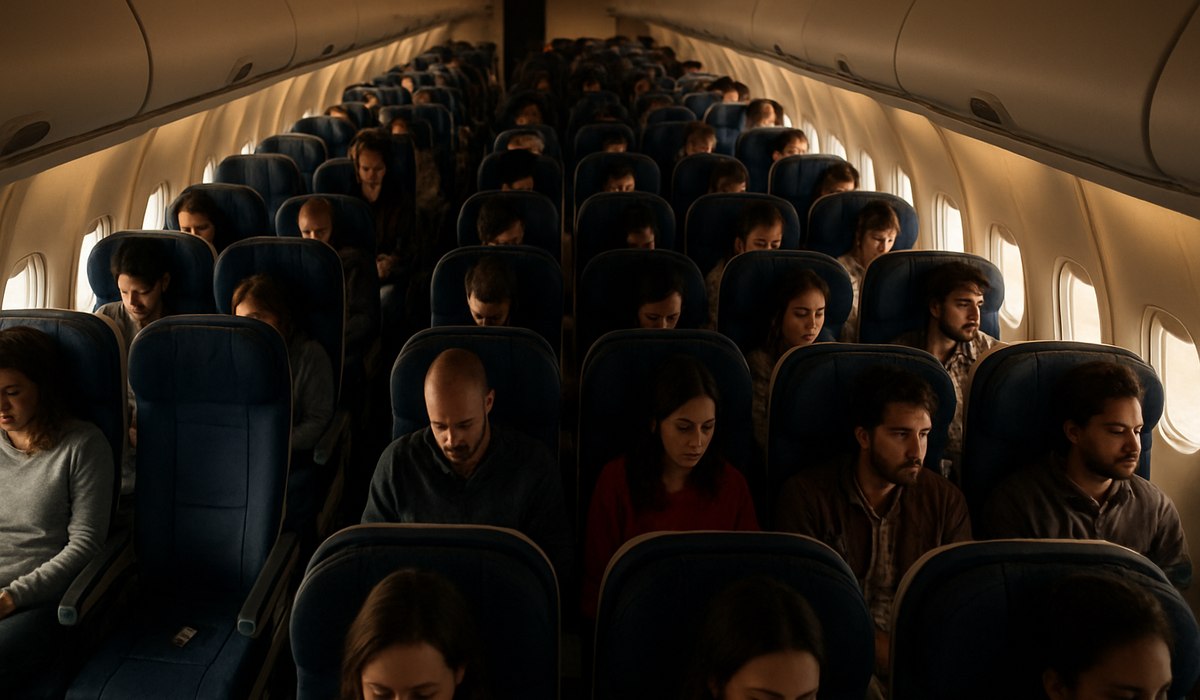
Image generated by AI
Economy Seats: The Revenue Engine That Doesn't Always Profit
Airlines economy seats revenue represents the single largest revenue stream across the industry in 2026, yet paradoxically, profitability from these seats varies dramatically. While economy cabins fill with the majority of passengers on any given flight, whether those seats actually generate profit depends on multiple interconnected factors—route selection, aircraft type, load factors, fuel surcharges, and aggressive ancillary revenue extraction. A typical narrow-body flight operated by major carriers like United, American, or Delta might carry 150-180 economy passengers, yet the economics governing their profitability differ wildly between a high-demand transcontinental route and a thin regional service.
The common misconception suggests simple math: more passengers equal more revenue. Reality proves far more complex. An economy seat can operate profitably, break even, or subsidize flights earning their true margins through premium cabin sales and loyalty partnerships. Understanding this dynamic reveals why airlines have fundamentally restructured their revenue models over the past decade.
The Economy Paradox: Volume vs. Margin
Economy cabin profitability hinges on a counterintuitive principle: highest passenger volume does not guarantee highest profitability margins. Airlines economy seats revenue comprises roughly 50-65% of total ticket sales for most carriers, yet premium economy and business class cabins generate significantly higher per-passenger yields despite carrying fewer people.
Legacy carriers like American Airlines and United operate under legacy cost structures with higher pilot wages, union agreements, and maintenance expenses that directly impact economy seat profitability calculations. Low-cost carriers like Southwest and Spirit achieve higher economy profitability through lower overall operating costs, aggressive capacity utilization, and minimal seat pitch standardization across fleets.
Route economics determine outcomes. A New York-Los Angeles flight with 95% load factor and $180 average economy fares generates substantial profit per seat, while a Tuesday morning Denver-Portland service with 65% load factor and $95 fares barely covers variable operating costs. Fuel prices, which represent 25-35% of airline operating expenses in 2026, directly compress economy cabin margins on longer routes.
What Really Determines Economy Seat Profitability
Profitability calculations require analyzing seven interconnected variables simultaneously. Aircraft type matters significantly—a Boeing 737 MAX economy seat cost structure differs substantially from an Airbus A320 or regional CRJ aircraft. Load factor (percentage of seats filled) determines fixed cost absorption per passenger. A flight with 72% load factor requires higher per-seat revenue to break even compared to the same route at 88% load factor.
Fuel pricing creates volatility that economy cabin revenue alone cannot absorb. When jet fuel rises from $2.10 to $2.85 per gallon, airlines cannot simply increase economy fares proportionally without driving demand destruction. They instead leverage premium cabin pricing, ancillary fees, and route optimization to compensate.
Competitive intensity on specific routes compresses economy fares most aggressively. Competitive transcontinental corridors between major hubs see economy fares decrease 15-25% when low-cost carriers enter the market. Legacy carriers then depend on premium cabin revenue and frequent flyer loyalty to maintain overall profitability. Check current fare data and route capacity utilization through FlightAware for real-time competitive pricing analysis.
Seasonality creates four-quarter variance in economy seat profitability. Summer peak season (June-August) sees economy fares rise 40-60% as families travel, while January-February troughs compress margins significantly. Airlines schedule aircraft and crew rotations based on these seasonal profitability forecasts, placing higher-capacity wide-bodies on peak routes and smaller regional jets during shoulder seasons.
The Ancillary Revenue Factor: Where Real Margins Hide
Airlines economy seats revenue calculations appear misleadingly low when examining ticket price alone. The profit reality emerges when ancillary revenue—baggage fees, seat assignments, loyalty partnerships, onboard food sales, and premium services—gets factored into passenger economics.
A passenger paying $150 for an economy seat might ultimately generate $220-280 in total revenue once baggage fees ($30-50 for first bag), seat selection ($10-25), in-flight purchases ($15-30), and loyalty program multiplier effects get included. This ancillary extraction transforms marginal-profit flights into respectable-margin routes.
Low-cost carriers pioneered this model aggressively. Spirit Airlines and Frontier generate 40-50% of total revenue through ancillaries, fundamentally changing the economics of economy seating. Legacy carriers have accelerated similar programs, with United, Delta, and American now extracting $50-80 in ancillaries per economy passenger on average.
Loyalty partnerships amplify margins further. Airlines earn meaningful revenue from credit card partnerships, hotel arrangements, and car rentals tied to frequent flyer accounts. These partnerships generate $15-25 in revenue per economy passenger beyond direct ticket and ancillary sales, improving overall cabin profitability significantly.
Premium Cabins: Higher Yield, Smaller Volume
Business and premium economy cabins generate disproportionately higher revenue despite carrying 10-20% of total passengers. A business class seat on a transcontinental flight generates $8,000-15,000 in ticket revenue plus substantial ancillary spending, while economy generates $200-400 ticket plus $50-80 ancillaries.
However, premium cabin revenue volatility exceeds economy cabin volatility. Business travel demand correlates directly with economic conditions, corporate travel budgets, and conference schedules. Recession environments compress business cabin demand 30-50% while economy demand proves more resilient. Airlines manage this risk through dynamic capacity allocation, converting premium seating back to economy when business demand weakens.
Premium economy (an intermediate product offered by most legacy carriers) represents a strategic hedge. These cabins generate 2.5-3.5× economy revenue per seat while requiring only modest additional capacity sacrifice. Airlines have aggressively expanded premium economy inventory, recognizing it attracts corporate travelers hesitant to purchase business class but willing to pay $150-300 premiums over economy.
The profitability hierarchy in 2026 operates as follows: business class (first), premium economy (second), and economy (third). However, airlines economy seats revenue matters most strategically because load factor stability on economy dictates overall flight profitability. A flight with 85% economy load factor rarely loses money, while a flight with 65% business load factor might prove highly profitable—until it doesn't.
Key Metrics: Economy Profitability by the Numbers
| Metric | Range | Impact on Profitability |
|---|---|---|
| Economy Load Factor | 65-92% | Higher load absorbs fixed costs; 72% break-even typical |
| Average Economy Fare | $95-320 | Route competition compresses; ancillaries compensate |
| Ancillary Revenue per Passenger | $50-85 | Transforms marginal seats into profitable seats |
| Fuel Cost per Gallon (2026) | $2.10-2.95 | Each 25-cent increase reduces per-seat margin $2-4 |
| Typical Seat Pitch (Economy) | 30-32 inches | Smaller pitch improves capacity; comfort affects loyalty |
| Loyalty Program Revenue Contribution | 15-25% of total | Increasingly vital to economy profitability models |
| Premium Cabin Yield Multiplier | 8-15× economy | Drives profitability; volatile with business cycles |
What This Means for Travelers
Understanding airline economics helps travelers navigate 2026 pricing and service trends:
-
Timing Matters Most: Book economy tickets 4-6 weeks advance for domestic routes, 8-12 weeks for international. Airlines yield-manage economy fares aggressively; early purchase captures lower buckets before inventory compression triggers price spikes.
-
Ancillary Transparency: Calculate total trip cost including baggage fees, seat assignments, and boarding positions. Budget airlines make this calculation essential; legacy carriers increasingly follow comparable models. Standard baggage now costs $30-50 per bag on most carriers.
-
Route Competitiveness Signals Savings: Routes with three or more carriers competing typically offer 15-30% lower economy fares than duopoly or monopoly routes. Flight search tools showing multiple carrier options indicate healthier pricing environments.
-
Premium Economy Value Proposition: When premium economy prices fall within 80-120% of economy on long-haul routes, the value proposition improves significantly. Compare total costs including baggage treatment and seat comfort duration.
-
Loyalty Program Maximization: Frequent flyers generate substantial value through elite status and earning multipliers on loyalty program spending. Economy passengers with elite status receive improved seat assignments and baggage waiver benefits worth $100+ annually.
-
Monitor Fuel Price Trends: Watch global jet fuel prices through aviation industry trackers. Rising fuel costs typically trigger economy fare increases within 7-14 days on competitive routes. Locking fares during stable fuel environments saves meaningful money.
FAQ
Do economy seats generate more profit than premium cabins?
No. Premium cabins generate substantially higher per-seat profit despite lower passenger volume. However, airlines economy seats revenue volumes prove essential to overall profitability because load factors remain higher and more stable. Most airlines would collapse operationally without reliable economy cabin load factors exceeding 75%.
How do airlines decide economy profitability on specific routes?
Airlines employ sophisticated revenue management systems analyzing historical demand, competitive capacity, fuel costs, and load factor forecasts. If projections show routes cannot achieve 70%+ load factor at current economy fare levels, airlines either remove capacity, adjust pricing, or increase ancillary extraction targets to reach profitability thresholds.
Will economy fares keep rising through 2026?
Fares depend primarily on fuel prices, capacity growth, and economic conditions—not airline profit margins. If fuel prices remain elevated and capacity grows slower than demand, economy fares rise. Conversely, capacity increases or economic softening typically compress economy fares regardless of airline profitability needs.
Why are economy ancillary fees increasing?
Airlines have determined that passenger price sensitivity focuses primarily on headline ticket fares while accepting ancillary fees as separately justified. Extracting revenue through ancillaries rather than higher ticket prices improves competitive positioning while improving per-passenger profitability on identical seat inventory.
Related Travel Guides
- Complete Guide to Airline Loyalty Programs: Maximizing Economy Travel Value in 2026
- Dynamic Pricing in Aviation: How Airlines Calculate Your Ticket Price
- Premium Economy vs. Business Class: Cost-Benefit Analysis for Business Travelers
Disclaimer
This article analyzes publicly available airline industry data, regulatory filings, and economic reports from 2026. Specific profitability figures represent industry averages and vary significantly by carrier, route, and time period. Airlines adjust pricing, capacity, and ancillary policies continuously based on market conditions. For the most current information regarding fares, baggage policies, and seat availability, consult directly with your airline or preferred booking platform. For passenger rights information, reference the FAA and U.S. Department of Transportation consumer protection guidelines. Always verify specific policies with your airline or booking provider before traveling.
Disclaimer
This article is for informational and educational purposes only. It does not constitute legal, financial, or professional advice. While we strive to provide accurate and up-to-date information, travel policies, regulations, and conditions change rapidly. Always verify information with official sources before making travel decisions. Nomad Lawyer makes no representations about the accuracy, reliability, completeness, or suitability of the information provided. Readers should consult qualified professionals for advice specific to their circumstances. The views expressed in this article are those of the author and do not necessarily reflect the views of Nomad Lawyer.
Kunal K Choudhary
Co-Founder & Contributor
A passionate traveller and tech enthusiast. Kunal contributes to the vision and growth of Nomad Lawyer, bringing fresh perspectives and driving the community forward.
Learn more about our team →