
Breaking Airline News: AirAsia X Delays London Route Amidst Middle East Tensions, Sparking Long-Haul Travel Chaos
Breaking airline news: Amidst a terrifying era of severe airspace volatility, AirAsia X abruptly delays its KUL-BAH-LGW route, plunging budget travelers into extreme travel chaos and unexpected flight cancellations.

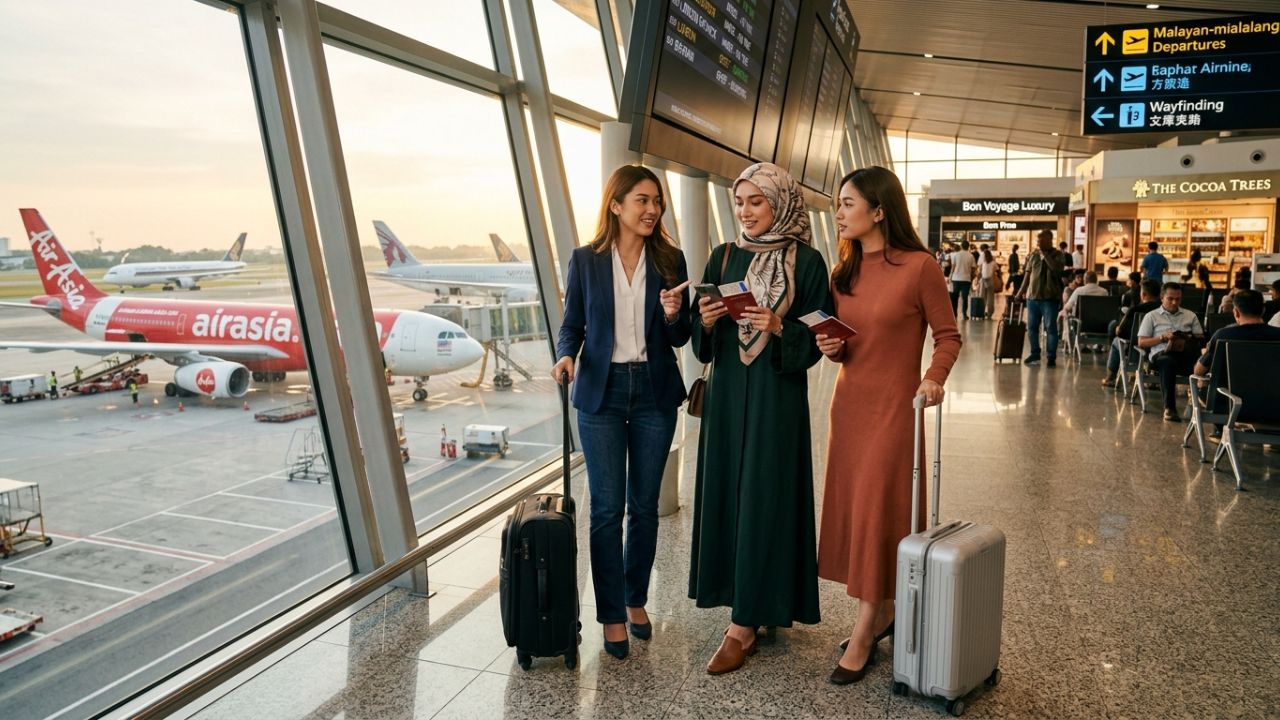
Image representing the intense strategic crisis as AirAsia X is violently forced to delay its highly anticipated London Gatwick route, triggering massive flight cancellations and extreme travel chaos due to severe Middle East instability.
Breaking Airline News: AirAsia X Delays London Route Amidst Middle East Tensions, Sparking Long-Haul Travel Chaos
As paralyzing terminal bottlenecks, terrifying airspace closures, and catastrophic operational fragility violently threaten to completely shatter the global transit grid, a massive disruption has just struck the low-cost long-haul sector. In a harrowing demonstration of how severe geopolitical instability can instantly trigger extreme travel chaos, AirAsia X has officially announced the abrupt delay of its highly anticipated Kuala Lumpur–Bahrain–London Gatwick route. Originally scheduled to commence in late June 2026, the critical Southeast Asia-to-Europe corridor has been forcefully pushed back to August or September 2026. Citing ongoing, highly volatile regional instability across the Middle East, the carrier has executed this massive postponement to ensure passengers and crew are not exposed to heightened geopolitical risks. For thousands of budget-conscious travelers who heavily relied on this affordable connection, the sudden delay translates to immediate, extremely frustrating flight cancellations and massive itinerary disruptions ahead of the peak summer travel season.
In a brutal demonstration of how desperately vulnerable commercial aviation remains to international conflict, the sheer logistical nightmare of attempting to navigate high-tension airspace corridors is forcing airlines into highly defensive postures. While AirAsia X’s decision represents a highly strategic, risk-aware approach to long-haul expansion, it instantly removes a massive capacity block from the market. This temporary withdrawal severely limits the availability of affordable connectivity between Asia, the Middle East, and Europe, forcing stranded passengers to aggressively hunt for expensive alternatives on traditional full-service carriers or face total travel paralysis.
Expanded Overview: The Airspace Threat and Fuel Volatility
The terrifying crisis of overwhelming passenger stress currently testing international gateways brutally exposes the severe limitations of airlines attempting to operate through politically sensitive zones. The airline heavily highlighted that severe operational constraints were the primary determinant in violently postponing the launch.
Airspace uncertainties generated by the ongoing regional tensions have massively increased the complexity of route planning across Middle Eastern corridors. Compounding this terrifying logistical threat, highly volatile jet fuel prices continue to brutally pressure airline financial performance. Because low-cost carriers operate on razor-thin margins, they simply cannot afford the massive fuel penalties associated with sudden, mid-air reroutings designed to avoid restricted airspace. Consequently, AirAsia X management has been violently compelled to adopt a highly measured approach, explicitly refusing to launch the route until absolute operational stability is mathematically confirmed.
Section-Wise Breakdown: The Route Disruption
To fully comprehend the massive strategic fallout of this postponement, industry analysts must review exactly how the KUL–BAH–LGW delay disrupts the broader aviation network.
The Kuala Lumpur (KUL) to London Gatwick (LGW) Blockade The delayed corridor was explicitly designed to cater to a massive, highly diverse segment of travelers seeking budget-friendly access between Southeast Asia and the United Kingdom. By utilizing Bahrain as a strategic transit hub, AirAsia X aimed to fiercely undercut legacy carriers. The sudden removal of these flights for June and July essentially blockades budget travelers, forcing those who had already secured bookings into immediate, highly stressful rebooking scenarios and generating extreme airport disruptions at customer service desks.
Navigating Geopolitical Chaos The postponement violently underscores the extreme sensitivity of long-haul operations. Airlines must constantly execute real-time risk assessments. This massive delay by AirAsia X may rapidly influence other international carriers operating in the region to aggressively re-evaluate their own airspace strategies, reconsider hub placements, and execute sudden, unannounced flight cancellations to protect their fleets.
AirAsia X Strategic Disruption Matrix
To ensure corporate travel planners and budget tourists can aggressively track the specific metrics defining this operational crisis, the following matrix details the verified data surrounding the AirAsia X route delay.
| Operational Metric | Strategic Route Data |
|---|---|
| Airline Operator | AirAsia X |
| Disrupted Route | Kuala Lumpur (KUL) – Bahrain (BAH) – London Gatwick (LGW) |
| Original Launch Target | Late June 2026 |
| Revised Launch Window | August or September 2026 (Subject to conditions) |
| Primary Catalyst for Delay | Ongoing regional instability in the Middle East |
| Secondary Economic Catalyst | Volatile jet fuel prices |
| Operational Impact | Temporary suspension of inaugurals (Not a total cancellation) |
| Strategic Hub Status | Bahrain remains a key future connecting hub |
| Passenger Compensation | Full refunds or alternative travel rebookings available |
Passenger Impact: Surviving the Rebooking Nightmare
For the thousands of travelers attempting to confidently navigate their summer European itineraries, this sudden delay represents a highly terrifying reality. Passengers who secured seats on the original June schedule are now trapped in a massive logistical scramble.
To survive this sudden travel chaos, affected customers must aggressively contact the AirAsia X customer support teams. The airline has officially confirmed that active rebooking management is underway, offering stranded passengers full refunds or alternative travel options. However, because alternative long-haul carriers are currently experiencing massive peak summer load factors, finding cheap replacement flights will be exceptionally difficult. This development violently highlights the absolute necessity of purchasing highly flexible travel insurance and securing robust contingency arrangements when flying through politically volatile global corridors.
Industry Analysis: Prioritizing Safety Over Expansion
From a strategic aviation perspective, this massive delay is part of a larger, highly defensive trend dominating the industry. Aviation analysts violently agree that carriers are increasingly prioritizing absolute safety and operational readiness over aggressive route expansion in high-tension zones. Despite the massive short-term revenue hit, AirAsia X continues to affirm its commitment to building Bahrain into a highly strategic hub. Once geopolitical tensions inevitably ease, the carrier is heavily positioned to resume the scheduled launch with renewed efficiency, capturing massive pent-up traffic.
Conclusion: A Holding Pattern for Budget Long-Haul
As the extremely critical Asia-to-Europe transit network continues to face terrifying strain from unprecedented geopolitical volatility, the AirAsia X delay serves as a massive warning. While official corporate communication reinforces that the delay is a temporary operational measure rather than a permanent route cancellation, the immediate reality for passengers is total disruption. Travelers must aggressively monitor airline announcements and international airspace advisories, as the threat of sudden flight cancellations will remain exceptionally high until regional Middle East stability is fully restored.
Key Takeaways for Travellers
- AirAsia X delays the Kuala Lumpur–Bahrain–London Gatwick route until at least August or September 2026, citing Middle East instability.
- Passengers are eligible for full refunds or alternative flight options, ensuring minimal disruption to travel plans.
- The delay is temporary, reflecting operational caution rather than cancellation.
- Bahrain remains a strategic hub for future operations once conditions stabilise.
- Travellers should monitor airline announcements and travel advisories for updated schedules, ensuring seamless itinerary planning.
Related Travel Guides
Disclaimer
This article is for informational and educational purposes only. It does not constitute legal, financial, or professional advice. While we strive to provide accurate and up-to-date information, travel policies, regulations, and conditions change rapidly. Always verify information with official sources before making travel decisions. Nomad Lawyer makes no representations about the accuracy, reliability, completeness, or suitability of the information provided. Readers should consult qualified professionals for advice specific to their circumstances. The views expressed in this article are those of the author and do not necessarily reflect the views of Nomad Lawyer.
Kunal K Choudhary
Co-Founder & Contributor
A passionate traveller and tech enthusiast. Kunal contributes to the vision and growth of Nomad Lawyer, bringing fresh perspectives and driving the community forward.
Learn more about our team →