
Newark Airport Travel Chaos: 90 Delays, 10 Cancellations Disrupt Spirit, United, Delta Across US Cities
Newark Liberty International Airport ground to a halt with 90 flight delays and 10 cancellations, stranding thousands across Los Angeles, Houston, Dallas, and Chicago.

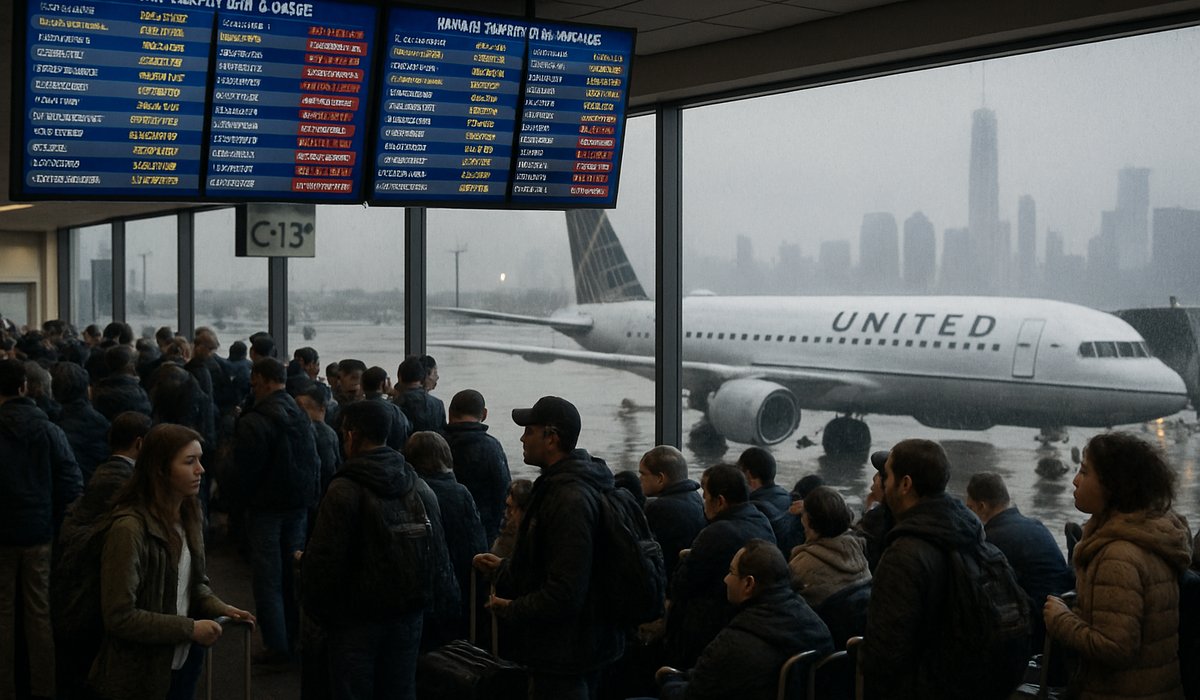
Image generated by AI
A massive wave of flight disruptions has engulfed Newark Liberty International Airport, leaving thousands of passengers stranded and scrambling for alternative travel arrangements. On April 5, 2026, the New Jersey hub recorded 90 flight delays and 10 cancellations, creating a cascading travel nightmare that rippled across major American cities and international gateways. The disruption affected critical routes connecting Newark to Los Angeles, Houston, Dallas, Chicago, London, Frankfurt, and Delhi, with major carriers including United Airlines, Spirit Airlines, and Delta Air Lines bearing the brunt of operational chaos.
The scale of this airport chaos underscores the fragility of modern airline networks, where a single hub's operational failure can paralyze connections across the entire continental United States and beyond. United Airlines experienced the highest volume of delays with 37 delayed flights and 2 cancellations, making it the most severely impacted carrier by sheer numbers. Spirit Airlines led the cancellation count with 5 cancelled flights and 15 delays, while Delta Air Lines reported 2 cancellations and 2 delays. Alaska Airlines recorded 1 cancellation with no delays, and several other carriers including American Airlines, Lufthansa, JetBlue, Republic, and Air Canada reported minor delays but no service suspensions. This delay-heavy disruption pattern suggests systemic operational strain rather than isolated incidents at Newark Liberty International Airport.
The geographic reach of this travel disruption extended far beyond Newark's immediate vicinity. Passengers heading to Los Angeles International Airport, Houston George Bush Intercontinental Airport, Dallas/Fort Worth International Airport, and Chicago O'Hare International Airport all experienced significant schedule adjustments and extended wait times. International travelers faced additional complications, as flights connecting Newark to London Heathrow Airport, Frankfurt Airport, and Indira Gandhi International Airport encountered cascading delays tied to the hub's operational challenges. The interconnected nature of modern airline scheduling meant that a single point of failure at Newark created a domino effect across domestic and international networks, stranding business travelers, families, and tourists throughout the day.
For affected passengers navigating this airport chaos, immediate action is critical. Travelers should continuously monitor flight status updates through airline mobile applications and official airport websites, as schedules remain subject to rapid change throughout operational disruptions. Direct contact with airline customer service channels—including mobile notifications, email alerts, and SMS updates—provides real-time information essential for rebooking decisions. The Federal Aviation Administration (FAA) recommends arriving at airports earlier than usual during periods of known delays to account for potential gate changes and rescheduling. Passengers should actively explore rebooking options or alternate flights offered by their carriers, particularly those facing extended delays on Newark-connected routes. Keeping essential travel documents, medications, and electronic device chargers readily accessible helps manage the stress of extended airport waits. For those with connecting flights, especially on international routes, vigilant monitoring is essential to prevent missed connections caused by upstream delays at Newark Liberty International Airport.
This incident highlights the broader vulnerability of the U.S. aviation system to operational disruptions at major hubs. According to IATA (International Air Transport Association) data, hub-based disruptions create exponential ripple effects across airline networks, affecting not just direct passengers but also those with connections through affected airports. The concentration of flight delays over cancellations suggests that airlines attempted to maintain service continuity despite operational constraints, but the sheer volume of schedule adjustments created significant passenger inconvenience. Tourism boards in affected cities including Los Angeles, Houston, Dallas, and Chicago may experience reduced visitor arrivals, while business travel to these hubs faces uncertainty. International connectivity to Europe and Asia also suffered, potentially impacting global business operations and leisure travel plans.
As the aviation industry continues to operate under capacity constraints and staffing challenges, incidents like the Newark Liberty International Airport disruption underscore the importance of passenger awareness and proactive communication from carriers. The U.S. Department of Transportation (DOT) maintains oversight of airline service standards, and passengers experiencing significant delays may be entitled to compensation under federal regulations. Monitoring your airline's official channels and maintaining flexibility in travel plans remains essential in today's unpredictable aviation environment.
Related Travel Guides
Disclaimer
This article is for informational and educational purposes only. It does not constitute legal, financial, or professional advice. While we strive to provide accurate and up-to-date information, travel policies, regulations, and conditions change rapidly. Always verify information with official sources before making travel decisions. Nomad Lawyer makes no representations about the accuracy, reliability, completeness, or suitability of the information provided. Readers should consult qualified professionals for advice specific to their circumstances. The views expressed in this article are those of the author and do not necessarily reflect the views of Nomad Lawyer.
Raushan Kumar
Founder & Lead Developer
Full-stack developer with 11+ years of experience and a passionate traveller. Raushan built Nomad Lawyer from the ground up with a vision to create the best travel and law experience on the web.
Learn more about our team →