
Aviation Updates: Terrifying Air New Zealand Pushback Collapse Triggers Severe Travel Chaos as Heavy Airbus A320 Sinks into Christchurch Mud
A routine morning departure violently transformed into a massive logistical nightmare after an Air New Zealand Airbus A320 became hopelessly bogged, triggering severe airport disruptions.

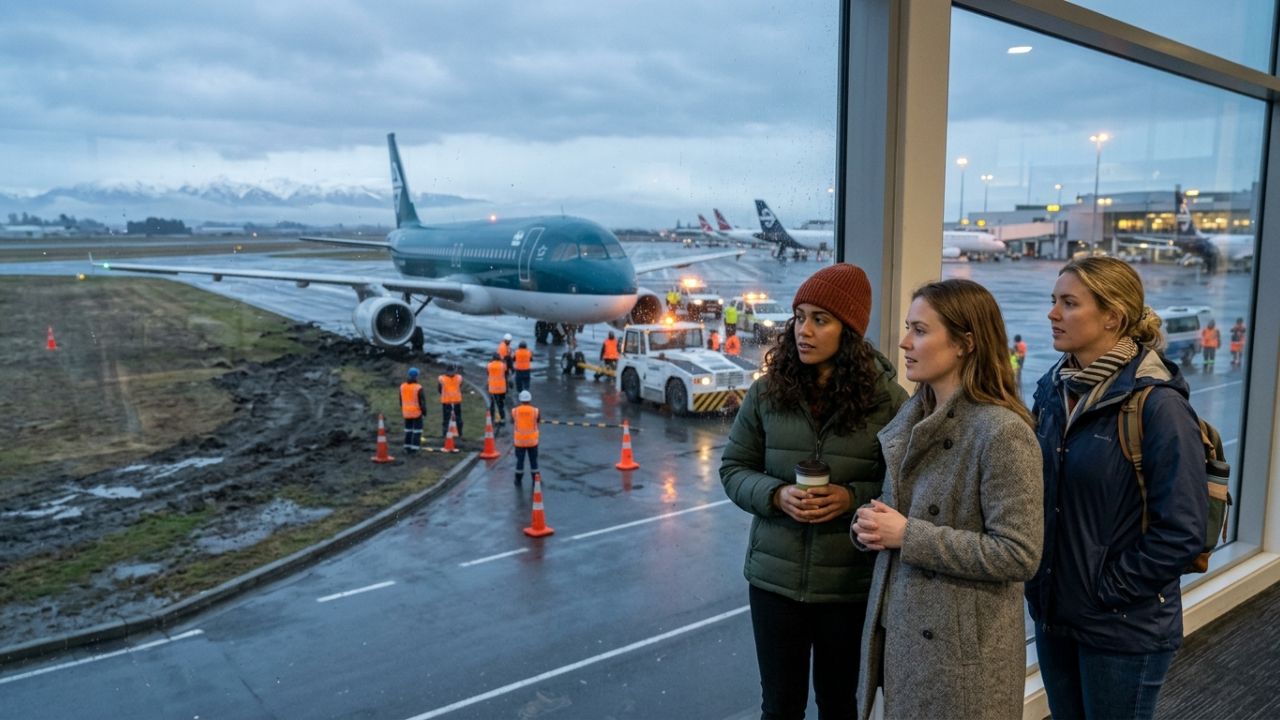
Image generated by AI
Aviation Updates: Terrifying Air New Zealand Pushback Collapse Triggers Severe Travel Chaos as Heavy Airbus A320 Sinks into Christchurch Mud
As incredibly severe winter conditions completely compromise vital ground infrastructure, a terrifying early morning pushback failure at Christchurch International Airport violently exposed how rapidly localized structural lapses can trigger massive, unannounced travel chaos for vulnerable domestic passengers.
While incredibly exhausted global passengers desperately navigate an incredibly brutal aviation landscape defined by rolling flight cancellations and severe, localized airport disruptions, a massive, highly alarming infrastructure failure has actively struck the absolute core of New Zealand's domestic transit network. According to the absolute latest breaking airline news, Air New Zealand flight NZ582 was violently grounded in the early hours of Sunday, June 21, 2026, after a massive operational collapse during its departure sequence. Desperate to maintain the highly critical Christchurch-Auckland corridor, operational teams watched helplessly as the massive Airbus A320, operating under registration ZK-OJS, catastrophically slipped off the sealed taxiway edge and became deeply embedded in heavily waterlogged winter mud.
This highly critical operational collapse explicitly positions airport surface integrity as a massive vulnerability in global travel optimization. At approximately 5:45 AM NZST, during what should have been a flawless peak-hour pushback maneuver, the heavy aircraft's left main landing gear violently breached the paved boundary, instantly sinking into the saturated grass verge. Because modern commercial jets rely entirely on structurally sound tarmac to support their massive weight, this sudden ground failure served as an absolute catalyst for immediate travel chaos. It completely destroyed the scheduled itinerary for 171 passengers, instantly transforming a routine domestic connection into a terrifying logistical nightmare of emergency disembarkation, cascading schedule delays, and massive structural extraction planning.
Aviation Updates: The Threat of Infrastructure Failure
This massive, highly structural ground incident perfectly illustrates the intense, incredibly fragile nature of modern runway and taxiway operations.
According to highly detailed, official aviation updates, this strategic failure is explicitly driven by severe environmental degradation colliding with incredibly heavy aviation machinery. The Airbus A320-232, fully loaded with passengers, baggage, and operational fuel, exerts massive, concentrated pressure through its dual-wheel main landing gear assemblies. Because the unsealed winter ground had been deeply compromised by severe rainfall, the shoulder immediately surrendered to the 40-plus tonne weight of the jet, instantly immobilizing the aircraft. This massive extraction crisis guarantees an unprecedented wave of localized airport disruptions, as standard tug operations were immediately rendered completely useless, forcing engineering teams to meticulously drain the aircraft of weight before attempting a highly dangerous recovery tow.
Section-Wise Breakdown: Navigating the Ground Collapse
The sudden, massive evolution of this critical taxiway failure actively impacts several incredibly distinct, highly sensitive operational protocols.
The Christchurch Terminal Gridlock
At the absolute core of this massive operational pivot is the immediate crisis management unfolding on the Christchurch apron. Operating as a massive domestic and international gateway, the airport narrowly avoided a complete terminal shutdown by isolating the bogged aircraft to its immediate stand area. However, the resulting travel chaos for flight NZ582 was absolute. Because the aircraft could not be safely extracted while fully loaded, airport ground crews and Air New Zealand teams were violently forced to abort the flight and execute a highly controlled passenger evacuation using mobile stairs. This excruciatingly slow process, followed by the mandatory offloading of all checked baggage, perfectly highlights how rapidly failing ground infrastructure can obliterate operational efficiency.
The Auckland Corridor Disruption
The ultimate victim of this highly strategic departure failure heavily targets the absolute most critical domestic connection in New Zealand. By aggressively establishing the early morning 5:45 AM departure, Air New Zealand actively guarantees highly reliable onward international connections through Auckland Airport. The sudden grounding of ZK-OJS completely severed this vital link, forcing the airline to scramble for a replacement aircraft later that morning. By utilizing emergency substitution protocols, the airline barely bypassed the severe logistical nightmares typically associated with relying on single-airframe scheduling, saving the 171 passengers from absolute flight cancellations but still subjecting them to grueling, highly stressful delays.
Flight Details and Verified Disruption Bypass Matrix
To fully understand the exact structural parameters of this massive pushback failure and how the airline attempted to navigate the resulting congestion, the following matrix explicitly details the operational mandate and technical incident data.
Confirmed NZ582 Incident & Disruption Matrix
| Operational / Incident Metric | Massive Technical Details | Regional Congestion Impact & Disruption |
|---|---|---|
| Flight Designation | Air New Zealand Flight NZ582 (Christchurch to Auckland). | Massive delay on the absolute busiest domestic inter-island corridor. |
| Aircraft Specifications | Airbus A320-232 (Registration ZK-OJS), 171-seat economy layout. | Fully loaded weight (40+ tonnes) catastrophically crushed the saturated verge. |
| Incident Timeline | Sunday, June 21, 2026, at approximately 5:45 AM NZST. | Obliterated peak morning connections, triggering massive travel chaos. |
| Ground Failure Mechanism | Left main landing gear breached sealed taxiway under tug control. | Instantly immobilized the aircraft, rendering standard pushback tugs useless. |
| Passenger Evacuation | Highly controlled disembarkation via mobile stairs/apron access. | Prevented injuries but guaranteed severe, multi-hour airport disruptions. |
| Recovery Strategy | Replacement aircraft deployed; bogged A320 faces structural inspection. | Averted total flight cancellations, but highlighted extreme infrastructural fragility. |
Data explicitly reflects the massive, highly structural operational failure designed to force aviation authorities to reevaluate their highly fragile taxiway margins during severe winter saturation.
Passenger Impact: The Escape from Immobilization
For the highly demanding passengers actively engaged in this massive morning mobility shift, traditional, highly routine departures are frequently viewed as completely safe until infrastructure violently fails.
The massive grounding of NZ582 significantly degraded travel convenience for 171 incredibly exhausted corporate executives, transferring tourists, and domestic commuters. Instead of relying absolutely solely on a highly predictable, heavily scheduled primary route—where sudden ground failures and massive flight cancellations can completely ruin a grueling onward international itinerary—travelers were violently thrust into a terrifying extraction scenario. Trapped aboard a tilting, immobilized aircraft, passengers were forced to endure a highly tense wait before being guided down mobile stairs onto the freezing winter apron. By actively experiencing this massive operational collapse, passengers were subjected to the terrifying, anxiety-inducing reality of severe, rolling airport disruptions that occur when multi-million dollar jets are defeated by localized mud.
Industry Analysis: The Economics of Pushback Failures
Aviation structural analysts strictly point out that this massive, highly localized operational failure perfectly illustrates the extreme, highly vital importance of heavily reinforced airport perimeters.
Aviation data explicitly indicates that massive legacy carriers like Air New Zealand are absolutely desperate to secure rapid turnaround times to actively combat the terrifying reality of regional schedule compression. Industry observers strongly view this ZK-OJS incident as the absolute ultimate warning regarding unsealed winter tarmac margins. A massive scaling mismatch currently exists between the immense weight of modern commercial jets and the structural integrity of waterlogged airport grass. When a tug operator slightly misaligns a pushback in low-visibility morning conditions, the resulting ground collapse completely destroys the reliance on fragile, highly restricted operational schedules. By aggressively launching an internal engineering review into tug performance and taxiway edge visibility, the airline acknowledges that avoiding massive future delays requires completely overhauling how heavy aircraft are maneuvered in saturated environments.
Conclusion: A Highly Vulnerable Winter Future
The massively evolving infrastructure dynamics directly defining the Christchurch incident violently reflect a much broader, highly critical structural transformation currently dominating how modern airports manage heavy aircraft in 2026.
Rather than blindly trusting that massive international jets can safely operate inches away from structurally compromised mud, global aviation networks must incredibly increasingly function as highly defensive, structurally fortified ecosystems. As Air New Zealand aggressively attempts to process this massive structural grounding, travelers actively navigating the incredibly busy domestic sector must absolutely remain highly vigilant. To actively survive potential travel chaos during this massive winter phase, passengers must aggressively monitor all breaking aviation updates, actively secure highly flexible onward connections through Auckland, and perfectly understand that escaping modern airport disruptions fundamentally requires acknowledging that even the most advanced aircraft can be instantly crippled by failing ground infrastructure.
Key Takeaways
- Massive Ground Collapse: Air New Zealand flight NZ582 (Christchurch to Auckland) was violently grounded after its left main landing gear sank into deep mud during pushback.
- Heavy Aircraft Immobilization: The 40+ tonne Airbus A320-232 (ZK-OJS) completely crushed the saturated winter verge at 5:45 AM NZST, rendering standard tugs useless.
- Severe Schedule Disruption: The incident completely destroyed peak morning operations for 171 passengers, triggering severe localized travel chaos.
- Emergency Disembarkation: Passengers and checked baggage were aggressively offloaded via mobile stairs to reduce weight and prevent further structural sinking.
- Replacement Deployment: Air New Zealand scrambled a substitute aircraft to avert total flight cancellations and rescue stranded passengers later that morning.
- Passenger Survival Strategy: Travelers utilizing peak winter departure slots are strictly advised to build massive buffer times into their connecting itineraries to survive sudden, terrifying airport disruptions caused by compromised ground infrastructure.
Related Travel Guides
Massive UAE Visa Bombshell: Strict New 30-Day Escape Window Announced
Travel Chaos Cripples Spain as Iberia and Ryanair Suffer 1,079 Delays
Global Flight Cancellation and Compensation Guide 2026
Zealand before attempting to travel during severe winter weather conditions.
Disclaimer
This article is for informational and educational purposes only. It does not constitute legal, financial, or professional advice. While we strive to provide accurate and up-to-date information, travel policies, regulations, and conditions change rapidly. Always verify information with official sources before making travel decisions. Nomad Lawyer makes no representations about the accuracy, reliability, completeness, or suitability of the information provided. Readers should consult qualified professionals for advice specific to their circumstances. The views expressed in this article are those of the author and do not necessarily reflect the views of Nomad Lawyer.
Preeti Gunjan
Contributor & Community Manager
A passionate traveller and community builder. Preeti helps grow the Nomad Lawyer community, fostering engagement and bringing the reader experience to life.
Learn more about our team →