
Air India Expands Cargo Transshipment Network, Cutting Delhi Connection Times to 5-8 Hours in 2026
Air India's expanded cargo transshipment framework cuts Delhi connection times from 36-48 hours to 5-8 hours, linking five Indian origin cities to Copenhagen, Frankfurt and London Heathrow as India pursues global air cargo hub status.

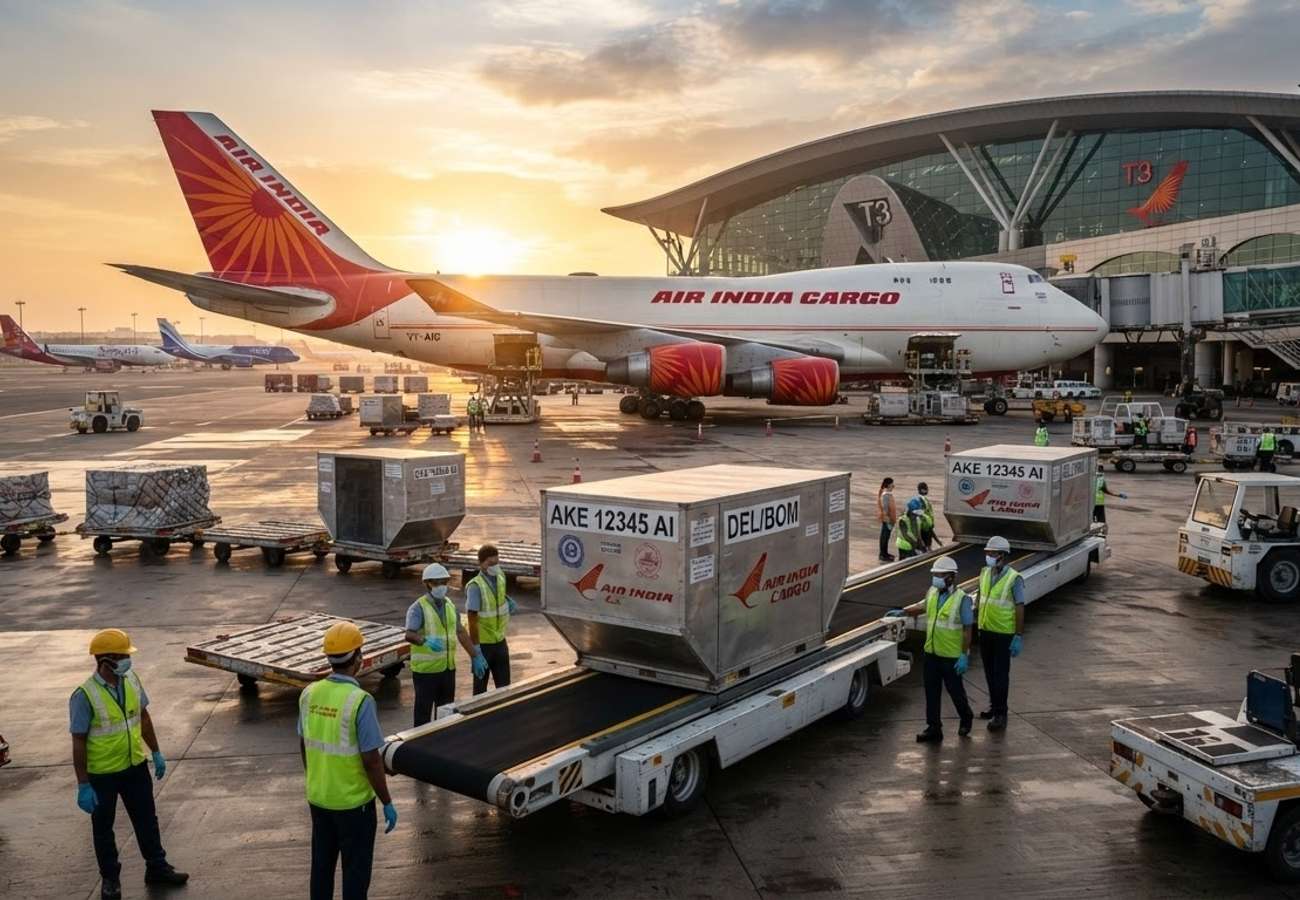
Image generated by AI
Air India has slashed cargo connection times at Delhi Airport from 36–48 hours to roughly 5–8 hours by letting sealed freight containers transit the hub without piece-by-piece re-screening. The framework, expanded on 21 August 2026 to link five Indian cities with three European gateways, is the strongest evidence yet that India can convert regulatory reform into real hub economics.
Air India has moved its cargo transshipment pilot beyond a single test corridor, extending a security and handling framework that allows eligible consignments to remain sealed inside the same unit load device while transiting Delhi. The expansion accelerates India's bid to position itself as a competitive global air cargo hub under a revised national policy, opening faster Europe-linked corridors for exporters.
Sealed Unit Load Devices Replace Piece-by-Piece Re-Screening at Delhi
The proof-of-concept launched on the Chennai–Delhi–Frankfurt route on 20 June 2026 and was publicly announced on 21 August 2026. It uses Delhi as the central gateway for long-haul cargo flows between India and Europe while testing a new security and handling regime.
The procedural change is simple but transformative. Instead of breaking down transit freight and re-screening it item by item, eligible shipments stay sealed inside their unit load device for the entire Delhi transfer.
That single adjustment has cut average connection times at Delhi Airport from 36–48 hours to roughly 5–8 hours on the pilot corridor. For shippers of time-sensitive goods, the gap between a two-day wait and a same-day connection often decides whether routing through India is viable at all.
The throughput data suggests the market responded immediately. Average daily cargo volumes on the route more than doubled, climbing from about 2.2 metric tonnes to 4.5 metric tonnes, with roughly 300 metric tonnes handled in the first two months of the trial.
Chennai–Delhi–Frankfurt Pilot Corridor Results
| Metric | Before framework | After framework |
|---|---|---|
| Average connection time at Delhi Airport | 36–48 hours | Roughly 5–8 hours |
| Average daily cargo volume | About 2.2 metric tonnes | About 4.5 metric tonnes |
| Total volume handled, first two months | — | Roughly 300 metric tonnes |
Five Indian Origins Now Feed Three European Gateways
Following the initial results, the government cleared an expansion of the proof-of-concept to a wider set of city pairs. Eligible shipments can now originate from Ahmedabad, Bengaluru, Chennai, Hyderabad and Mumbai, funnel through Delhi, and connect onward to Copenhagen, Frankfurt and London Heathrow.
The structure effectively creates a spoke-and-hub cargo network centred on Delhi, mirroring the passenger hub-and-spoke strategy being rolled out across India's aviation system. Concentrating screening, consolidation and long-haul uplift at one major hub allows the airline to offer more consistent schedules to exporters and forwarders while maximising belly capacity on its long-haul fleet.
The Bureau of Civil Aviation Security has authorised the expanded pilot to validate the new security and handling processes before a wider nationwide rollout. As supporting infrastructure, technology and processes reach additional airports, more domestic gateways are expected to feed similar international corridors.
Expanded Transshipment Network at a Glance
| Network role | Cities covered |
|---|---|
| Indian origin points | Ahmedabad, Bengaluru, Chennai, Hyderabad, Mumbai |
| Central transshipment hub | Delhi |
| European destinations | Copenhagen, Frankfurt, London Heathrow |
Security and Customs Reforms Cleared the Path
The pilot sits within a broader regulatory rewrite aimed at turning India into a regional and eventually global air cargo hub. The revised framework for handling and securing transshipment cargo now explicitly covers all four movement categories: international to international, international to domestic, domestic to international and domestic to domestic flows.
Earlier circulars from the Bureau of Civil Aviation Security, followed by amendments, relaxed the long-standing requirement for mandatory re-screening of secured transit cargo. The condition is that freight moves through designated transfer cargo security hold areas under defined safeguards, bringing Indian procedure closer to practices at established cargo hubs in the Middle East, Europe and East Asia.
Customs authorities have added their own streamlining measures. These include:
- An all-India air transshipment bond regime, removing the need for multiple bonds at different airports
- Digital transshipment messages processed through the national customs IT platform to accelerate clearances
Industry bodies argue such steps are essential if India is to capture a larger share of Asia–Europe and intra-Asia cargo that currently routes over foreign hubs. The underlying logic is straightforward: every hour of avoidable dwell time pushes freight toward competitors.
Digital Cargo Platforms and Airport Infrastructure Deepen the Push
Air India has been modernising its cargo technology in preparation for higher volumes. The airline has rolled out a new cargo management system and selected a next-generation digital cargo platform from a specialist provider, moves intended to enhance booking, tracking and capacity management.
These systems provide real-time visibility into available capacity, automate key planning functions and integrate more smoothly with customs and regulatory processes. For freight forwarders, pairing faster transshipment at Delhi with better digital tools reduces uncertainty and handling costs on multi-leg shipments.
The infrastructure pipeline reinforces the strategy. At Noida International Airport, Air India SATS has been selected to develop a multimodal cargo hub, planned with integrated cargo terminals, warehousing and logistics zones. Other regional airports are expanding cargo terminals and cold-chain facilities, aiming to plug local manufacturing and agricultural clusters into global air freight networks.
Why the Shift Matters for Exporters and Global Routings
The immediate beneficiaries are Indian exporters moving high-value or time-sensitive goods to Europe. Shorter connections through Delhi and simplified security processing improve on-time performance and reduce damage risk, making air freight more dependable for sectors such as:
- Pharmaceuticals
- Electronics
- Automotive components
- Perishables
The bigger prize is a gradual rerouting of global flows. If the framework extends to international-to-international transfers at scale, Indian hubs could serve as midpoints on long-haul trade corridors between East Asia, Europe and Africa — traffic that today depends on hubs in the Gulf, Southeast Asia and Western Europe.
The pace of that shift depends on how quickly the new processes move beyond proof-of-concept status, and how effectively airlines, airports and regulators coordinate. For now, the expansion converts policy changes and infrastructure investment into measurable operational gains on a live corridor.
Key Takeaways
- Air India's transshipment framework cut average connection times at Delhi from 36–48 hours to roughly 5–8 hours by keeping eligible cargo sealed in the same unit load device.
- Daily cargo volumes on the Chennai–Delhi–Frankfurt pilot more than doubled, from about 2.2 to 4.5 metric tonnes, with roughly 300 metric tonnes handled in the first two months.
- The expanded pilot covers five origins — Ahmedabad, Bengaluru, Chennai, Hyderabad and Mumbai — connecting via Delhi to Copenhagen, Frankfurt and London Heathrow.
- The Bureau of Civil Aviation Security authorised the expansion, and the revised framework now spans all four movement categories, including international to international.
- An all-India air transshipment bond regime and digital customs messaging align Indian procedures with established hubs in the Middle East, Europe and East Asia.
Frequently Asked Questions
What changed under Air India's cargo transshipment framework? Eligible consignments now remain sealed inside the same unit load device while transiting Delhi, instead of being broken down and re-screened piece by piece. On the pilot corridor, this cut average connection times from 36–48 hours to roughly 5–8 hours.
Which routes does the expanded pilot cover? Shipments can originate from Ahmedabad, Bengaluru, Chennai, Hyderabad and Mumbai, transit through Delhi, and continue onward to Copenhagen, Frankfurt and London Heathrow.
When did the transshipment pilot launch? The proof-of-concept launched on the Chennai–Delhi–Frankfurt route on 20 June 2026 and was announced on 21 August 2026.
Which regulator approved the expansion? The Bureau of Civil Aviation Security authorised the expanded pilot to validate the new security and handling processes before a wider nationwide rollout.
Which industries benefit most from faster transshipment? Pharmaceuticals, electronics, automotive components and perishables stand to gain the most, since on-time performance and reduced handling risk determine whether air freight is competitive for these goods.
For India, the cargo hub race is no longer fought in policy circulars — it is now measured in hours saved on the apron at Delhi.
Related Travel Guides
Disclaimer
This article is for informational and educational purposes only. It does not constitute legal, financial, or professional advice. While we strive to provide accurate and up-to-date information, travel policies, regulations, and conditions change rapidly. Always verify information with official sources before making travel decisions. Nomad Lawyer makes no representations about the accuracy, reliability, completeness, or suitability of the information provided. Readers should consult qualified professionals for advice specific to their circumstances. The views expressed in this article are those of the author and do not necessarily reflect the views of Nomad Lawyer.
Preeti Gunjan
Contributor & Community Manager
A passionate traveller and community builder. Preeti helps grow the Nomad Lawyer community, fostering engagement and bringing the reader experience to life.
Learn more about our team →