
Air Canada Expands Long-Haul Operations with 440-Seat Boeing 777 Fleet Across 8 Strategic Routes
Breaking airline news and aviation industry updates for 2026.

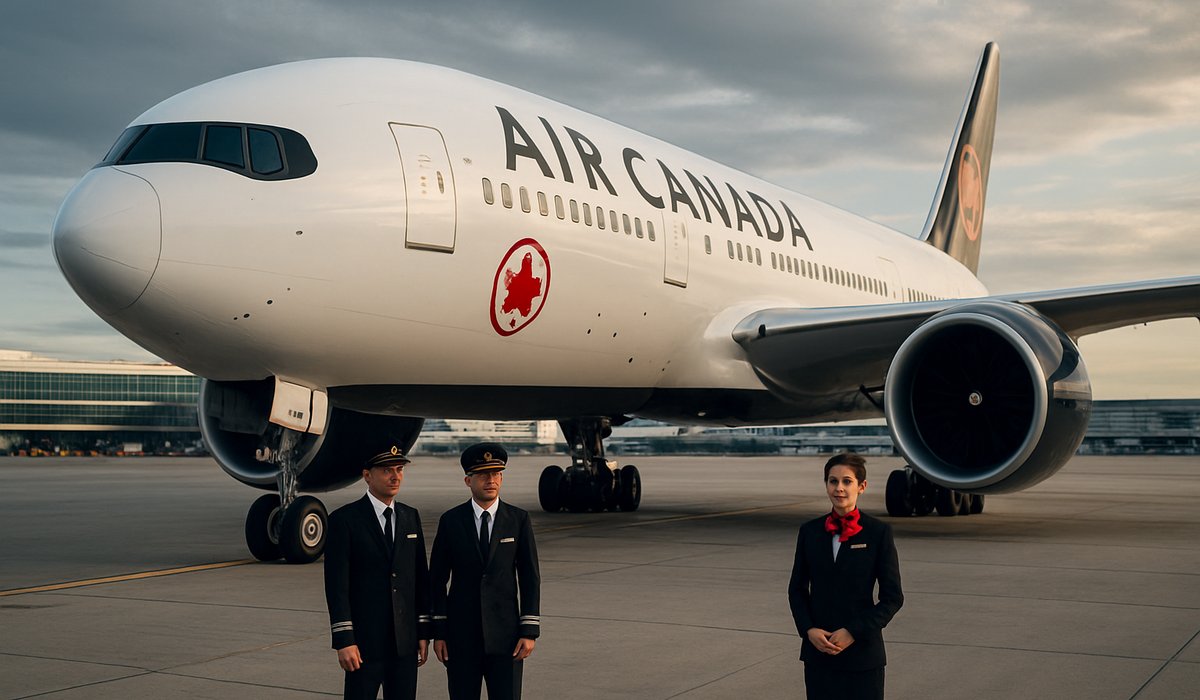
Image generated by AI
Air Canada Expands Long-Haul Operations with 440-Seat Boeing 777 Fleet Across 8 Strategic Routes
The Star Alliance carrier leverages widebody aircraft to strengthen transatlantic and transpacific connectivity
Air Canada's Widebody Dominance Takes Shape
Air Canada is deepening its commitment to premium long-haul travel, deploying its substantial widebody fleet—comprising 85 aircraft—across an expanding network of international routes. The Canadian carrier's strategic reliance on large-capacity Boeing 777 aircraft underscores the airline's investment in high-density, fuel-efficient operations amid volatile jet fuel prices and evolving travel demand patterns.
The airline currently operates 19 Boeing 777-300ER aircraft and six 777-200LR jets, positioning these twin-engine workhorses as critical assets for transcontinental connectivity. These wide-body machines, capable of accommodating up to 440 passengers in high-density configurations, represent a pivotal strategy for maximizing revenue per flight while managing operational costs in an industry increasingly pressured by inflationary pressures and baggage charges competition.
Fleet Composition and Strategic Aircraft Mix
Air Canada's widebody infrastructure extends beyond its 777 operations. According to aviation data specialists at ch-aviation, the Star Alliance member maintains a diversified fleet architecture: 32 Boeing 787-9 Dreamliners, 20 Airbus A330-300s, and eight Boeing 787-8 variants. This multi-aircraft strategy allows the carrier to optimize route economics—deploying smaller widebodies on lower-demand long-haul services while reserving larger 777s for premium transatlantic and transpacific lanes.
The carrier has signaled future growth through firm orders for the Airbus A350-1000 and Boeing 787-10, indicating confidence in sustained international travel recovery despite economic headwinds affecting the aviation industry globally.
Operational Restructuring and Fleet Modernization
Notably, Air Canada has concluded its Boeing 767 passenger operations, converting remaining aircraft to dedicated freight service. This transition reflects broader industry trends toward narrower-body, point-to-point configurations for regional routes while concentrating widebody capacity on profitable intercontinental services.
Industry Context: Rising Operational Costs
The deployment of these premium widebody fleets occurs against a backdrop of elevated jet fuel prices and increased airline fees across the sector. Carriers worldwide are relying on high-capacity aircraft like the 777 to distribute fuel costs across more passengers, partially offsetting margin compression from volatile energy markets and competitive baggage charges across the aviation industry.
For Canadian travelers and aviation enthusiasts tracking Air Canada's network evolution, the 777-driven expansion signals sustained investment in premium transatlantic and transpacific connectivity—despite macroeconomic uncertainties reshaping global travel patterns.
Frequently Asked Questions
What is Air Canada's current widebody fleet size? Air Canada operates 85 widebody aircraft, including 25 Boeing 777 variants (19 777-300ERs and six 777-200LRs), forming a critical backbone of international operations.
How many passengers can a Boeing 777 accommodate on Air Canada flights? Air Canada's 777 configuration supports up to 440 passengers in high-density seating arrangements, maximizing revenue generation on long-haul routes.
Which new aircraft has Air Canada ordered? The carrier has placed firm orders for the Airbus A350-1000 and Boeing 787-10, signaling modernization efforts and future capacity growth.
How do airline fees and jet fuel prices impact widebody aircraft deployment? Rising operational costs incentivize carriers to deploy large-capacity aircraft like the 777 to distribute fuel expenses across more passengers, improving unit economics despite elevated baggage charges and surcharges.
What routes does Air Canada's 777 fleet primarily serve? Air Canada's 777 aircraft concentrate on transatlantic and transpacific routes, connecting North American hubs to European and Asian destinations.
Related Travel Guides
External Resources
Disclaimer
This article is for informational and educational purposes only. It does not constitute legal, financial, or professional advice. While we strive to provide accurate and up-to-date information, travel policies, regulations, and conditions change rapidly. Always verify information with official sources before making travel decisions. Nomad Lawyer makes no representations about the accuracy, reliability, completeness, or suitability of the information provided. Readers should consult qualified professionals for advice specific to their circumstances. The views expressed in this article are those of the author and do not necessarily reflect the views of Nomad Lawyer.
Preeti Gunjan
Contributor & Community Manager
A passionate traveller and community builder. Preeti helps grow the Nomad Lawyer community, fostering engagement and bringing the reader experience to life.
Learn more about our team →