
Seat Pitch Airlines: Why Legroom Varies Wildly Across US Carriers
Economy seat pitch airlines differ dramatically across US carriers in 2026. Airlines strategically compress dimensions to maximize profits, leaving passengers with wildly inconsistent legroom and comfort on identical aircraft types.

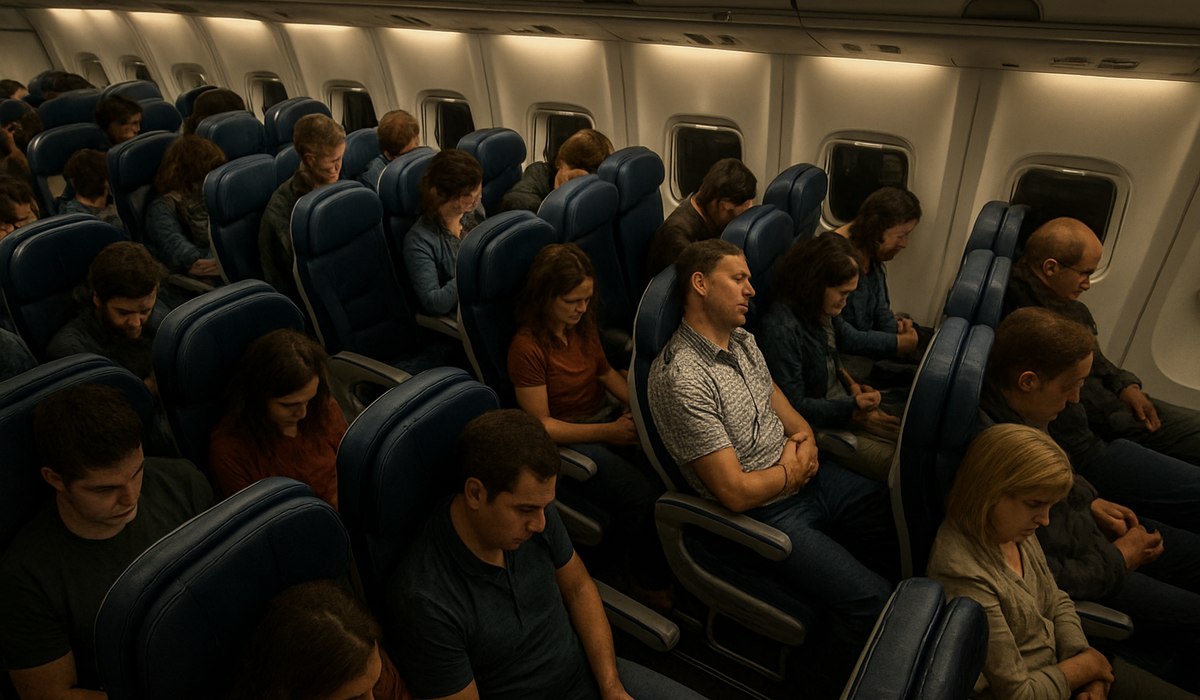
Image generated by AI
Economy Seat Dimensions Are Strategic Profit Engineering, Not Random Design
The experience of settling into an economy seat often feels jarringly inconsistent. One carrier's coach cabin offers generous legroom; another's feels claustrophobic on an identical aircraft type. This dramatic variance isn't accidental—seat pitch airlines operate as carefully calibrated profit levers in the modern aviation industry. Seat pitch (the distance from one seat back to the next) and seat width are engineered specifically to balance passenger comfort against revenue density. What passengers experience as random discomfort is actually the predictable result of competing financial strategies, manufacturing constraints, and fierce competitive pressures reshaping how US carriers pack their cabins in 2026.
The Economics Behind Seat Dimensions
Every fraction of an inch matters in airline economics. When carriers reduce seat pitch by just two inches across a single-aisle aircraft, they can add 10–15 additional seats to a flight. On a cross-country route operating 300 days annually, that translates to hundreds of thousands in incremental revenue—even if fares remain flat.
Airlines face constant pressure to improve unit economics. Fuel costs, labor, and maintenance expenses remain relatively fixed per flight. Adding seats becomes one of the few levers carriers can pull to improve profitability without raising ticket prices directly. This explains why seat pitch has compressed from the historical 32 inches (common in the 1980s) to today's 29–31 inch standard in most US economy cabins.
Manufacturers enable this compression. Boeing and Airbus design aircraft with modular cabin layouts specifically allowing carriers to choose pitch configurations. An airline can order an aircraft with baseline seating, then adjust spacing to match its financial targets. This manufacturer flexibility transformed seats from fixed product features into variable revenue optimization tools.
The trade-off feels invisible to casual travelers. Passengers don't directly feel the difference between 29 and 31 inches on a two-hour flight. But on transcontinental routes, that missing inch compounds discomfort. Airlines calculate exactly where passenger pain thresholds sit—the point where discomfort becomes severe enough to trigger complaints or frequent-flyer defection—then position their offerings just below that threshold.
How Aircraft Manufacturers Set the Standard
Boeing and Airbus don't manufacture seats; they provide the physical framework—the fuselage, floor mounting points, and technical specifications. Specialized seating manufacturers like Recaro, Collins, and Zodiac then create actual seats within those constraints.
The critical factor is fuselage width. A Boeing 737's cabin interior is 11 feet 6 inches wide. A 737 in standard 3-3 configuration (six seats across) uses approximately 17.3 inches per seat. This width is largely non-negotiable. Narrower seats pinch hips; wider seats reduce the number of seats that fit.
Manufacturers publish standard pitch recommendations (typically 28–33 inches). Airlines then choose where within that range to position themselves. This creates a curious market dynamic: manufacturers gain no direct benefit from padding, yet airlines face enormous pressure to maximize density. The result is a race to the minimum acceptable pitch, with passenger comfort as the variable that adjusts downward.
New aircraft designs occasionally attempt to improve cabin comfort. The Boeing 737 MAX and updated Airbus A320 family include slightly wider fuselages and better ergonomic mounting. But these improvements translate to only modest gains—perhaps one additional inch per seat width—because airlines still pursue density maximization.
Seat Pitch vs. Seat Width: The Fundamental Trade-off
Passengers often conflate these distinct dimensions, but they operate under entirely different constraints.
Seat pitch (front to back) drives long-haul discomfort. This directly affects legroom, knee clearance, and your ability to recline. Compressing pitch from 32 to 29 inches feels dramatic on a six-hour flight. Pitch is also easier to adjust: manufacturers simply mount seats closer together.
Seat width (hip space) affects all flight lengths equally. A 16-inch wide seat feels cramped on any journey. But width is harder to compress because fuselage constraints are absolute. An airline can't make three-aisle aircraft any narrower without architectural changes.
This explains why US carriers have targeted pitch aggressively (compressing to 29 inches on most airlines) while seat width has remained relatively stable (17–17.5 inches on major carriers). Pitch offers more room to extract revenue; width is geometrically constrained.
Premium economy emerged partly to address this trade-off. Carriers offer 38–40 inch pitch in premium economy at prices between economy and business, capturing passengers willing to pay for legroom without investing in expensive lie-flat seats. This actually increases their incentive to compress standard economy further, creating a profitable "squeeze" effect.
Which US Airlines Offer the Most Legroom in 2026?
Seat pitch varies significantly across major US carriers. Here's how they stack up in standard economy on domestic routes:
Spacious operators (30–31 inches): Southwest Airlines stands alone, offering 32 inches on most aircraft because its open seating model and lack of assigned seats create operational efficiencies. Hawaiian Airlines maintains 31 inches on domestic flights, leveraging island-route customer expectations for comfort.
Middle-ground carriers (29–30 inches): Delta Air Lines positions most mainline economy at 31 inches on Boeing 777s but compresses regional aircraft to 29 inches. United Airlines runs 30–31 inches on wide-body aircraft, 29 on narrow-bodies. American Airlines similarly varies by aircraft type (31 inches on 777s, 29 on 737s).
Ultra-dense operators (28–29 inches): Allegiant Air, Spirit Airlines, and Frontier Airlines embrace density strategies, offering 28–29 inch pitch even on longer routes. This enables their ultra-low-cost model but creates significant discomfort on 3+ hour flights.
The paradox: identical aircraft types feature dramatically different pitches depending on carrier. A Boeing 737 might have 31 inches on Southwest but 29 inches on a competitor's network. Same fuselage; entirely different experiences.
Check real-time specifications via FlightAware's aircraft database before booking. Aircraft type doesn't guarantee legroom—carrier configuration does.
Key Legroom Data: US Airline Seat Pitch Comparison (2026)
| Airline | Aircraft Type | Standard Economy Pitch | Premium Economy Pitch | Notes |
|---|---|---|---|---|
| Southwest | Boeing 737 MAX 8 | 32 inches | N/A | No assigned seating; most spacious domestic option |
| Hawaiian | Airbus A321 | 31 inches | 38 inches | Island-focused route optimization |
| Delta | Boeing 777-200 | 31 inches | 38 inches | Varies by aircraft; regional aircraft compress to 29" |
| United | Boeing 787 Dreamliner | 31 inches | 40 inches | Most comfortable long-haul; narrow-bodies reduce to 29" |
| American | Airbus A350 | 31 inches | 38 inches | Latest wide-bodies maintain pitch; older 737s at 29" |
| Frontier | Airbus A319 | 28 inches | 33 inches (paid) | Ultra-density strategy; lowest domestic pitch |
| Spirit | Boeing 737 MAX 8 | 28 inches | 32 inches (paid) | Aggressive pitch compression drives ultra-low fares |
| Allegiant | Boeing 757 | 28 inches | 30 inches (paid) | Regional carrier using older aircraft with density focus |
*Data sourced from airline official specifications as of April 2026.
Disclaimer
This article is for informational and educational purposes only. It does not constitute legal, financial, or professional advice. While we strive to provide accurate and up-to-date information, travel policies, regulations, and conditions change rapidly. Always verify information with official sources before making travel decisions. Nomad Lawyer makes no representations about the accuracy, reliability, completeness, or suitability of the information provided. Readers should consult qualified professionals for advice specific to their circumstances. The views expressed in this article are those of the author and do not necessarily reflect the views of Nomad Lawyer.
Preeti Gunjan
Contributor & Community Manager
A passionate traveller and community builder. Preeti helps grow the Nomad Lawyer community, fostering engagement and bringing the reader experience to life.
Learn more about our team →