Air Canada Drops Toronto–Mumbai Flights from 2027 Network Amid Widebody Fleet Realignment and Geopolitical Route Pressures

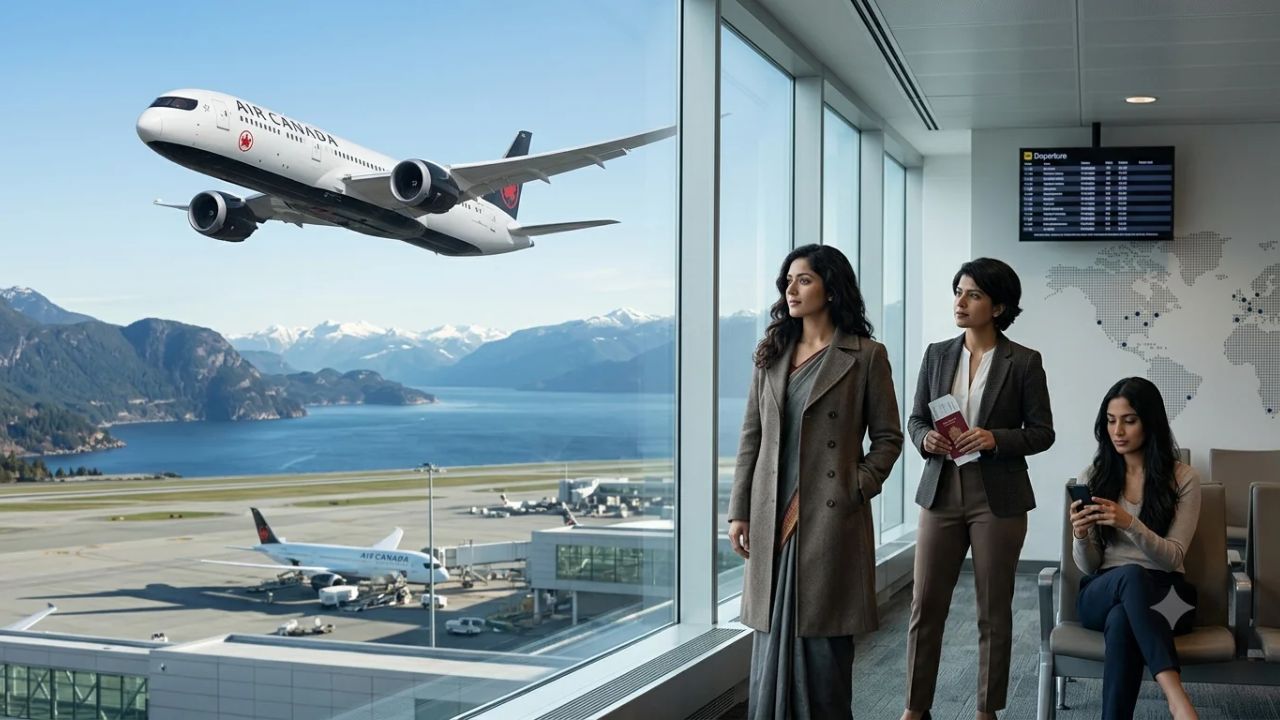
TORONTO & MUMBAI — Canada’s flag carrier, Air Canada, has officially omitted its former Toronto–Mumbai passenger route from its published 2027 international flight schedules, formalizing an extended operational withdrawal from India’s primary commercial and financial capital. The service, which historically linked Toronto Pearson International Airport (YYZ) with Mumbai’s Chhatrapati Shivaji Maharaj International Airport (BOM) through an intermediate technical and commercial stop at London Heathrow (LHR), last carried passengers in March 2026. Industry schedule filings compiled by aviation data analytics provider Cirium confirm that the Canadian carrier has declined to restore the dual-sector service for the entire 2027 operating cycle, leaving Air Canada without an owned-metal presence in western India.
The non-restoration of the Mumbai corridor represents a calculated strategic realignment within Air Canada’s long-haul network planning. Rather than operating multi-stop fifth-freedom sectors that tie up valuable widebody aircraft across three continents, the Montreal-based airline is concentrating its Indian subcontinent operations exclusively on nonstop gateway flights serving New Delhi's Indira Gandhi International Airport (DEL) from Toronto and Montreal. At the same time, severe airspace closures across Russia, volatile international jet fuel prices, intense competitive capacity across the North Atlantic, and the premium utilization value of Boeing 787 Dreamliners have compelled fleet planners to redeploy long-range aircraft to higher-margin seasonal transatlantic and transpacific markets.
       AIR CANADA TORONTO–MUMBAI ROUTE WITHDRAWAL & REALLOCATION MATRIX
       ================================================================

       [ FORMER DUAL-SECTOR ROUTE STRUCTURE (SUSPENDED MARCH 2026) ]
       Toronto Pearson (YYZ) --------> London Heathrow (LHR) --------> Mumbai (BOM)
              [ Sector 1: Transatlantic ]            [ Sector 2: Fifth-Freedom ]
              * Boeing 787-8 / 787-9                 * High Heathrow slot costs
              * North Atlantic airway                * Direct competition from BA/AI
                                      |
                                      v
       [ 2027 NETWORK REALIGNMENT: STRATEGIC SHIFT & RATIONALE ]
       -------------------------------------------------------------------------
       * Russian Airspace Ban: Forces costly southern detours for North America–India
       * Jet Fuel Surges: Doubling of fuel prices following Middle East hostilities
       * Fleet Efficiency: Frees Boeing 787 widebodies for high-yield point-to-point
       * Hub Consolidation: Concentrates India operations on Toronto/Montreal–Delhi
                                      |
                                      v
       [ PASSENGER ALTERNATIVES FOR TORONTO–MUMBAI TRAVELERS (2027) ]
       +------------------------------+------------------------------+
       |                              |                              |
       v                              v                              v
[ STAR ALLIANCE HUB TRANSIT ]  [ DELHI GATEWAY TRANSFER ]     [ GULF CARRIER ROUTINGS ]
* Lufthansa (via FRA / MUC)    * Air Canada YYZ–DEL nonstop   * Emirates (via Dubai)
* Swiss (via Zurich ZRH)       * Air India domestic connection * Qatar Airways (via Doha)
* Single-ticket bag transfer   * Dedicated T3 customs check   * Etihad (via Abu Dhabi)
The Anatomy of a Fifth-Freedom Operation: Why Air Canada Flew via London
To understand Air Canada’s decision to drop the Toronto–Mumbai route from its 2027 schedule, one must examine the operational and regulatory mechanics of the flight itself. Unlike standard long-haul passenger flights that connect two cities nonstop, Air Canada's Mumbai operation was built upon an intricate intermediate routing through London Heathrow Airport.
The service operated under what international aviation law designates as "Fifth-Freedom" traffic rights. Established under the 1944 Chicago Convention on International Civil Aviation, fifth-freedom rights permit an airline based in Country A (Canada) to fly to Country B (the United Kingdom), disembark passengers and cargo, take on new paying passengers in Country B, and transport them to Country C (India), as part of a continuous service originating or terminating in the carrier's home territory.
AIR FREEDOM CLASSIFICATIONS: AIR CANADA CASE STUDY
| Entity / Facility | Delays | Cancellations | Details |
|---|---|---|---|
| Freedom Classification | Regulatory Scope | Operational Route | Commercial Objective |
| & Legal Definition | & Bilateral Rights | Example | & Traffic Source |
| Third & Fourth | Carry passengers | Toronto Pearson | Primary bilateral flow |
| Freedom Rights | between home state | to London Heathrow | between Canada and the |
| and a foreign state | (YYZ–LHR) | United Kingdom | |
| Fifth-Freedom | Carry revenue | London Heathrow | Supplementary local |
| Traffic Rights | traffic between two | to Mumbai Shivaji | traffic between the UK |
| foreign nations | (LHR–BOM) | and Indian markets | |
| Single-Carrier | Carry through- | Toronto to Mumbai | End-to-end diaspora & |
| Through Journey | passengers via an | via London stop | business traveler flow |
| intermediate hub | (YYZ–LHR–BOM) | on one airline ticket |
For decades, fifth-freedom tag flights were a staple of global aviation, allowing international carriers to stretch the range of earlier aircraft generations while supplementing passenger loads by selling seats on the intermediate segment. In Air Canada's case, the London–Mumbai leg gave the airline direct access to the immense volume of business and visiting-friends-and-relatives (VFR) travel moving between the United Kingdom and India. Passengers originating in Toronto could remain on the same airline all the way to Mumbai, while British travelers could purchase seats solely for the London–Mumbai sector.
However, operating a fifth-freedom tag flight in modern commercial aviation introduces acute operational overhead. The aircraft must pay two sets of takeoff and landing fees, dual ground handling charges, and elevated navigation fees across dozens of national airspaces. At London Heathrow—consistently ranked among the most expensive and slot-congested airports in the world—Air Canada was forced to utilize precious landing and gate slots that might generate substantially higher returns on transatlantic flights connecting Canadian business centers with Western Europe.
Additionally, the London–Mumbai sector placed Air Canada in direct head-to-head competition against well-entrenched legacy carriers operating dedicated, high-frequency nonstop widebody services, including British Airways, Virgin Atlantic, and Air India. Lacking the frequency and brand dominance of these home carriers in the UK-India corridor, Air Canada was frequently forced to discount seats on the London–Mumbai leg, depressing seat yields on an aircraft that required heavy fuel and crew expenditures.
Geopolitical Disruption and the Closure of Russian Airspace
The operational viability of northern-tier long-haul travel between North America and South Asia changed permanently following the Russian Federation’s invasion of Ukraine in February 2022. In response to Western economic sanctions, Moscow closed Russian airspace to commercial air carriers from Canada, the United States, the European Union, and the United Kingdom.
Before these geopolitical restrictions, polar and Siberian routings provided the most fuel-efficient, direct great-circle tracks between North American hubs like Toronto, Montreal, Vancouver, and major Indian cities. Aircraft could track directly over the Arctic Ocean, crossing northern Russia and Central Asia before descending into Delhi or Mumbai.
       GREAT CIRCLE ROUTING VS. SOUTHERN BYPASS TRAJECTORIES
       =====================================================

       [ PRE-2022 POLAR ROUTING (RUSSIAN AIRSPACE OPEN) ]
       Toronto Pearson (YYZ) ---> Arctic Circle ---> Russia ---> Central Asia ---> India
       * Distance: Approx. 7,790 Nautical Miles
       * Flight Time: 13.5 to 14.5 Hours Nonstop
       * Fuel Burn: Baseline Optimized Efficiency
                                     |
                                     v
       [ POST-2022 SOUTHERN BYPASS ROUTING (RUSSIAN AIRSPACE CLOSED) ]
       Toronto Pearson (YYZ) ---> North Atlantic ---> Europe ---> Middle East ---> India
       * Distance: Approx. 8,650 to 9,200 Nautical Miles
       * Flight Time: 15.5 to 17.5+ Hours Nonstop (or Dual-Sector Stopover)
       * Structural Penalties: Heavy fuel burn, payload limitations, crew duty limits
When Russian airspace was closed to Canadian carriers, Air Canada was forced to route its Indian subcontinent flights along complex southern corridors over the North Atlantic, the Mediterranean basin, and parts of the Middle East. For nonstop flights between Toronto and Delhi, this diversion added between 90 minutes and three hours of additional flight time in each direction, dramatically inflating aviation turbine fuel burn.
For a potential nonstop Toronto–Mumbai routing, the southern diversion renders flights virtually impossible without imposing severe payload penalties—meaning the airline would have to leave cargo behind or deliberately block passenger seats from being sold to keep the aircraft light enough to carry the necessary fuel reserves.
While the intermediate stop in London Heathrow partially mitigated the range and payload penalty by breaking the journey into two separate stages, it introduced an entirely separate set of geopolitical vulnerabilities. Flights navigating between London and Mumbai must traverse airspaces in Southeast Europe, Turkey, the Arabian Gulf, and the Arabian Sea. As regional tensions and military hostilities escalated across the Middle East throughout 2024, 2025, and 2026, air-traffic corridors over Iran, Iraq, and the Levant faced recurring closures and safety advisories, forcing airlines to route around conflict zones. These diversions lengthened flight times on the London–Mumbai leg, increased fuel consumption, disrupted aircraft turnaround schedules at Heathrow, and eroded operating margins.
OPERATIONAL PENALTIES: SOUTHERN TRANSIT VS. POLAR FLIGHT
| Entity / Facility | Delays | Cancellations | Details |
|---|---|---|---|
| Operational Factor | Pre-2022 Polar | Post-2022 Southern | Route Impact on |
| & Flight Parameter | Great Circle Track | Airway Diversion | Long-Haul Feasibility |
| Air Distance | Shortest physical | Extended by 800 to | Adds 1.5 to 3.0 hours |
| Flown (YYZ to India) | trajectory over | 1,400 nautical | of continuous engine |
| Arctic & Siberia | miles southward | operating hours | |
| Jet Fuel | Standard long-haul | Escalated by 15% | Millions in annualized |
| Consumption | fuel planning; | to 22% due to | fuel costs per airframe |
| optimal headwinds | circuitous airway | assigned to route | |
| Payload & Cargo | Maximum passenger | Weight-restricted; | Curtails lucrative |
| Capacity Limits | load & high-value | cargo space must be | belly-hold freight |
| belly cargo space | surrendered | commercial contracts | |
| Flight Crew Duty | Standard two-crew | Requires augmented | Exceeds single-shift |
| & Layover Rostering | flight operations | multi-pilot crews; | regulatory limits; |
| & layover turns | overtime penalties | elevates hotel costs |
Fleet Economics: The Premium Value of the Boeing 787 Dreamliner
A central factor in Air Canada’s decision to remove Mumbai from its 2027 network is the deployment strategy for its twin-aisle widebody fleet, specifically the Boeing 787 Dreamliner. Air Canada operates both the Boeing 787-8 and the larger-capacity Boeing 787-9, which formed the operational backbone of the former Toronto–London–Mumbai route.
The Boeing 787 is widely recognized as one of the most technologically advanced and fuel-efficient commercial aircraft in the sky, constructed with carbon-composite materials, advanced GE GEnx engines, and lower cabin altitude pressurization that reduces passenger fatigue. However, within a major international carrier's fleet, widebody aircraft are finite capital assets that must be assigned where they generate the highest unit revenue per available seat mile (PRASM).
       AIR CANADA BOEING 787 WIDEBODY ROTATION COMPARISON
       ==================================================

       [ ROUTE OPTION A: TORONTO–LONDON–MUMBAI DUAL-SECTOR ROTATION ]
       * Total Cycle Time: 48 to 54 hours per complete round trip
       * Airport Landing Fees: Paid at YYZ, LHR, and BOM
       * Crew Requirements: Triple crew sets (Toronto base, London base, Mumbai layovers)
       * Ground Time: Extended intermediate stopover at Heathrow terminal
       * Yield Profile: Highly seasonal, leisure/VFR dominant, high OTA discounting
                                      |
                                      v
       [ ROUTE OPTION B: DEDICATED TRANSATLANTIC / TRANSPACIFIC TURNS ]
       * Total Cycle Time: 20 to 24 hours per round trip (e.g., YYZ–LHR or YYZ–FCO)
       * Airport Landing Fees: Standard single-turn fees
       * Crew Requirements: Single crew turn with standard destination rest
       * Ground Time: Rapid 90-minute to 2-hour turnaround
       * Yield Profile: High premium cabin business demand, corporate contracts
When dedicated to the Toronto–London–Mumbai rotation, a single Boeing 787 was effectively tied up for more than two full calendar days to complete a single round-trip circuit. Accounting for time zone shifts, the transatlantic flight to London, the mandatory ground servicing window at Heathrow, the seven-hour tag flight to Mumbai, ground turnaround at Chhatrapati Shivaji Maharaj International Airport, and the return sequence, the aircraft was unavailable for any other network assignment for nearly 50 hours.
In sharp contrast, that same Boeing 787 Dreamliner can operate two complete, high-frequency round trips between Toronto and Western European business centers (such as London, Paris, Frankfurt, Zurich, or Rome) in the same operational timeframe. During the busy transatlantic spring and summer travel windows, premium cabin fares on European and transatlantic routes yield exceptionally high profitability.
By stepping away from the capital-intensive Mumbai tag flight, Air Canada effectively recovers widebody airframes that can be deployed across its core transatlantic transatlantic and transpacific networks—markets where the airline captures high-yielding business travelers, premium leisure vacationers, and corporate cargo contracts without absorbing the intermediate overhead of Heathrow.
Network Rationalization: Lessons from Air Canada's Commercial Route Audits
The withdrawal from Mumbai does not occur in isolation. Throughout 2026, Air Canada has executed a systematic audit of its global route portfolio to weed out underperforming sectors, stabilize operating margins, and insulate corporate earnings from volatile energy markets.
In an official corporate update published on April 17, 2026, and updated on April 23, Air Canada executives detailed the severe financial strains triggered by escalating jet fuel prices. The carrier documented that international aviation jet fuel costs had doubled in the wake of Middle East regional conflicts, significantly increasing unit operating expenses across long-haul flight operations. In response, Air Canada enacted a wide-ranging series of network adjustments affecting approximately 1 percent of its total planned annual available seat miles (ASMs).
AIR CANADA 2026 NETWORK ADJUSTMENTS & ROUTE AUDIT MATRIX
| Entity / Facility | Delays | Cancellations | Details |
|---|---|---|---|
| Route Sector | Geographical Scope | Nature of Network | Underlying Strategic |
| & City Pair | & Service Market | Action Implemented | & Commercial Factor |
| Fort McMurray– | Domestic Canadian | Suspended from | Reallocation of regional |
| Vancouver (YMM–YVR) | Resource Corridor | May 28, 2026 | aircraft to higher-flow |
| domestic hubs | |||
| Yellowknife–Toronto | Domestic Northern | Suspended from | Seasonal leisure drop; |
| (YZF–YYZ) | Subarctic Route | August 30, 2026 | consolidation into |
| western hubs | |||
| Salt Lake City– | Cross-Border | Suspended from | Low premium yield; |
| Toronto (SLC–YYZ) | Transborder Hub | June 30, 2026 | capacity absorbed by |
| partner airline codes | |||
| New York JFK–Toronto | High-Frequency | Suspended from | Prioritizing LaGuardia |
| / Montreal | Transborder Shuttle | June 1, 2026 | (LGA) & Newark (EWR) |
| business corridors | |||
| Algiers–Montreal | Transatlantic | Summer suspension; | High seasonal swing; |
| (ALG–YUL) | Long-Haul Link | targeted return | fleet reallocation to |
| in 2027 | European trunk routes | ||
| Guadalajara–Montreal | Central American | Planned inaugural | Deferral of speculative |
| (GDL–YUL) | Expansion Route | launch suspended | leisure routes to save |
| widebody capacity | |||
| Toronto–London– | Intercontinental | Route suspended | High intermediate cost; |
| Mumbai (YYZ–LHR–BOM) | Fifth-Freedom Link | March 2026; dropped | Russian airspace ban; |
| from 2027 schedule | 787 fleet redeployment |
While Air Canada’s official April communique did not isolate Mumbai as a sole casualty of the fuel surge, the operational arithmetic of long-haul aviation is undeniable: when fuel prices double, long, multi-sector tag routes operating under severe airspace restrictions become the most vulnerable candidates for suspension. With each gallon of aviation kerosene consuming a higher percentage of total passenger revenue, routes that fail to command consistently high premium cabin yields cannot survive corporate scrutiny.
The Delhi Stronghold: Air Canada’s Enduring Indian Subcontinent Gateway
It is vital to distinguish between Air Canada’s departure from Mumbai and its broader commitment to the Indian subcontinent. Dropping Mumbai from its 2027 network does not signal an exit from the Indian market. On the contrary, Air Canada maintains an active, high-capacity commercial presence in India anchored by its flagship services into New Delhi’s Indira Gandhi International Airport.
       AIR CANADA CONTINUING SUBCONTINENT FOOTPRINT (2026–2027)
       ========================================================

       [ TORONTO PEARSON (YYZ) ]               [ MONTREAL TRUDEAU (YUL) ]
                   \                                        /
                    \                                      /
                     v                                    v
       +---------------------------------------------------------------+
       |             NONSTOP CANADIAN GATEWAY CONNECTIVITY             |
       |  * High-capacity Boeing 777-200LR & Boeing 787-9 operations   |
       |  * Direct polar-bypass long-haul services                     |
       |  * Core business, academic & diaspora passenger corridor       |
       +---------------------------------------------------------------+
                                       |
                                       v
                    [ INDIRA GANDHI INTERNATIONAL AIRPORT (DEL) ]
                    * Terminal 3 Premier Hub Facility
                    * Comprehensive Star Alliance domestic onward links
                    * Air India & Vistara domestic interline networks
Air Canada continues to operate regular nonstop flights connecting Toronto Pearson with New Delhi, complemented by scheduled operations linking Montreal’s Pierre Elliott Trudeau International Airport (YUL) with the Indian capital. By consolidating its Canadian widebody capacity into New Delhi, Air Canada preserves its vital commercial, cultural, and diaspora corridor while eliminating the costly operational complexities of the intermediate London stop.
New Delhi’s modern Terminal 3 acts as an expansive international transfer hub. From Delhi, inbound travelers arriving on Air Canada flights can connect seamlessly to extensive domestic networks operated by Star Alliance partner Air India, as well as domestic interline agreements that span Mumbai, Bengaluru, Hyderabad, Chennai, and dozens of tier-two Indian regional hubs.
The Consumer Reality: Navigating 2027 Bookings to Mumbai on AirCanada.com
A source of confusion for international travelers is that Air Canada’s public booking platform and digital reservation engines continue to display and sell tickets between Canadian gateways and Mumbai for travel dates stretching into 2027.
Travelers must understand the critical industry distinction between airline ticket distribution and airline operational metal:
BOOKING REALITY: OPERATING METAL VS. CODESHARE MARKETING
| Entity / Facility | Delays | Cancellations | Details |
|---|---|---|---|
| Reservation Feature | Air Canada | Star Alliance | Interline Commercial |
| & Booking Channel | Operated Metal | Codeshare Partner | Partner Flight |
| Operating Aircraft | Air Canada Boeing | Lufthansa, Swiss, | British Airways, |
| & Cockpit / Cabin | 787 or Boeing 777; | or Air India | Virgin Atlantic, |
| Crew Staffing | Canadian crew | aircraft & crew | or local partner |
| Ticket Stock & | Issued on 014 | Issued on 014 | Issued on 014 |
| Airline Code | ticket stock; | ticket stock; AC | ticket stock; partner |
| pure AC flight | marketing code | flight number shown | |
| Transit Hub & | Formerly London | Frankfurt (FRA), | London (LHR), |
| Intermediate Airport | Heathrow (LHR); | Munich (MUC), or | Paris (CDG), or |
| now discontinued | Zurich (ZRH) | Middle East hubs | |
| Baggage & Loyalty | Full Aeroplan | Aeroplan mileage | Partial or basic |
| Benefits | status benefits | accrual & Star | interline baggage; |
| & baggage rights | Alliance Gold perks | check fare conditions |
When a passenger searches for a flight from Toronto Pearson to Mumbai on Air Canada’s website today, the booking engine will return valid, bookable itineraries. However, careful inspection of the flight details reveals that Air Canada is not operating the aircraft between Europe and Mumbai.
Instead, the passenger will typically fly Air Canada across the Atlantic to a major European Star Alliance hub—such as Frankfurt (FRA), Munich (MUC), or Zurich (ZRH)—and transfer to an onward flight operated by Lufthansa or Swiss International Air Lines directly to Mumbai. Alternatively, the passenger may be routed on Air Canada’s nonstop flight to Delhi, connecting onward to Mumbai on an Air India domestic flight.
This codeshare and interline arrangement allows Air Canada to serve its commercial clientele traveling to India’s financial center without risking millions of dollars in operating costs to fly its own airplanes on the route.
Passenger Travel Guide: Best Routing Alternatives for Canada–Mumbai Travel
For corporate executives, academic travelers, and diaspora families planning travel between Toronto and Mumbai in 2027, several established routing strategies offer excellent alternatives to the retired Air Canada service:
        CANADIAN TRAVELER'S ROUTE SELECTION WORKFLOW (2027)
        ==================================================

        [ 1. PRIMARY PREFERENCE: LOYALTY ACCRUAL & STATUS ]
        * Star Alliance / Aeroplan:
          -> Book Air Canada to Frankfurt/Munich/Zurich + Lufthansa/Swiss to Mumbai
          -> Book Air Canada nonstop YYZ–DEL + Air India domestic transfer to Mumbai
        * SkyTeam / Flying Blue:
          -> Air France via Paris Charles de Gaulle (CDG)
          -> KLM via Amsterdam Schiphol (AMS)
        * Oneworld / British Airways Executive Club:
          -> British Airways via London Heathrow (LHR)
                               |
                               v
        [ 2. SECONDARY PREFERENCE: SPEED & SINGLE-STOP COMFORT ]
        * Persian Gulf Super-Connectors:
          -> Emirates via Dubai (DXB) with daily A380/777 service from Toronto
          -> Qatar Airways via Doha (DOH) from Montreal/Toronto
          -> Etihad Airways via Abu Dhabi (AUH) from Toronto
                               |
                               v
        [ 3. ESSENTIAL TRANSIT VERIFICATION STEPS ]
        * Confirm European transit visa requirements (Schengen vs. UK Direct Airside Transit)
        * Check luggage interline transfer allowances across multi-carrier tickets
        * Verify minimum connecting times (MCT) at Frankfurt, Munich, or Dubai
- The Star Alliance European Connection (Lufthansa & Swiss): For loyal Aeroplan members who want to retain points accrual and Star Alliance Gold privileges, connecting via Frankfurt, Munich, or Zurich remains the most seamless choice. Both Lufthansa and Swiss operate daily widebody flights into Mumbai from their central European hubs. Baggage is checked through automatically from Toronto to Mumbai, and passengers can access Star Alliance lounges throughout the journey.
- The Gulf Super-Connectors (Emirates, Qatar Airways, Etihad): For travelers prioritizing onboard comfort, entertainment, and modern widebody cabins, the major Gulf airlines provide formidable alternatives. Emirates operates direct services from Toronto Pearson to Dubai International Airport (DXB), where passengers connect onto frequent daily flights into Mumbai. Qatar Airways offers seamless transfers through Hamad International Airport (DOH) in Doha, while Etihad Airways connects via Abu Dhabi (AUH).
- The Delhi Gateway Transfer: Travelers who prefer to spend the maximum duration of their journey on a Canadian carrier can book Air Canada’s nonstop flight from Toronto to New Delhi. Upon arrival at Delhi’s Terminal 3, passengers clear Indian immigration and customs before taking one of the hourly domestic shuttle flights connecting Delhi with Mumbai on Air India, IndiGo, or Vistara.
- European Flag Carriers (British Airways, Air France, KLM): Travelers flying via Europe can also utilize British Airways through London Heathrow, Air France through Paris Charles de Gaulle (CDG), or KLM through Amsterdam Schiphol (AMS). Each carrier maintains robust, high-frequency services into Mumbai, though passengers traveling through the UK must ensure they meet British direct airside transit visa requirements where applicable.
Industry Outlook: Will Air Canada Ever Return to Mumbai?
While Air Canada’s published 2027 schedules formally confirm the route’s continued non-restoration, airline network planning is inherently cyclical. An absence from published schedules does not constitute an irrevocable cancellation.
Aviation history demonstrates that airlines routinely suspend international routes during periods of macroeconomic uncertainty, elevated fuel prices, or fleet retooling, only to reinstate them when operational conditions normalize. If geopolitical conditions in Eastern Europe evolve to allow the reopening of Russian airspace to Western carriers, the fundamental economics of North America–India flying will dramatically improve.
Additionally, as Air Canada takes delivery of new ultra-long-range widebody aircraft in the late 2020s, the airline may eventually possess the technological capability and favorable operating economics to launch a true, nonstop Toronto–Mumbai service that bypasses London entirely. Next-generation composite airframes equipped with enhanced aerodynamic efficiency and ultra-efficient turbofan engines could potentially overcome the payload restrictions imposed by southern bypass trajectories. Until such structural conditions align, however, travelers journeying between Canada and India’s financial capital must look beyond Air Canada’s own wings, relying instead on its international alliance partners and global competitors to bridge the divide.
Related Travel Guides
- Koh Yao Noi and Historic Global Capitals Gain Wider Luxury Reach as Wyndham Expands Registry Collection
- Seoul Tourism Spending Shifts Beyond Myeong-dong as Foreign Visitors Fuel an 80 Percent Surge in Seongsu and Namdaemun
- Secondary Cities Outpace Traditional Hubs in 2026 as Anti-Overtourism Regulations Spread
- Paris and Brussels Launch Joint European Gastronomy Pass Promoting Organic Dining
- Australia Scales Up Coral Restoration Tourism as Cairns Deploys Larval Robotics
This article is for informational purposes. Flight routes, passenger regulations, visa rules, and transit advisories are subject to change by airlines and aviation authorities. Readers are advised to verify schedules and travel documentation with relevant carriers and border agencies before departure.
Related Stories

Mumbai's Dual-Airport Era: Airlines Prepare to Shift 5 Million International Passengers to Navi Mumbai

Canadian Airlines Expand Winter 2026–2027 Sun Networks: Caribbean, Mexico & Central America Flight Guide