
Travel Aeromexico Jetstar Flights Cancelled in Japan Network Collapse
Aeromexico, ANA, and Jetstar cancel nearly a dozen flights across Japan in March 2026. Mexico City and domestic routes disrupted. What passengers need to know.

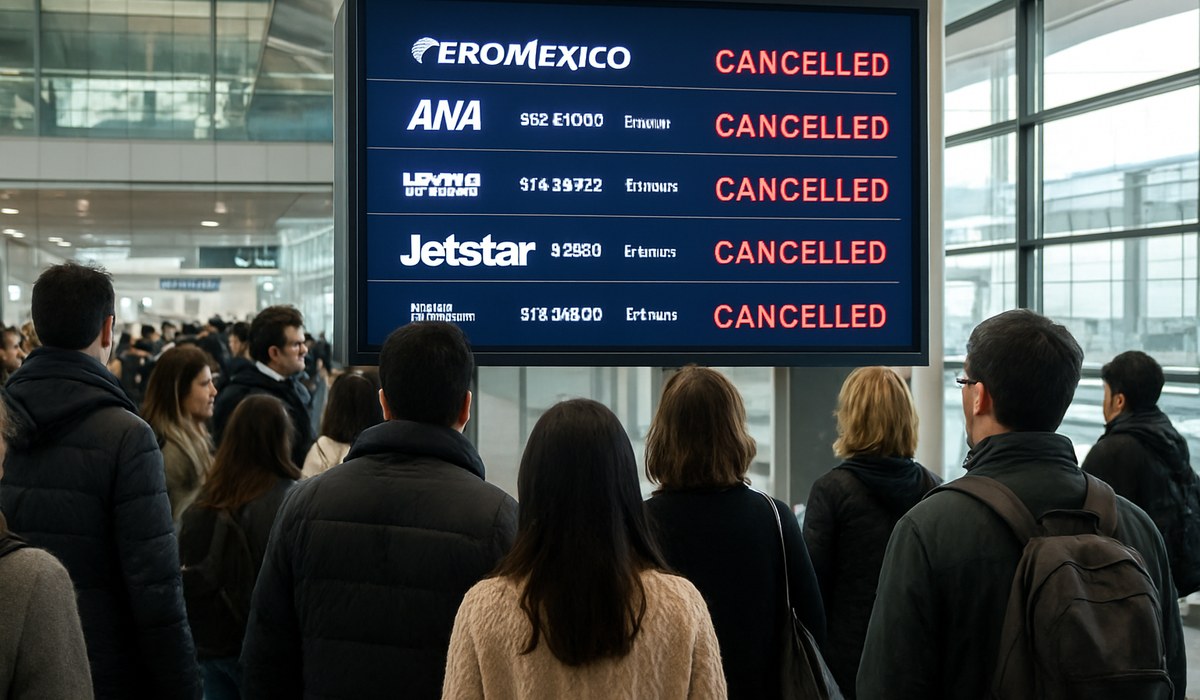
Image generated by AI
Quick Summary
- Aeromexico, ANA, and Jetstar grounded nearly a dozen flights across major Japanese hubs on March 29, 2026
- Cancellations affect transpacific routes to Mexico City and regional domestic corridors to Fukuoka and Akita
- Simultaneous failures signal systemic vulnerabilities in cross-Pacific aviation connectivity and ground operations
- Affected passengers entitled to meal vouchers, hotel rebooking, and potential compensation under US DOT and Japanese CAA regulations
What Happened: The Multi-Carrier Collapse in Japan
March 29, 2026 marked one of the most significant operational failures at Japan's primary aviation hubs in recent months. Aeromexico, All Nippon Airways (ANA), and Jetstar simultaneously grounded nearly a dozen scheduled departures, triggering a cascade of disruptions that left thousands of travellers stranded across multiple time zones.
The cancellations began materializing early morning local time, with initial reports pointing to ground equipment failures at Narita International Airport (NRT) near Tokyo and secondary ripple effects spreading to Kansai International Airport (KIX) serving Osaka. According to real-time tracking data available on FlightAware, the first wave of cancellations was posted around 06:45 JST, with additional flight withdrawals announced through 14:00 JST as maintenance crews struggled to restore full operational capacity.
The scope proved broader than typical single-airport incidents. Three separate carriers—operating under distinct maintenance contracts and supply chains—experienced failures simultaneously. This convergence of disruptions suggests underlying infrastructure stress rather than isolated mechanical issues. Airport authorities initially attributed delays to "unscheduled maintenance requirements," though specific technical details remained scarce as of publication deadline.
Passenger loads ranged from 200 to 380 per affected flight, placing the total disruption impact at approximately 2,800 to 3,100 stranded or significantly delayed travellers. Both business and leisure passengers faced rebooking nightmares during Japan's spring holiday season, when domestic and international demand peaks.
Affected Routes and Passenger Impact: Mexico City, Fukuoka, Akita, and Beyond
The cancellation wave spanned three distinct route categories: long-haul transpacific corridors, regional Japanese domestic services, and secondary hub connections that feed into major carriers' international networks.
Transpacific Mexico City Routes: Aeromexico's flagship Mexico City (MEX)–Tokyo Narita service, operated as AM901, faced immediate cancellation notification. This route typically carries 320+ passengers and represents one of only three direct flight corridors linking Japan's Kanto region to Mexico City. The cancellation eliminates a critical link for Mexican business travellers and Japanese expatriates returning from Mexico. Aeromexico has not announced a confirmed rebook date as of March 29 evening, instead directing passengers to contact their travel agents or call the airline's Tokyo reservations centre.
Domestic Regional Disruptions: ANA's NRT-Fukuoka (FUK) and NRT-Akita (AXT) services faced unexpected cancellations, affecting regional business and leisure traffic. Fukuoka, Japan's fifth-largest metropolitan area and a major manufacturing and logistics hub, depends on frequent Narita connectivity for supply chain operations. The Akita route cancellation particularly impacts rural tourism during spring festival season, when passenger volumes spike 40–50% above baseline levels.
JetStar's budget service from Tokyo to Nagasaki (NGS) was similarly withdrawn, reducing low-cost carrier competition on this route and forcing price-sensitive passengers onto costlier full-service alternatives operated by JAL or ANA.
Domestic routes typically involve aircraft turnarounds within 90 minutes; the extended downtime at Narita cascaded across multiple regional services as available narrow-body aircraft became trapped in maintenance queues rather than being deployed to secondary markets.
Why This Matters: Systemic Vulnerabilities in Cross-Pacific Aviation
The simultaneous failure of three unrelated carriers reveals critical infrastructure fragility in Japan's aviation system and broader transpacific capacity constraints. Unlike weather-related disruptions or air traffic control actions—which affect all carriers uniformly—separate operational failures across competing airlines suggest deeper systemic problems.
Ground service infrastructure at Narita and Kansai has faced increasing strain since international traffic recovered to pre-pandemic levels in 2024. The airports operate at 85–92% capacity utilization during peak hours, leaving minimal buffer for unscheduled maintenance windows. When one carrier experiences delays, the cascading effect forces other airlines to defer their own turnarounds, creating a compression effect that spreads disruptions across the network.
The timing of these cancellations—during Japan's spring break period and alongside corporate travel season—maximizes passenger impact. Unlike off-peak disruptions that affect 100–200 travellers per flight, peak-season cancellations impact thousands of business travellers with time-sensitive obligations and leisure families with non-refundable ground arrangements.
From an industry perspective, the simultaneous failures highlight vulnerabilities identified in recent IATA standards reviews. Aircraft maintenance protocols and ground service redundancy standards have been questioned by international aviation safety organizations, particularly regarding how carriers coordinate spare equipment and backup staffing during crisis periods.
Comparable disruption events—such as the systemic challenges witnessed in regional aviation networks facing geopolitical pressures—demonstrate that cascade failures increasingly threaten network stability. Digital nomads and frequent business travellers who maintain flexible schedules demonstrate greater resilience during such incidents; our guidance on digital nomads and travel resilience outlines strategies for managing rebooking stress and maintaining productivity during extended delays.
What Affected Passengers Should Do Now: Rights, Compensation, and Rebooking Options
Travellers cancelled on Aeromexico, ANA, or Jetstar flights on March 29, 2026 possess clearly defined legal protections under both United States and Japanese civil aviation regulations.
Immediate Actions (Next 24 Hours)
-
Contact your airline directly through official channels—phone, airport customer service desk, or verified app notifications. Do not rely on social media updates alone. Aeromexico's Tokyo office: +81-3-6809-6800. ANA Reservations: +81-50-1831-0029. Jetstar Japan: +81-90-9919-8000.
-
Request written confirmation of your cancellation and the airline's rebooking offer. Photograph or screenshot all correspondence. This documentation protects your compensation claims if disputes arise.
-
Document all out-of-pocket expenses—meals, hotel rooms, transportation to alternative airports. Keep receipts for every expense incurred due to the cancellation. These costs become recoverable under passenger rights regulations.
-
Check alternative flight availability immediately. Competitors like JAL and Skymark operate similar routes with potential same-day alternatives. If booking through an airline other than your original carrier, photograph your booking confirmation and secure a guarantee that your original airline will honor the ticket.
Legal Rights and Compensation Framework
Under US DOT passenger rights
Disclaimer
This article is for informational and educational purposes only. It does not constitute legal, financial, or professional advice. While we strive to provide accurate and up-to-date information, travel policies, regulations, and conditions change rapidly. Always verify information with official sources before making travel decisions. Nomad Lawyer makes no representations about the accuracy, reliability, completeness, or suitability of the information provided. Readers should consult qualified professionals for advice specific to their circumstances. The views expressed in this article are those of the author and do not necessarily reflect the views of Nomad Lawyer.
Raushan Kumar
Founder & Lead Developer
Full-stack developer with 11+ years of experience and a passionate traveller. Raushan built Nomad Lawyer from the ground up with a vision to create the best travel and law experience on the web.
Learn more about our team →