
Japan Flight Crisis: 1,142 Delays and 20 Cancellations Strand Hundreds at Haneda, Osaka, Fukuoka

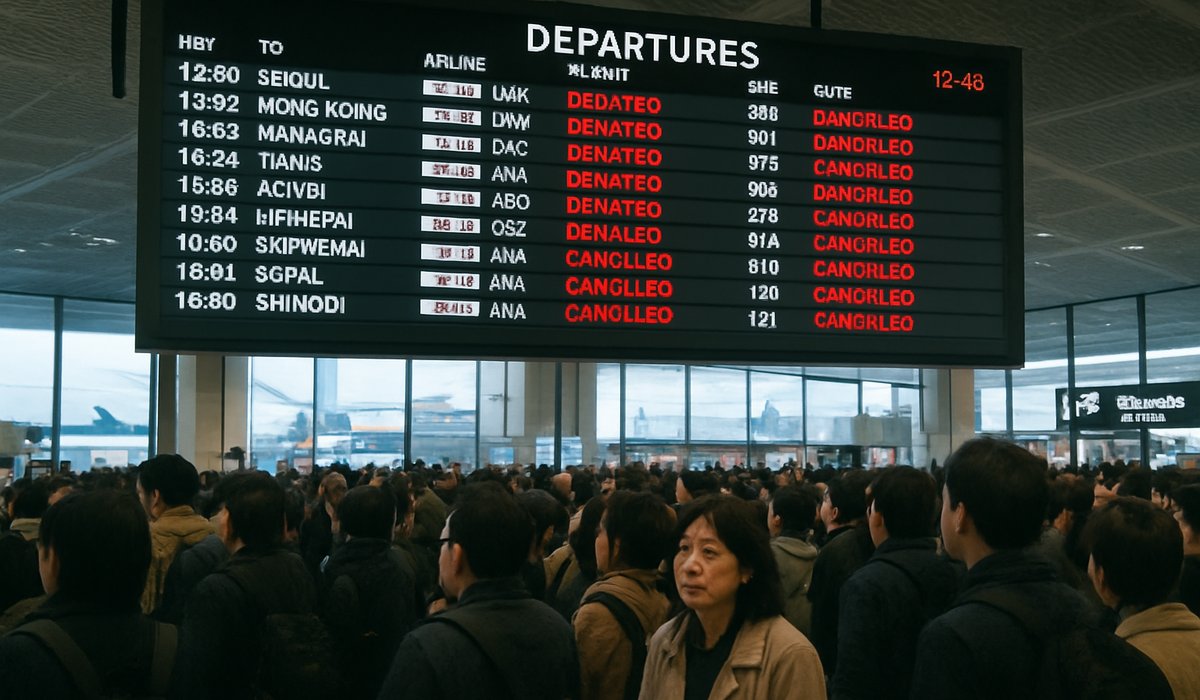
Image generated with AI
**> Quick Summary
- 1,142 delays and 20 cancellations across 6 major Japanese airports on March 31, 2026
- Tokyo Haneda was the epicenter with 713 delays and 5 cancellations
- Japan Airlines led airline disruptions with 368 delays and 3 cancellations
- ANA Wings recorded the highest cancellation count at 7 cancelled flights
- Fukuoka, Osaka, Miyazaki, Shizuoka, and Aomori all reported significant disruptions**
Hundreds of travelers were left stranded across Japan on March 31, 2026, as a large-scale flight disruption event swept through the country's aviation network. Six major airports — Tokyo Haneda, Osaka Itami, Fukuoka, Miyazaki, Shizuoka, and Aomori — recorded a combined total of 1,142 delays and 20 cancellations, disrupting thousands of passengers and creating cascading schedule problems across Japan's busiest air corridors.
The most heavily impacted carriers were Japan Airlines, All Nippon Airways (ANA), ANA Wings, Skymark, Solaseed, Oriental Air Bridge, StarFlyer, Jetstar Japan, and Peach Aviation.
Airport-by-Airport: Where the Disruptions Hit Hardest
Tokyo Haneda — The Epicenter
Tokyo's Haneda Airport bore the brunt of the day's disruptions by a wide margin. The airport recorded 713 delays and 5 cancellations, making it by far the most impacted hub. Japan Airlines and All Nippon Airways together accounted for the substantial majority of these operational delays, reflecting how concentrated traffic dependence on two major carriers creates systemic vulnerability.
Fukuoka — Second Hardest Hit
Fukuoka Airport followed as the second most severely disrupted airport, logging 265 delays and 4 cancellations. Japan Airlines, All Nippon, and Skymark were among the key operators contributing to the disruption at this western Japan hub.
Osaka Itami — Moderate but Significant
Osaka's Itami Airport reported 97 delays and 5 cancellations, with Japan Airlines and ANA Wings leading the disruption figures at this major domestic hub.
Miyazaki — Regional Impact
Miyazaki recorded 51 delays and 2 cancellations, largely driven by Solaseed and Japan Airlines operations serving this southern Kyushu gateway.
Shizuoka — Limited but Notable
Shizuoka experienced 10 delays and 1 cancellation, primarily involving Fuji Dream Airlines and ANA Wings on this smaller regional route network.
Aomori — Northern Disruptions
Aomori in northern Honshu reported 6 delays and 3 cancellations, with disruptions split between Japan Airlines handling delays and ANA Wings bearing most of the cancellations.
Airlines Most Affected
Japan Airlines — Most Disrupted Overall
Japan Airlines recorded the highest disruption count of any airline, with 368 delays and 3 cancellations across Tokyo, Osaka, Fukuoka, Aomori, and Miyazaki. As Japan's flag carrier and market leader, JAL's disruptions had outsized ripple effects across the entire network.
All Nippon Airways — Close Second
All Nippon reported 256 delays and 2 cancellations, with a particularly heavy presence felt at both Tokyo and Fukuoka, contributing significantly to both airports' disruption totals.
ANA Wings — Highest Cancellation Rate
ANA Wings saw 83 delays and 7 cancellations — the highest outright cancellation count of any airline on the day. These cancellations hit particularly hard at Osaka Itami and Aomori routes.
Skymark — Tokyo and Fukuoka Impact
Skymark recorded 71 delays, mainly concentrated in Tokyo and Fukuoka, adding to regional congestion at both hubs.
Solaseed — Miyazaki Concentration
Solaseed logged 67 delays, with the significant share coming from Miyazaki and Tokyo operations connecting this regional carrier's core routes.
StarFlyer — Consistent Disruptions
StarFlyer reported 54 delays, tied primarily to operations at Tokyo Haneda and Fukuoka.
Oriental Air Bridge — High Cancellation Impact
Oriental Air Bridge experienced 43 delays and 4 cancellations, with impact concentrated heavily on Fukuoka and Miyazaki routes — a significant hit for an operator of this size.
Additional Carriers Affected
- Jetstar Japan: 30 delays
- Peach Aviation: 14 delays
What Can Affected Passengers Do?
If you are currently navigating Japan's flight disruptions, here are the concrete steps to take:
- Check real-time flight updates before heading to airports like Tokyo Haneda or Fukuoka — do not rely on printed departure boards alone.
- Contact your airline's customer service immediately for rebooking options or compensation eligibility.
- Arrive early at airports like Osaka Itami, where moderate but ongoing disruptions are still being processed.
- Keep digital and physical copies of all tickets and travel documents readily accessible throughout the process.
- Monitor announcements at smaller airports like Shizuoka or Aomori, where schedule changes may propagate quickly with short notice.
- Consider flexible travel arrangements if flying through heavily impacted hub airports like Haneda or Fukuoka.
Overview: The Scale of the Disruption
The concentration of today's disruption across Japan Airlines and ANA — Japan's two dominant carriers — highlights a systemic vulnerability in the country's heavily hub-centric air network. When the largest operators experience significant operational pressure simultaneously, the ripple effects cascade rapidly through regional feeders and charter operators alike.
Tokyo Haneda remains the most structurally impacted hub, followed by Fukuoka and Osaka, while smaller cities like Aomori and Shizuoka absorbed limited but notable disruptions. For regional operators like ANA Wings and Oriental Air Bridge, today's cancellation figures represent a disproportionately heavy operational day.
Source: FlightAware and multiple Japanese airport authorities
Related Travel Guides
- RAF Launches Historic Airborne Medical Mission to Remote Atlantic Island Amid Hantavirus Outbreak
- Airbus Extends Manufacturing Lead Over Boeing as Both Aerospace Giants Accelerate Production Recovery
- Aviation Updates: SkyWest Flight SKW6443 Diverts to Arkansas Mid-Air, Triggering Regional Travel Chaos
Disclaimer
This article is for informational and educational purposes only. It does not constitute legal, financial, or professional advice. While we strive to provide accurate and up-to-date information, travel policies, regulations, and conditions change rapidly. Always verify information with official sources before making travel decisions. Nomad Lawyer makes no representations about the accuracy, reliability, completeness, or suitability of the information provided. Readers should consult qualified professionals for advice specific to their circumstances. The views expressed in this article are those of the author and do not necessarily reflect the views of Nomad Lawyer.
Kunal K Choudhary
Co-Founder & Contributor
A passionate traveller and tech enthusiast. Kunal contributes to the vision and growth of Nomad Lawyer, bringing fresh perspectives and driving the community forward.
Learn more about our team →