
Japan Aviation Crisis: 11 Flights Cancelled as United Airlines, Jetstar Japan, ANA, and Regional Carriers Disrupt Tokyo, Osaka, Hokkaido, and Kyushu Routes
Multiple Japanese airlines cancelled 11 scheduled flights across major domestic and international routes, affecting key airport hubs including Narita, Kansai, Haneda, and New Chitose. Disruptions extended to regional destinations including Guam, Sendai, Hakodate, Fukuoka, Miyazaki, Kumamoto, and Kagoshima.

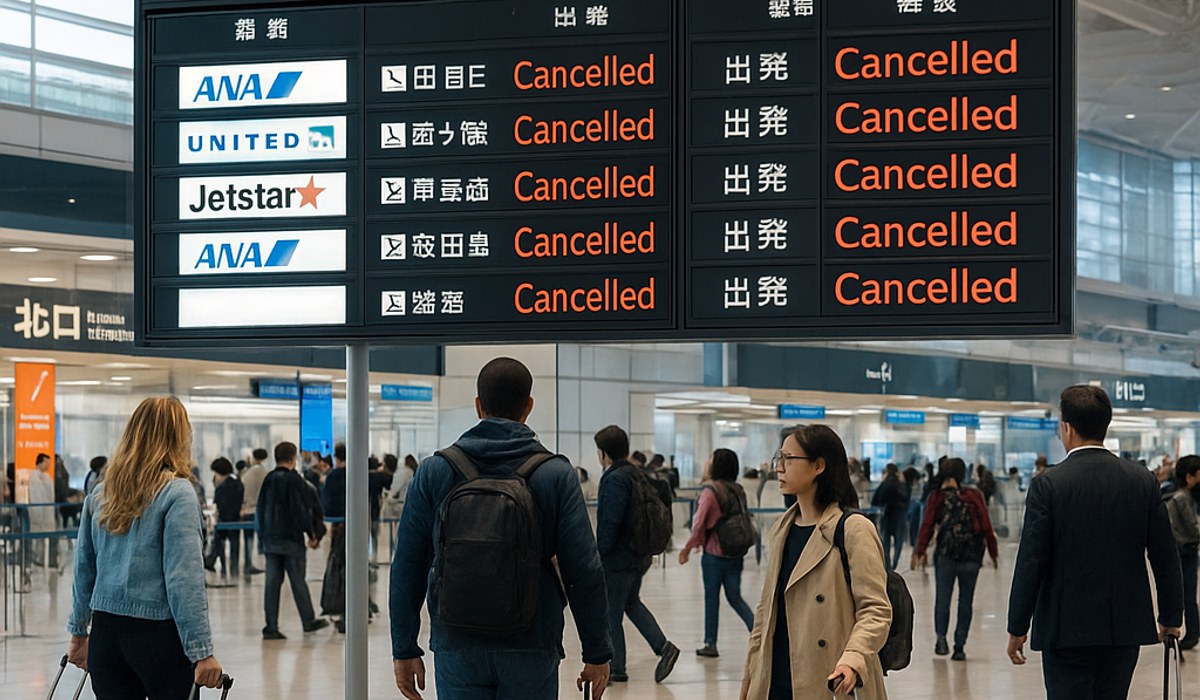
Image generated by AI
Quick Summary
- 11 flights cancelled across multiple Japanese carriers affecting domestic and international routes
- United Airlines, ANA, ANA Wings, Jetstar Japan, and IBEX Airlines all impacted by disruptions
- Key airports affected: Narita, Kansai, Haneda, New Chitose, Chubu Centrair, and Osaka International
- Top destinations impacted: Guam, Tokyo, Osaka, Hokkaido, Fukuoka, Miyazaki, Kumamoto, Kagoshima, Sendai, and Hakodate
- Travel implications: Scattered rebooking challenges and limited alternative flight availability on regional routes
Japan's Aviation Network Faces Fresh Wave of Operational Disruptions
Japan's interconnected air travel system experienced another significant round of cancellations throughout March 2026. Eleven scheduled flights across multiple carriers were grounded, disrupting both high-frequency domestic corridors and vital international connections. The cancellations highlight ongoing operational pressures facing Japan's aviation infrastructure as airlines continue adjusting to shifting demand patterns and logistical constraints.
This latest wave of cancellations cuts across multiple carriers and airport systems, demonstrating systemic challenges rather than isolated incidents at any single airline or location.
International Gateway Hit: Narita's Pacific Route Cancelled
United Airlines Flight 3919 departing from Tokyo's Narita International Airport represents one of the most significant cancellations in this disruption wave. This Boeing 737-800 service connecting Narita to Guam International Airport was scheduled to depart Monday at 7:30 PM JST.
The Guam route stands as a crucial Pacific gateway for travelers heading to U.S. territories and onward international connections. Passengers relying on this flight faced limited rebooking options for such a specialized long-haul route. Guam connectivity represents strategic importance for both leisure travelers and business passengers accessing the western Pacific region.
United Airlines' decision to ground this specific route reflects the complex operational pressures facing international carriers serving Japan's primary hub airports.
Disaster at Osaka International: Multiple Carriers Ground Regional Flights
Osaka International Airport (Itami) experienced the heaviest concentration of cancellations, with multiple regional flights grounded across different carriers and aircraft types.
ANA Wings Regional Disruptions
ANA Wings Flight AKX509 connecting Osaka (Itami) to Miyazaki Airport was cancelled for Monday at 5:05 PM JST. This Dash 8B regional aircraft serves a crucial link between Kansai's major hub and Kyushu's tourism destination.
ANA Wings Flight AKX547 from Osaka to Kagoshima Airport was cancelled Saturday at 3:45 PM JST. This route connects western Japan's primary business center with Kyushu's volcanic tourism region, highlighting disruptions to both business and leisure travel patterns.
ANA Wings Flight AKX521 routing from Osaka to Kumamoto Airport faced cancellation Saturday at 7:05 AM JST. This morning departure served regional connectivity to Kyushu's earthquake-recovery region and local business travel demands.
All Nippon Airways (ANA) International Regional Service Impacted
ANA Flight ANA20, a Boeing 787-800 operating from Osaka (Itami) to Tokyo's Haneda Airport, was cancelled Saturday at 10:00 AM JST. This widebody aircraft typically serves as a regional flagship between Japan's two largest metropolitan areas, and its cancellation disrupted premium travel options between these key markets.
The concentration of ANA Wings regional aircraft (Dash 8-100/200 series) cancellations suggests specific capacity or operational challenges affecting Japan's largest domestic carrier's feeder network.
Domestic Hub Disruptions: Jetstar Japan's Kansai-Narita Service
Jetstar Japan Flight JJP238 operating the Kansai International Airport to Narita corridor was cancelled Sunday at 9:00 PM JST. This Airbus A320 service represents a high-demand domestic connection between Kansai and Tokyo's secondary hub.
The Kansai-Narita airbridge serves crucial functions for both connections to international flights and domestic business travelers. Evening cancellation of this flight creates particular challenges for connecting passengers scheduled to arrive at Narita for outbound international services.
Central Japan Regional Stranded: IBEX Airlines Chubu-Fukuoka Cancellation
IBEX Airlines Flight IBX3159, a Canadair CRJ700 regional jet, was pulled from service on the Chubu Centrair International Airport to Fukuoka route Saturday at 1:50 PM JST.
This cancellation disrupts the vital link between central Japan's manufacturing heartland and Kyushu's major business hub. The Chubu region's industrial connectivity depends on reliable regional air service, making this cancellation particularly notable for business travel and supply chain logistics.
Hokkaido's Northern Routes Face Repeated Disruptions
New Chitose Airport in Sapporo, Hokkaido reported multiple cancellations highlighting challenges in Japan's northernmost markets.
Sendai Regional Route Consolidation
IBEX Airlines Flight IBX3150 from Sapporo to Sendai was cancelled Saturday at 8:10 PM JST. This CRJ700 service provides crucial connectivity between Hokkaido and northern Honshu's Tohoku region.
Notably, IBEX Airlines Flight IBX50, also routing from New Chitose to Sendai, was cancelled the same day at 8:10 PM JST on an identical schedule. This duplicate cancellation on the same route and departure time suggests intentional flight consolidation rather than isolated operational failures—a pattern increasingly common across Japan's regional network.
ANA Wings Hakodate Connection Cancelled
ANA Wings Flight AKX4853, a Dash 8B service from Sapporo to Hakodate, faced cancellation Saturday at 11:00 AM JST. This short-haul regional connection serves Hokkaido's secondary airport, which has experienced growth as a regional tourism gateway in recent years.
Complete Flight Cancellation Details
| Flight | Airline | Aircraft | Route | Scheduled Departure |
|---|---|---|---|---|
| UAL3919 | United Airlines | Boeing 737-800 | Narita → Guam | Mon 7:30 PM JST |
| JJP238 | Jetstar Japan | Airbus A320 | Kansai → Narita | Sun 9:00 PM JST |
| IBX3159 | IBEX Airlines | CRJ700 | Chubu → Fukuoka | Sat 1:50 PM JST |
| AKX509 | ANA Wings | Dash 8B | Itami → Miyazaki | Mon 5:05 PM JST |
| AKX547 | ANA Wings | Dash 8B | Itami → Kagoshima | Sat 3:45 PM JST |
| ANA20 | All Nippon Airways | Boeing 787 | Itami → Haneda | Sat 10:00 AM JST |
| AKX521 | ANA Wings | Dash 8B | Itami → Kumamoto | Sat 7:05 AM JST |
| IBX3150 | IBEX Airlines | CRJ700 | New Chitose → Sendai | Sat 8:10 PM JST |
| IBX50 | IBEX Airlines | CRJ700 | New Chitose → Sendai | Sat 8:10 PM JST |
| AKX4853 | ANA Wings | Dash 8B | New Chitose → Hakodate | Sat 11:00 AM JST |
Understanding the Pattern: What's Behind These Cancellations?
Airlines have not publicly detailed specific root causes for this latest disruption wave. However, observable patterns reveal systematic operational factors:
Regional Aircraft Concentration
Dash 8B and CRJ700 regional jets dominate the cancelled flight list, suggesting particular strain on Japan's regional air network. These turboprops and regional jets typically serve high-frequency, lower-capacity routes—exactly the segments most vulnerable to capacity adjustments.
Route Consolidation Strategy
The duplicate Sendai cancellations (identical flight number, departure time, and aircraft type) indicate deliberate flight consolidation rather than random disruptions. Airlines appear to be deliberately reducing frequency on specific regional routes, bundling passenger loads into fewer flights.
Capacity Management Pressures
From Hokkaido's Sapporo hub to Kyushu's regional network, affected routes share common characteristics: moderate-distance hops (200-500 km), regional traffic dominance, and typically moderate load factors. These profile routes first whenever operators face capacity constraints.
International versus Domestic Trade-offs
The grounding of United's Guam international service alongside regional Japanese flights suggests global capacity challenges are influencing domestic scheduling as well. Wide-body aircraft like the Boeing 787 (ANA20) are increasingly prioritized for long-haul operations, reducing premium domestic capacity.
What This Means for Travelers
Immediate Rebooking Challenges
With only 11 flights cancelled across Japan's massive network, individual route impact varies dramatically. However, on specialized routes—particularly regional Kyushu connections and the Guam international service—alternative flights proved genuinely scarce. Passengers booked on these flights faced either multi-day rebooking delays or forced rerouting through connecting flights.
Network Cascading Effects
Japan's aviation system is tightly interconnected, meaning cancellations generate ripple effects far beyond initial affected passengers. Evening cancellations at Tokyo's Haneda or Kansai International can prevent connecting passengers from reaching outbound international flights scheduled the following morning.
Regional Travel Planning
Travelers relying on regional connections—particularly between Hokkaido and Tokyo, or within Kyushu's business centers—should consider building additional buffer time into itineraries. Booking flights with multiple available daily options provides insurance against sporadic cancellations.
Premium Route Instability
The Boeing 787 cancellation between Osaka and Tokyo reveals that even premium business routes can face disruptions. Frequent business travelers should maintain flexibility regarding aircraft type and departure timing.
What Happens Next for Japan's Aviation Network?
These 11 cancellations fit within a broader pattern of operational adjustments rippling through Japan's domestic network. Unlike acute disruptions caused by weather or mechanical failures, these cancellations suggest systematic capacity rebalancing—a pattern likely to persist as demand dynamics shift throughout 2026.
Seasonal Patterns
Late March through April typically bring spring vacation travel surges in Japan. These cancellations, despite demand growth periods, suggest that operational pressures are outweighing traditional seasonal loading patterns. This points to lingering fleet constraints or pilot/crew availability challenges.
Regional Network Future
Japan's regional airlines face a crossroads. While major carriers like ANA and Jetstar can absorb individual cancellations, frequent disruptions on regional routes risk pushing price-sensitive leisure travelers toward alternative transportation (trains, buses, or driving). Rebuilding reliability on these routes becomes crucial for maintaining regional air service viability.
International Service Evolution
United Airlines' Guam cancellation, combined with ANA's Boeing 787 domestic service reduction, suggests international carriers are consolidating Japan presence. This could accelerate the transition where international carriers prioritize high-frequency, high-yield routes while reducing connecting-traffic-dependent services.
FAQ: Traveler Questions About Japan Flight Disruptions
Q: Are Japan's airport safety systems affected by these disruptions?
A: No. Flight cancellations represent operational and capacity decisions, not safety issues. Japan maintains world-class aviation safety standards regardless of scheduling adjustments.
Q: Should I rebook my Japan flight if it hasn't been cancelled yet?
A: Ongoing cancellations should prompt review of your specific flight route, carrier, and airport. Research whether your particular service operates on routes showing disruption patterns, but don't automatically rebook absent specific problems with your booking.
Q: What's the best strategy for traveling within Japan right now?
A: Build 2-3 hour buffers between flight segments, avoid tight connections, and consider alternative transportation (rapid trains) for shorter regional hops. Train service between Tokyo, Osaka, and regional cities often proves more reliable than aviation alternatives anyway.
Q: Which Japanese airlines are safest during this disruption period?
A: All Japanese carriers maintain excellent safety records. Operational cancellations affect schedule reliability but not safety outcomes. Choose based on route availability rather than carrier preference.
Q: When will these disruptions end?
A: Single flight cancellations may represent temporary issues, but patterns like these typically persist until underlying capacity constraints are resolved—usually through fleet additions, crew scheduling improvements, or seasonal demand corrections (typically 2-4 weeks).
Final Takeaway
Japan's aviation network absorbs this latest disruption wave with characteristic system resilience, yet the underlying pattern warrants traveler awareness. When 11 flights across multiple carriers ground simultaneously, it signals operational pressures that won't resolve overnight.
From the Narita-Guam Pacific bridge to Hokkaido's regional feeder routes, Japan's airlines are managing competing pressures between capacity resources, crew availability, and traffic demand. Passengers traveling through Japan should maintain realistic expectations, build schedule buffers, and appreciate that even temporary disruptions in a hyper-connected network can generate surprisingly complex cascading effects.
Travelers heading to Japan or connecting through its major hubs should monitor developments closely—not due to safety concerns, but simply to understand whether their specific flight routes will operate as scheduled.
Keywords: Japan flight cancellations, Tokyo Osaka airport disruptions, ANA United Airlines Jetstar, Haneda Narita Kansai, airline news March 2026, Japan travel disruptions, Hokkaido Kyushu flights
Disclaimer
This article is for informational and educational purposes only. It does not constitute legal, financial, or professional advice. While we strive to provide accurate and up-to-date information, travel policies, regulations, and conditions change rapidly. Always verify information with official sources before making travel decisions. Nomad Lawyer makes no representations about the accuracy, reliability, completeness, or suitability of the information provided. Readers should consult qualified professionals for advice specific to their circumstances. The views expressed in this article are those of the author and do not necessarily reflect the views of Nomad Lawyer.
Raushan Kumar
Founder & Lead Developer
Full-stack developer with 11+ years of experience and a passionate traveller. Raushan built Nomad Lawyer from the ground up with a vision to create the best travel and law experience on the web.
Learn more about our team →