
Air Transat Breaks New Ground with Unprecedented 9-Hour Transatlantic Routes to Europe
Breaking airline news and aviation industry updates for 2026.

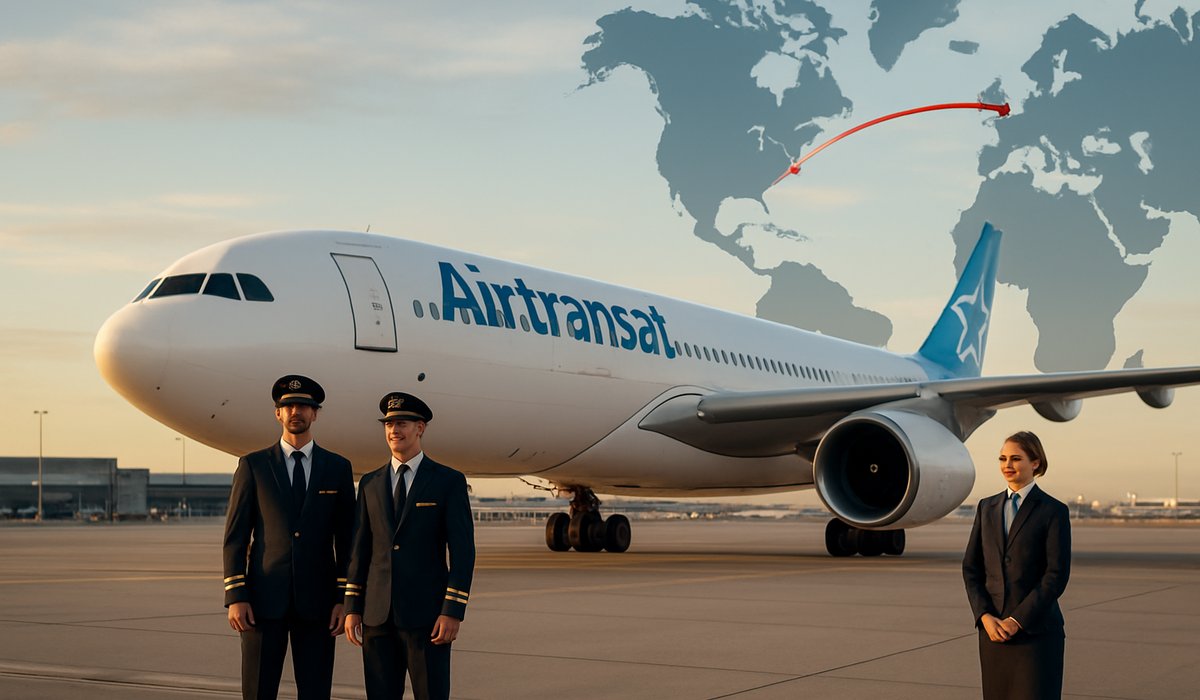
Image generated by AI
Air Transat Breaks New Ground with Unprecedented 9-Hour Transatlantic Routes to Europe
Canadian leisure carrier launches unconventional Canary Islands service, signaling shifting strategy in competitive European travel market
Air Transat, Canada's leading leisure airline, has unveiled a strategic expansion into European markets with the introduction of two novel nonstop routes, marking the carrier's first-ever service to Spain's geographically unique Canary Islands. The development represents a deliberate repositioning by the Toronto-based airline as it navigates evolving demand patterns in the transatlantic travel sector.
Strategic Expansion Into Unconventional Markets
The announcement signals Air Transat's calculated move beyond traditional European gateways. Rather than competing head-to-head on saturated routes to major metropolitan centers, the airline is targeting the Canary Islands—a Spanish autonomous community positioned off the West African coast, hundreds of kilometers south of mainland Spain.
Industry analysts view this approach as a response to intensifying competition from established carriers and budget airlines on conventional transatlantic corridors. By introducing these nine-hour nonstop flights, Air Transat is positioning itself to capture leisure travelers seeking year-round warm-weather destinations without requiring connections through hub cities.
Market Positioning and Competitive Landscape
The routing reflects broader trends within the aviation industry, where carriers increasingly target secondary and tertiary European markets to optimize load factors and yield management. The Canary Islands have experienced sustained tourism growth, with the archipelago consistently ranking among Europe's most visited destinations for sun-and-beach vacations.
For Air Transat, the investment in these routes demonstrates confidence in sustained demand recovery following pandemic-related disruptions. The carrier operates a fleet specifically engineered for long-haul leisure operations, making it well-positioned to service routes that may not generate sufficient volume for full-service carriers' premium cabin offerings.
Implications for the Wider Aviation Industry
This expansion occurs within a context of volatile jet fuel prices and evolving consumer preferences regarding baggage charges and ancillary aviation fees. Canadian carriers have faced particular pressure to diversify European capacity as transatlantic competition intensifies and operating costs remain elevated.
The introduction of routes to less-trafficked European destinations represents a broader industry shift toward capacity deployment flexibility. Rather than concentrating aircraft on premium routes with established demand, carriers are increasingly deploying assets to capture emerging leisure travel segments.
Looking Ahead
Air Transat's move underscores the Canadian aviation market's continued internationalization and the viability of nonstop service to secondary European markets from major Canadian gateways. Industry observers will closely monitor load factors and revenue performance on these routes as bellwethers for similar strategic initiatives across the North American leisure travel sector.
Frequently Asked Questions
What are Air Transat's new European routes? Air Transat has launched nonstop service to Spain's Canary Islands, representing the airline's first direct operations to the archipelago with two new routes totaling approximately nine hours of flight time.
Why did Air Transat choose the Canary Islands over major European cities? The Canary Islands represent an underserved leisure destination with consistent tourism demand, allowing Air Transat to differentiate from competitors while avoiding saturated markets like London, Paris, and Rome.
How does this affect airline baggage fees and ancillary charges? Increased competition on European routes typically stabilizes or moderates baggage charges and airline fees. Air Transat's expanded capacity may influence pricing structures across the transatlantic leisure market.
What impact will this have on jet fuel costs and airline profitability? New transatlantic routes require optimization of fuel efficiency and load factors. High jet fuel prices make route selection critical; Air Transat's focus on consistent leisure demand helps offset fuel cost volatility.
How does this reflect broader trends in the aviation industry? This expansion demonstrates carriers' strategic shift toward secondary European markets rather than hub concentration, driven by competitive pressure, evolving travel preferences, and the need for capacity flexibility in volatile fuel price environments.
Related Travel Guides
Flight Delay Compensation Guide 2026
Understanding Airline Route Changes
Airport Security Process Updated (2026)
External Resources
Disclaimer
This article is for informational and educational purposes only. It does not constitute legal, financial, or professional advice. While we strive to provide accurate and up-to-date information, travel policies, regulations, and conditions change rapidly. Always verify information with official sources before making travel decisions. Nomad Lawyer makes no representations about the accuracy, reliability, completeness, or suitability of the information provided. Readers should consult qualified professionals for advice specific to their circumstances. The views expressed in this article are those of the author and do not necessarily reflect the views of Nomad Lawyer.
Raushan Kumar
Founder & Lead Developer
Full-stack developer with 11+ years of experience and a passionate traveller. Raushan built Nomad Lawyer from the ground up with a vision to create the best travel and law experience on the web.
Learn more about our team →