
US Air Force Halves A-10 Warthog Fleet While Preserving Icon's Future Operations
Breaking airline news and aviation industry updates for 2026.

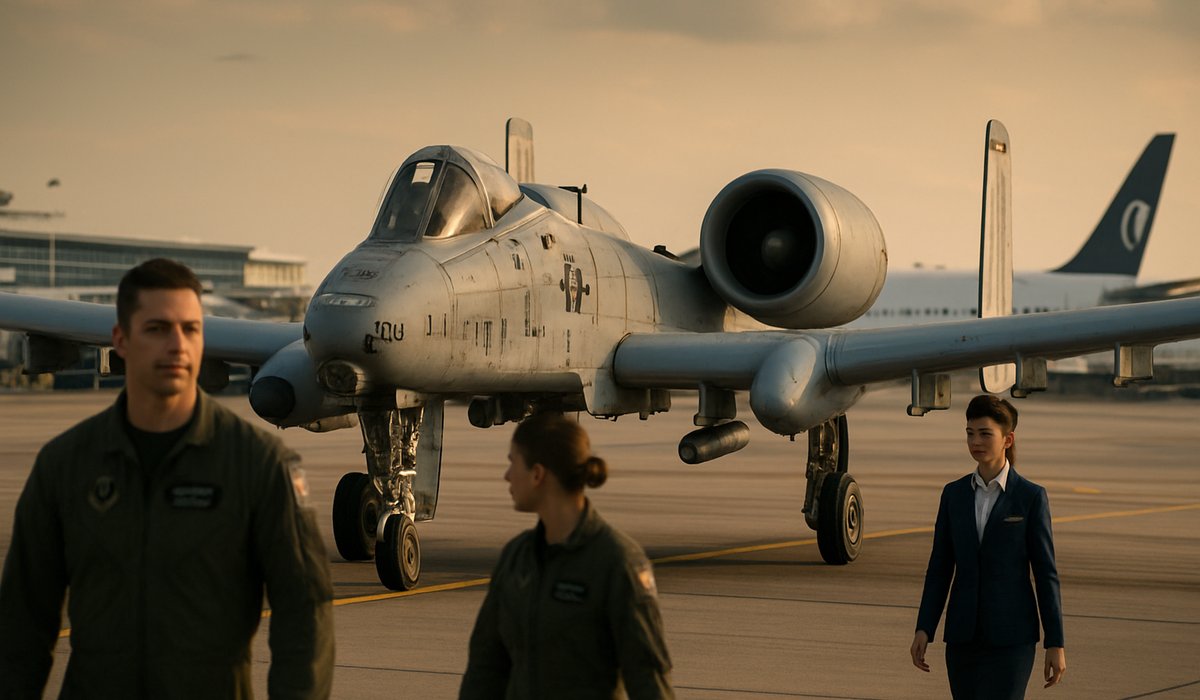
Image generated by AI
US Air Force Halves A-10 Warthog Fleet While Preserving Icon's Future Operations
Pentagon reverses full retirement plan, keeping legendary tank-killer airborne through 2030 amid strategic reassessment
Military Modernization Meets Operational Reality
The United States Air Force has fundamentally altered its aircraft retirement strategy, reversing course on a complete phase-out of the Fairchild Republic A-10 Thunderbolt II—the legendary "Warthog" that has defined close air support operations for nearly five decades. Rather than retiring the entire fleet by 2026 as previously planned, the service branch will now maintain approximately half of its A-10 inventory through 2030, signaling a significant shift in Pentagon priorities regarding air combat capabilities.
Strategic Compromise in Fleet Modernization
The Air Force's decision reflects mounting pressure from military strategists, Congress, and regional commanders who have consistently advocated for the A-10's retention despite the service's push to transition operations entirely to the next-generation F-35 Lightning II stealth fighter. The compromise approach allows the Pentagon to advance its modernization agenda while acknowledging operational gaps that the F-35 cannot immediately fill.
"The extended service life preserves critical close air support capabilities during a transitional period," military officials indicated, underscoring the complexity of replacing a specialized platform designed specifically for battlefield air interdiction with a multi-role fighter optimized for different mission parameters.
The Warthog's Enduring Value
First introduced in 1976, the A-10 has become synonymous with ground force protection, renowned for its distinctive rotary 30mm cannon, heavy armor plating, and ability to operate from austere airfields. These characteristics have made it irreplaceable in irregular warfare scenarios and low-intensity conflicts where precision and survivability trump stealth technology.
The decision to maintain partial fleet operations through 2030 provides the Air Force with additional time to evaluate whether the F-35's emerging capabilities can genuinely replace the Warthog's close air support role without compromising effectiveness or increasing casualty risk to ground personnel.
Broader Implications for Military Aviation
This strategic reversal highlights persistent tensions within defense procurement between maintaining aging but proven systems and investing in cutting-edge technological replacements. Budget constraints, operational demands in multiple theaters, and pilot familiarity with existing platforms continue to influence such decisions across military aviation sectors.
The extended A-10 timeline also reflects geopolitical realities: with multiple regional tensions and sustained counterinsurgency operations requiring specialized air support, the Pentagon recognizes that wholesale fleet replacements require longer transition periods than previously anticipated.
Frequently Asked Questions
Why didn't the Air Force retire the A-10 Warthog entirely as planned? Operational commanders and congressional oversight determined that the F-35 Lightning II cannot fully replicate the A-10's specialized close air support capabilities, particularly its armor protection, low-altitude performance, and precision ground attack systems designed for protecting ground forces in active combat zones.
How many A-10 Warthogs will remain in service through 2030? Approximately 50% of the current A-10 fleet will continue operational service through 2030, with the remaining aircraft retired earlier to reduce maintenance costs while preserving critical close air support capabilities during the transition period.
What advantages does the A-10 have over the F-35 for close air support missions? The A-10 was specifically engineered for low-altitude combat, featuring exceptional armor plating, a devastating 30mm rotary cannon optimized for tank engagement, exceptional loiter time, and reliability in austere operational environments—attributes the multi-role F-35 prioritizes differently in its design parameters.
What does this decision mean for Air Force modernization timelines? The extended A-10 timeline extends the overall modernization transition by approximately four years, allowing for more gradual F-35 capability integration and reducing operational risk during the platform transition period.
Related Travel Guides
Flight Delay Compensation Guide 2026
Understanding Airline Route Changes
Airport Security Process Updated (2026)
External Resources
Disclaimer
This article is for informational and educational purposes only. It does not constitute legal, financial, or professional advice. While we strive to provide accurate and up-to-date information, travel policies, regulations, and conditions change rapidly. Always verify information with official sources before making travel decisions. Nomad Lawyer makes no representations about the accuracy, reliability, completeness, or suitability of the information provided. Readers should consult qualified professionals for advice specific to their circumstances. The views expressed in this article are those of the author and do not necessarily reflect the views of Nomad Lawyer.
Kunal K Choudhary
Co-Founder & Contributor
A passionate traveller and tech enthusiast. Kunal contributes to the vision and growth of Nomad Lawyer, bringing fresh perspectives and driving the community forward.
Learn more about our team →