
Eight Iconic Aircraft That Shattered the Sound Barrier: A Journey Through Aviation's Fastest Machines
Breaking airline news and aviation industry updates for 2026.

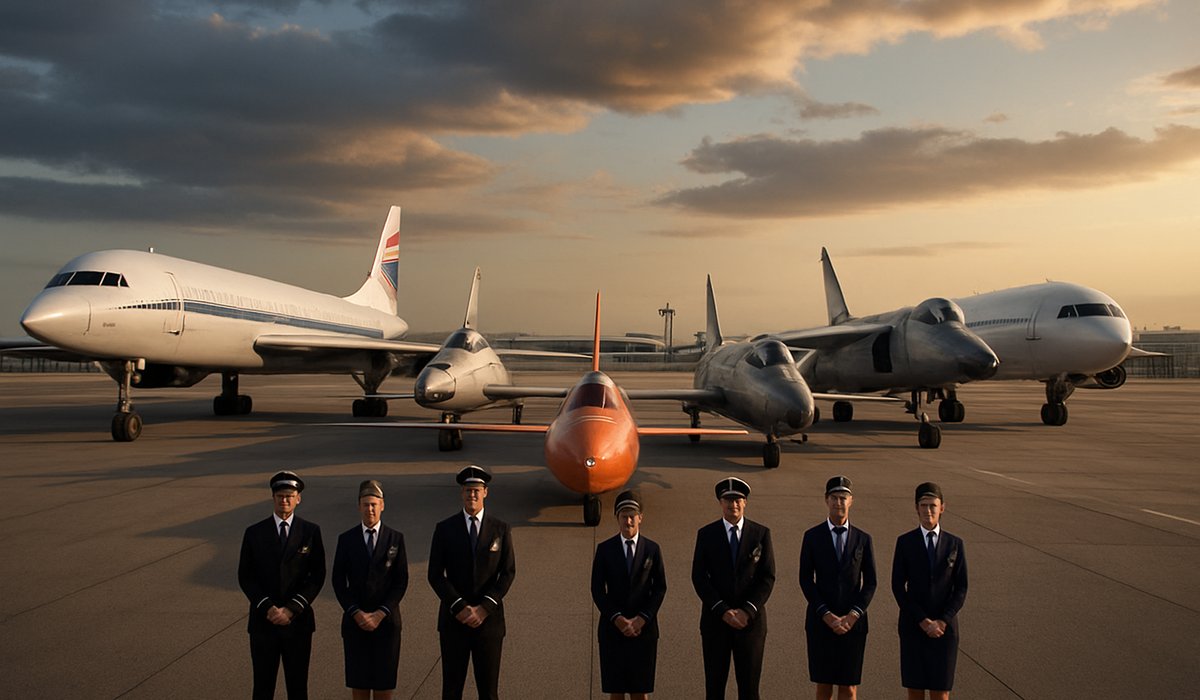
Image generated by AI
Eight Iconic Aircraft That Shattered the Sound Barrier: A Journey Through Aviation's Fastest Machines
From experimental rocket planes to cutting-edge commercial jets, these aircraft redefined what was once considered impossible
The Barrier That Changed Everything
The sound barrier once represented the ultimate frontier in aviation—a theoretical limit many believed could never be breached. Yet over the past seven decades, dozens of aircraft have not only crossed this threshold but have fundamentally transformed our understanding of high-speed flight. While fighter jets, military trainers, and strategic bombers number in the hundreds, a select group of aircraft stands out for their pioneering achievements and lasting impact on aviation history.
The Elite Eight: Breaking Speed Records
This curated collection represents the most significant sound barrier-breaking aircraft, excluding the countless military fighters and training platforms that now routinely exceed Mach 1. The selection focuses on civilian commercial operations, experimental programs, and revolutionary platforms that fundamentally advanced aerospace technology.
Among these distinguished aircraft is the legendary North American X-15 rocket plane, which holds a unique distinction in aviation history. As the only crewed aircraft ever to achieve hypersonic flight—exceeding Mach 5—the X-15 transcended conventional aviation parameters entirely. This experimental platform, operated during the Cold War era, served as a critical testbed for technologies that would later enable space exploration.
Why These Aircraft Matter
Each aircraft on this list represents a critical milestone in humanity's quest to master supersonic travel. They demonstrate the progression from theoretical concepts to operational reality, showcasing engineering breakthroughs that pushed materials science, aerodynamics, and propulsion systems to their limits.
The significance extends beyond mere speed records. These aircraft provided invaluable data that influenced subsequent generations of military and commercial aviation. Technologies developed through supersonic research programs filtered down into mainstream aircraft design, improving fuel efficiency, structural integrity, and safety systems across the entire industry.
The Legacy Continues
Today, while supersonic commercial aviation remains dormant following the Concorde's retirement in 2003, renewed interest in hypersonic flight is reshaping the aviation sector. Companies worldwide are investing heavily in next-generation supersonic business jets and experimental hypersonic platforms, suggesting we may be entering a new era of speed-breaking achievements.
The aircraft that shattered the sound barrier decades ago weren't merely chasing speed—they were validating possibilities that seemed impossible and paving pathways for future innovation in an industry that continues to redefine human potential.
FAQ: Understanding Sound Barrier-Breaking Aircraft
What does it mean for an aircraft to break the sound barrier? Breaking the sound barrier refers to an aircraft exceeding Mach 1 (approximately 761 mph at sea level), the speed of sound. This threshold was once considered the ultimate limit of aeronautical capability.
How many aircraft have actually broken the sound barrier? Dozens of aircraft have exceeded Mach 1, including nearly all modern fighter jets, numerous military trainers, experimental platforms, and strategic bombers. The exact number is difficult to quantify due to classified military programs.
What made the North American X-15 unique among sound barrier-breaking aircraft? The X-15 remains the only crewed aircraft to achieve hypersonic flight, reaching speeds exceeding Mach 5. Its experimental nature and technological innovations made it unparalleled in aviation history.
Why don't modern commercial airlines fly supersonic routes? The Concorde's retirement in 2003 marked the end of commercial supersonic service due to high operational costs, noise pollution concerns, and limited profitability. Current aviation regulations and environmental considerations have prevented new supersonic commercial services.
Are supersonic commercial flights returning to aviation? Yes, multiple companies are developing next-generation supersonic business jets and exploring hypersonic technologies, suggesting renewed commercial interest in high-speed aviation within the next decade.
Related Travel Guides
Flight Delay Compensation Guide 2026
Understanding Airline Route Changes
Airport Security Process Updated (2026)
External Resources
Disclaimer
This article is for informational and educational purposes only. It does not constitute legal, financial, or professional advice. While we strive to provide accurate and up-to-date information, travel policies, regulations, and conditions change rapidly. Always verify information with official sources before making travel decisions. Nomad Lawyer makes no representations about the accuracy, reliability, completeness, or suitability of the information provided. Readers should consult qualified professionals for advice specific to their circumstances. The views expressed in this article are those of the author and do not necessarily reflect the views of Nomad Lawyer.
Kunal K Choudhary
Co-Founder & Contributor
A passionate traveller and tech enthusiast. Kunal contributes to the vision and growth of Nomad Lawyer, bringing fresh perspectives and driving the community forward.
Learn more about our team →