
Turkish Airlines Deploys Unprecedented 492-Seat Boeing 777 on Ultra-Short Flights: An Industry Game-Changer
Breaking airline news and aviation industry updates for 2026.

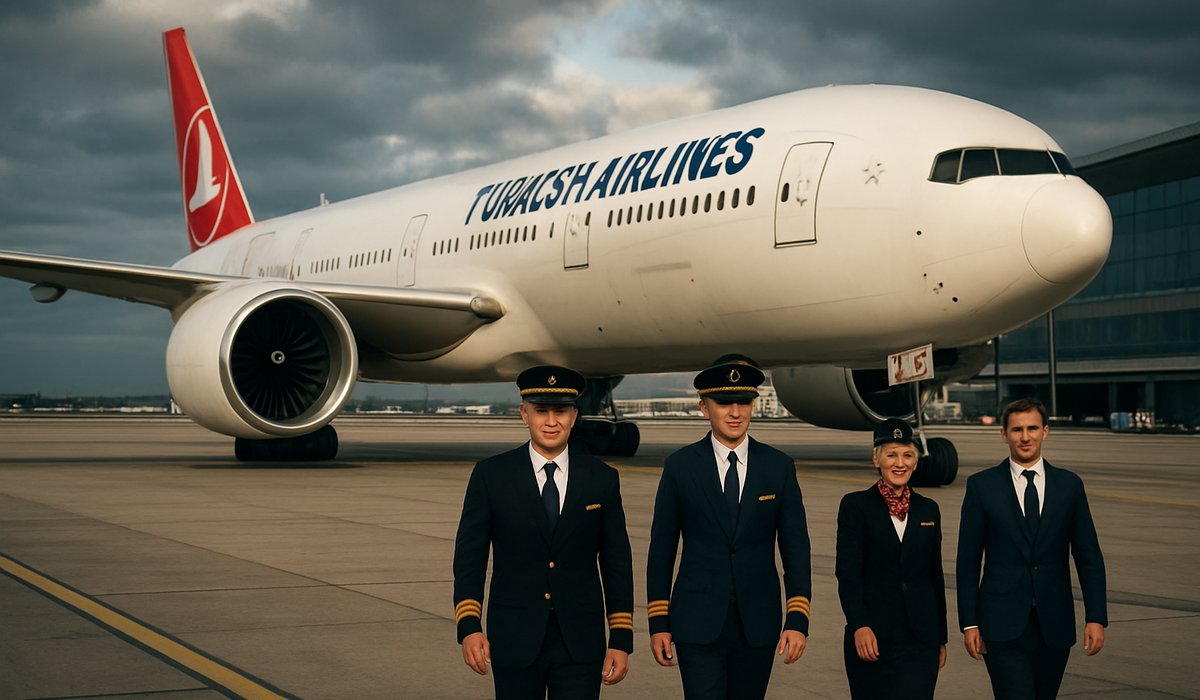
Image generated by AI
Turkish Airlines Deploys Unprecedented 492-Seat Boeing 777 on Ultra-Short Flights: An Industry Game-Changer
The carrier's radical capacity experiment challenges conventional aviation economics on regional routes
High-Density Strategy Reshapes Short-Haul Operations
Turkish Airlines has quietly introduced one of aviation's most unconventional configurations to its fleet: a Boeing 777-300ER jet crammed with 492 seats and deliberately assigned to one-hour regional flights. The aircraft, registered as TC-LKF, represents a bold departure from industry norms and signals a fundamental shift in how legacy carriers are approaching profitability on shorter routes amid rising operational pressures.
While Turkish Airlines operates more than 40 Boeing 777 widebody aircraft across its international network, this single airframe stands alone in its extreme seat density. The configuration defies conventional wisdom about passenger comfort and operational efficiency, particularly on brief regional missions where turnaround times dominate financial calculations.
The Economics Behind Ultra-Dense Seating
The strategic deployment reflects mounting pressures facing global carriers to maximize revenue per flight hour. With jet fuel prices remaining volatile and aviation industry margins under continuous strain, Turkish Airlines has evidently calculated that trading passenger comfort for sheer capacity pays dividends on high-frequency, short-distance routes.
The 492-seat layout transforms the 777-300ER—traditionally configured with 350-400 seats across cabin classes—into a near-charter operation. On one-hour flights between regional hubs, the mathematical advantage becomes apparent: the airline captures significantly higher per-flight revenue despite reduced legroom and amenities.
Strategic Implications for Global Aviation
This unconventional approach reflects broader industry trends as carriers respond to post-pandemic capacity demands and inflationary pressures. Budget carriers have long operated dense configurations, but major network airlines like Turkish Airlines deploying such tactics signals mounting financial desperation across the sector.
The experiment also underscores how geopolitical disruptions—including ongoing regional tensions affecting Middle Eastern airspace and fuel price volatility—are forcing carriers toward creative, albeit controversial, solutions. Turkish Airlines' Istanbul hub remains strategically positioned for dense regional networks connecting Europe, Asia, and the Middle East.
What This Means for Passengers
Travelers on these routes should expect minimal space and streamlined service. The ultra-high-density configuration typically means narrower seats, reduced overhead bin access, and expedited boarding and deplaning procedures. However, the strategy may translate to lower ticket prices for cost-conscious passengers on regional routes.
Frequently Asked Questions
Why would Turkish Airlines cram 492 seats into a Boeing 777? The carrier maximizes revenue per flight hour on short routes where turnaround speed matters more than onboard comfort. Higher passenger volume per departure directly improves financial performance on one-hour flights.
Is 492 seats the highest density ever used on a 777? While extremely high, some charter and budget carriers have experimented with similarly dense configurations. Turkish Airlines' use on scheduled regional flights is notably unusual for a full-service carrier.
How does this affect airline fees and baggage charges? Dense configurations typically correlate with stricter baggage policies and ancillary revenue optimization, potentially increasing per-passenger fees for checked luggage and seat selection.
Will other airlines adopt this strategy? Potentially, if Turkish Airlines demonstrates consistent profitability. Rising jet fuel costs and pressure on aviation industry margins may incentivize competitors to follow suit.
What does this reveal about current aviation economics? It signals that traditional carriers are increasingly adopting budget-carrier tactics, reflecting sector-wide financial pressures and the need for creative capacity solutions in volatile markets.
Related Travel Guides
External Resources
Disclaimer
This article is for informational and educational purposes only. It does not constitute legal, financial, or professional advice. While we strive to provide accurate and up-to-date information, travel policies, regulations, and conditions change rapidly. Always verify information with official sources before making travel decisions. Nomad Lawyer makes no representations about the accuracy, reliability, completeness, or suitability of the information provided. Readers should consult qualified professionals for advice specific to their circumstances. The views expressed in this article are those of the author and do not necessarily reflect the views of Nomad Lawyer.
Preeti Gunjan
Contributor & Community Manager
A passionate traveller and community builder. Preeti helps grow the Nomad Lawyer community, fostering engagement and bringing the reader experience to life.
Learn more about our team →