
Major US Airlines Launch 15 New Routes in Five Days as Competition Intensifies Across Domestic Network
Breaking airline news and aviation industry updates for 2026.

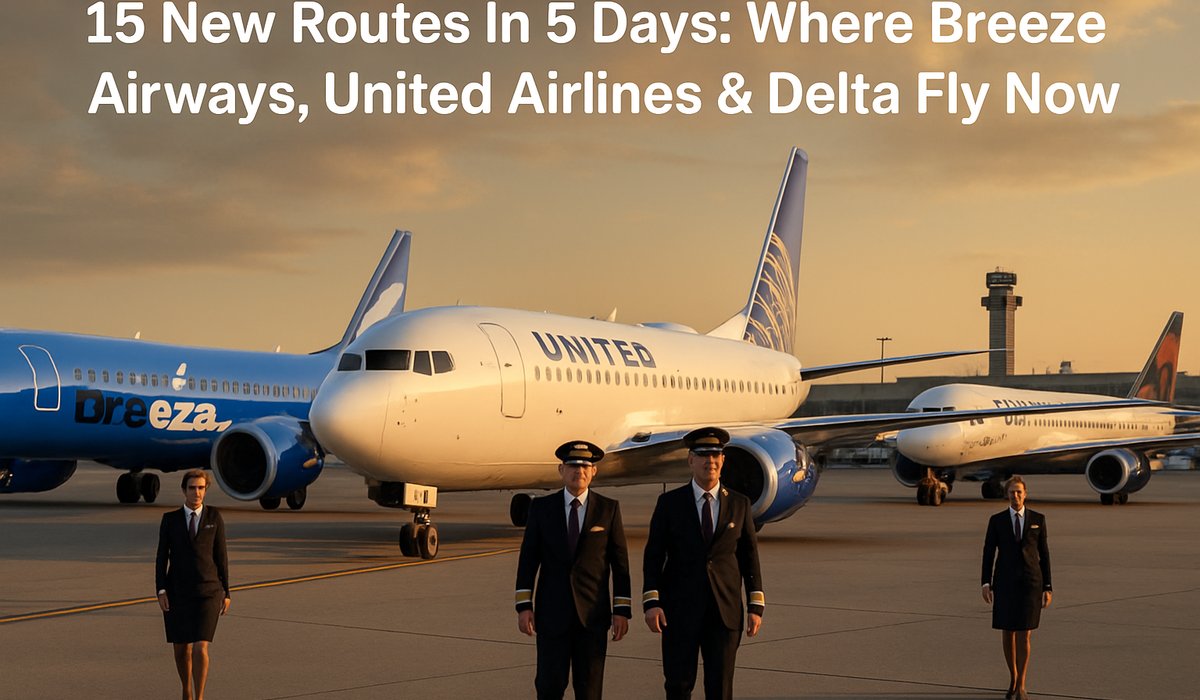
Image generated by AI
Major US Airlines Launch 15 New Routes in Five Days as Competition Intensifies Across Domestic Network
Breeze Airways, United, and Delta expand service as carriers race to capture market share and optimize post-pandemic route portfolios
Unprecedented Route Expansion Signals Aggressive Competition
Three of America's largest carriers have simultaneously launched 15 new routes within a concentrated five-day period, marking a significant acceleration in domestic aviation expansion as the industry competes fiercely for passenger traffic and revenue recovery.
The coordinated surge in route announcements—involving low-cost carrier Breeze Airways alongside major legacy carriers United Airlines and Delta Air Lines—reflects intensifying competition for market dominance during a critical period of aviation industry restructuring. This expansion spree demonstrates carriers' confidence in sustained travel demand while signaling their strategic responses to shifting consumer preferences and evolving economic conditions.
Carriers Pursuing Aggressive Network Growth
The timing of these route launches is particularly noteworthy, as multiple carriers announcing new services within days typically indicates coordinated capacity deployment across high-demand markets. This clustering of announcements is not unusual in aviation, where carriers monitor competitor moves closely and adjust their own scheduling accordingly.
Breeze Airways, the upstart ultra-low-cost carrier that has been methodically expanding its network since operations began, continues to carve out its position by targeting underserved markets and secondary airports. Meanwhile, both United and Delta are deploying additional capacity on routes designed to strengthen their respective network hubs and capture leisure and business travelers increasingly returning to pre-pandemic travel patterns.
Strategic Implications for the Aviation Sector
These route additions underscore broader industry trends: carriers are actively repositioning assets to maximize profitability as jet fuel prices stabilize and operational costs normalize following pandemic-era volatility. The expansion also reflects calculated responses to consumer demand patterns, with airlines investing in routes they project will generate sustainable long-term returns.
For travelers, increased route competition typically translates to more flight options and potential pricing pressure—though airlines have demonstrated consistent pricing power in premium cabin segments despite competitive pressures in economy class.
The rapid succession of announcements indicates the airline industry remains in expansion mode, with carriers confident enough to commit resources to new market entries despite broader economic uncertainties affecting consumer spending and fuel cost volatility.
FAQ: Understanding New Airline Routes and What They Mean for Travelers
Q: Why do airlines announce multiple new routes within days of each other? A: Airlines monitor competitor announcements closely and strategically deploy capacity to high-demand markets. Route clustering often reflects carriers' similar market analyses and competitive positioning strategies during capacity expansion cycles.
Q: How do new airline routes affect ticket prices? A: Increased competition on new routes can initially pressure fares, though airlines use sophisticated yield management to optimize pricing. Established carriers often maintain pricing power, particularly in premium cabin offerings.
Q: What's driving route expansion during current economic conditions? A: Stabilized jet fuel prices, normalized operational costs, and strong post-pandemic leisure travel demand are encouraging carriers to expand. Airlines are also responding to market gaps competitors have not yet filled.
Q: Which airline types benefit most from route expansion—low-cost or legacy carriers? A: Low-cost carriers like Breeze often target underserved secondary markets with lower operational costs, while legacy carriers expand premium markets and strengthen hub connectivity where they command pricing advantages.
Q: How should travelers respond to new airline route announcements? A: New routes often feature introductory fares. Monitoring announcements allows travelers to capture early-launch pricing before routes reach equilibrium pricing levels.
Related Travel Guides
Disclaimer
This article is for informational and educational purposes only. It does not constitute legal, financial, or professional advice. While we strive to provide accurate and up-to-date information, travel policies, regulations, and conditions change rapidly. Always verify information with official sources before making travel decisions. Nomad Lawyer makes no representations about the accuracy, reliability, completeness, or suitability of the information provided. Readers should consult qualified professionals for advice specific to their circumstances. The views expressed in this article are those of the author and do not necessarily reflect the views of Nomad Lawyer.
Preeti Gunjan
Contributor & Community Manager
A passionate traveller and community builder. Preeti helps grow the Nomad Lawyer community, fostering engagement and bringing the reader experience to life.
Learn more about our team →