
Emirates Deploys Ultra-Capacity A380 with 569 Seats Across Three Major Routes, Signaling Shift Toward Premium Travel
Breaking airline news and aviation industry updates for 2026.

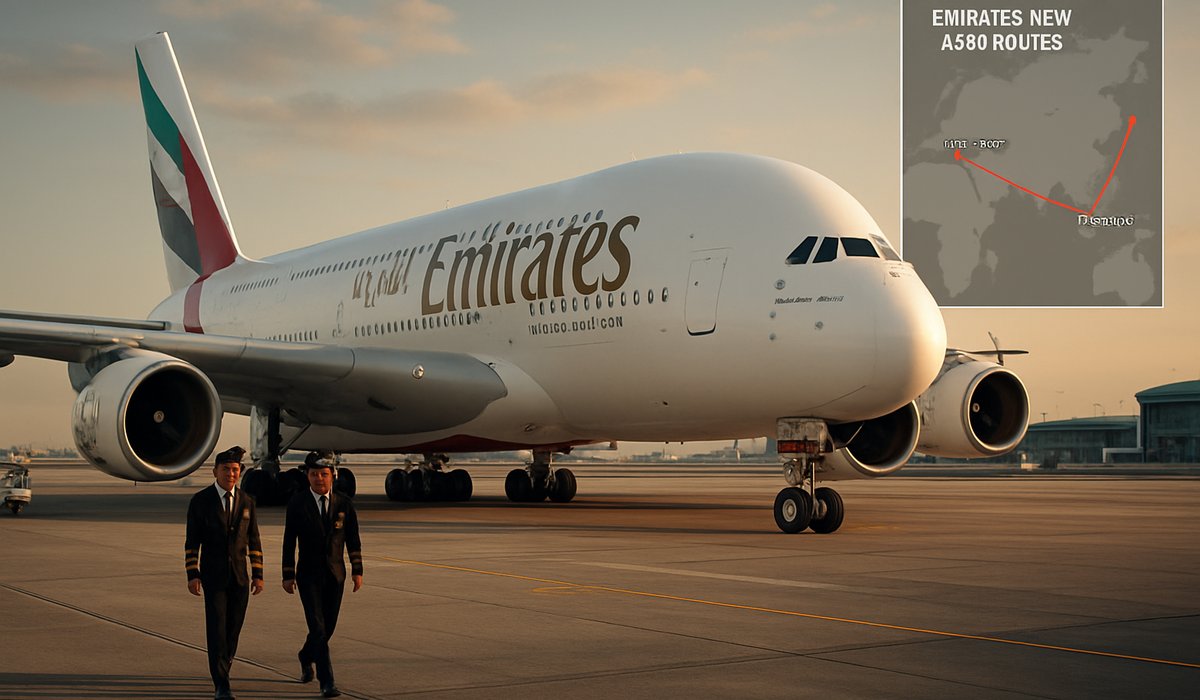
Image generated by AI
Emirates Deploys Ultra-Capacity A380 with 569 Seats Across Three Major Routes, Signaling Shift Toward Premium Travel
The airline's reconfigured superjumbo introduces a new three-class cabin strategy, replacing its historically dense two-class configuration
A Strategic Reconfiguration Takes Flight
Emirates has begun operating its newly configured Airbus A380 aircraft featuring a 569-seat capacity, marking a significant departure from the carrier's traditional approach to its superjumbo fleet. The reconfigured aircraft represents a fundamental shift in the Middle Eastern carrier's cabin strategy, replacing an older 615-seat two-class configuration with a more segmented three-class product that incorporates a premium economy cabin tier.
The redesigned A380 is now actively serving three international routes, establishing the blueprint for how the airline plans to balance passenger volume with elevated service standards across its long-haul network. This operational deployment signals Emirates' response to evolving market demands and changing consumer preferences for mid-tier premium offerings.
Understanding the Configuration Change
The transition from 615 seats to 569 seats represents a deliberate reduction in overall passenger capacity—a reduction of roughly 7.5 percent—in exchange for improved cabin comfort and additional revenue opportunities. By introducing a dedicated premium economy section, Emirates has transformed what was previously a traditional business and economy two-tier arrangement into a more nuanced cabin hierarchy.
This structural change reflects broader trends within the aviation industry, where carriers increasingly recognize the commercial value of premium economy cabins. Rather than forcing passengers into binary choices between expensive business-class fares and economy pricing, airlines can now capture the substantial middle market of cost-conscious premium travelers.
Fleet Modernization and Industry Context
The deployment comes as global airlines continue investing in cabin product enhancements amid volatile jet fuel prices and shifting travel demand patterns. Emirates' A380 represents one of aviation's most capital-intensive aircraft, making optimal cabin utilization essential for maintaining profitability on ultra-long-haul routes.
The three-route initial deployment of this configuration allows Emirates to evaluate operational performance, crew training protocols, and passenger feedback before potential broader rollout across additional services. The airline's willingness to reduce theoretical capacity in favor of improved product quality underscores competitive pressures in premium long-haul aviation.
Strategic Implications for Global Aviation
The reconfiguration initiative positions Emirates as a leader in addressing the premium economy boom—a market segment that has grown substantially across international carriers over the past five years. By retrofitting existing superjumbo assets rather than purchasing new aircraft, the airline optimizes capital efficiency while maintaining operational flexibility.
This approach carries implications for competing carriers operating large-cabin aircraft, particularly those weighing similar strategic decisions about balancing volume against revenue per available seat.
FAQ: Emirates A380 Configuration and Premium Aviation Trends
What is Emirates' new A380 seat configuration? Emirates has reconfigured select A380 aircraft from a 615-seat two-class layout to a 569-seat three-class configuration that includes business, premium economy, and economy cabins.
How many routes currently operate the reconfigured A380? The newly configured A380 is deployed across three designated international routes as part of the initial operational rollout.
Why did Emirates reduce capacity if it eliminated 46 seats? The reduction enables the addition of a premium economy cabin, allowing the airline to capture higher-yielding passengers while improving overall cabin comfort and service standards.
What does the premium economy trend mean for airline ticket prices? Premium economy typically commands fares 40-60% higher than standard economy while remaining 30-50% cheaper than business class, creating new pricing opportunities for carriers.
How does this affect other airlines with large-cabin fleets? The move demonstrates the commercial viability of retrofitting existing aircraft for premium economy, potentially influencing similar decisions by competitors operating comparable aircraft.
Related Travel Guides
Flight Delay Compensation Guide 2026
Understanding Airline Route Changes
Airport Security Process Updated (2026)
External Resources
Disclaimer
This article is for informational and educational purposes only. It does not constitute legal, financial, or professional advice. While we strive to provide accurate and up-to-date information, travel policies, regulations, and conditions change rapidly. Always verify information with official sources before making travel decisions. Nomad Lawyer makes no representations about the accuracy, reliability, completeness, or suitability of the information provided. Readers should consult qualified professionals for advice specific to their circumstances. The views expressed in this article are those of the author and do not necessarily reflect the views of Nomad Lawyer.
Kunal K Choudhary
Co-Founder & Contributor
A passionate traveller and tech enthusiast. Kunal contributes to the vision and growth of Nomad Lawyer, bringing fresh perspectives and driving the community forward.
Learn more about our team →