
Yukon's Sub-Arctic Tourism Pipeline: How Cooperative Funding Expands First Nations and Wilderness Lodges in 2026
Yukon deploys C$2.2 million across tourism development and cooperative marketing funds, expanding global discoverability for First Nations cultural centers, fly-in wilderness lodges, and Klondike heritage.

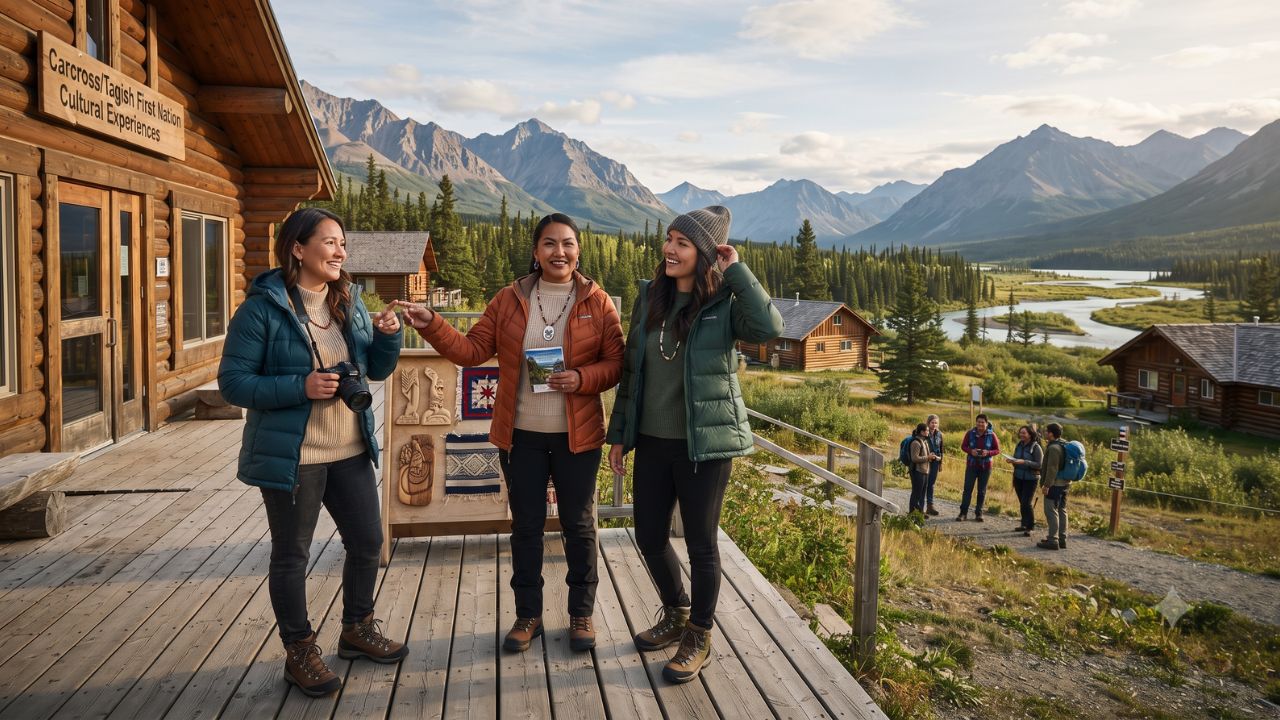
While Whitehorse anchors the territory's main airport, newly published government registries reveal that Yukon disbursed C$799,711.69 across regional wilderness operators, municipal associations, and First Nations governments to bring remote fly-in lodges, indigenous cultural hubs, and sub-Arctic communities into international traveler view. Backed by a dedicated annual C$700,000 Tourism Cooperative Marketing Fund (TCMF) and an overarching C$2.2 million destination development strategy, the Government of Yukon is bridging the discoverability gap for remote northern enterprises that previously lacked digital reach.
Structured Capital Pipelines and the 2026–27 Marketing Intake
Following the close of the second 2026–27 marketing intake on 1 October 2026, territorial evaluators entered a 30-business-day review window to allocate matching funds operating from 1 December 2026 through 30 November 2027. The funding model requires a 50/50 cost share, providing standard grants between C$2,500 and C$25,000 for private operators (supporting campaigns valued from C$5,000 to C$50,000) and up to C$50,000 for destination marketing organizations.
The program directly supports B2B trade show representation, allocating C$4,200 per approved overseas travel trade show, C$3,800 for United States exhibitions, C$3,800 for Atlantic Canada, C$2,800 for Central Canada, and C$1,400 for Western Canada, alongside up to C$2,000 for familiarization (FAM) itineraries and sales missions.
This marketing initiative forms one pillar of a three-tier development ecosystem totaling C$2.2 million outlined in the territory's Main Estimates:
- Spark Micro Grant (C$150,000): Focuses on early-stage tourism entrepreneurs and product testing (closing 15 October 2026).
- Tourism Cooperative Marketing Fund (C$700,000): Drives global consumer discoverability, digital campaigns, and travel-trade sales missions (closed 1 October 2026).
- Community Destination Development (C$1.35 Million): Funds large-scale physical infrastructure and market-readiness projects (Tier 2 closes 16 November; Tier 1 closes 15 December 2026).
Indigenous Heritage, Gold Rush Frontiers, and Aurora Wilderness
The geographical distribution of marketing support shifts traveler attention away from standard transit stops toward authentic northern heritage promoted by Travel Yukon:
- Indigenous Cultural Immersion: Self-governing First Nations are expanding authentic cultural experiences. For example, the Champagne and Aishihik First Nations—awarded C$7,591 in past cooperative funding—operate the Da Kų Cultural Centre in Haines Junction, showcasing traditional Southern Tutchone storytelling, birchbark canoe craftsmanship, and guided interpretive walks through Kluane National Park and Reserve boundaries.
- Living Gold Rush Heritage in Dawson City: Located 530 kilometers north of Whitehorse, Dawson City forms part of the Tr'ondëk-Klondike region inscribed by the UNESCO World Heritage Centre. The Klondike Visitors Association (awarded C$50,000) and the Dawson City Museum (C$5,077.25) preserve 19th-century timber boardwalks, historic mining claims on Bonanza Creek, and indigenous Hän heritage along the Yukon River.
- Remote Fly-In Wilderness Lodges: Remote operators such as Nahanni Wilderness Adventures (C$25,000), Wolf Lake Wilderness Lodge (C$25,000), and Northern Lights Resort (C$25,000) provide off-grid aurora viewing, guided canoeing on untouched sub-Arctic rivers, and wildlife observation at the Yukon Wildlife Preserve (C$21,264.88).
Yukon Tourism Development Framework and Past Funding Allocations
| Program / Recipient | Funding Mechanism / Award | Geographic Base | Primary Tourism Role |
|---|---|---|---|
| Community Destination Development | C$1.35 Million Total Budget | Territory-Wide | Physical infrastructure & market readiness |
| Tourism Cooperative Marketing (TCMF) | C$700,000 Annual Pool | Territory-Wide | B2B trade shows, digital SEO & sales missions |
| Spark Micro Grant | C$150,000 Annual Pool | Emerging Entrepreneurs | Product testing & concept validation |
| Klondike Visitors Association | C$50,000 Past Award | Dawson City | Tr'ondëk-Klondike heritage & event promotion |
| Nahanni Wilderness Adventures | C$25,000 Past Award | Remote Wilderness | Guided river expeditions & backcountry trekking |
| Wolf Lake Wilderness Lodge | C$25,000 Past Award | Southern Lakes Region | Fly-in fishing, cabins & wildlife observation |
| Northern Lights Resort & Spa | C$25,000 Past Award | Whitehorse Valley | Aurora glass chalets & winter wellness |
| Yukon Wildlife Preserve | C$21,264.88 Past Award | Takhini River Valley | Arctic mammal research & educational tours |
| Champagne & Aishihik First Nations | C$7,591 Past Award | Haines Junction / Da Kų | Southern Tutchone cultural center & guiding |
| Town of Faro / Watson Lake | C$7,551 / C$5,337.50 Awards | Campbell & Alaska Hwys | Community visitor centers & dark-sky tourism |
Visitor Insider Tips
- Timing Autumn and Winter Aurora Expeditions: Avoid mid-winter Arctic cold snaps (-35°C to -45°C) by planning aurora viewing trips during the autumn shoulder window (late August to mid-October) or late winter (March). Autumn offers dark night skies, reflection photography across unfrozen lakes, and golden tundra foliage without requiring extreme polar gear.
- Driving the Klondike and Alaska Highways: If embarking on road trips between Whitehorse, Haines Junction, and Dawson City, rent an all-wheel-drive vehicle equipped with full-size spare tires and stone guards. Fuel stations in remote settlements like Carmacks, Stewart Crossing, and Faro can be 150 to 200 kilometers apart; refill your tank whenever it drops below half.
- First Nations Interpretive Protocol: When visiting cultural centers such as the Da Kų Cultural Centre in Haines Junction or the Dänojà Zho Cultural Centre in Dawson City, take time to listen to elder-led interpretive sessions. Always request permission before photographing sacred regalia, ceremonial masks, or cultural demonstrations.
- Connecting Regional Transport: Skip expensive one-way vehicle drop-off charges between Whitehorse and Dawson City by using scheduled regional shuttle services like the Husky Bus (supported by C$2,800 in TCMF funding) or booking scheduled regional flights on Air North.
Cultural and Environmental Context
Tourism across the Yukon operates within sensitive sub-Arctic boreal forest and tundra biomes that require strict adherence to environmental principles. In Kluane National Park and along the Dempster Highway, wildlife corridors sustain grizzly bears, Dall sheep, and the migratory Porcupine caribou herd.
Cultural sustainability is equally essential. Eleven of the fourteen Yukon First Nations have signed self-government agreements, holding constitutional authority over their traditional ancestral territories. Sustainable tourism models prioritize community-owned enterprises where tourism revenue remains in rural villages, supporting indigenous language revitalization programs, elder-youth storytelling initiatives, and traditional land-based stewardship practices.
FAQ: Exploring Canada's Yukon in 2026
What is the best base for viewing the Northern Lights in the Yukon?
The valleys surrounding Whitehorse and the remote cabins around Watson Lake and Southern Lakes offer prime viewing with minimal light pollution from late August through mid-April.
How do travelers get to Dawson City from Whitehorse?
Travelers can take a 6-hour scenic drive along the paved Klondike Highway (530 km), ride scheduled regional shuttle vans, or take a 1-hour scheduled flight with Air North from Erik Nielsen Whitehorse International Airport.
What cultural centers showcase Yukon First Nations heritage?
Key centers include the Da Kų Cultural Centre in Haines Junction (Champagne and Aishihik First Nations), the Dänojà Zho Cultural Centre in Dawson City (Tr'ondëk Hwëch'in), and the Kwanlin Dün Cultural Centre along the Whitehorse riverfront.
Do I need specialized cold-weather gear to visit in winter?
Yes. Temperatures between December and February routinely drop below -30°C; local outfitters in Whitehorse provide heavy insulated parkas, polar mittens, and insulated snow boots for rent.
Targeted community investment and indigenous stewardship ensure the Yukon's vast sub-Arctic wilderness remains wild, authentic, and welcoming to discerning global travelers.
Related Travel Guides
- Yukon Aurora Borealis Planning Guide: Best Viewing Seasons and Wilderness Lodges
- Dawson City and the Klondike Highway: Gold Rush History and UNESCO Heritage Routes
- Kluane National Park Expedition: Glaciers, King's Throne Trail, and First Nations Heritage
- Dempster Highway Road Trip Playbook: Driving to the Arctic Circle and Tuktoyaktuk
Disclaimer
This article is for informational and educational purposes only. It does not constitute legal, financial, or professional advice. While we strive to provide accurate and up-to-date information, travel policies, regulations, and conditions change rapidly. Always verify information with official sources before making travel decisions. Nomad Lawyer makes no representations about the accuracy, reliability, completeness, or suitability of the information provided. Readers should consult qualified professionals for advice specific to their circumstances. The views expressed in this article are those of the author and do not necessarily reflect the views of Nomad Lawyer.
Raushan Kumar
Founder & Lead Developer
Full-stack developer with 11+ years of experience and a passionate traveller. Raushan built Nomad Lawyer from the ground up with a vision to create the best travel and law experience on the web.
Learn more about our team →