
WTTC Warns EU: EES Border System Rollout Could Cost Europe 41 Million Visitors and $45.4B in 2026
The World Travel & Tourism Council urges urgent EU coordination on the Schengen Entry/Exit System deployment to prevent three-hour border delays that could devastate European tourism jobs and visitor spending.

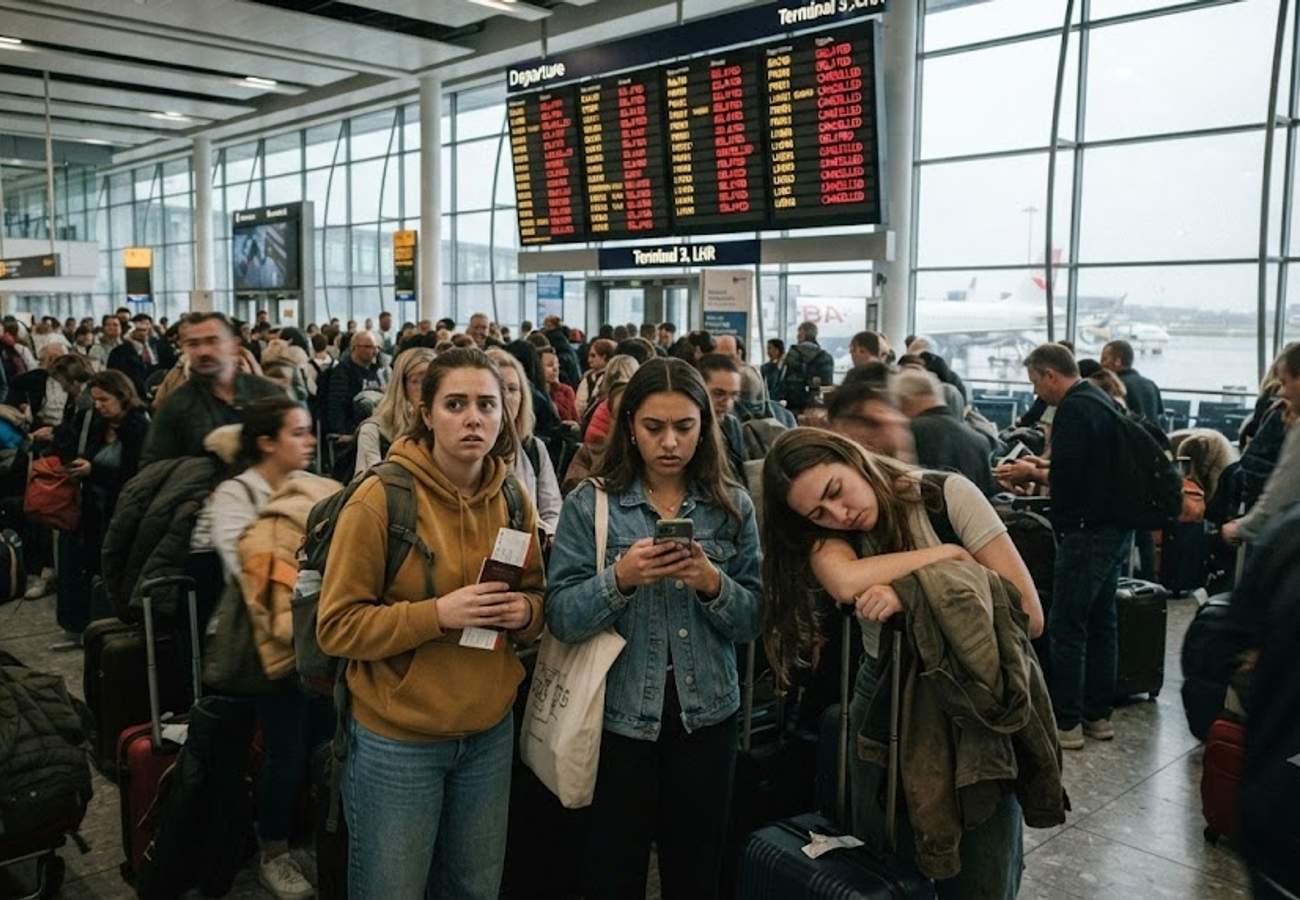
Image generated by AI
Europe's Tourism Crisis Is Just Three Hours Away
The clock is ticking. The World Travel & Tourism Council (WTTC) has issued an urgent alarm: Europe's newly deployed Schengen Entry/Exit System (EES) could trigger a tourism catastrophe if border queues spiral out of control this summer.
The stakes? Up to 41 million visitor arrivals and $45.4 billion in potential spending at risk. That's not a minor operational glitch—that's an existential threat to millions of European livelihoods.
What Is EES and Why Does It Matter?
The EES replaces manual passport stamping with electronic entry-exit records for non-EU visitors. It captures facial recognition and fingerprints. On paper, it sounds like border efficiency. In reality, it's become a pressure cooker for Europe's entire travel ecosystem.
Airports Council International Europe, Airlines for Europe (A4E), and the International Air Transport Association (IATA) have all sounded alarms: technology alone doesn't guarantee smooth operations. The system must move passengers quickly, safely, and clearly—or it becomes a barrier instead of a gateway.
Reddit: "I heard horror stories about 3-hour border waits at Dublin. If that becomes normal, I'm choosing Spain or Portugal next year instead." — r/travel
The 41 Million Visitor Question
WTTC surveyed over 2,500 travellers from major source markets. The finding was stark: approximately one-third of respondents said they would be significantly less likely to visit the Schengen Area if three-hour border delays became routine.
Scale that across 2026 forecasts, and Europe faces a potential tourism bloodbath. For context, WTTC estimates that Travel and Tourism contributed around $3 trillion to Europe's economy in 2025 and supported 40.7 million jobs. Hotels, restaurants, tour operators, guides, retailers, cultural attractions—all depend on visitor flow.
Long-haul travellers from the United States, Canada, Australia, and the United Kingdom are especially sensitive. These markets spend more per visit and stay longer. A bad first arrival experience could reshape their entire European perception.
Smart Borders Cannot Become Slow Borders
WTTC's message is direct: Europe cannot compete globally if it becomes synonymous with immigration bottlenecks.
The Middle East, Asia, North America, Africa, and the Caribbean are all investing in faster arrival systems, digital travel credentials, and streamlined processing. If European borders become a bottleneck, long-haul markets will simply choose alternative destinations.
The problem isn't the EES concept. Digital borders enhance security and can identify overstayers, irregular movement, document fraud, and identity issues. The European Commission is right to modernise Europe's external borders.
The problem is execution. A secure system must also be workable for millions of daily travellers. Once a destination gains a reputation for slow arrival processing, rebuilding confidence takes years.
The Travel to Europe App: A Partial Solution
WTTC is pushing faster adoption of the Travel to Europe app, which allows eligible non-EU travellers to pre-register travel documents and facial images before arriving. This doesn't eliminate border checks—fingerprint capture still requires physical presence at the border—but it reduces bottlenecks.
The catch? Uptake must be clear, consistent, and widely communicated. Travellers need to know:
- Where the app works
- Who is eligible
- When to complete registration
- What still happens at the border
- How much extra time to allow
Without coordinated communication in source markets, the app's potential remains untapped.
Traveller Communication Starts Before Departure
Most non-EU travellers don't understand EES. They know they need a passport. They often don't know that biometric registration happens, that first-time processing takes longer, or whether pre-registration is available.
This knowledge gap must close before summer peaks, not during airport queue chaos.
WTTC is calling for coordinated campaigns across:
- Airlines
- Airports
- Tour operators
- Travel advisors
- Booking platforms
- Government travel pages
- Destination organisations
Clear communication reduces fear, confusion, and arrival stress—especially for families, older travellers, and those with reduced mobility.
Airports and Airlines Demand Operational Flexibility
The aviation industry has asked the European Commission for flexibility mechanisms: the ability to pause EES procedures during passenger volume spikes, especially during peak summer travel.
This isn't about abandoning border control. It's about preventing technology-induced gridlock. ACI Europe, A4E, and IATA have identified critical operational gaps:
- Insufficient staffing
- Unstable systems
- Unreliable national interfaces
- Broken self-service kiosks
- Incomplete automated border gate deployment
- Slow pre-registration rollout
These aren't excuses—they're documented vulnerabilities that need fixing before peak season.
The Real Threat: Lost Competitive Advantage
Europe's tourism economy depends on seamless visitor experience. For short-haul weekend travellers, three-hour border waits make the trip unworkable. For long-haul business travellers, arrival delays damage conference attendance and corporate visits. For cruise passengers, tight port schedules become impossible.
Tour operators have carefully planned itineraries; borders delays cascade into entire trip failures. The economic ripple extends far beyond airports.
According to WTTC's analysis, the stakes are clear: coordinate aggressively now, or watch Europe lose millions of visitors and tens of billions in spending to competing destinations.
What Needs to Happen Now
The European Commission, Member States, border authorities, airports, airlines, and travel businesses must align on:
- Flexible suspension protocols for peak-hour overloads
- Widespread Travel to Europe app deployment
- Multi-language, cross-border communication campaigns
- Adequate staffing and infrastructure investment
- Real-world testing and backup procedures
The EES is here. The system is launching. The question is whether Europe will execute it smoothly or stumble into a self-inflicted tourism crisis.
For millions of European workers—and billions in visitor spending—the difference is everything.
The border controls are coming. What Europe does in the next 60 days will determine whether travellers see a gateway or a wall.
Related Travel Guides
Disclaimer
This article is for informational and educational purposes only. It does not constitute legal, financial, or professional advice. While we strive to provide accurate and up-to-date information, travel policies, regulations, and conditions change rapidly. Always verify information with official sources before making travel decisions. Nomad Lawyer makes no representations about the accuracy, reliability, completeness, or suitability of the information provided. Readers should consult qualified professionals for advice specific to their circumstances. The views expressed in this article are those of the author and do not necessarily reflect the views of Nomad Lawyer.
Kunal K Choudhary
Co-Founder & Contributor
A passionate traveller and tech enthusiast. Kunal contributes to the vision and growth of Nomad Lawyer, bringing fresh perspectives and driving the community forward.
Learn more about our team →