
Six-Hour Border Queues Threaten British Holiday Plans as EU's New Digital Entry System Overwhelms Airports in 2026
IATA warns British travelers face unprecedented six-hour passport delays as the EU's Entry/Exit System creates chaos across Schengen borders, threatening 41 million arrivals and billions in tourism revenue.

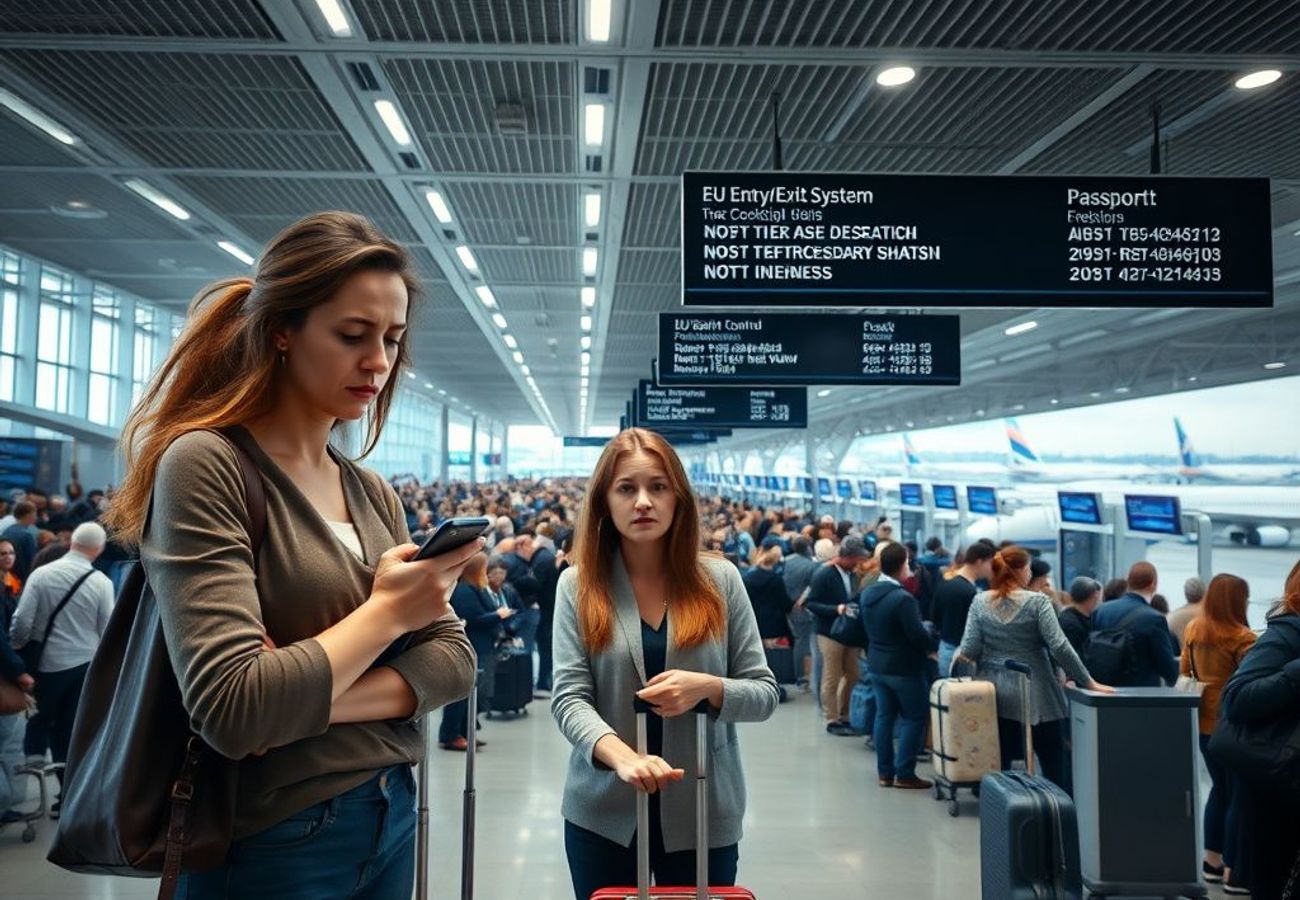
Image generated by AI
The Warning That Sparked Holiday Panic
The International Air Transport Association (IATA) has issued a stark alert that's sending shockwaves through the travel industry: British holidaymakers should brace for apocalyptic six-hour passport control waits as the European Union's new Entry/Exit System (EES) buckles under the weight of peak summer volumes.
This isn't speculation. Airports across continental Europe are already experiencing operational meltdown. The newly mandated biometric screening system, which went live fully in April 2026, requires all non-EU travelers—including UK passport holders—to submit fingerprints and facial scans before entering the Schengen Area. The result? Historic gridlock that's already forcing airlines to board passengers later and threatening an estimated 41 million arrivals.
Reddit: "Just got back from Spain. The queue was absolutely mental—nearly four hours just to get stamped. They really weren't kidding about this." — r/travel
When Border Control Becomes a Six-Hour Nightmare
What we're witnessing at Malaga, Alicante, Palma de Mallorca, Amsterdam Schiphol, Paris Charles de Gaulle, and Frankfurt is nothing short of an operational crisis. Airports Council International Europe has already documented delays exceeding three and a half hours during early seasonal surges. IATA projections suggest these waits could peak at six hours during dense summer weeks—effectively eating away entire travel days before vacationers even reach their hotels.
The mechanics of the problem are straightforward but devastating. Traditional passport checks took roughly 20 seconds per traveler. The new EES enrollment process demands up to 90 seconds per person, requiring physical biometric terminals for fingerprint and facial scan capture. When multiple widebody aircraft land simultaneously—which happens constantly at major hubs—the immigration infrastructure simply collapses.
The chaos isn't theoretical. In one documented incident, over 100 passengers missed their outbound flights after being trapped in terminal queues. Airlines like Ryanair, easyJet, and Jet2 are frantically adjusting boarding protocols to absorb these delays, but even their flexibility has limits.
The Perfect Storm: Where Peak Season Meets Digital Dysfunction
British travelers represent the single largest non-EU demographic flowing into Schengen airports. During summer months, that concentration becomes explosive. Major holiday gateways aren't just experiencing longer queues—they're experiencing complete terminal saturation.
Spain's coastal airports face the severest impact due to their dominant share of UK holiday traffic. But this isn't a Spanish problem alone. Secondary regional airports are reporting unprecedented lines as their limited immigration staffing collapses under the new mandate. Rail terminals and ferry checkpoints face identical backlogs.
Travel analytics reveal the risk multiplies exponentially during Friday afternoons and weekend windows. Tourism boards in affected regions are watching cancellation rates climb in real-time, increasingly anxious that these structural failures will permanently damage their reputations as accessible destinations.
The Economic Reckoning: Billions at Risk
The financial stakes are staggering. The World Travel & Tourism Council has published research warning that prolonged border queues could cost the European economy a devastating €45 billion this year alone.
More alarming: a comprehensive consumer survey shows 39 percent of British citizens are actively reconsidering European travel plans due to passport line anxieties. This isn't minor friction—it's a seismic shift in consumer confidence that threatens to redirect holiday spending toward non-Schengen Mediterranean destinations entirely.
Hotel operators in Majorca and Ibiza are sounding the alarm. For family-run hospitality businesses generating their entire annual profit during summer peak weeks, these artificial terminal barriers are catastrophic. The positive impact of extensive summer marketing campaigns evaporates instantly when potential guests decide the border friction isn't worth the hassle.
Local business coalitions are pleading with European lawmakers for immediate administrative relief. They understand the mathematics: fewer arrivals equals fewer bookings, fewer meals purchased, fewer car rentals—a domino effect that devastates regional economies.
The Contingency Window Is Closing Fast
There is theoretically an escape hatch. Under current European Commission guidelines, member states retain sovereign authority to temporarily pause biometric checks if passport lines threaten public safety or airport stability.
But here's the critical problem: this flexibility expires in September 2026, and the border management agency Frontex has signaled no current plans to extend the grace period.
A unified coalition of international airlines and travel associations is mounting an aggressive lobbying campaign demanding extension through October. Simultaneously, they're pushing for rapid deployment of dedicated e-gates and widespread adoption of the official Travel to Europe pre-registration mobile application, which allows some travelers to submit biometric data before arrival.
What British Travelers Must Do Now
The harsh reality: summer 2026 travel to the Schengen Area requires fundamentally rethinking departure logistics. The era of rapid European transit is temporarily extinct.
Actionable steps:
-
Arrive at airports 4-5 hours before international flights rather than the traditional 3 hours—you'll need the buffer for biometric processing.
-
Download the Travel to Europe application and pre-register biometric data before departure. This single step can reduce processing time significantly.
-
Avoid peak travel windows if flexibility exists. Flying midweek morning routes generates shorter queues than Friday afternoon and weekend departures.
-
Select airports strategically. Smaller regional gateways currently experience shorter delays than major hubs, though this advantage is eroding rapidly.
-
Consider alternative routes temporarily. Non-Schengen Mediterranean destinations in Turkey, Egypt, and Morocco offer beach experiences without border friction.
The travel industry remains locked in a race against time. Will European governments extend the contingency window and mobilize additional border staffing? Will pre-registration applications gain adoption quickly enough to materially reduce queue times?
The answers will define summer 2026 for millions of British holidaymakers.
The border chaos is real, the economics are brutal, and the window for solutions is closing—travelers need to adapt now or risk losing their summer entirely.
Related Travel Guides
Disclaimer
This article is for informational and educational purposes only. It does not constitute legal, financial, or professional advice. While we strive to provide accurate and up-to-date information, travel policies, regulations, and conditions change rapidly. Always verify information with official sources before making travel decisions. Nomad Lawyer makes no representations about the accuracy, reliability, completeness, or suitability of the information provided. Readers should consult qualified professionals for advice specific to their circumstances. The views expressed in this article are those of the author and do not necessarily reflect the views of Nomad Lawyer.
Kunal K Choudhary
Co-Founder & Contributor
A passionate traveller and tech enthusiast. Kunal contributes to the vision and growth of Nomad Lawyer, bringing fresh perspectives and driving the community forward.
Learn more about our team →