
Help American Airlines Fight Climate Change: AI Targets Contrails in 2026
American Airlines deploys AI-powered contrail avoidance technology in March 2026 to help reduce aviation's climate warming impact. The system targets persistent ice clouds through smart flight rerouting, cutting contrail formation by 50-60% with minimal fuel cost.

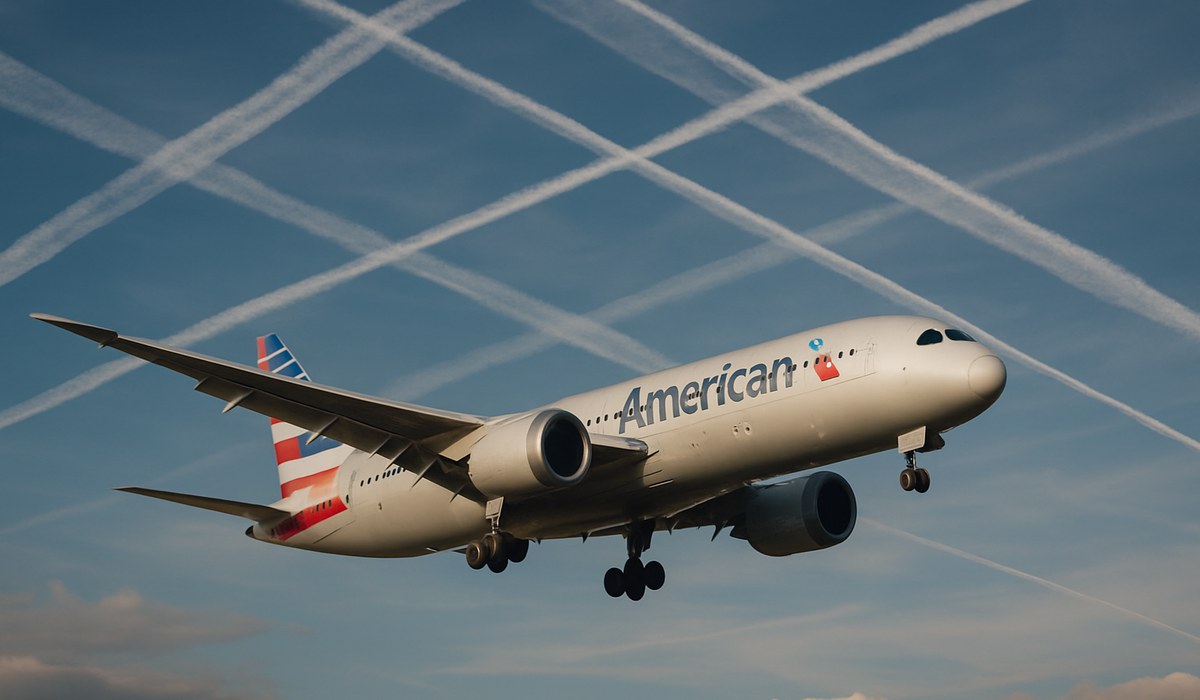
Image generated by AI
American Airlines is deploying artificial intelligence to tackle one of aviation's most underestimated climate challenges: persistent contrails. The carrier's new system helps flight dispatchers steer aircraft away from atmospheric layers where ice clouds form and trap heat. Starting in March 2026, AI-powered route adjustments targets specific flight corridors, reducing contrail warming with minimal fuel consumption.
AI Transforms Flight Dispatch Operations at American Airlines
American Airlines integrated contrail forecasting directly into dispatcher software in collaboration with Google and climate research partners. The AI system helps flight planners by analyzing satellite imagery, historical weather patterns, and real-time atmospheric data. Dispatchers receive alternative routing suggestions that nudge aircraft a few thousand feet higher or lower to pass through drier air. The technology targets high-impact flight segments where small altitude shifts prevent contrail formation. This helps American Airlines reduce climate warming without overhauling aircraft or fuel systems. The system operates within existing dispatch tools, allowing seamless adoption across the carrier's entire network.
Real-World Trial Results Show 50-60% Contrail Reduction
Recent flight trials demonstrate measurable success for American Airlines contrail-avoidance programs. Transatlantic test flights accepting AI-guided routing achieved 50-60% reductions in contrail coverage compared to conventional paths, verified by satellite cloud analysis. Larger randomized trials involving hundreds of flights showed double-digit percentage contrail reductions across standard dispatch operations. Critically, these gains came with negligible fuel penalties—some tests reported no statistically significant difference in fuel consumption between treatment and control groups. This balance matters enormously in an industry where fuel costs represent a major operating expense and carbon emissions source. Researchers found that targeted rerouting during peak warming hours delivered the strongest climate benefits.
For more details on aviation industry standards and climate tracking, visit the International Air Transport Association (IATA) website.
Understanding Contrails and Their Climate Impact
Contrails appear as white streaks across the sky but carry outsized climate consequences. Aircraft ice clouds trap outgoing atmospheric heat, particularly at night or under humid conditions. While individual contrails dissipate quickly, persistent ones that spread into thin cirrus layers significantly amplify aviation's warming effect. Research indicates that aviation-induced cloudiness may account for a substantial portion of aviation's total climate impact beyond direct carbon emissions. The warming effect concentrates in specific corridors and atmospheric layers at particular times of day. This uneven distribution is precisely why AI proves effective: sophisticated models isolate high-impact flight segments where modest routing changes prevent the biggest climate penalties. Climate scientists identify contrail management as one of aviation's most immediate operational levers for reducing non-CO2 warming.
Scaling AI Contrail Solutions Across Global Airways
American Airlines contrail technology reflects a broader industry shift from limited experiments to globally scalable systems. Earlier trials required manual identification of high-risk segments, limiting expansion. The new AI-based forecasting generates updated contrail-risk maps in near-real-time, enabling thousands of daily flights to access avoidance options. Flight planning software now toggles contrail-aware routing alongside standard cost and safety parameters. Regulatory challenges remain significant: international airspace operates under fragmented navigation rules, and altitude/routing changes require air traffic control clearance. Industry coordination with other carriers, air navigation providers, and regulators helps integrate contrail-aware routing into broader traffic management. The [Federal Aviation Administration (FAA)](https://www.faa.gov) provides updated guidance on emerging aviation technologies. Successful scaling depends on simultaneous adoption across multiple airlines and regions.
What This Means for Travelers Planning Flights in 2026
Contrail-avoidance routing remains invisible to passengers during normal flight operations. Altitude adjustments measure in hundreds to a few thousand feet—imperceptible during flight. Route diversions add minimal time to overall trip duration. Passengers don't experience delays or service changes, yet their flights contribute measurably to reducing aviation's climate warming. For environmentally conscious travelers, booking American Airlines flights helps support climate innovation investment. No special ticket types or premium fares apply to contrail-optimized flights. Travelers benefit automatically when their departure falls within high-contrail-risk windows and alternative paths exist. This passive climate contribution aligns with industry goals to decarbonize aviation by 2050.
Traveler Action Checklist
- Book American Airlines flights to support airlines investing in climate technology innovation.
- Check flight booking confirmations for routing information; contrail-optimized paths may show slight time variations.
- Monitor American Airlines announcements regarding expanded contrail programs in Q2-Q3 2026.
- Contact American Airlines customer service if curious about specific flight routing choices.
- Leave positive feedback about sustainability initiatives with the airline on social media.
- Share knowledge about contrail technology with fellow travelers interested in green aviation.
Key Contrail Reduction Data
| Metric | Result | Impact |
|---|---|---|
| Contrail Coverage Reduction | 50-60% | Direct climate warming prevention |
| Fuel Consumption Change | Negligible to neutral | No economic penalty for climate gains |
| Trial Flight Count | Hundreds to thousands | Statistically significant sample size |
| Altitude Adjustment Range | 2,000-5,000 feet | Imperceptible to passengers |
| Time Impact per Flight | 0-5 minutes | Operationally insignificant |
| Daily Eligible Flights | Thousands | Scalable across global network |
| Climate Benefit Timeline | Immediate | Real-time contrail reduction |
Frequently Asked Questions
How does AI help American Airlines reduce contrail formation? AI analyzes satellite imagery, weather data, and historical patterns to predict persistent contrail zones. The system identifies alternative altitudes or routes where drier atmospheric layers prevent ice crystal formation. Dispatchers receive real-time options to avoid high-impact warming segments. This helps American Airlines reduce contrail coverage by 50-60% without fuel penalties or passenger delays.
Will contrail-avoidance routing affect my flight time or ticket price? Contrail-optimized routing produces negligible time changes—typically 0-5 minutes per flight. Altitude adjustments remain imperceptible during flight operations. Ticket pricing remains unchanged; no premium applies to contrail-managed flights. Passengers benefit automatically without extra cost or inconvenience.
When did American Airlines start using contrail-targeting technology? American Airlines began major trial deployments in 2025, with expanded implementation rolling out in March 2026. The airline integrated AI forecasting into standard dispatch software during Q1 2026. Larger-scale adoption across transatlantic and domestic routes continues through mid-2026. Help American Airlines achieve broader climate impact by choosing contrail-aware flights when available.
Why do contrails matter more than regular aircraft emissions? Aviation contrails trap atmospheric heat through mechanisms separate from carbon dioxide emissions. Persistent ice clouds can amplify warming effects at night or under humid conditions. Research suggests contrail-induced cloudiness accounts for a substantial portion of aviation's non-CO2 climate impact. Contrail management represents one of aviation's fastest operational levers for immediate warming reduction alongside long-term fuel and aircraft improvements.
Stay Informed on Aviation Climate Innovation
Track contrail reduction initiatives and fleet modernization updates through nomadlawyer.org's travel news section. Explore sustainable aviation fuel adoption timelines and next-generation aircraft technology deployment across major carriers. Learn how to help American Airlines and competitor carriers meet 2030 emissions targets through informed travel choices.
Related Travel Guides
Disclaimer
This article is for informational and educational purposes only. It does not constitute legal, financial, or professional advice. While we strive to provide accurate and up-to-date information, travel policies, regulations, and conditions change rapidly. Always verify information with official sources before making travel decisions. Nomad Lawyer makes no representations about the accuracy, reliability, completeness, or suitability of the information provided. Readers should consult qualified professionals for advice specific to their circumstances. The views expressed in this article are those of the author and do not necessarily reflect the views of Nomad Lawyer.
Raushan Kumar
Founder & Lead Developer
Full-stack developer with 11+ years of experience and a passionate traveller. Raushan built Nomad Lawyer from the ground up with a vision to create the best travel and law experience on the web.
Learn more about our team →