
World's Largest Air Forces Ranked by F-35 Fighter Jets in 2026
The F-35 Lightning II program has reshaped global air power since 2001, becoming history's largest US defense initiative. Allied nations now compete for supremacy through F-35 deployment numbers, fundamentally changing 21st-century military aviation and international travel security protocols.

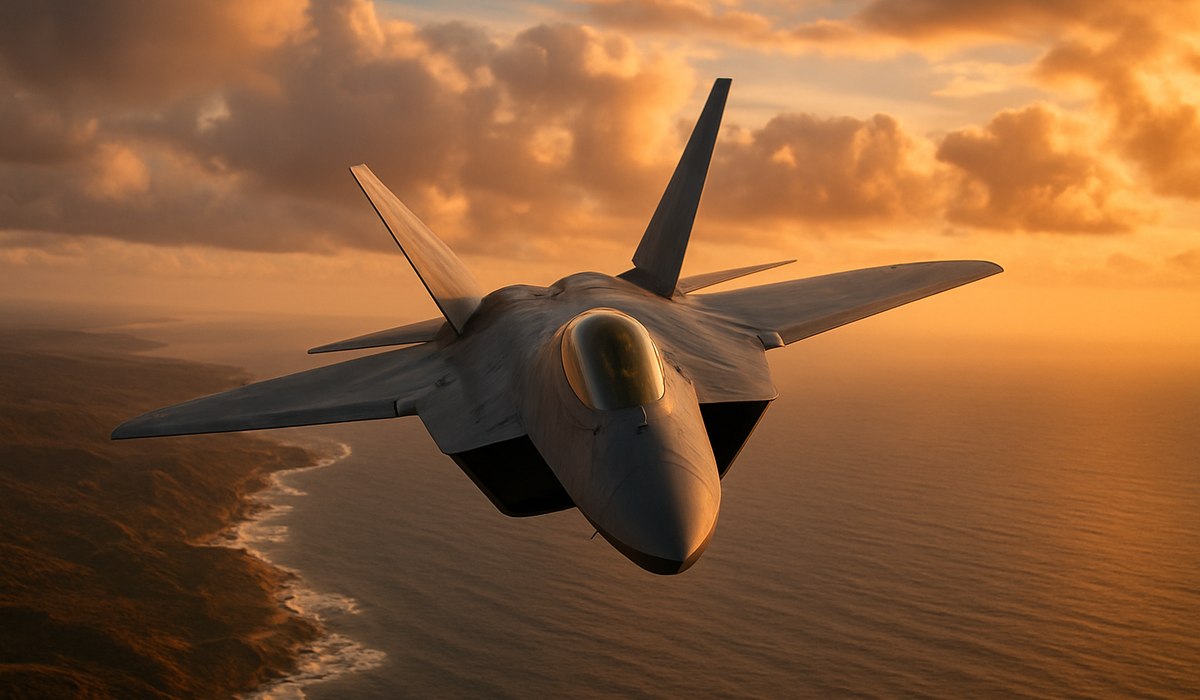
Image generated by AI
How the F-35 Program Reshaped Global Air Superiority
The F-35 Lightning II has fundamentally transformed which nations command air dominance worldwide since 2001. What began as a single US Air Force initiative has evolved into the most extensive defense procurement project in American history, with allied partners across Europe, Asia, and the Pacific now competing fiercely for advanced fighter jet inventory. Where once traditional air power metrics focused solely on total aircraft numbers, today's geopolitical calculations revolve around F-35 deployment capabilities. When the program launched two decades ago, few anticipated how comprehensively it would reshape international military aviation. Why this matters for global travelers relates directly to airspace security, military base proximity considerations, and international aviation protocol changes driven by allied defense postures.
The F-35 Program: From Concept to Global Dominance
The Joint Strike Fighter concept emerged during the 1990s as defense planners sought a unified platform serving multiple military branches. Lockheed Martin secured the primary development contract, transforming the vision into the F-35 Lightning II, a fifth-generation stealth fighter designed for air-to-air combat, ground support, and reconnaissance missions. Since 2001's official program inception, the initiative has consumed over $1.7 trillion across development and procurement phases—making it unequivocally the largest defense project ever undertaken by the United States government.
The aircraft's versatility attracted NATO members and Pacific allies seeking interoperability with American forces. Each partner nation customized their F-35 variants to meet specific operational requirements, creating a standardized ecosystem while maintaining sovereignty over deployment decisions. This collaborative approach contrasts sharply with previous-generation fighter programs that often generated international friction over technology transfer and combat capabilities.
Today's geopolitical landscape reflects this strategic investment, with allied air forces increasingly organized around F-35 operational doctrine. The program's success fundamentally altered procurement priorities across defense budgets worldwide, redirecting billions toward fifth-generation platforms rather than legacy aircraft maintenance. For international travelers, this means enhanced airspace monitoring capabilities, more sophisticated air traffic management systems, and strengthened military coordination along major flight corridors.
Learn more about military aviation advancements shaping modern air transportation.
Manufacturing Hub: Fort Worth and International Partners
Fort Worth, Texas serves as the primary manufacturing headquarters for F-35 production, housing Lockheed Martin's sprawling aerospace complex that employs thousands of engineers, technicians, and support personnel. This facility, historically known as the "Bomber Plant" for its World War II-era B-17 production legacy, now concentrates on next-generation fighter assembly and component integration.
International manufacturing partnerships extended F-35 production capabilities significantly. Cameri, Italy hosts a sophisticated final assembly and checkout facility serving European operators and NATO members. Nagoya, Japan operates another advanced assembly line supporting Pacific allies including Australia, South Korea, and regional defense initiatives. This distributed manufacturing model created supply chain resilience while distributing economic benefits across allied nations.
Component production spans dozens of suppliers across North America, Europe, and Asia-Pacific regions. Pratt & Whitney engines, Northrop Grumman sensor systems, and BAE Systems avionics integration represent multinational cooperation at unprecedented scales. The complexity of coordinating global manufacturing networks while maintaining security protocols presents unique logistical challenges that ripple through international aviation infrastructure.
These manufacturing decisions influence regional economies, military base locations, and even commercial airline routing around defense facilities. Travelers should understand that many major airports near F-35 manufacturing hubs experience heightened security protocols and airspace restrictions during testing and delivery operations.
Which Nations Lead in F-35 Deployment Numbers
| Nation | F-35s Operational | F-35s on Order | Expected Full Deployment | Total Investment |
|---|---|---|---|---|
| United States | 467 | 1,241 | 2035 | $1.7+ Trillion |
| Italy | 48 | 30 | 2028 | $21.7 Billion |
| Japan | 42 | 60 | 2030 | $45.1 Billion |
| United Kingdom | 38 | 24 | 2027 | $38.8 Billion |
| Israel | 35 | 17 | 2026 | $32.6 Billion |
| South Korea | 19 | 54 | 2032 | $88.5 Billion |
| Turkey | 0 | 0 | Suspended Program | Program Cancelled |
| Poland | 0 | 32 | 2031 | $41.2 Billion |
The world's largest air forces measured by F-35 capability increasingly follow acquisition patterns established by the United States military. America maintains overwhelming numerical superiority with over 467 operational F-35s across Air Force, Navy, and Marine Corps units, supplemented by commitments for 1,241 additional aircraft through 2035. This comprehensive fleet modernization ensures American air dominance for decades while establishing technological standards allied nations must match.
Allied nations pursue F-35 acquisition aggressively, recognizing that fifth-generation aircraft capabilities determine contemporary air power hierarchies. Italy operates 48 combat-ready F-35s, supporting NATO commitments across Mediterranean and Central European airspace. Japan fields 42 operational Lightning IIs while pursuing expanded procurement to address evolving Indo-Pacific security dynamics. The United Kingdom maintains 38 carrier-capable variants, fundamentally reshaping naval aviation capabilities across European waters.
Israel emerged as an early F-35 operator, integrating 35 aircraft into its already formidable defense posture while demonstrating combat capabilities across Middle Eastern operational theaters. South Korea accelerates F-35 acquisition specifically addressing North Korean military modernization and Chinese air force expansion. Poland, similarly concerned about Russian regional dominance, committed to purchasing 32 F-35s, representing Central European strategic realignment toward advanced NATO capabilities.
Notably, Turkey's suspension from the F-35 program due to Russian S-400 air defense system procurement demonstrates how alliance dynamics directly impact fighter jet distribution. This geopolitical consequence reshaped NATO aviation strategy and underscored that F-35 fighter jets represent not merely military platforms but symbols of allied commitment and interoperability.
Discover NATO defense strategy implications for international aviation security.
Implications for 21st Century Air Power
Fifth-generation fighter aircraft fundamentally altered military aviation doctrine, emphasizing sensor fusion, stealth capabilities, and network-centric warfare over previous-generation speed and maneuverability metrics. The world's largest air forces now organize operational structures around F-35 platforms, creating standardized training protocols, maintenance procedures, and combat doctrine across allied nations.
This technological standardization generates unprecedented interoperability among NATO members and Pacific partners. Pilots trained on F-35 systems can transition seamlessly between allied squadrons, creating a distributed air defense capability unavailable during previous generations. Intelligence sharing, target data exchange, and coordinated strike operations reflect integration levels unimaginable twenty years ago.
The F-35 program's success attracted significant investment from nations outside traditional Western alliances. Japan, South Korea, Australia, and other Indo-Pacific democracies view F-35 fighter jets as essential for balancing Chinese military modernization. This creates evolving power dynamics where advanced aviation capabilities concentrate among allied democracies while challenging authoritarian regimes to accelerate indigenous fighter development.
Cyber warfare dimensions complicate contemporary air power calculations substantially. F-35 networks require extraordinary security protections against increasingly sophisticated cyber attacks targeting military platforms. The interconnected nature of fifth-generation aviation simultaneously creates vulnerabilities and resilience through redundant systems and decentralized command structures.
For international aviation, these military advancements indirectly
Disclaimer
This article is for informational and educational purposes only. It does not constitute legal, financial, or professional advice. While we strive to provide accurate and up-to-date information, travel policies, regulations, and conditions change rapidly. Always verify information with official sources before making travel decisions. Nomad Lawyer makes no representations about the accuracy, reliability, completeness, or suitability of the information provided. Readers should consult qualified professionals for advice specific to their circumstances. The views expressed in this article are those of the author and do not necessarily reflect the views of Nomad Lawyer.
Kunal K Choudhary
Co-Founder & Contributor
A passionate traveller and tech enthusiast. Kunal contributes to the vision and growth of Nomad Lawyer, bringing fresh perspectives and driving the community forward.
Learn more about our team →