
Force Boeing Presidential Aircraft Still Powers US Air Force One
The US Air Force continues deploying modified Boeing 747s for Air Force One operations in 2026. The jumbo jet's unmatched versatility outpaces newer aircraft competitors for presidential transport missions.

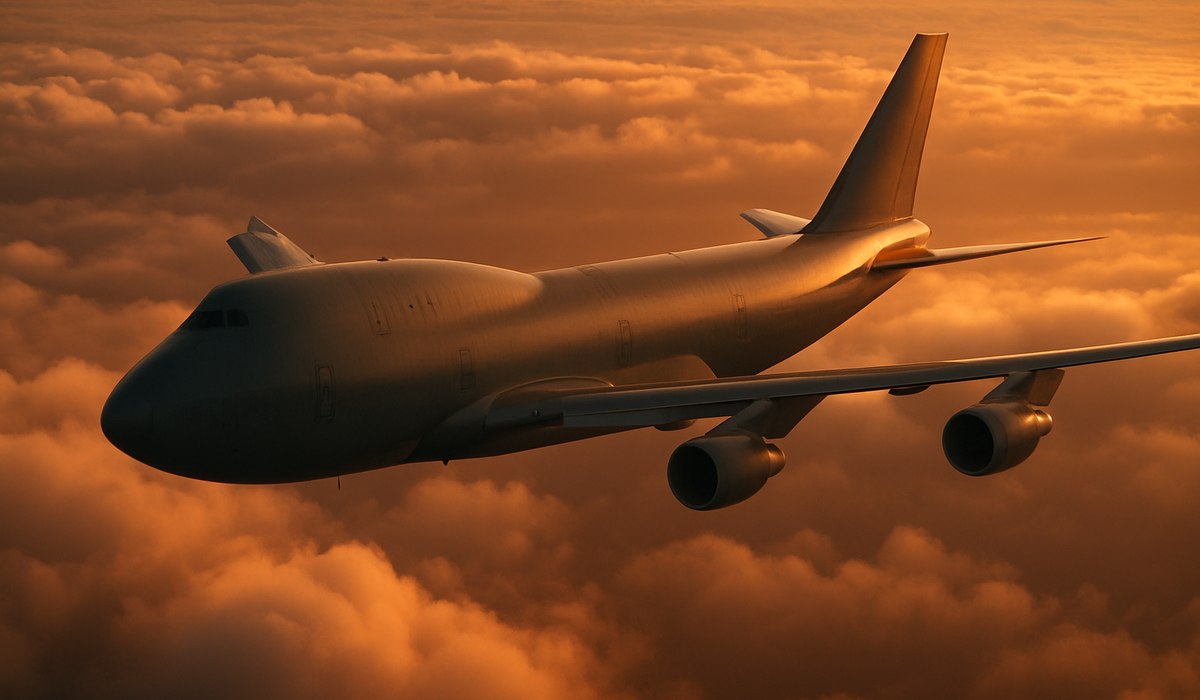
Image generated by AI
Air Force One Continues Reliance on Boeing 747 Platform
The US Air Force maintains operational Boeing 747s for Air Force One missions, leveraging the jumbo jet's proven performance and specialized capabilities that newer aircraft haven't replicated. Despite two decades of aviation advancement, the force boeing presidential transport strategy remains anchored to modified 747 variants rather than transitioning to alternative ultra-large platforms. This commitment reflects both operational necessity and the aircraft's unmatched adaptability across military and civilian applications.
The 747's dominance in presidential transport stems from engineering advantages competitors failed to match. While the Airbus A380 emerged as the world's largest passenger aircraft, the force boeing presidential preference endures because the 747 entered service decades earlier and demonstrated superior versatility. The jumbo jet's proven track record supporting NASA's Space Shuttle carrier missions and specialized Air Force operations created operational expertise that remains difficult to replicate.
Why The 747 Outpaces The A380
The Airbus A380 entered commercial service in 2007, arriving when the aviation industry already shifted toward fuel-efficient twin-engine wide-body designs. The larger A380 quadjet configuration proved economically disadvantageous for most commercial operators, limiting adoption and reducing operational experience. The Boeing 747, conversely, accumulated decades of real-world operational data across military and civilian contexts.
The force boeing presidential selection process prioritized adaptability over raw passenger capacity. The 747's upper-deck design provided secure compartments for command centers, conference facilities, and classified communication systems that the A380's configuration couldn't easily accommodate. The aircraft's structural strength and cargo handling capabilities enabled unique applications beyond passenger transport, including the Space Shuttle carrier role that demanded exceptional structural integrity.
Maintenance logistics further favor the 747. With thousands in operation globally across military and commercial fleets, support infrastructure and spare parts availability remain extensive. The A380's limited deployment meant fewer maintenance facilities possessed specialized expertise. For force boeing presidential operations, operational continuity and rapid repair capacity represent mission-critical considerations.
Presidential Transport Requirements And Operational Scope
Air Force One requires capabilities extending far beyond commercial airline standards. The aircraft must operate from austere military bases worldwide, including locations with limited ground support infrastructure. The 747's proven performance at high-altitude airfields and from unprepared surfaces surpasses alternatives. Long-range endurance requirements demand extended range without refueling, a specification the 747 meets reliably.
Defensive systems integration represents another critical requirement. The force boeing presidential aircraft incorporates advanced radar countermeasures, electronic warfare capabilities, and communications systems requiring extensive internal space and structural modifications. The 747's spacious fuselage and cargo hold designs provided optimal platforms for equipment integration without compromising aerodynamic performance or stability characteristics.
Crew quarters and operational facilities demand on-board medical capabilities, secure work environments, and redundant systems. Presidential transport missions lasting 16+ hours require crew rest facilities and food preparation areas. The 747's double-deck configuration naturally accommodated these requirements while maintaining passenger comfort and operational functionality for accompanying delegations.
Broader Military Applications Beyond Air Force One
The US military's force boeing presidential strategy extends to additional specialized roles beyond executive transport. The 747-400F freighter variant supports strategic airlift operations, moving oversized cargo incompatible with smaller aircraft. These transport missions carry military equipment, humanitarian relief supplies, and time-sensitive cargo across intercontinental distances.
NASA's Space Shuttle Carrier Aircraft represented the most demanding force boeing presidential-era application, requiring structural modifications and aerodynamic adaptations that demonstrated the platform's unmatched versatility. The program proved that 747 airframes could tolerate stresses far exceeding commercial specifications while maintaining flight safety and performance standards.
Early warning and command center roles employ modified 747 variants in AWACS (Airborne Warning and Control Systems) operations, though primarily in allied nations' air forces. The spacious interior accommodates radar domes, communication equipment, and crew stations for extended airborne surveillance missions. These applications reinforce why the force boeing presidential commitment remains justified from a multi-mission perspective.
The Future Of Presidential Aircraft
Replacement planning for Air Force One's current fleet has begun, with studies examining both new-build options and continued 747 modifications. The force boeing presidential future likely involves extended service lives for existing airframes paired with advanced avionics and communication system upgrades. Complete platform replacement demands identifying an aircraft matching the 747's combination of capacity, range, reliability, and adaptability.
The Airbus A350 and Boeing 777X represent potential successors, though neither replicates the 747's spacious cargo and internal volume characteristics. Defense contractors continue analyzing whether future ultra-large aircraft development remains justified given changing military transport requirements and operational patterns. Current Air Force studies project the existing force boeing presidential fleet will continue operations into the 2030s with sustained modification programs.
The 747's production ended in 2023, limiting new airframe availability for dedicated government applications. This scarcity reinforces the imperative to maintain existing aircraft through comprehensive overhaul programs rather than retire serviceable platforms prematurely. The air frame's longevity, already exceeding 50 years in some cases, demonstrates the structural integrity and design excellence that continues supporting force boeing presidential operations.
Key Data Table: Boeing 747 Vs. Airbus A380 Presidential Viability
| Specification | Boeing 747 | Airbus A380 | Winner |
|---|---|---|---|
| Service Entry | 1970 | 2007 | 747 |
| Maximum Range | 7,325 nm | 8,000 nm | A380 |
| Upper Deck Area | 4,631 sq ft | 5,006 sq ft | A380 |
| Structural Strength Rating | Proven 50+ years | Limited operational history | 747 |
| Military Adaptation History | Extensive (AWACS, Shuttle) | Minimal | 747 |
| Operational Support Infrastructure | Global network | Limited regional facilities | 747 |
| Cargo Flexibility | Excellent | Limited | 747 |
| Force Boeing Presidential Selection | Current primary platform | Not selected | 747 |
What This Means for Travelers
Understanding force boeing presidential operations provides context for broader aviation logistics. While standard commercial passengers won't board Air Force One, the 747's operational continuity demonstrates aircraft reliability principles affecting all long-haul international travel.
Actionable Travel Insights:
-
Book 747-operated flights when available for international routes, as the aircraft's proven safety record and maintenance standards remain industry benchmarks.
-
Monitor airline fleet schedules through FlightAware to identify aircraft types on your booked routes, allowing informed comfort comparisons.
-
Understand that force boeing presidential commitments influence military airlift operations, occasionally affecting airspace availability near military installations on your routing.
-
Recognize that specialized aircraft like the 747 cost premium operational expenses, justifying higher business-class pricing on routes where these platforms remain essential.
-
Monitor FAA guidance at www.faa.gov for evolving large-aircraft operational requirements that may impact your preferred carriers' fleet deployments.
Frequently Asked Questions
Why doesn't the US Air Force just buy new A380 aircraft for presidential transport?
The A380's late-2000s introduction missed the operational experience window that established 747 expertise. Military applications require extensive modification capabilities and proven structural reliability over decades. The A380's limited military adoption created insufficient technical support infrastructure and maintenance knowledge for secure presidential operations.
How much longer will the Boeing 747 remain in Air Force One service?
Current projections indicate force boeing presidential operations will continue through the 2030s with sustained modernization programs. No confirmed replacement aircraft has been selected, ensuring the 747 maintains its role through multiple presidential administrations while successor analysis continues.
Can commercial 747s be converted to presidential transport specifications?
Government procurement processes favor dedicated military airframes rather than converted commercial variants. Force boeing presidential aircraft undergo specialized modifications from new-build configurations,
Disclaimer
This article is for informational and educational purposes only. It does not constitute legal, financial, or professional advice. While we strive to provide accurate and up-to-date information, travel policies, regulations, and conditions change rapidly. Always verify information with official sources before making travel decisions. Nomad Lawyer makes no representations about the accuracy, reliability, completeness, or suitability of the information provided. Readers should consult qualified professionals for advice specific to their circumstances. The views expressed in this article are those of the author and do not necessarily reflect the views of Nomad Lawyer.
Raushan Kumar
Founder & Lead Developer
Full-stack developer with 11+ years of experience and a passionate traveller. Raushan built Nomad Lawyer from the ground up with a vision to create the best travel and law experience on the web.
Learn more about our team →