
Women Travel Abroad Expands Global Reach: The Rise of Solo Female Small-Group Travel in 2026

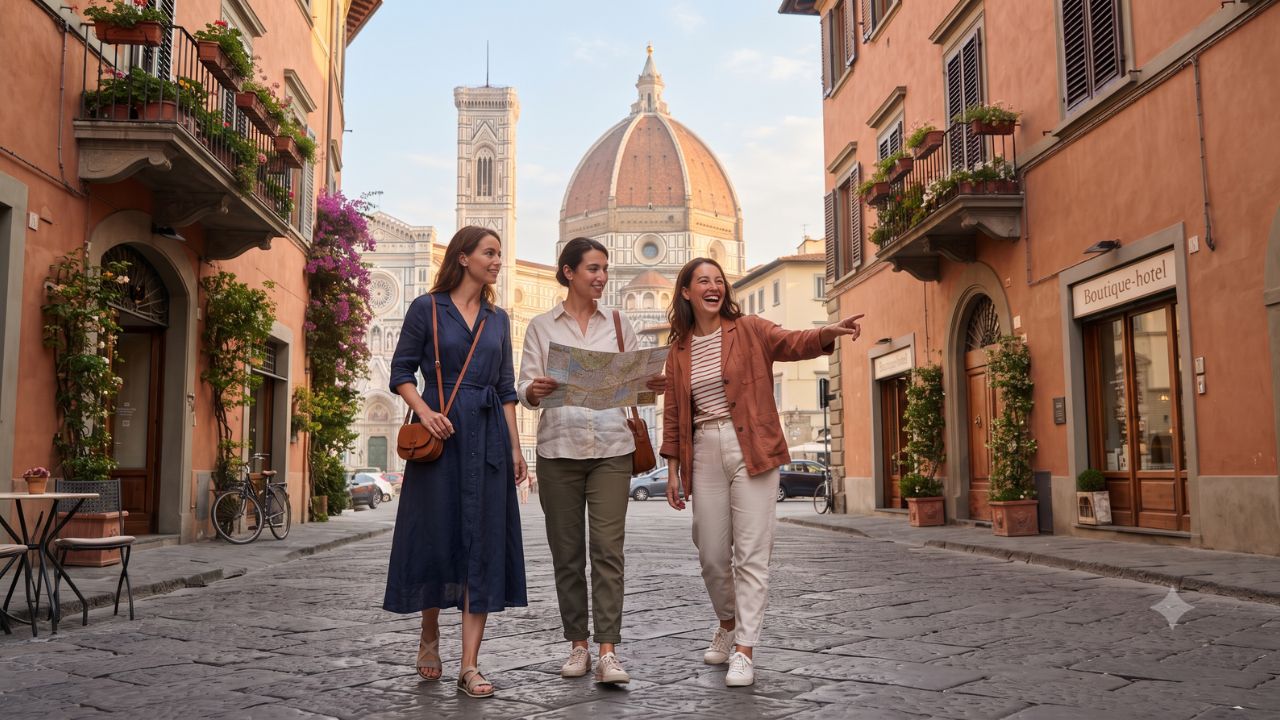
While the global solo travel market climbed to an extraordinary US$549.8 billion in 2025 with female travelers generating 54.6 percent of total revenue, nearly three out of four prospective women travelers remain sidelined by a single systemic obstacle: the punitive single supplement. Despite market projections from Grand View Research expecting worldwide solo travel spending to top US$1.6 trillion by 2033, legacy commercial tour agencies still penalize solo explorers with room surcharges exceeding 50 percent, creating artificial barriers for independent women seeking authentic international discovery.
According to findings in the 2026 Solo Female Travel Trends Survey, 73 percent of women who have never embarked on an independent overseas trip cited inflated accommodation expenses as their primary hesitation. Yet the appetite for experiential discovery is immense: 76 percent of surveyed women confirmed they would readily join an organized women-only expedition if those friction points were removed. Responding to this massive cultural shift, boutique operator Women Travel Abroad (WTA) is redefining small-group travel by providing private boutique accommodations for every traveler without single supplements, compulsory roommate pairings, or cookie-cutter resort itineraries.
Dismantling the Single Supplement: How Boutique Operators Reshape Women's Travel
Headquartered in Cincinnati and originally founded in 2014, Women Travel Abroad is accelerating its international presence under owner and Chief Executive Katherine Butler-Dines. A graduate of the Georgetown University School of Foreign Service who launched her travel career in Morocco, earned an MBA from Duke University's Fuqua School of Business in 2023, and previously led a private equity-backed technology company, Butler-Dines partnered with her husband Rahul Desai to evaluate more than 80 acquisition candidates starting in January 2024 before purchasing WTA in September of that year.
Operating under her new holding company, Affinity Travel Co., Butler-Dines is executing an ambitious expansion that preserves intimate trip dynamics. After welcoming approximately 150 guests across 16 departures in 2025, WTA is targeting nearly 300 travelers across as many as 29 departures in 2026. Rather than booking travelers on impersonal 50-passenger coaches, WTA limits every departure to just six to ten women, ensuring access to family-run guesthouses, historic riads, and intimate cultural kitchens that large commercial groups simply cannot enter.
The Over-55 Female Traveler Revolution: Autonomy Without Isolation
The demographic driving this global boom is surprisingly seasoned. WTA caters primarily to women aged 55 and above—a generation with discretionary savings and accumulated leave who refuse to delay bucket-list journeys simply because spouses, partners, or friends have conflicting schedules or physical limitations. Approximately 90 percent of WTA's guests register completely solo, seeking community and shared adventure without having to manage complex foreign logistics independently.
WTA currently curates itineraries across more than 41 international destinations organized into five specialized travel styles. The portfolio spans established destinations such as Italy, Japan, Switzerland, Iceland, Australia, and New Zealand, alongside culturally immersive regions including Morocco, Egypt, Oman, South Africa, St Lucia, and Patagonia. By pairing structured security with scheduled windows for self-directed exploration, itineraries allow mature travelers to discover foreign cities at an unhurried, respectful pace.
Safety protocols operate with institutional discipline. WTA exclusively runs itineraries in destinations categorized as Level 1 or Level 2 under the U.S. Department of State Travel Advisories framework, continuously monitoring regional conditions. New hosts complete an intensive six-week training course followed by annual refresher certifications, supported by 24-hour on-the-ground and headquarters back-office backup. Guests also receive detailed pre-departure briefings at 90, 60, and 30 days prior to departure, fostering close social bonds before anyone steps foot in an airport.
Solo Female Travel Shift: Traditional Group Tours vs. The Boutique Micro-Group Model
| Travel Dimension | Legacy Commercial Tour Operators | Boutique Women-Only Model (WTA) | Industry Market Impact |
|---|---|---|---|
| Rooming Policies | Compulsory single supplement fees (30% to 70% extra) or forced room-sharing | Guaranteed private room included for every traveler with zero extra fee | Eliminates the primary financial hurdle deterring 73% of solo female travelers |
| Group Capacity | 35 to 55 travelers aboard large charter buses | Strictly capped micro-groups of 6 to 10 travelers | Allows access to historic neighborhood trattorias and boutique heritage inns |
| Target Demographics | Broad generic age brackets with rigid itineraries | Women aged 55+ with 90% booking independently | Serves experienced women prioritizing cultural immersion and peer connection |
| Safety Framework | Large-scale group escorts with minimal personal check-ins | 6-week trained hosts, 24/7 dual-tier support, Level 1 & 2 destination caps | Provides comprehensive reassurance for travelers navigating unfamiliar terrain |
| Global Scale & Growth | Standard fixed seasonal departures in mass tourism corridors | Expanding from 16 departures (2025) to 29 itineraries across 41+ nations (2026) | Captures market share in a sector expanding toward US$1.6 trillion by 2033 |
Insider Guidance for Solo and Small-Group Female Journeys
- Embrace Solo Dining Traditions: When traveling independently through Italy or Japan, do not hide in hotel rooms for dinner. In Rome or Florence, participate in evening aperitivo culture at neighborhood wine bars, where ordering a glass of wine includes small plates and friendly counter conversation. In Tokyo or Kyoto, counter seating at soba and yakitori shops is standard for solo patrons. Official destination advice is available via Visit Japan.
- Pack for Historic Pavements: Boutique properties in the medinas of Fez or along cobblestone alleys in Switzerland rarely feature baggage elevators or roadside drop-offs. Travel with a lightweight 21-inch four-wheel spinner and a comfortable daypack so you can navigate train platforms and ancient stone stairs without strain.
- Respectful Attire in Conservative Regions: In Morocco, Egypt, and Oman, dressing conservatively communicates cultural respect and drastically reduces unwanted street attention. Pack breathable linen tunics, ankle-length skirts, and lightweight pashmina scarves that can cover your shoulders and hair when visiting mosques or rural souqs.
- Pre-Trip Connection Protocols: Take full advantage of pre-departure orientation calls scheduled at the 90-, 60-, and 30-day marks. Introducing yourself early allows you to align on flight schedules, coordinate shared airport transfers, and build friendships before your arrival cocktail.
Ethical Encounters: Empowering Local Female Artisans and Preserving Living Traditions
Beyond passenger statistics, small-group female travel delivers direct economic empowerment to destination host communities. When mass tour buses deposit dozens of hurried tourists at state-run souvenir emporiums, little financial benefit reaches resident families. In contrast, micro-groups of six to ten travelers intentionally patronize female-owned cooperatives, culinary workshops, and independent rural craft centers.
In the Atlas Mountains of Morocco, small groups directly support Berber women's argan oil and weaving cooperatives, where fair wages provide educational funding for village daughters. In the mountain villages of Oman, visits to women's date-farming collectives and traditional potters help sustain ancient domestic industries. Because small groups do not overwhelm village infrastructure or strain water resources, community encounters remain respectful, reciprocal, and dignified.
As the female solo travel market expands toward its projected US$1.6 trillion milestone, travelers over 55 are proving that independent exploration is not the exclusive domain of youthful backpackers. By prioritizing private rooms, small groups, and deep cultural connections, the modern solo female traveler is transforming international tourism into an agent of personal and cultural renewal.
FAQ: Solo and Small-Group Female Travel 2026
What makes women-only small-group tours different from standard group travel?
Capping group sizes at six to ten participants eliminates the rush of big bus tours, allowing access to authentic boutique accommodations and private rooms without single supplements.
Is it common to join a women-only tour without knowing anyone?
Yes, approximately 90 percent of participants on boutique trips like Women Travel Abroad register completely solo, connecting through scheduled pre-departure orientations before departure.
How do operators ensure traveler safety in unfamiliar destinations?
Reputable operators exclusively select Level 1 or Level 2 destinations under US State Department advisories, train hosts rigorously over multiple weeks, and provide round-the-clock emergency support.
Are physical fitness requirements high for travelers over 55?
Itineraries vary across five distinct travel styles, ranging from relaxed cultural and culinary walking trips to active outdoor hikes, allowing travelers to choose paces matching their personal mobility.
When women over fifty step onto international paths with private rooms and trusted small circles, they discover that independence and sisterhood were never mutually exclusive.
Related Travel Guides
- Canada's Women Friendship Escapes 2026: Addressing the Friendship Recession via Tourism
- United States Boosts Solo Travel Appeal With Scenic Escapes, Cultural Cities And Coastal Adventures
- How San Diego is Promoting Eco-Tourism and Sustainable Beach Travel Amid the Rise of Solo Flight Savings in 2026
Disclaimer
This article is for informational and educational purposes only. It does not constitute legal, financial, or professional advice. While we strive to provide accurate and up-to-date information, travel policies, regulations, and conditions change rapidly. Always verify information with official sources before making travel decisions. Nomad Lawyer makes no representations about the accuracy, reliability, completeness, or suitability of the information provided. Readers should consult qualified professionals for advice specific to their circumstances. The views expressed in this article are those of the author and do not necessarily reflect the views of Nomad Lawyer.
Raushan Kumar
Founder & Lead Developer
Full-stack developer with 11+ years of experience and a passionate traveller. Raushan built Nomad Lawyer from the ground up with a vision to create the best travel and law experience on the web.
Learn more about our team →